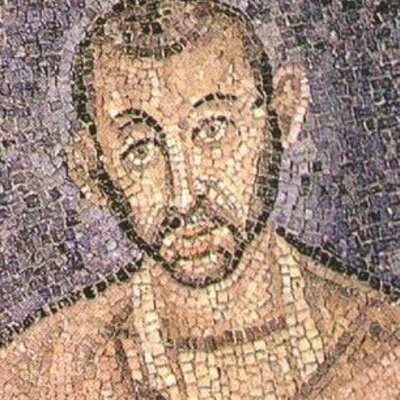
Ambrose of Milan (c. 339–397) was bishop of Milan from 374 until his death and is counted among the four traditional Latin Doctors of the Church. Born at Trier into a Roman senatorial family, he was serving as governor of Aemilia-Liguria when the people of Milan acclaimed him bishop while he was still only a catechumen; he was baptized, ordained, and consecrated within a single week. As bishop he confronted Arian factions at court, defended ecclesiastical independence against the emperors Valentinian II and Theodosius — most famously imposing public penance on Theodosius after the massacre at Thessalonica — and instructed and baptized Augustine of Hippo. His exegetical works (commentaries on Luke, the Psalms, Genesis, and the patriarchs), dogmatic treatises (De fide, De Spiritu Sancto, De mysteriis, De officiis ministrorum), Latin hymns, and pastoral letters shaped Latin theology, liturgy, and political thought throughout the Middle Ages.
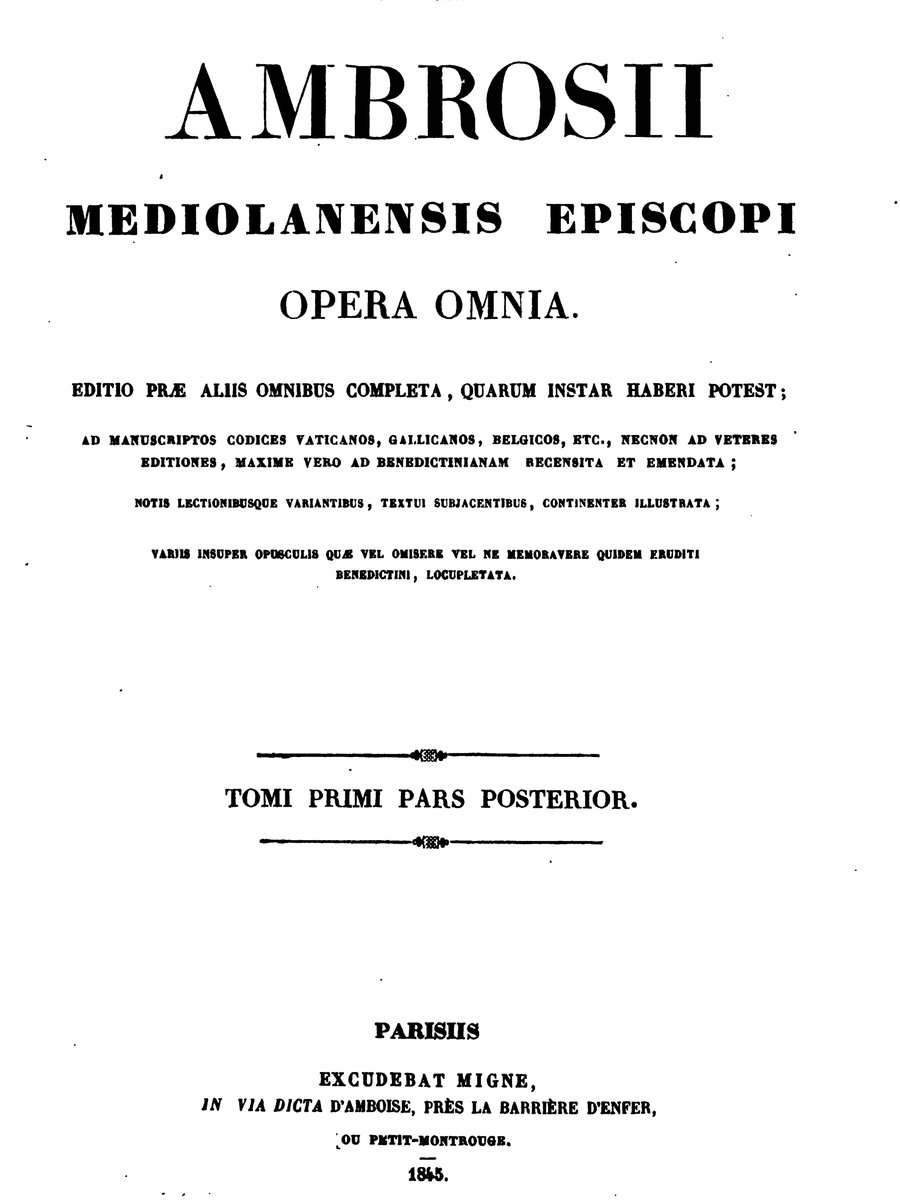
Complete Course of Patrology, Latin Series, Volume 15: The Complete Works of Saint Ambrose, Bishop of Milan, Volume One, Second Part
Patrologiae Cursus Completus, Series Latina, Tomus XV: Sancti Ambrosii Mediolanensis Episcopi Opera Omnia, Tomi Primi Pars Posterior
Commentary on the Gospel according to Luke, Book IV, §§52–54
Expositio Evangelii secundum Lucam, Liber IV, §§52–54
Three sections from Book IV of Ambrose's Expositio Evangelii secundum Lucam, drawing the lessons of Naaman's healing (2 Kings 5) into a teaching against simony. Commenting on Christ's command in Luke 4 — "Gratis accepistis, gratis date" — Ambrose insists that no price may be exacted in the dispensation of the sacraments and that the grace of healing is no man's to sell. The reading culminates with a denunciation of Gehazi, whose hereditary leprosy (4 Kings 5:27) Ambrose reads as the figure of all who, like Simon Magus, would profit from sacred ministry: such men are made foreign to the Kingdom of God, "neque ebriosus, neque idolis serviens regnum Dei possidebit" (1 Cor. 6:10).
Commentary on the Gospel according to Luke, Book IX, §19
Expositio Evangelii secundum Lucam, Liber IX, §19
A single section from Book IX of Ambrose's Expositio Evangelii secundum Lucam, on Christ's overturning of the seats of those who sold doves in the Temple (Luke 19:45–46; Matt. 21:12). Reading the gesture spiritually rather than literally — for "what dignity is there among doves?" — Ambrose connects the dove with the Holy Spirit descending at Christ's baptism, and so identifies the dove-sellers as those who "would peddle the grace of the Holy Spirit" (qui sancti Spiritus gratiam nundinentur). He invokes Christ's command "Freely you have received, freely give" (Matt. 10:8) and Peter's rebuke of Simon Magus — "Thy money perish with thee, because thou hast thought that the gift of God may be purchased with money: thou hast no part nor lot in this faith" (Acts 8:20–21) — to bar simoniacs from the company of the Church.