
Aphrahat (c. 280–c. 345), called the Persian Sage (Sapiens Persa), was a fourth-century Syriac Christian writer who lived under the Sasanian Empire, almost certainly as a celibate ascetic and possibly as a bishop or head of the monastery of Mar Mattai near Mosul. He is the earliest substantial witness to Syriac Christian thought, writing entirely outside the Greco-Roman world and apparently in no significant contact with the Greek theological tradition. Between 337 and 345 he composed twenty-three Demonstrations (tahwyātā), the first twenty-two arranged as an alphabetical acrostic on the Syriac alphabet and treating the Christian life — faith, love, fasting, prayer, war, monasticism, penitents, the resurrection, humility, pastors, the dispute with the Jews, the messiah, the foods, virginity, almsgiving, persecution, and death — and the twenty-third, on the grape (De Acino), serving as a recapitulation of salvation history. His expositions are notable for their extensive scriptural argumentation, their preservation of pre-Nicene exegesis, and their detailed engagement with Jewish interlocutors during the persecution of Shapur II.
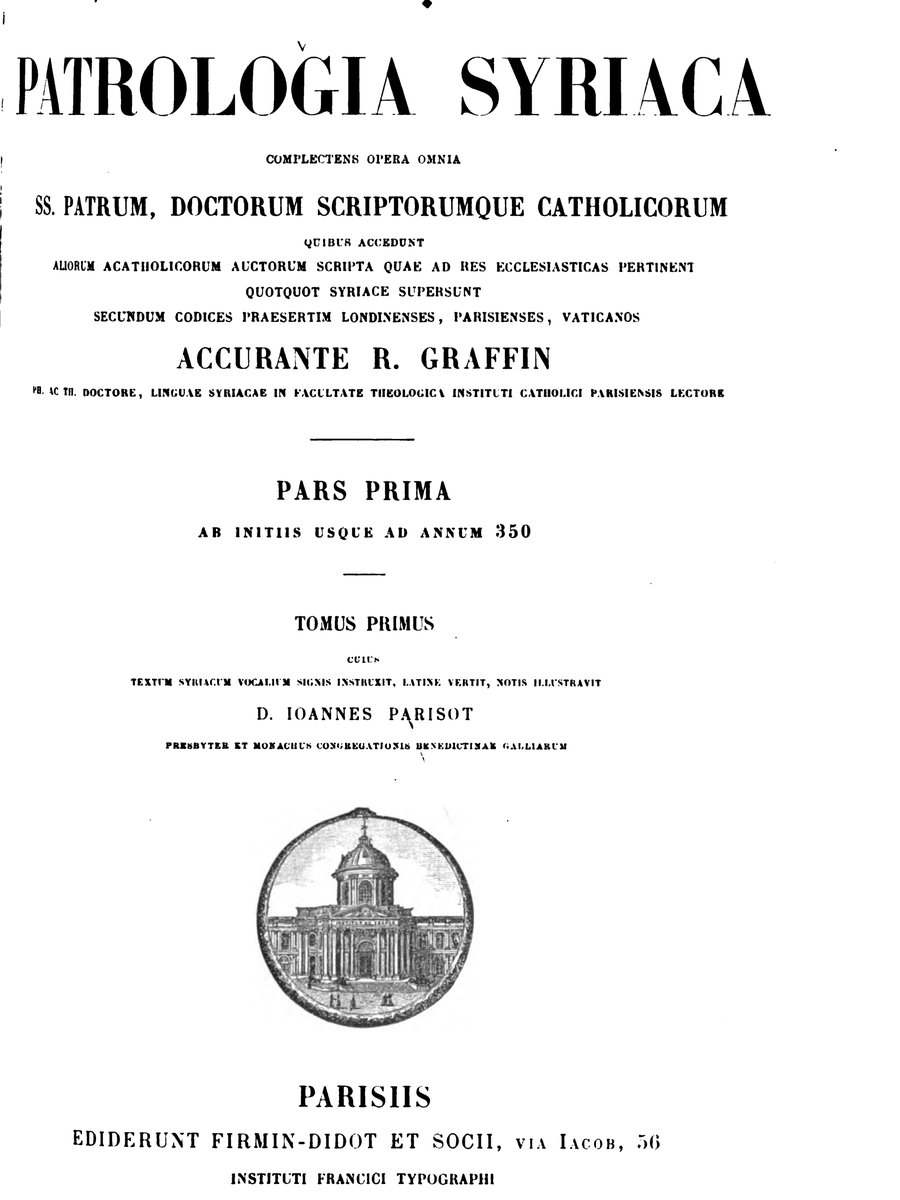
Syriac Patrology, Part One, Volume One: The Demonstrations of Aphrahat the Persian Sage
Patrologia Syriaca, Pars Prima, Tomus Primus: Aphraatis Sapientis Persae Demonstrationes
Demonstration I, §1
Demonstratio I, §1
The opening paragraph of Aphrahat's first Demonstration (De Fide), addressed to the unnamed correspondent who wrote requesting instruction in faith. Aphrahat acknowledges the letter and cites Matthew 10:8 — "Freely you have received, freely give" — to justify his willingness to share what he himself has received without charge. The same verse and theme are taken up at length in Demonstration X §8 (cross-referenced in the footnote here).
Demonstration X, §8
Demonstratio X, §8
A passage from Aphrahat's tenth Demonstration (De Pastoribus, "On Pastors") meditating on the inexhaustibility of the Lord's treasury of wisdom, freely shared with prophets, apostles, and pastors. Aphrahat invokes Matthew 10:8 — "Freely you have received, freely give" — to argue that those who received gratuitously must likewise give gratuitously; if they hoard or sell what was given, it will be taken from them. A key patristic locus for the theological argument against simony.