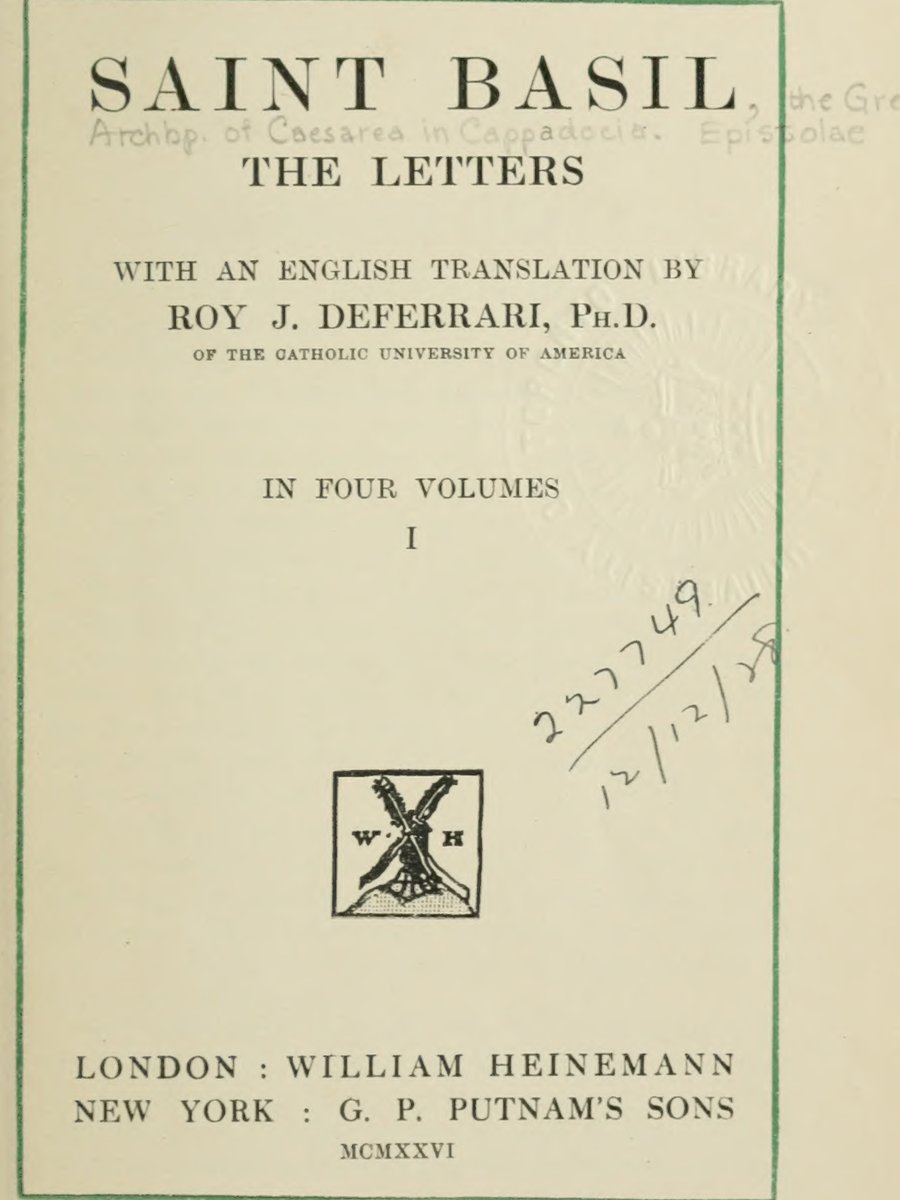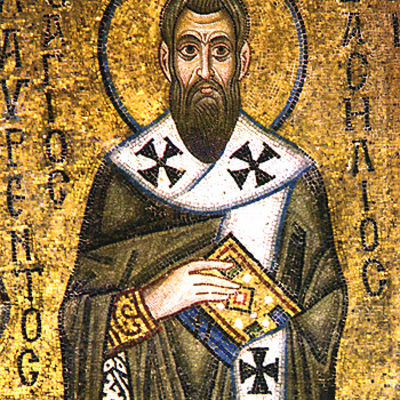
Basil of Caesarea (c. 329–379), also known as Basil the Great, was bishop of Caesarea in Cappadocia from 370 until his death and is counted among the four Greek Doctors of the Church. Educated in Athens alongside Gregory of Nazianzus, he became one of the foremost theologians of the Nicene party in the Arian controversy, defending the full divinity of both the Son and the Holy Spirit. His voluminous correspondence — over three hundred letters survive — documents the political and theological struggles of the post-Nicene church and his efforts to unite Eastern bishops around Nicene orthodoxy. He is also the founder of the cenobitic monastic tradition in the Greek East, whose rules (Asketikon) shaped Byzantine monasticism, and a major liturgical figure whose name is attached to one of the principal Eastern eucharistic anaphoras.