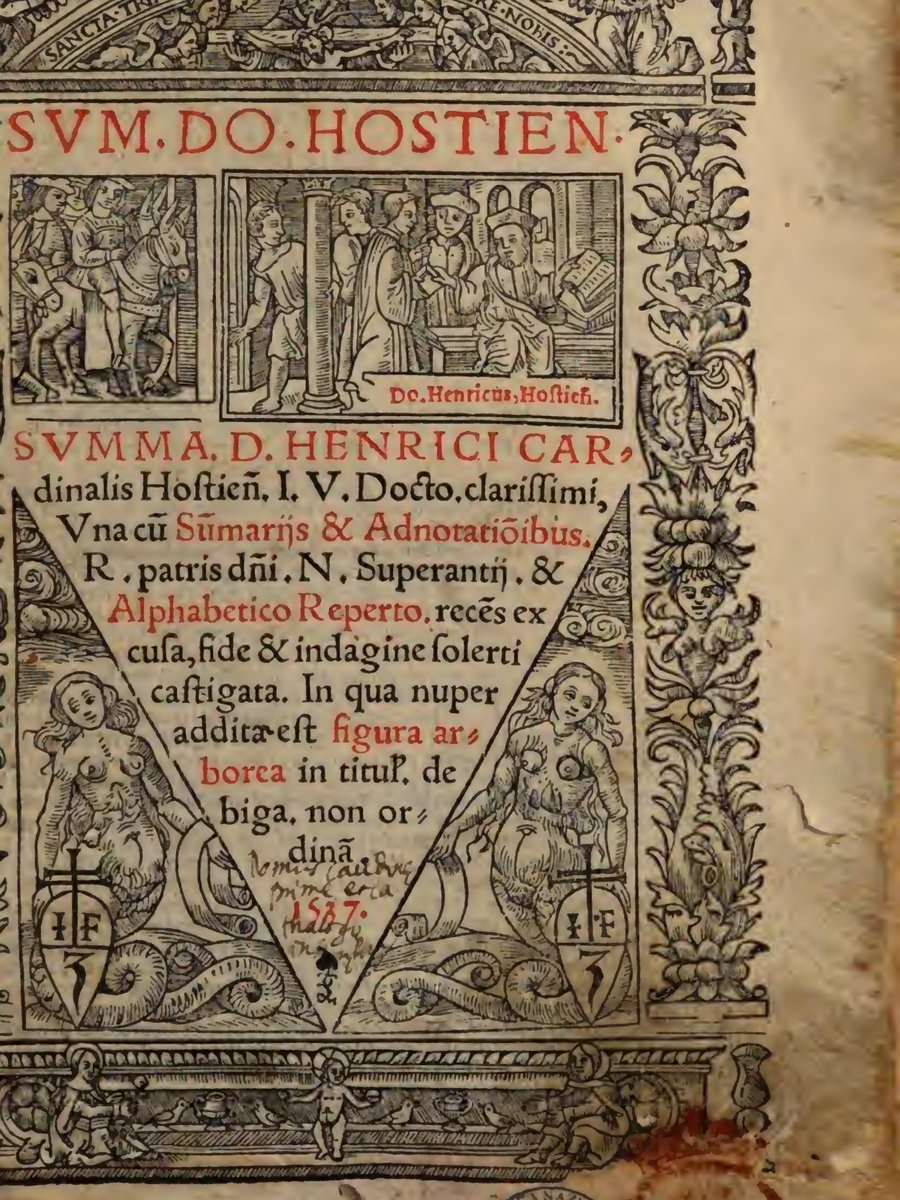
Henricus de Segusio (Henry of Susa, c. 1200–1271), known as Hostiensis from his late cardinal-bishopric of Ostia, was the leading canonist of the thirteenth century. After studying and teaching Roman and canon law at Bologna and Paris, he served as archdeacon of Paris, bishop of Sisteron, archbishop of Embrun, and finally Cardinal Bishop of Ostia (1262). His two great commentaries — the Summa on the titles of the Decretals of Gregory IX (later called the Summa aurea) and the Lectura (or Commentaria) on the same Decretals — synthesised the ius commune of Roman and canon law and remained authoritative throughout the later Middle Ages. Hostiensis articulated influential doctrines on papal plenitude of power, the relationship between secular and ecclesiastical jurisdiction, and the rights of non-Christians.