The Register of Pope Gregory VII
Das Register Gregors VII.
The Registrum of Gregory VII (Hildebrand, r. 1073–1085) preserves the official record of papal letters and synodal acts from the pontificate that gave the Gregorian Reform its name. The collection survives in the eleventh-century Vatican register (Reg. Vat. 2), copied from the original chancery rolls, and contains some 390 letters and decrees across nine books, including the Dictatus papae (II, 55a) and the Lent-synod legislation of 1074 and 1075 against simony and Nicolaitism. Erich Caspar's critical edition appeared in two fascicles (Books I–IV in 1920, Books V–IX in 1923) as Epistolae selectae II in the Monumenta Germaniae Historica, and remains the standard text. This volume is the 1955 photographic reprint (2. unveränderte Auflage) of both fascicles bound together.
Author

Gregory VII
Gregorius VII
Readings
Gregory VII to the People of Lodi
Gregorius VII Laudensis ecclesie filiis
In this letter of 3 March 1075, Gregory VII writes to the people of Lodi to applaud their zeal against simony and clerical incontinence and to urge them to support their bishop Opizo in extirpating these "pests" from their church. Issued within days of the 1075 Lent Synod (Reg. II.52a), the letter expressly invokes the synodal program: no one is to serve at the altar over the relics of St. Bassianus in the cathedral if he has entered the church by purchase, is a fornicator, or is a pursuer of base gain. Apostolic blessing is promised to those who cooperate with Opizo, apostolic curse to those who oppose him.
Gregory VII·1075·Latin·Liber II, Epistula LV·p. 200–201Protocol of the Roman Lent Synod of 1076
Protocollum synodi Romanae anni MLXXVI
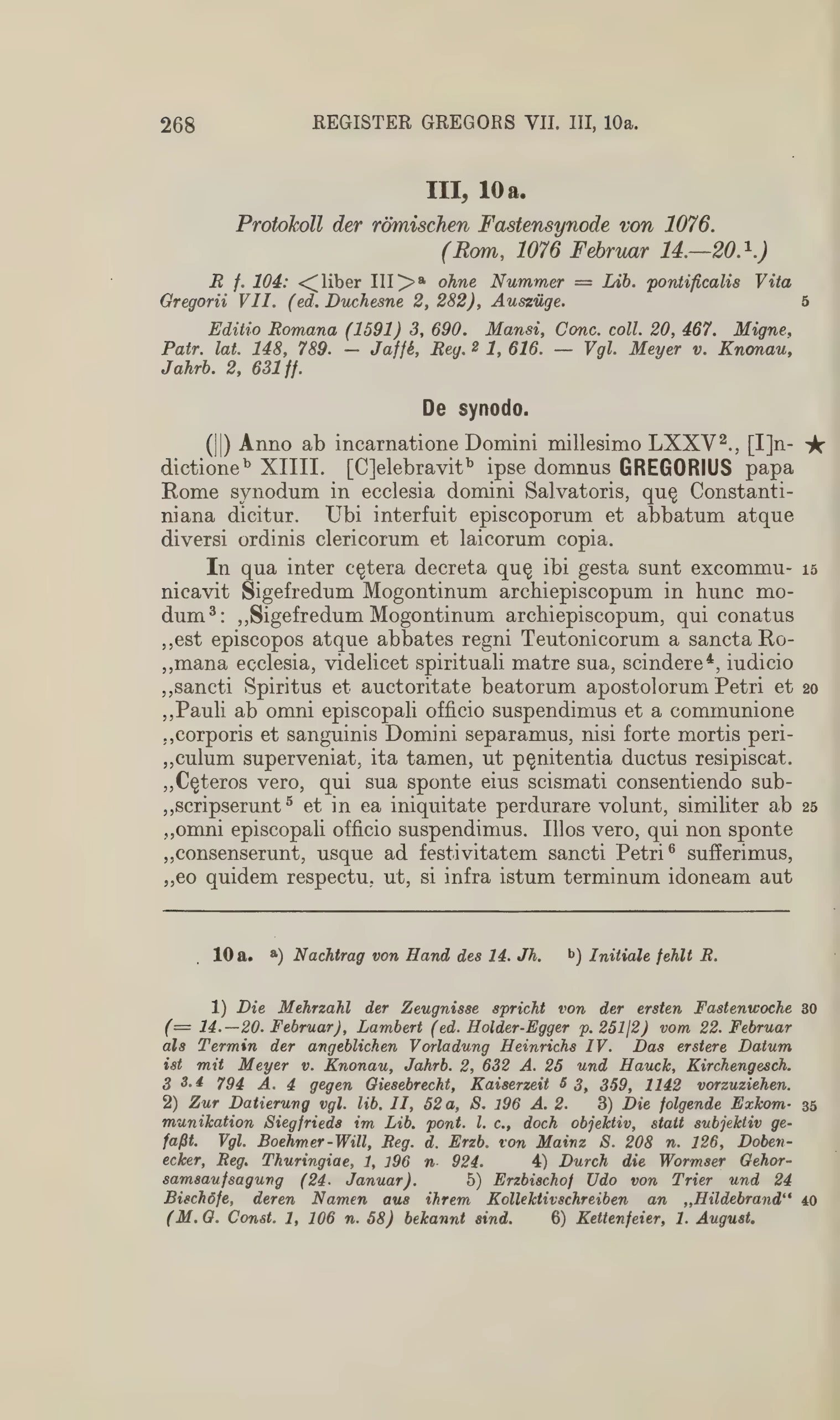
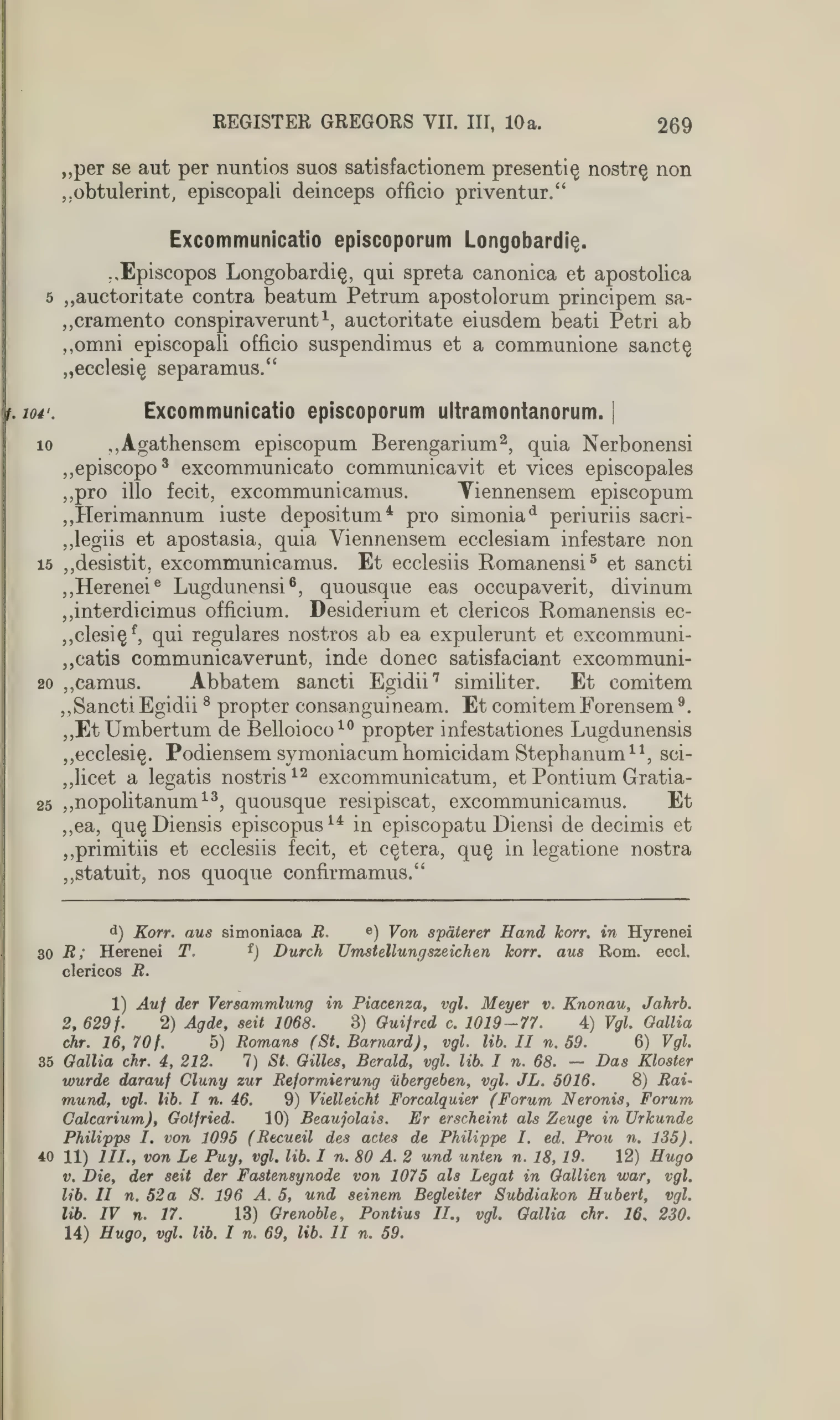
The protocol of the Roman Lent Synod of 14–20 February 1076, preserved in Gregory VII's Register as III.10a. The synod is the climactic event of the early Investiture Controversy: it suspended Archbishop Siegfried of Mainz and the German bishops who had renounced obedience to Rome, excommunicated the Lombard bishops, deposed and excommunicated a series of transalpine bishops (including Hermann of Vienne "pro simonia, periuriis, sacrilegio, et apostasia…"), and finally suspended and excommunicated King Henry IV himself in a formal address to St. Peter ("Beate Petre, apostolorum princeps…"). The record contains the first use of the noun simonia in Gregory's Register and provides the canonical text of Henry IV's excommunication — the act that precipitated the king's penance at Canossa in January 1077. The synod is dated anno MLXXV in the manuscript, following the Pisan/Florentine calendar style in which the year began on 25 March; modern reckoning places it in 1076 (indiction XIV).
Gregory VII·1076·Latin·Liber III, Epistula Xa·p. 268–271