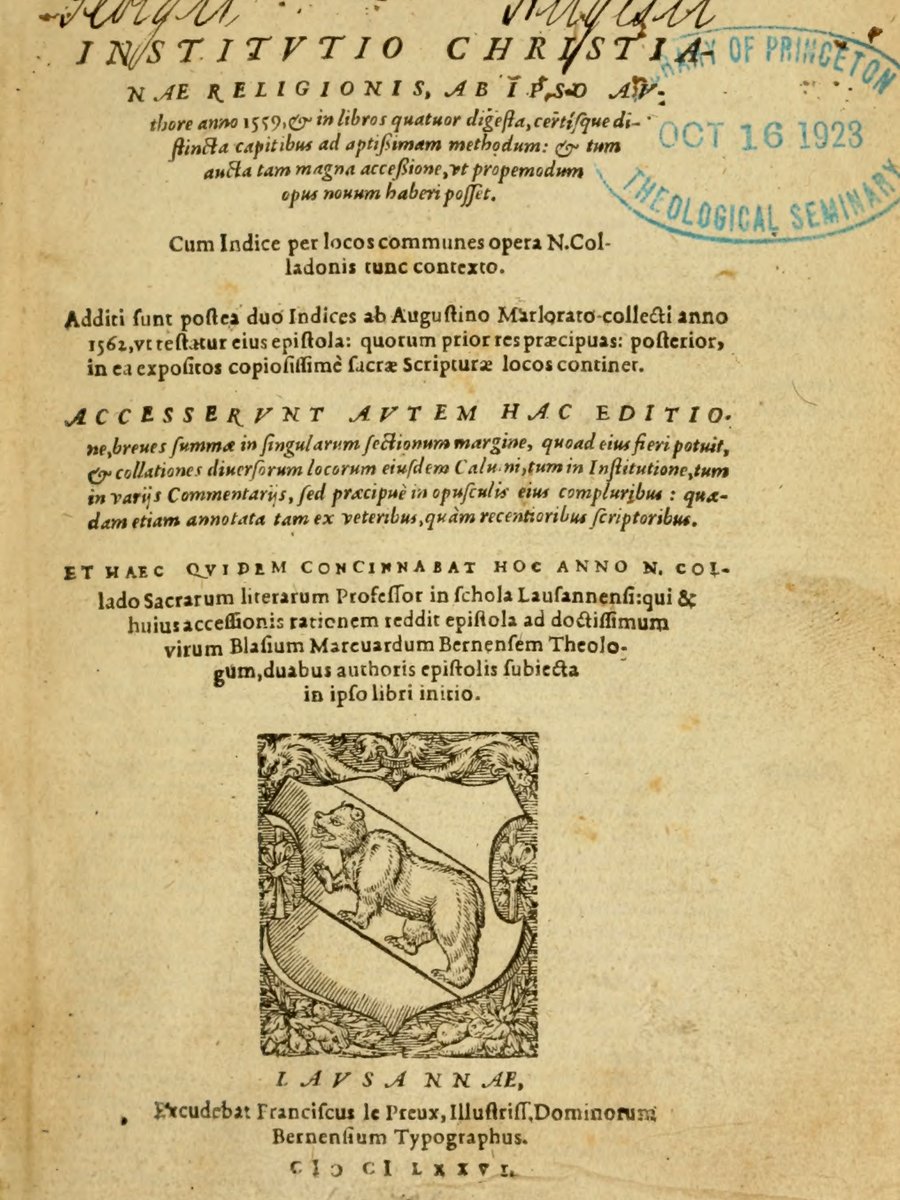
That the ancient form of church government was completely subverted by papal tyranny
Antiquam regiminis formam omnino pessum datam fuisse tyrannide Papatus
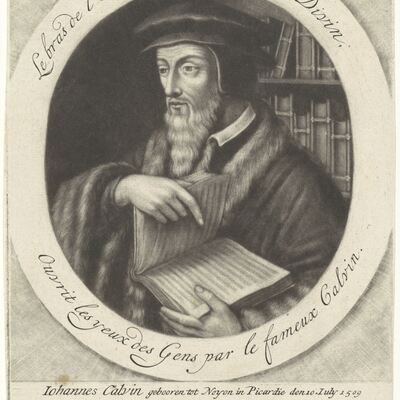 John Calvin
CAP. V.
Antiquam regiminis formam omnino pessundatam fuisse tyrannide Papatus.
Nunc ordinem gubernandæ Ecclesiæ, quem hodie tenet Romana sedes ac omnes eius satellites, totamque hierarchiæ illius quam perpetuo in ore habent imaginem ob oculos ponere operæ pretium est, ac cum illo quem descripsimus, primæ ac veteris Ecclesiæ conferre; quò ex comparatione eluceat qualem Ecclesiam habeant qui hoc solo titulo ad nos grauandos vel potius obruendos ferociunt. Præstat autem à
vocatione incipere, vt videamus qui & quales & qua ratione vocentur ad hoc ministerium. Tum deinde considerabimus quam fideliter munus suum impleant. Dabimus autem primum locum Episcopis: quibus vtinam hoc honori esse posset, in hac disputatione primum tenere ordinem. Sed res ipsa non patitur me vel leuiter attingere hoc argumentum sine summo ipsorum dedecore. Et tamen meminero in quo scripti genere nunc verser: nec orationem meam, quæ ad simplicem doctrinam composita esse debet, vitra suas metas diffluere patiar. Sed tamen respondeat mihi quispiam eorum qui non prorsus frontem perdiderunt, quales hodie Episcopi passim eligantur. Sane examen haberi de doctrina nimis obsoletum est: quod siquis habetur doctrinæ respectus, iurisconsultum aliquem deligunt, qui in foro magis litigare nouerit quam in Ecclesia concionari. Hoc constat, a centum annis vix centesimum quenque fuisse electum qui sacræ doctrinæ aliquid teneret. Superioribus seculis non ideo parco, quod multo meliora fuerint, sed quod de præsenti modo Ecclesia nobis quæstio est. Si de moribus fiat censura, paucos aut propemodum nullos fuisse reperiemus quos non indignos veteres Canones iudicassent. Qui non fuit ebriosus, fuit scortator: qui ab hoc quoque scelere purus fuit, aut aleo fuit, aut venator, aut in aliqua parte vitæ dissolutus. Sunt enim leuiora vitia quæ secundum vetustos Canones hominem ab Episcopatu excludunt. Hoc vero longe absurdissimum, quod pueri quoque vix decennes, Papæ concessione, Episcopi sunt facti. Eo impudentiæ ac stuporis prouecti sunt vt ne illud quidem extremum & adeo prodigiosum flagitium horrerent, quod ab ipso naturæ sensu penitus abhorret. Hinc apparet quam religiosæ fuerint electiones, vbi tam supina negligentia fuit.
2 Iam in eligendo totum illud ius populi sublatum est. Vota, assensus, subscriptiones & omnia eiusmodi euanuerunt: ad solos Canonicos integra potestas translata est. Illi in quem volunt, conferunt Episcopatum: eum mox in conspectum plebis producunt, sed adorandum, non examinandum. Atqui reclamat Leo, nullam rationem id sinere, ac violentam impositionem esse pronuntiat. Cyprianus, quum fluere ex iure diuino testatur ne fiat nisi ex consensu populi, pugnare diuersum morem cum verbo Dei ostendit. Tot synodorum decreta ne secus fiat seuerissime prohibent: ac, si factum sit, iubent esse irritum. Si hæc vera sunt, nulla hodie neque diuino neque Ecclesiastico iure Canonica electio in toto Papatu superest. Verum etiamsi nihil aliud mali foret, qui tamen hoc excusare poterunt quod ita spoliauerint suo iure Ecclesiam? Atqui ita, inquiunt, exigebat temporum corruptio, vt quoniam apud plebem & magistratus plus valebant odia & studia in assumendis Episcopis, quam rectum sanumque iudicium, eius rei arbitrium paucis deferretur. Fuerit sane hoc extremum mali in rebus deploratis remedium. Verum vbi medicina morbo ipso nocentior apparuit, cur non & nouo huic malo succurritur? Sed est, inquiunt, ipsis Canonicis exacte præscriptum quid sequi in electione debeant. Sed an dubitamus quin sanctissimis legibus olim plebs se astringi intelligeret, quum videret sibi regulam e verbo Dei propositam, dum ad Episcopum eligendum conueniret? Siquidem illa diuina vox Dei qua describit veram Episcopi effigiem, merito pluris esse debebat quam infinitæ Canonum myriades. Sed nihilominus, pessimo affectu corrupta, nullam habebat legis aut æquitatis rationem. Sic hodie etsi optima scriptæ sunt leges, manent tamen in chartis sepultæ. Interim vt plurimum moribus receptum est, & (quasi ratione fiat) etiam approbatum, vt ebriosi, scortatores, aleones passim ad hunc honorem promoueantur: parum dico: vt Episcopatus adulteriorum & lenociniorum sint præmia.
præmia. Nam quum venatoribus & aucupibus dantur, præclare res cecidisse existimanda est. Tantam indignitatem vllo modo excusare, nimis improborum est. Habebat, inquam, olim optimum canonem populus, cui præscribebat Dei verbum, oportere Episcopum esse irreprehensibile, doctorem, non pugnacem, &c. Cur ergo eligendi prouincia a populo ad istos translata est? Quia scilicet inter populi tumultus & factiones verbum Dei non exaudiebatur. Et cur hodie ab istis rursum non transferatur, qui non modo leges omnes violant, sed abiecto pudore, libidinose, auare, ambitiose, humana diuinis commiscent & confundunt?
3 Sed mentiuntur quum aiunt hoc remedij loco fuisse inuentum. Sæpe in Episcopis eligendis tumultuatas olim fuisse vrbes legimus: nemo tamen vnquam de auferendo ciuibus iure cogitare ausus est. Alias enim habebant vias quibus vel obuiarent his vitijs, vel iam admissa corrigerent. Verum dicam quid sit. Quum populus in delectu habendo negligentior esse coepisset, & hanc curam, quasi minus sibi congruentem, in Presbyteros reiceret, illi hac occasione ad tyrannidem sibi vsurpandam abusi sunt: quam postea nouis canonibus editis stabilierunt. Ordinatio autem nihil aliud est quam merum ludibrium. Species enim examinis, quam illic ostentant, adeo inanis est & ieiuna, vt omni etiam fuco careat. Itaque quod alicubi pactione impetrarunt principes a Romanis Pontificibus, vt nominarent ipsi Episcopos, in eo nihil noui damni fecit Ecclesia: quia canonicis duntaxat electio, quam nullo iure rapuerant, vel certe furati erant, adempta est. Est hoc sane fœdissimum exemplum, quod ex aula mittuntur Episcopi ad occupandas Ecclesias, & piorum principum esset a tali corruptela abstinere. Est enim impia Ecclesiæ spoliatio, quoties alicui populo ingeritur Episcopus quem non petierit, vel saltem libera voce approbarit. Verum inordinatus ille mos qui in Ecclesiis iampridem fuit, occasionem principibus dedit vt præsentationem Episcoporum sibi sumerent. Maluerunt enim suum esse beneficium, quam eorum in quos nihilo plus id competebat, & qui non minus perperam eo abutebantur.
4 En præclara vocatio, cuius causa Episcopi Apostolorum successores se esse iactant. Presbyteros autem creandi ius sibi solis competere dicunt. Sed in hoc pessime corrumpunt vetus institutum, quod non Presbyteros sua ordinatione creant qui populum regant ac pascant, sed Sacerdotes qui sacrificent. Similiter quum Diaconos consecrant, nihil agunt de vero ac proprio ipsorum officio: sed ad certas modo ceremonias circa calicem & patinam ordinant. At in Synodo Chalcedonensi contra sancitum est, ne fiant absolutæ ordinationes, hoc est, quin locus simul assignetur ordinatis vbi munus suum exerceant. Hoc decretum duplici nomine vtilissimum est, Ne oneretur Ecclesiæ superuacuo sumptu, & in homines otiosos expendatur quod erogari pauperibus debet. Deinde vt ij qui ordinantur, cogitent non se ad honorem promoueri, sed munus sibi mandari ad quod obeundum solenni testificatione obligentur. At Romanenses magistri (qui nihil in religione curandum putant præter ventrem) primo titulum interpretantur reditum qui ad alimoniam sufficiat: siue ex patrimonio sit, siue ex sacerdotio. Itaque quum Diaconum vel Presbyterum ordinant, nihil soliciti vbi debeant ministrare, ordinem illis conferunt, & modo satis diuites sint ad se alendos. Verum quis hominum hoc recipiat, vt titulus quem requirit concilij decretum, sit annuus prouentus ad alimoniam? Iam vero quia recentiores Canones Episcopos damnabant eorum alimonia, quos sine idoneo titulo ordinassent, quo sic reprimerent nimiam eorum facilitatem, etiam cautio excogitata est qua eluderent pænam. Nam qui ordinatur, nominato qualicunque titulo
promittit eo se fore contentum. Eo pacto ab alimentorum actione depellitur. Taceo mille fraudes quæ hic fiunt: vt quum alij inanes sacerdotiorum titulos mentiuntur, vnde quinque asses annuatim conficere nequeant: alij sub arcana stipulatione sacerdotia commodato accipiunt quæ statim reddituros se pollicentur, sed interdum non reddunt. Et alia eius generis mysteria.
5 Verum etiamsi illi abusus crassiores tolerentur, annon illud semper absurdum est, Presbyterum constituere cui locum nullum assignes? neminem enim ordinant nisi ad sanctificandum. Atqui legitima Presbyteri ordinatio est, ad Ecclesiæ gubernationem: Diaconi, ad eleemosynæ procurationem vocari. Multis quidem pompis adumbrant id quod agunt: quò specie ipsa veneratione apud simplices habeat: sed apud sanos quid valere possunt istæ laruæ, vbi nihil solidi aut veri subest? Nam ceremonias adhibent vel ex Iudaismo accersitas, vel ex seipsis confictas: quibus abstinere satius foret. De vero autem examine (vmbram enim illam quam retinent nihil moror) de populi consensu, de aliis rebus necessariis, nulla mentio. Vmbram voco ridiculas illas gesticulationes, ad ineptam ac frigidam vetustatis imitationem compositas. Habent Episcopi suos vicarios, qui ante ordinationem de doctrina inquirant. Sed quid? an legere suas Missas possint: an vulgare aliquod nomen, quod in lectione occurret, declinare, an coniugare verbum, an vocis vnius significationem nouerint: neque enim necesse est vt vel vnius versiculi sensum reddere sciant. Neque tamen adhuc sacerdotio repelluntur qui in his quoque puerilibus elementis deficiunt, modo aliquam pecuniæ vel gratiæ commendationem attulerint. Eiusdem farinæ est quòd quum ad altare admouentur ordinandi, quæritur ter voce non intellecta, sintne digni honore. Respondet vnusqui eos nunquam vidit, sed nequid formulæ desit, has partes habet in fabula) Digni sunt. Quid in venerandis istis Patribus accuses, nisi quod in tam apertis sacrilegiis ludendo, Deum & homines nullo pudore rident? At quia in diuturna eius rei possessione sunt, putant id sibi iam licere. Quisquis enim contra hæc tam clara tamque atrocia flagitia hiscere audet, quasi qui sacra Cereris in aperto olim protuerat, ad capitale iudicium ab ipsis rapitur. An hoc facerent si quem putarent esse Deum?
6 Iam in beneficiorum collationibus (quæ res olim coniuncta erat cum ordinatione, nunc prorsus est separata) quanto melius se gerunt? Est autem apud eos multiplex ratio: neque enim soli Episcopi conferunt sacerdotia: & in his etiam quorum vocantur Collatores, non semper plenum ius habent: sed alij præsentationem habent: ipsi autem Collationis titulum retinent, honoris causa. Accedunt etiam nominationes ex scholis, resignationes, vel simplices, vel permutationis causa factæ: rescripta commendatitia, præuentiones & quicquid tale est. Verum ita se omnes gerunt vt nullus eorum possit alteri quippiam exprobrare. Sic contendo: vix centesimum quodque beneficium hodie in Papatu sine simonia conferri: qualiter simoniam veteres definiuerunt. Non dico omnes numerato pretio emere: sed cedo mihi vnum ex viginti qui nulla obliqua commendatione ad sacerdotium perueniat. Alios cognatio vel affinitas promouet, alios parentum authoritas: alij obsequiis fauorem sibi conciliant. Denique in hunc finem conferuntur sacerdotia, non vt Ecclesiis sit prospectum, sed iis qui accipiunt. Itaque Beneficia appellant, quo nomine satis declarant se non alio loco ea habere quam principum donatiua, quibus vel conciliant fauorem militum, vel eorum labores remunerantur. Omitto quin tonsores, coquos, mullones, atque eius fæcis homines hæc præmia conferuntur. Iam vero nullis fere litibus magis hodie perstrepunt iudicia quam
ob sacerdotia: vt dicas nihil aliud quàm prædam esse canibus obiectam ad venationem. An hoc vel auditu tolerabile est, Pastores vocari qui in Ecclesiæ possessionem, quasi in hostile prædium irruperint? qui foretibus iurgiis euicerint? qui pretio redemerint? qui sordidis obsequiis emeruerint? qui pueri vixdum balbutientes, eam, ceu hæreditariam à patruis & cognatis, interdum etiam à patribus spurij creuerint?
Sed hoc quoque maius portentum est, quod vnus homo (non dico qualis, certè qui seipsum regere non potest) quinque aut sex Ecclesiis gubernandis præficitur. Videre est hodie in aulis Principum Adolescentes ter Abbates, bis Episcopos, semel Archiepiscopos. Passim vero sunt Canonici, quinque, sex, septem sacerdotiis onusti: quorum nulla prorsus nisi in recipiendo prouentu curam habent. Non obiiciam, verbum Dei vbique reclamare: quod iampridem desiit apud eos habere tantillum momenti. Non obiiciam, multas seuerissimas sanctiones in pluribus Conciliis contra hanc improbitatem esse factas: nam has quoque, quoties libet, fortiter contemnunt. Sed dico vtrunque esse prodigiosum flagitium, quod Deo, naturæ, & Ecclesiastico regimini prorsus aduersetur, vt vnus prædo pluribus simul Ecclesiis incubet: vt Pastor nominetur, qui gregi suo adesse, etiamsi velit, nequeat: & tamen (qua sunt impudentia) tam abominandas fœditates Ecclesiæ nomine prætexunt, quo ab omni reprehensione eximant. Quinetiam, si Deo placet, in istis nequitiis continetur sacrosancta illa successio, cuius merito effectum esse iactant ne Ecclesia peritet.
Ex sacerdotibus, qui illic creantur, alij sunt Monachi, alij quos vocant Seculares. Prior ille grex incognitus fuit veteri Ecclesiæ: & habere talem in Ecclesia locum, adeo cum monastica professione pugnat, vt quum olim ex monasteriis in clerum cooptarentur, monachi esse definerent. Atque adeo Gregorius, cuius tempus multum fecis habuit, hanc tamen confusione fieri passus non est. Vult enim clericatu abdicari qui Abbates facti fuerint: quia monachus simul esse & clericus rite nemo queat: quum alterum alteri fit impedimento. Nunc si interrogem quomodo munus suum bene impleat quem Canones non esse idoneum declarant: quid obsecro, responsuri sunt? Citabunt mihi scilicet abortiua illa decreta Innocentij & Bonifacij, quibus monachi ad sacerdotij honorem & potestatem sic recipiuntur, vt in monasteriis suis maneant. Sed quæ ista est ratio, vt indoctus quiuis asinus, simulac Romanam sedem occupauerit, totam antiquitatem verbulo vno euertat? Verùm de hac re postea. Istud nunc sufficiat, pro magna absurditate habitum esse in Ecclesia puriori, si monachus sacerdotio fungeretur. Nam Hieronymus se officium sacerdotis agere negat, qui inter monachos degit: seque vnum ex plebe facit qui à sacerdotibus regatur. Verum, vt hoc illis demus, quid tamen officij faciunt? Ex mendicantibus nonnulli concionantur: reliqui omnes monachi vel cantillant vel demurmurant Missas in suis latibus. Qui si ad hoc fieri Presbyteros, aut Christus voluerit, aut muneris natura patiatur. Quum Scriptura palam testetur, Presbyteris esse proprium Ecclesiam regere, annon impia est profanatio, aliò transferre, imo penitus immutare sacrum Dei institutum? Nam quum ordinantur, nominatim vetantur facere quæ Deus Presbyteris omnibus iniungit. Siquidem illis hæc cantilena canitur, Monachus suo claustro contentus, nec sacramenta administrare, nec aliud quippiam publici muneris gerere præsumit. Negent si poterunt, apertum esse Dei ludibrium, in hoc aliquem Presbyterum fieri, vt à vero & germano officio abstineat.
9 Venio ad seculares: qui partim beneficiarij sunt (vt loquuntur) id est, qui habent sacerdotia quibus alantur: partim quotidianas operas locant missando vel canendo, & quasi collecta inde stipe victitat. Beneficia aut curam animarum habent, vt Episcopatus & parochia: aut stipendia sunt hominum delicatorum, qui cantillando victum acquirunt: vt præbende, canonicatus, personatus, ac dignitates, capellaniæ, & similia. Quamquam, rebus sursum deorsum iam conuersis, Abbatiæ & Prioratus non tantum secularibus Presbyteris, sed pueris quoque priuilegio (id est vulgari & vsitata consuetudine) conferuntur. Quantum ad mercenarios attinet, qui in diem victum quærunt, quid aliud facerent quam quod faciunt? nempe vt illiberali ac pudendo modo sese prostituant ad quæstum: præsertim in tanta multitudine quanta nunc orbis scatet. Itaque quum palam mendicare non audeant, vel hac via reputent se parum profecturos, velut canes famelici circumeunt, & sua importunitate non secus ac latratu extorquent ab inuitis hominibus quod in aridum ventrem ingerant. Hic si verbis persequi coner quantum sit dedecus Ecclesiæ, eo recidisse honorem & munus Presbyterij, nullus erit finis. Non est igitur cur a me expectent lectores orationem quæ tam flagitiosæ indignitati respondeat. Breuiter dico, Si Presbyteri officium est (quod & verbum Dei præscribit, & vetusti Canones requirunt) Ecclesiam pascere, & spirituale Christi regnum administrare: tales omnes sacrifici qui nullum nisi in Missarum nundinatione opus aut stipendium habent, non modo cessant in officio, sed nullum quod exerceant legitimum habent officium. Locus enim docendi illis nullus datur: nullam plebem habent quam gubernent. Denique nihil illis reliquum est præter altare in quo Christum sacrificent: quod non est Deo, sed dæmoniis litare, vt alibi videbimus.
10 Non attingo hic extranea vitia, sed duntaxat intestinum malum, quod in ipsorum institutione radicitus hæret. Addam vocem, quæ male sonabit in eorum auribus: sed quia vera est, dicere oportet, eodem loco habendos esse Canonicos, Decanos, Capellanos, Præpositos, & quicunque otiosis sacerdotiis aluntur. Quale enim Ecclesiæ ministerium præstare queunt? Nam verbi prædicationem, curam disciplinæ, & sacramentorum administrationem, tanquam onera nimis molesta a se depulerunt. Quid ergo habent reliquum quo se veros Presbyteros esse iactent? Cantum scilicet & ceremoniarum pompam. At quid hoc ad rem? Si consuetudinem si vsum si longi temporis præscriptionem allegant: ego contra Christi definitionem regero, qua & veros Presbyteros nobis expressit, & quid habere debeant qui tales haberi volunt. Quod si tam duram legem ferre nequeunt vt se Christi regulæ subiiciant, patiantur saltem hac causa ex authoritate primæ Ecclesiæ decidi. At nihilo melior erit ipsorum conditio, si ex vetustis Canonibus de eorum statu iudicetur. Quin in Canonicos degenerarunt, Presbyteri esse debuerant, vt fuerunt olim, qui Ecclesiam cum Episcopo in commune regerent, & veluti collegæ eius essent in munere pastorali. Dignitates illæ capitulares, quas vocat, nihil prorsus spectant ad veram Ecclesiæ gubernationem: multo minus Capellaniæ, & reliqua sextalium nominum. Quo igitur loco eos omnes habebimus? Certe & verbum Christi, & veteris Ecclesiæ obseruatio eos a Presbyterij honore excludit. Presbyteros tamen se esse contendunt: sed detrahenda est larua: sic reperiemus, totam eorum professionem alienissimam esse ac remotissimam ab illo munere Presbyterorum, quod & Apostoli nobis describunt, & in prima Ecclesia requisitum fuit. Omnes ergo eiusmodi ordines quibuscunque titulis insigniatur, nouitij quum sint, certe nec Dei insti-
institutione, nec antiqua Ecclesiæ obseruatione suffulti, locum nullum habere debet in descriptione regiminis spiritualis, quod ore Domini ipsius consecratum Ecclesia recepit. Aut (si rudius ac craffius me loqui malunt) quando Capellani, Canonici, Decani, Præpositi, & eius farina otiosi ventres ne minimo quidem digito particulam vllam attingunt eius officij quod in Presbyteris necessario requiritur, non est ferendum vt falso sibi honorem vsurpando, sanctam Christi institutionem violent.
11 Supersunt Episcopi & parochiarum rectores: qui vtinam de retinendo officio contenderent. Libenter enim illis concederemus, eos habere pium & eximium munus, si quidem eo defungerentur: sed quum Ecclesias sibi commissas deferendo, earumque curam in alios reiiciendo haberi pastores volunt, perinde faciunt acsi munus pastoris esset nihil agere. Siquis fænerator, qui nunquam pedem vrbe moueret, aratorem se, aut vinitorem esse profiteretur: si miles, qui assiduus fuisset in acie & castris, forum aut libros nunquam vidisset, pro iurisconsulto se venditaret, quis ferret tam putidas ineptias? Atqui aliquanto absurdius isti faciunt, qui videri volunt & nominari legitimi Ecclesiæ pastores, & tamen esse nolunt. Quotus enim quisque est qui vel in speciem Ecclesiæ suæ regimen obeat? Plurimi Ecclesiarum reditus tota vita deuorant, ad quas ne inspiciendi quidem causa vnquam accedunt. Alij semel quotannis aut veniunt ipsi, aut œconomum mittunt, nequid in locatione depereat. Quum hæc corruptela primum obreperet, priuilegiis se eximebant qui frui volebant hoc genere vacationis: nunc rarum exemplum est vt quis in Ecclesia sua resideat: æstimant enim non secus ac villas, quibus vicarios suos, tanquam villicos aut colonos præficiunt. Atqui hoc ipse quoque naturæ sensus repudiat, pastorem esse gregis, qui ouem ex eo nullam vnquam viderit.
12 Iam ætate Gregorij apparet quædam huius mali semina extitisse, vt Ecclesiarum rectores negligentiores in docendo esse inciperent: quia id grauiter alicubi conqueritur. Mundus (inquit) sacerdotibus plenus est: sed tamen in messe rarus inuenitur operator: quia officium quidem sacerdotale suscipimus, sed opus officij non implemus. Item, Quia charitatis viscera non habent, Domini videri volunt, patres se minime recognoscunt. Humilitatis locum in elationem dominationis mutant. Item, Sed nos o Pastores, quid agimus, qui mercedem consequimur, & operarij non sumus? Ad exteriora negotia delapsi sumus: & aliud suscipimus, aliud præstamus. Ministerium prædicationis relinquimus: & ad pœnam nostram, vt video, Episcopi vocamur, qui honoris nomen non virtutis tenemus. Quum tanta verborum asperitate vtatur aduersus eos qui tantum erant in officio minus assidui vel seduli, quid, quæso, dicturus esset si videret ex Episcopis fere nullum, aut certe paucissimos, ex reliquis vix centesimum quenque suggestum semel tota vita conscendere? Nam eo furoris ventum est vt vulgo existimetur res Episcopali dignitate inferior, concionem ad populum habere. Tempore Bernardi res aliquanto magis prolapsæ erant: sed videmus etiam quam acerbis obiurgationibus inuehatur in totum ordinem: quem tamen credibile est fuisse tunc non paulo integriorem quam nunc sit.
13 Quod siquis totam hanc gubernationis Ecclesiasticæ faciem quæ hodie sub Papismo est, rite perpendatac excutiat, reperiet nullum esse spoliarium, in quo licentiosius sine lege & modo latrones grassentur. Certe omnia illic a Christi institutione adeo dissimilia sunt, imo aliena, adeo ab antiquis Ecclesiæ institutis ac moribus degenerarunt, adeo cum natura & ratione pugnat, vt nulla maior Christo fieri iniuria possit quam dum eius nomen ad defensionem tam inordinati regiminis obtendunt.
Nos(inquiunt) sumus Ecclesiæ columnæ, religionis antistites, Christi vicarii, fidelium capita: quia potestas Apostolica per successionem ad nos peruenit. Quasi apud stipites loquantur, istis ineptiis perpetuo superbiunt. Quoties vero istuc iactabunt, quæram ab iis vicissim quid habeant cum Apostolis commune. Non enim de hæreditario aliquo honore agitur, qui dormientibus deferri queat: sed de prædicationis munere, quod ipsi tantopere defugiunt. Similiter quum ipsorum regnum tyrannidem Antichristi esse asserimus, continuo excipiunt, esse venerabilem illam toties a magnis & sanctis viris laudatam hierarchiam. Quasi vero sancti Patres, quum Ecclesiasticam hierarchiam aut spirituale regimen, vt ipsis per manus ab Apostolis traditum erat, commendarent, hoc deforme & vastitatis plenum chaos somniarent, vbi Episcopi vel rudes vt plurimum asini sunt, qui ne prima quidem & plebeia fidei rudimenta tenent: aut interdum pueri a nutrice adhuc recentes: & si qui doctiores sunt (quod tamen rarum est exemplum) Episcopatum nihil aliud esse putant quam splendoris & magnificentiæ titulum: vbi Ecclesiarum rectores non magis de pascendo grege cogitant quam sutor de arando: vbi omnia plusquam Babylonica dissipatione sic confusa sunt, vt nullum integrum vestigium paternæ illius ordinationis amplius appareat.
vbi erit illa lux mundi quam Christus requirit? vbi sal terræ? vbi illa sanctitas quæ velut perpetua censura esse possit? Nullus hodie est hominum ordo magis infamis luxu, mollitie, deliciis, omni deniq; genere libidinum, nullo ex ordine aptiores aut peritiores omnis imposturæ, fraudis, proditionis, perfidiæ magistri: nusquam tantum ad nocendum vel sollertiæ, vel audaciæ. Taceo fastum, superbiam, rapacitatem, saevitiam. Taceo dissolutam in omnibus vitæ partibus licentiam. Quibus ferendis ita fatigatus est mundus vt verendum non sit nequid nimium exaggerare videar. Vnum dico, quod inficiari ne ipsi quidem poterunt: Ex Episcopis fere nullum: ex parochialium prefectis non esse centesimum quemque, cuius si de moribus ferenda sit secundum veteres Canones sententia, non sit vel excommunicandus, vel minimum a munere abdicandus. Videor aliquid incredibile dicere, adeo prisca illa disciplina, quæ exactiorem censuram de moribus cleri fieri precipiebat, obsolevit: sed omnino ita res habet. Eant nunc qui sub Romanæ sedis vexillis & auspiciis militant, & de sacerdotali apud se ordine glorientur. Certe quem habent, neque a Christo, neque ab eius Apostolis, neque a Patribus, neque ab Ecclesia veteri esse constat.
Quanquam Diaconos suos ad eam rem minime iam creant: nihil enim aliud ipsis iniungunt nisi vt ministrent ad altare, Euangelium recitent aut canant, & nescio quas agant nugas. Nihil de eleemosyinis, nihil de cura pauperum, nihil de tota illa functione quam olim gerebant. De ipsa institutione loquor: nam si spectemus quod faciunt, reipsa non munus illis est, sed gradus duntaxat ad presbyterium. Vna in re, qui locum Diaconi in missa tenent, inane simulachrum antiquitatis repræsentant: recipiunt enim oblationes ante consecrationem. Fuit autem id antiqui moris vt ante Cœnæ communionem se mutuo oscularentur fideles, & eleemosynas ad altare offerrent: ita symbolo prius, deinde ipsa beneficentia charitatem suam declarabant. Diaconus, qui œconomus erat pauperum, recipiebat quod dabatur, vt distribueret. Nunc ex illis eleemosynis nihilo plus peruenit ad pauperes quam si in mare proiicerentur. Ludunt ergo Ecclesiam cum isto mendaci diaconatu. Certe in eo nec cum Apostolica institutione, nec cum veteri obseruatione simile quippiam habent. Ipsam vero bonorum dispensationem
tionem alio transtulerunt: & ita composuerunt vt nihil fingi queat magis inordinatum. Quemadmodum enim latrones, iugulatis hominibus, prædam inter se diuidunt: ita isti post extinctum verbi Dei lumen, quasi iugulata Ecclesia, putarunt expositum esse prædæ ac direptioni quicquid in sanctos vsus dicatum erat. Itaque facta diuisione, rapuit ad se quisque quantum potuit.
16 Hic totæ illæ veteres rationes quas exposuimus, non tantum conturbatæ, sed prorsus expunctæ & inductæ sunt. Potissimam partem Episcopi & Presbyteri vrbani, qui facti hac præda diuites, versi sunt in canonicos, inter se diripuerunt. Partitionem tamen fuisse tumultuariam ex eo apparet, quod de finibus ad hunc vsque diem litigant. Quicquid sit, hac decisione prouisum est ne obolus vnus ex omnibus Ecclesiæ bonis ad pauperes rediret, quorum dimidia saltem ex parte fuerat. Nominatim enim quartam partem canones illis attribuunt: altera vero quarta ideo destinant Episcopis vt in hospitalitatem & alia benignitatis officia erogent. Taceo quid sua portione facere clerici, & quem in vsum illam conferre debuerint: nam reliquum quod templis, aedificiis, & aliis sumptibus deputatur, debere pauperibus in necessitate patere, satis demonstratum est. Quæso, si scintillam vnam timoris Dei in corde haberent, sustinerentne hanc conscientiam, quod quicquid comedunt ac vestiuntur, ex furto, imo ex sacrilegio prouenit? Sed quia Dei iudicio parum commouentur, saltem cogitarent homines esse, sensu & ratione præditos, quibus persuadere volunt se habere tam pulchros & dispositos in Ecclesia sua ordines quam iactare solent. Respondeant mihi breuiter, an Diaconia sit furandi ac latrocinandi licentia. Hoc si negant, fateri etiam cogentur, nullam se Diaconiam reliquam habere: quando apud eos tota opum Ecclesiasticarum administratio in sacrilegam depredationem palam conuersa est.
17 Sed hic vtuntur pulcherrimo colore, dicunt enim Ecclesiæ dignitatem non indecenter hac magnificentia sustineri. Et habent ex sua secta quosdam ita impudentes vt audeant palam iactare, sic demum adimpleri vaticinia illa quibus splendorem regni Christi describunt veteres Prophetæ, vbi regius ille apparatus in ordine sacerdotali visitur. Non frustra, inquiunt, hæc Deus Ecclesiæ suæ promisit: Venient Reges, adorabunt in conspectu tuo, tibi afferent munera. Consurge, consurge, induere fortitudine tua Sion, induere vestimentis gloriæ tuæ Ierusalem. Omnes de Saba venient, aurum & thus deferentes, & laudem Domino annuntiantes. Omne pecus Cedar congregabitur tibi. In hac improbitate confutanda si multum insistam, vereor ne ineptus videar. Proinde verba temere perdere non libet. Quæro tamen, Si quis Iudæus istis testimoniis abuteretur, quam solutionem daturi essent? Nempe reprehenderent eius stuporem, quod quæ de spirituali Christi regno spiritualiter dicta sunt, ad carnem, & mundum transferret. Scimus enim Prophetas sub imagine rerum terrestrium, cælestem Dei gloriam, quæ lucere in Ecclesia debet, nobis delineasse. His enim benedictionibus, quas exprimunt eorum verba, nunquam minus abundauit Ecclesia, quam sub Apostolis: & tamen vim regni Christi tune maxime effloruisse omnes fatentur. Quid ergo sibi volunt illæ sententiæ? Quicquid vspiam est pretiosum, sublime, præclarum, id oportete Domino lucrari. Quod autem nominatim de Regibus dicitur, scilicet, submitturos Christo, fasces, diademata sua proiecturos ad eius pedes, opes suas consecraturos Ecclesiæ, quando verius ac plenius exhibitum fuisse dicent, quam quum Theodosius, abiecta purpura, relictis imperii insignibus, tanquam vnus quilibet ex plebe coram Deo & Ecclesia se ad solennem pænitentiam submisit: quam quum ipse & alij similes pij Principes,
sua studia & suas curas ad puram in Ecclesia doctrinam conseruandam, ad fouendos & protegendos sanos Doctores contulerunt: At vero quam non luxuriarint tunc superuacuis opibus Sacerdotes, vna illa vox Synodi Aquileiensis, cui praerat Ambrosius, satis declarat, Gloriosa in Sacerdotibus Domini paupertas. Habebant certe tunc Episcopi nonnullas facultates, quibus conspicuum Ecclesiae decus reddere poterant, si putassent hac esse vera Ecclesiae ornamenta. Sed quum scirent Pastorum officio nihil esse magis aduersum, quam mensarum deliciis, vestium nitore, magno famulitio, magnificis palatiis splendere ac superbire, humilitatem ac modestiam, imo paupertatem ipsam, quam Christus inter suos ministros consecrauit, sequebantur & colebant.
18 Verum ne hic simus longiores, iterum in breuem summam colligamus, quam procul absit ea que nunc est opum Ecclesiasticarum vel dispensatio, vel dissipatio, a vera Diaconia quam & verbum Dei nobis commendat, & vetus Ecclesia obseruauit. Quod in templorum ornatum confertur, perperam collocari dico, si non adhibeatur is modus quem & ipsa natura sacrorum praescribit, & Apostoli aliique sancti Patres, tum doctrinarum exemplis praescripserunt. At quid tale hodie in templis conspicitur? Quicquid non dico ad priscam illam frugalitatem, sed ad honestam aliquam mediocritatem est compositum, respuitur. Nihilomnino placet, nisi quod luxum & temporum corruptelam sapiat. Interim tantum abest vt viuorum templorum iustam habeant curam, vt potius multa pauperum millia fame perite passuri sint, quam minimum calicem aut vrceolum confringant ad inopiam eorum subleuandam. Nequid grauius a meipso pronuntiem, hoc tantum pios lectores cogitare velim, si nunc Exuperium illum Tholosae Episcopum, quem retulimus, si Acatium, si Ambrosium, aut similem quempiam excitari a mortuis contingat, quidnam sint dicturi. Certe non probabunt, in tanta pauperum necessitate, quasi superfluas opes alio transferri. Vt taceam, hos vsus quibus impenduntur (etiamsi nulli sint pauperes) multis modis noxios: vtiles vero nulla ex parte esse. Sed homines omitto. Bona haec Christo sunt dicata: eius itaque arbitrio dispensanda sunt. Frustra autem partem hanc impensam Christo ferent, quam praeter eius mandatum profuderunt. Quam quam (vt verum fatear) non multum de ordinario Ecclesiae reditu his sumptibus deciditur. Nulli enim sunt tam opulenti Episcopatus, nullae tam opimae Abbatiae, nulla denique neque tam multa neque tam ampla sacerdotia, quae ad explendam sacerdotum ingluuiem sufficiant. Verum dum sibi volunt parcere populum superstitione inducunt, vt quod erat in pauperes erogandum, ad extruenda templa, ad erigendas statuas, ad emenda vasa, ad pretiosas vestes comparandas conuertant. Ita hoc gurgite quotidianae eleemosynae absumuntur.
19 De reditu quem ex agris & possessionibus percipiunt, quid aliud dicam quam quod iam dixi, & est ante omnium oculos? Maximam portionem videmus qua fide administrent qui Episcopi vocantur & Abbates. Quae insania est Ecclesiasticum ordinem hic quaerere? An in satellitij numero, aedium splendore, vestitus & epularum deliciis, principum lautitias aemulati eos decebat, quorum vitam oportuerat singulare frugalitatis, modestiae, continentiae, humilitatis esse exemplar? Quantum & hoc ab eorum officio aborrebat quos aeternum inuiolabileque Dei edictum turpis lucri appetentes esse vetat, & simplici victu contentos esse iubet, non modo vicis & arcibus manum iniicere, sed in amplissimas satrapias inuolare, demum imperia ipsa occupare? Si verbum Dei contemnunt, quid respondebunt ad vetusta illa Synodorum decreta? quibus statuitur vt Episcopus non procul ab Ecclesia hospitiolum habeat, vilem mensam, & supelle-
suppellectilem. Quid ad illud Synodi Aquileiensis elogium, quo in sacerdotibus Domini gloriosa paupertas prædicatur? Nam illud forte quod Hieronymus Nepotiano præcipit, vt mensulam eius pauperes & peregrini & cum illis Christus conuiuia nouerit, tanquam nimis austerum repudiabunt. Verum quod statim subiicit pudebit eos diffiteri, Gloriam esse Episcopi, pauperum opibus prouidere: ignominiam omnium sacerdotum, propriis studere diuitiis. Hoc autem recipere nequeunt quin se omnes ignominiæ condemnent. Sed non est necesse durius hic eos persequi, quum nihil aliud voluerim quam demonstrare sublatum esse iam pridem de medio apud ipsos legitimum Diaconatus ordinem: ne amplius hoc titulo ad Ecclesiæ suæ commendationem superbiant. Quod me abunde fecisse existimo.
CHAP. V.
The ancient form of church government has been utterly overthrown by the tyranny of the Papacy.
It is now worth our while to set before our eyes the order of governing the Church that the Roman see and all its satellites maintain today, together with the full image of that hierarchy they forever have on their lips, and to compare it with the order we have described from the early and ancient Church — so that from the comparison it may become clear what sort of Church those people possess who, on this title alone, rage against us to oppress us, or rather to crush us. It is best to begin from
the calling, so that we may see who is called to this ministry, of what character they are, and by what manner. Then we shall consider how faithfully they discharge their office. We shall give the first place to bishops — would that this could be an honor for them, to hold first rank in this disputation. But the matter itself does not allow me to touch even lightly upon this subject without the greatest disgrace to them. And yet I shall remember what kind of writing I am now engaged in, and I shall not allow my discourse, which ought to be composed for plain instruction, to overflow its proper bounds. Yet let anyone of them who has not altogether lost his sense of shame answer me: what sort of men are commonly elected as bishops today? Certainly any examination of doctrine is too antiquated a practice; and if any regard for doctrine is shown, they choose some jurist who knows better how to argue in court than to preach in the Church. This much is certain: that for a hundred years, scarcely one in a hundred has been elected who had any grounding in sacred doctrine. I spare the preceding centuries not because they were much better, but because the question before us concerns the present state of the Church. If a moral censure were conducted, we should find few or virtually none whom the ancient canons would not have judged unworthy. The one who was not a drunkard was a whoremonger; the one who was free from that vice too was either a gambler, a hunter, or dissolute in some part of his life. These, after all, are the lesser vices which according to the ancient canons exclude a man from the episcopate. Most outrageous of all is the fact that boys barely ten years old have been made bishops by papal dispensation. They have advanced to such lengths of impudence and stupor that they did not shrink even from that extreme and so monstrous an outrage which nature’s own sense utterly abhors. From this it is apparent how devout the elections were where such gross negligence prevailed.
2 As for the election itself, the entire right of the people has been abolished. Votes, consent, signatures, and everything of that kind have vanished; full power has been transferred to the canons alone. They confer the episcopate on whomever they please, and presently bring him before the sight of the people — but to be adored, not examined. Yet Leo protests that reason allows no such thing, and pronounces it a violent imposition. Cyprianus, when he testifies that it flows from divine right that nothing be done without the consent of the people, shows that the contrary practice conflicts with the word of God. The decrees of so many synods most strictly forbid that it be done otherwise, and command that if it be done [otherwise] it shall be void. If these things are true, then today there remains in the whole Papacy not a single canonical election valid either by divine or ecclesiastical law. But even if there were no other evil, how will they be able to excuse this — that they have so stripped the Church of its right? Their reply is that the corruption of the times required it: since among the people and the magistrates, hatreds and partisan interests prevailed more than sound and right judgment in the appointment of bishops, the discretion in the matter was therefore entrusted to a few. This may indeed have been the last resort in a desperate situation. But where a remedy has proved more harmful than the disease itself, why is not relief provided for this new evil as well? But, they say, it has been precisely prescribed to the canons themselves what they ought to follow in an election. Yet can we doubt that the people of old understood themselves to be bound by most holy laws, when they saw a rule set before them from the word of God, as they gathered to elect a bishop? For that divine voice of God in which he describes the true character of a bishop rightly ought to count for more than countless thousands of canons. And yet, corrupted by base affections, the people had no regard for law or equity. So today, even though excellent laws are written, they remain buried in their parchments. Meanwhile it has in most cases become established practice — and (as though it were done by good reason) even approved — that drunkards, whoremongers, and gamblers are everywhere advanced to this honor. I say too little: that episcopates are the rewards of adulteries and pimping.
For when they are given to hunters and fowlers, the outcome is to be accounted excellent. To excuse so great an indignity in any way is the work of utterly shameless men. The people, I say, once had an excellent canon prescribed to them by the word of God: that a bishop must be blameless, an apt teacher, not quarrelsome, and so on. Why then was the right of election transferred from the people to these men? Because, of course, amid the tumults and factions of the people, the word of God could not be heard. And why today is it not transferred back from them, since they not only violate all laws but, having cast off all shame, lasciviously, greedily, and ambitiously mingle and confound things human with things divine?
3 But they lie when they say that this was devised as a remedy. We read that cities were often in uproar over the election of bishops in former times; yet no one ever dared to think of removing from the citizens their right. They had other means by which to prevent these evils or to correct them once committed. But I will say what the truth is. When the people began to grow more careless in holding elections, and pushed off this responsibility onto the presbyters as less fitting for themselves, the presbyters abused that occasion to usurp tyranny for themselves, which they afterwards established by issuing new canons. As for ordination, it is nothing other than pure mockery. For the semblance of examination they display there is so empty and hollow that it lacks even a pretense of substance. Therefore, where princes have in some places obtained by compact from the Roman Pontiffs the right to nominate bishops themselves, the Church has suffered no new injury thereby — since the election was merely taken away from the canons, who had seized it by no right, or rather had stolen it outright. It is indeed a most shameful example that bishops are dispatched from the court to take possession of churches, and it would become godly princes to abstain from such corruption. For it is an impious despoiling of the Church whenever a bishop is thrust upon a people who did not seek him, or at least did not openly approve him. Yet the disordered practice that had long prevailed in the churches gave princes the occasion to take to themselves the presentation of bishops. For they preferred this to be their own benefaction rather than belong to those who had no better claim to it, and who abused it no less perversely.
4 Behold, what a splendid calling, on the ground of which bishops boast that they are successors of the Apostles. They also claim that the right of creating presbyters belongs to them alone. But in this they most perversely corrupt the ancient institution — in that by their ordination they create not presbyters to govern and feed the people, but priests to offer sacrifice. Likewise when they consecrate deacons, they do nothing about their true and proper office; they ordain them only for certain ceremonies around the chalice and the paten. Yet in the Council of Chalcedon it was decreed to the contrary, that absolute ordinations are not to be performed — that is, not without simultaneously assigning to the ordained a place where they may exercise their office. This decree is most useful for two reasons: lest the Church be burdened with superfluous expense, and lest what ought to be distributed to the poor be spent on idle men. Further, so that those who are ordained may consider that they are not being advanced to an honor, but that an office is being entrusted to them, to the discharge of which they are bound by solemn pledge. But the Romanist masters — who think nothing in religion need be attended to except the belly — first interpret “title” as an income sufficient for sustenance, whether from a patrimony or from a benefice. And so when they ordain a deacon or presbyter, with no concern for where they ought to minister, they confer the order upon them, provided only that they are wealthy enough to sustain themselves. But who could accept this — that the title required by the council’s decree is an annual income for sustenance? Moreover, because the more recent canons condemned bishops to support at their own expense those whom they had ordained without a suitable title, in order to restrain their excessive readiness to ordain, a device was contrived to evade the penalty. For the one being ordained, having named some title or other,
he promises to be content with it. By this arrangement he is barred from any action for maintenance. I say nothing of the thousand frauds that occur here: as when some falsely claim vacant benefice titles from which they cannot scrape together five pennies a year; others accept benefices under a secret agreement as a loan, pledging to return them straightway — though sometimes they do not. And other mysteries of that kind.
5 But even if those grosser abuses were tolerated, is it not always absurd to appoint a presbyter to whom you assign no place? For they ordain no one except to perform the sacrifice. Yet the legitimate ordination of a presbyter is to be called to the governance of the Church; of a deacon, to the administration of alms. They do indeed clothe what they do in much pomp, so that by its very appearance it may command reverence among the simple — but among sane men, what weight can those masks carry when there is nothing solid or true beneath them? For they employ ceremonies either borrowed from Judaism or fabricated by themselves, which it would be better to leave aside altogether. Of a true examination, however (for that shadow they retain I do not trouble with), of the consent of the people, of other necessary matters — not a word. By “shadow” I mean those ridiculous gesticulations composed in feeble and frigid imitation of antiquity. Bishops have their vicars who are to inquire before ordination into [the candidate’s] learning. But what do they ask? Whether he can read his Masses; whether he can decline some common noun that comes up in a reading, or conjugate a verb, or knows the meaning of a single word — for it is not required that he be able to render the sense of even one verse. Nor are those rejected from the priesthood who fall short even in these childish rudiments, provided they bring some recommendation of money or favor. Of the same stamp is the fact that when those to be ordained are brought to the altar, a question is put three times in a voice that no one understands, whether they are worthy of the honor. One man who has never laid eyes on them answers (but lest anything be wanting to the formality, this part is assigned to him in the play), “They are worthy.” What is there to fault in these venerable Fathers, except that in sporting with such open sacrileges, they mock God and men without any shame? But because they have been long in possession of this practice, they think it is now their right. For whoever dares open his mouth against these offenses so manifest and so atrocious is dragged by them to a capital trial — like one who in former times had revealed the sacred rites of Ceres in public. Would they do this if they believed there was any God?
6 Now in the conferral of benefices (which was once joined with ordination but is now entirely separated from it) — how much better do they conduct themselves? Among them the procedure is manifold: for not bishops alone confer benefices, and even among those who are called patrons, they do not always have full right; but some hold the right of presentation, while the patrons retain the title of collation as a matter of honor. To these are added nominations from the schools, resignations — whether simple or made by way of exchange — letters of commendation, preventions, and whatever is of that kind. Yet they all conduct themselves in such a way that none of them can reproach another for anything. My contention is this: scarcely one in a hundred benefices in the Papacy today is conferred without simony, as the ancients defined simony. I do not say that all purchase with a price paid out in coin — but show me one in twenty who reaches the priesthood without some crooked recommendation. Some are advanced by kinship or family connection; others by the authority of their parents; others win favor through services rendered. In short, benefices are conferred not so that the Churches may be provided for, but for those who receive them. They call them “Benefits,” by which name they declare plainly enough that they regard them in no other light than as the gifts of princes, by which they either purchase the goodwill of soldiers or reward their labors. I say nothing of the fact that these rewards are bestowed on barbers, cooks, muleteers, and men of that sort of dregs. Indeed, there are hardly any matters over which the courts today ring with more litigation than
over benefices — so that one might say they are nothing but prey thrown to dogs for the hunt. Is it even bearable to hear that men are called Pastors who have broken into the Church’s possession as into an enemy’s spoil? who have prevailed through bitter litigation? who have purchased it with a price? who have earned it through base services? who, as boys barely able to stammer, have claimed it as an inheritance from uncles and kinsmen, and sometimes even from their fathers — though illegitimate?
But this too is a greater monstrosity: that one man (I will not say of what sort — certainly one who cannot govern himself) is set over the governance of five or six Churches at once. One can see today in the courts of princes young men who are thrice abbots, twice bishops, once archbishops. And everywhere there are canons burdened with five, six, seven benefices, of which they take absolutely no care except in receiving the income. I will not cite the Word of God speaking everywhere against this — which has long since ceased to carry even the least weight with them. I will not cite the many most severe sanctions against this wickedness made in many Councils — for these too they boldly despise whenever it pleases them. But I say that both are prodigious enormities wholly contrary to God, to nature, and to ecclesiastical governance: that one plunderer should prey upon several Churches at once; that a man should be called Pastor who cannot be present with his flock even if he wished — and yet (such is their shamelessness) they cloak these abominable foulnesses with the name of the Church to shield them from all reproach. Indeed, if it please God, in these wickednesses is contained that sacrosanct succession by whose merit they boast that the Church has been kept from perishing.
Of the priests created there, some are monks and others are those called seculars. That first class was unknown to the ancient Church, and to hold such a position in the Church is so at odds with the monastic profession that when men were formerly co-opted from monasteries into the clergy, they ceased to be monks. And indeed Gregorius, whose time contained much of the dregs [of decline], nevertheless did not permit this confusion to occur. For he requires that those made abbots renounce the clerical order, because no one can rightly be both monk and cleric, since the one is an impediment to the other. Now if I ask how someone can properly fulfill his office whom the Canons declare unfit — what, I ask, will they answer? They will cite for me those abortive decrees of Innocentius and Bonifacius by which monks are received to the honor and power of the priesthood while remaining in their monasteries. But what sort of reasoning is it that any ignorant ass, the moment he has occupied the Roman see, should overturn all antiquity with a single little word? But of this matter later. Let it suffice for now that it was regarded as a great absurdity in the purer Church if a monk were to serve as a priest. For Hieronymus declares that he who dwells among monks does not perform the office of a priest, and counts himself among the laity to be governed by priests. But even granting them this, what duty do they perform? Among the mendicants, some preach; all other monks either drone through or mutter Masses in their lairs. [One must ask] whether Christ ever willed, or the nature of the office permits, that presbyters should be made for this purpose. Since Scripture plainly testifies that it is proper to presbyters to govern the Church, is it not impious profanation to transfer — indeed wholly to transform — the sacred ordinance of God? For when they are ordained, they are expressly forbidden to do what God enjoins upon all presbyters. For this refrain is sung to them: “The monk, content within his cloister, presumes neither to administer the sacraments nor to discharge any other public function.” Let them deny, if they can, that it is open mockery of God to make someone a presbyter for the purpose of abstaining from the true and genuine office.
9 I come to the seculars, who are partly beneficed (as they say) — that is, holding benefices that provide their living — and partly hire out their daily labor by singing Masses or chanting, living as it were on the alms collected thereby. Benefices either carry the cure of souls, as bishoprics and parishes, or they are stipends for leisured men who earn their living by chanting — such as prebends, canonries, personages and dignities, chaplaincies, and the like. Although, with everything now turned upside down, abbacies and priorships are conferred by privilege (that is, by common and established custom) not only on secular priests but even on boys. As for the mercenaries who seek their daily living, what else would they do but what they do? Namely, prostitute themselves in a servile and shameful manner for gain — especially given the enormous multitude with which the world now swarms. And so, since they dare not beg openly, or reckon that this way profits them too little, they go about like hungry dogs and by their importunity extort from unwilling men, no differently than by barking, what they stuff into their shriveled bellies. Were I to pursue at length in words how great a disgrace it is to the Church that the honor and office of the presbyterate has sunk to this, there would be no end. Readers need not therefore expect from me a discourse equal to so shameful an outrage. Briefly I say: if the office of a presbyter is (as both the Word of God prescribes and the ancient Canons require) to feed the Church and administer the spiritual kingdom of Christ, then all those sacrificers who have no work or stipend except in the trafficking of Masses not only fail in their duty but have no legitimate office at all that they exercise. For they are given no place of teaching; they have no people to govern. In short, nothing remains to them except an altar at which to sacrifice Christ — which is to make offering not to God but to demons, as we shall see elsewhere.
10 I am not touching here on extraneous vices, but only on the inward malady that is rooted in their very institution. I will add a word that will sound harsh in their ears — but because it is true, it must be said: canons, deans, chaplains, provosts, and all who are supported by idle benefices must be reckoned in the same category. For what ministry of the Church can they render? They have cast off the preaching of the Word, the exercise of discipline, and the administration of the sacraments as burdens too onerous to bear. What then do they retain by which to boast that they are true presbyters? Chanting, forsooth, and the pomp of ceremonies. But what has that to do with the matter? If they appeal to custom, to usage, to long prescription of time — I in reply cite Christ’s own definition, by which he both set before us the true presbyters and specified what those who wish to be so regarded must possess. And if they cannot bear so hard a law as to submit themselves to Christ’s rule, let them at least allow the matter to be decided on the authority of the early Church. But their condition will be no better if their standing is judged by the ancient Canons. Indeed, they degenerated into canons when they ought to have remained presbyters, as they once were — those who governed the Church together with the bishop and were, as it were, his colleagues in the pastoral office. Those capitular dignities, as they are called, look not at all toward the true governance of the Church; far less do chaplaincies and the rest bearing names of the sixth order [of lesser offices]. In what position then shall we place all of them? Certainly both the Word of Christ and the observance of the ancient Church excludes them from the honor of the presbyterate. Yet they contend they are presbyters — but the mask must be stripped away: so we shall find that their whole profession is most alien and remote from that office of presbyters which both the Apostles describe for us and which was required in the early Church. All such orders, therefore, by whatever titles they may be distinguished, are novelties, and certainly neither the ordinance of God nor
tution nor the ancient observance of the Church, ought to have any place in the description of that spiritual government which the Church received, consecrated by the very mouth of the Lord. Or (if they prefer me to speak more bluntly and plainly) since Chaplains, Canons, Deans, Provosts, and all the idle bellies of that flour do not touch with so much as a little finger the smallest part of the office required of Presbyters, it is not to be borne that by falsely usurping the honor they should violate the holy institution of Christ.
11 There remain the Bishops and rectors of parishes: who, one would wish, would at least contend to retain their office. For we would willingly grant them that they hold a pious and excellent charge, if indeed they discharged it; but when, by abandoning the churches committed to them and casting their care upon others, they still wish to be counted pastors, they act as if the office of pastor were to do nothing. If some moneylender who never stirred from the city were to profess himself a plowman or a vine-dresser; if a soldier who had served constantly in battle and camp, and had never seen a forum or a book, were to sell himself as a jurisconsult — who would endure such rotten absurdity? Yet these men act somewhat more absurdly still, who wish to appear and be named legitimate pastors of the Church, and yet are unwilling to be so. For how many of them discharge even the appearance of governing their own church? Most devour their churches’ revenues throughout their whole lives, and never once approach them even to take a look. Others come themselves once a year, or send a steward, lest anything be lost in the leasing. When this corruption first crept in, those who wished to enjoy this kind of leave exempted themselves by special privilege; but now it is a rare example for any to reside in his own church — they value them no differently than country estates, over which they set their vicars as farm managers or tenants. Yet even the natural sense itself repudiates this: that one is the pastor of a flock who has never seen so much as a single sheep of it.
12 Already in the age of Gregorius it is apparent that some seeds of this evil had taken root, so that the rectors of churches were beginning to be more negligent in teaching — for he complains of this bitterly in certain places. “The world,” he says, “is full of priests; and yet in the harvest a laborer is rarely found — for we take up the priestly office indeed, but do not fulfill the work of the office.” Likewise: “Because they have not the bowels of charity, they wish to be seen as lords, but they in no way acknowledge themselves as fathers. They exchange the place of humility for the pride of domination.” Likewise: “But we, O pastors, what are we doing, who receive the reward and are no workmen? We have slipped down into outward affairs; we undertake one thing and perform another. We abandon the ministry of preaching; and, to our punishment as I see it, we are called Bishops — we who hold the name of honor, not of virtue.” When he uses such harsh words against those who were merely less diligent or assiduous in their duty, what, I ask, would he say if he saw that from among the Bishops almost none, or certainly very few, and from among the rest scarcely one in a hundred, ever once in their whole life mount the pulpit? For matters have come to such madness that it is commonly reckoned a thing beneath the dignity of a Bishop to deliver a sermon to the people. In the time of Bernardus things had fallen somewhat further; but we see also with what bitter reproaches he inveighs against the whole order — an order which at that time we may well believe was considerably more sound than it is now.
13 But if anyone rightly weighs and examines the entire face of this ecclesiastical government that exists today under Popery, he will find that there is no den of thieves in which bandits range more lawlessly and without measure. Certainly all things there are so utterly unlike, yea wholly alien from, the institution of Christ, have so degenerated from the ancient institutions and customs of the Church, and so war against nature and reason, that no greater injury can be done to Christ than when his name is held out in defense of so disordered a government.
“We,” they say, “are the pillars of the Church, the overseers of religion, the vicars of Christ, the heads of the faithful — for the Apostolic power has passed to us by succession.” As though they were speaking to blocks of wood, they puff themselves up perpetually with these absurdities. But as often as they boast of this, I will in turn ask them what they have in common with the Apostles. For it is not a question of some hereditary honor that can be conferred on those who are asleep, but of the office of preaching, which they themselves flee with such great care. Similarly, when we assert that their reign is the tyranny of Antichrist, they immediately retort that this is that venerable hierarchy so often praised by great and holy men. As if, forsooth, the holy Fathers, when they commended the ecclesiastical hierarchy or spiritual government as it had been handed down to them through succession from the Apostles, were dreaming of this misshapen and ruin-filled chaos — where Bishops are for the most part like rude asses who do not even hold the first rudiments of faith common among the people; or at times are boys still fresh from their nurse; and where those who are more learned (which is however a rare example) think the episcopate to be nothing other than a title of splendor and magnificence; where the rectors of churches think no more of feeding the flock than a cobbler thinks of plowing; where all things are so confused in more than Babylonian dissolution that no whole vestige of that ancient order any longer appears.
Where will be found that light of the world which Christ requires? Where the salt of the earth? Where that sanctity which could serve as a perpetual censure? There is today no class of men more notorious for luxury, softness, and pleasures, and every kind of lust besides; from no class are fitter or more skilled masters of all imposture, fraud, treachery, and perfidy to be found; nowhere is there so much cunning or audacity for doing harm. I say nothing of arrogance, pride, rapacity, cruelty. I say nothing of the unbridled license in every part of life. With enduring these things the world has been so wearied that there is no danger I may seem to exaggerate too much. I will say one thing which even they themselves will not be able to deny: of the Bishops almost none, and of the prefects of parishes not one in a hundred, is such that, if judgment were to be rendered upon his morals according to the ancient Canons, he would not be either excommunicated or at the very least removed from office. I seem to be saying something incredible, so thoroughly has that ancient discipline — which required a more exact scrutiny of the morals of the clergy — fallen into disuse; but the matter stands exactly so. Let those now go, who serve under the banners and auspices of the Roman see, and boast of the sacerdotal order they possess. Certainly the order they have is clearly not from Christ, nor from his Apostles, nor from the Fathers, nor from the ancient Church.
Although they no longer appoint their deacons for that purpose at all — for they impose upon them nothing other than to minister at the altar, to recite or chant the Gospel, and to perform various trifles of I know not what kind. Nothing concerning alms, nothing concerning care of the poor, nothing concerning that whole function which they once performed. I speak of the institution itself; for if we look at what they do, in reality it is not truly an office for them but merely a step on the way to the presbyterate. In one respect, those who hold the place of deacon at the mass represent an empty image of antiquity: they receive the oblations before the consecration. For it was the ancient custom that before the communion of the Supper the faithful would kiss one another, and offer alms at the altar — thus declaring their charity, first by the symbol [of the kiss] and then by the act of generosity itself. The deacon, who was the steward of the poor, received what was given, to distribute it. Now from those alms no more reaches the poor than if they were cast into the sea. They therefore make a mockery of the Church with this lying diaconate. Certainly in it they have nothing in common either with the Apostolic institution or with the ancient observance. The actual administration of goods, however,
they have transferred elsewhere; and they have so arranged it that nothing more disordered can be imagined. For as bandits, after slaughtering men, divide the plunder among themselves: so these men, after extinguishing the light of the Word of God and, as it were, slaughtering the Church, thought that whatever had been dedicated to sacred uses lay open for plunder and pillage. And so, once the division was made, each seized for himself as much as he could.
16 Here all those ancient arrangements which we described were not merely thrown into confusion, but utterly erased and annulled. The urban Bishops and Presbyters, who had grown rich from this plunder and had transformed themselves into canons, divided the greater part among themselves. Yet that the partition was tumultuous is evident from the fact that they are litigating over the boundaries to this very day. Whatever the case, by this settlement it was ensured that not a single farthing of all the Church’s goods should revert to the poor, to whom at least half of it had rightfully belonged. For the canons expressly assign a fourth part to the poor; and the other fourth is designated for Bishops, that they may expend it on hospitality and other offices of generosity. I say nothing of what the clergy were obligated to do with their own portion and for what use they ought to have devoted it — for it has been sufficiently demonstrated that the remainder, which is set apart for churches, buildings, and other expenses, ought in time of need to be open to the poor. I ask: if they had one spark of the fear of God in their heart, could they bear this on their conscience — that whatever they eat and wear comes from theft, yea from sacrilege? But since they are little moved by the judgment of God, let them at least consider that they are men endowed with sense and reason, and that they are trying to persuade us that their ecclesiastical orders are as fine and well-ordered as they are wont to boast. Let them answer me briefly: is the diaconate a license for stealing and robbery? If they deny this, they will also be compelled to confess that they have no diaconate left — since among them the entire administration of ecclesiastical wealth has been openly turned into sacrilegious plunder.
17 But here they employ a very fine pretext, saying that the dignity of the Church is not unfittingly maintained by this magnificence. And they have from their own sect certain men so shameless that they dare to boast openly that those prophecies in which the ancient Prophets describe the splendor of Christ’s kingdom are then at last fulfilled, when that royal pomp is seen arrayed in the sacerdotal order. “Not in vain,” they say, “did God promise these things to his Church: ‘Kings shall come, they shall worship in your sight, they shall bring gifts to you.’ ‘Arise, arise, put on your strength, O Zion; put on your garments of glory, O Jerusalem.’ ‘All they from Sheba shall come, bearing gold and frankincense, and shall proclaim the praise of the Lord.’ ‘All the flocks of Kedar shall be gathered to you.’” If I were to dwell at length in refuting this shamelessness, I fear I might seem foolish. I therefore have no desire to waste words thoughtlessly. Yet I ask this: if some Jew were to abuse these testimonies, what answer would they give him? They would rebuke his stupidity in transferring to flesh and the world what was spoken spiritually of Christ’s spiritual kingdom. For we know that the Prophets, under the image of earthly things, portrayed for us that heavenly glory of God which ought to shine in the Church. For in those blessings expressed by their words the Church was never less abundant than under the Apostles; and yet all acknowledge that the power of Christ’s kingdom then flourished most vigorously. What then do those passages mean? That whatever is anywhere precious, lofty, and excellent, must be won for the Lord. And as for what is said specifically of Kings — that they would submit their fasces to Christ, cast down their diadems at his feet, and consecrate their wealth to the Church — when will they say this was more truly and fully displayed, than when Theodosius, laying aside the purple and leaving behind the insignia of empire, submitted himself as one of the common people before God and the Church to solemn penance; than when he and other like pious princes
their efforts and their cares to the preservation of pure doctrine in the Church, to the fostering and protection of sound teachers. But how little the priests of that time wallowed in superfluous wealth is made plain enough by that single utterance of the Synod of Aquileia, over which Ambrosius presided: Glorious in the priests of the Lord is poverty. The bishops of that day certainly had some resources with which they might have rendered the Church conspicuous in outward splendor, had they thought such things to be the true ornaments of the Church. But since they knew that nothing was more contrary to the duty of pastors than to shine and to swell with pride in the delicacies of the table, in the elegance of clothing, in a great retinue, and in magnificent palaces, they followed and cultivated humility and modesty, and indeed poverty itself, which Christ consecrated among his ministers.
18 But lest we be too lengthy here, let us gather again into a brief summary how far removed is that dispensation — or rather dissipation — of ecclesiastical goods which now exists from the true diaconate that both the word of God commends to us and the ancient Church observed. What is devoted to the adornment of churches, I say is wrongly applied, if that measure is not observed which the very nature of sacred things prescribes, and which the Apostles and other holy Fathers prescribed by the examples of their teaching. But what of this kind is seen in churches today? Whatever is not arranged to conform — I will not say to that ancient frugality, but to any decent moderation — is rejected. Nothing whatever pleases unless it savors of luxury and the corruption of the times. Meanwhile, they are so far from having proper care for the living temples [of God] that they would rather see many thousands of the poor perish of hunger than break the smallest chalice or flagon to relieve their want. That I may not pronounce any harsher judgment of my own, I would wish only that pious readers would consider what those men would say if that Exuperius, bishop of Toulouse, whom we have mentioned, or Acatius, or Ambrosius, or someone like them, were to be raised from the dead. Assuredly they would not approve of resources being transferred elsewhere as though they were superfluous, while the poor are in such great necessity. To say nothing of the fact that the purposes to which they are devoted (even if there were no poor) are in many respects harmful, and in no respect beneficial. But I leave men aside. These goods are consecrated to Christ: they must therefore be dispensed at his discretion. And that portion of expenditure which they have lavished contrary to his command, they will in vain represent as an outlay for Christ. Although (to speak the truth) not much of the ordinary revenue of the Church is spent on these purposes. For there are no bishoprics so wealthy, no abbeys so rich, no benefices either so numerous or so ample, as to suffice for satisfying the gluttony of priests. But while they wish to spare themselves, they lead the people into superstition, so that what ought to have been distributed to the poor is diverted to the building of churches, the erecting of statues, the purchase of vessels, and the procuring of costly vestments. Thus in this whirlpool the daily alms are swallowed up.
19 As for the revenue they derive from fields and possessions, what else shall I say than what I have already said, and what is before the eyes of all? We see with what fidelity the greater part of those who are called bishops and abbots administer it. What madness is it to look for ecclesiastical order here? Was it fitting for men whose life ought to have been a singular example of frugality, modesty, continence, and humility, to rival the magnificence of princes in the number of their retinue, the splendor of their dwellings, and the refinements of their dress and table? How far also did it depart from the duty of those whom the eternal and inviolable decree of God forbids to be lovers of base gain, and commands to be content with a simple maintenance — not merely to lay hands on villages and fortresses, but to swoop down upon the most ample satrapies, and finally to seize dominions themselves? If they despise the word of God, what will they answer to those ancient decrees of Synods by which it is ordained that a bishop shall have a modest lodging not far from the Church, a plain table, and humble
furnishings. What [will they say] to that famous declaration of the Synod of Aquileia, in which glorious poverty is praised in the priests of the Lord? For that precept which Hieronymus gives to Nepotianus — that his modest table should be known to the poor and to strangers, and with them to Christ as their guest — they will perhaps reject as too austere. But that which he immediately adds they will be ashamed to deny: that it is the glory of a bishop to provide for the needs of the poor, and the ignominy of all priests to be devoted to their own enrichment. Yet they cannot accept this without all condemning themselves to disgrace. But there is no need to press them more harshly here, since my sole purpose has been to demonstrate that the legitimate order of the diaconate has long since been abolished among them — so that they may no longer boast under this title for the commendation of their Church. Which I think I have done abundantly enough.