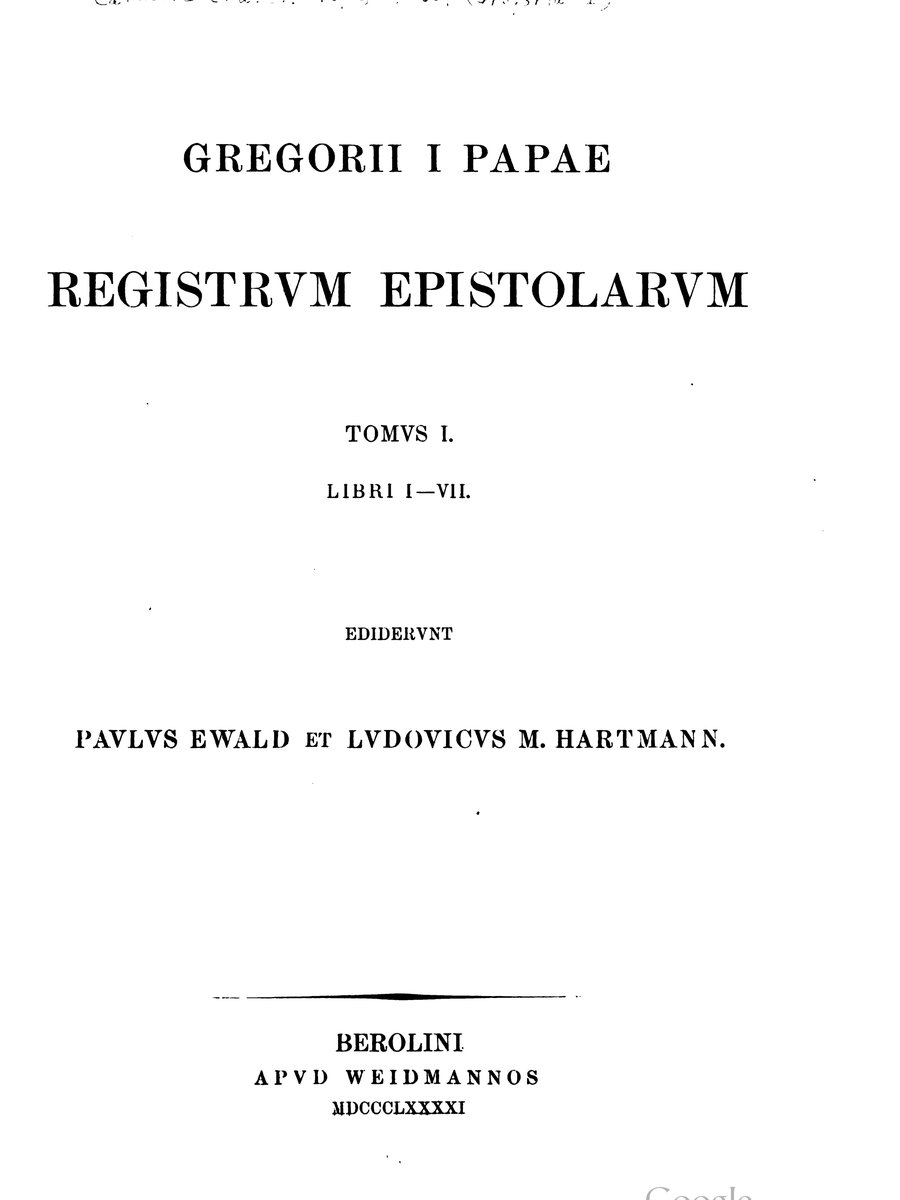
Gregory to Virgilius, Bishop of Arles
Gregorius Vergilio episcopo Arelatensi
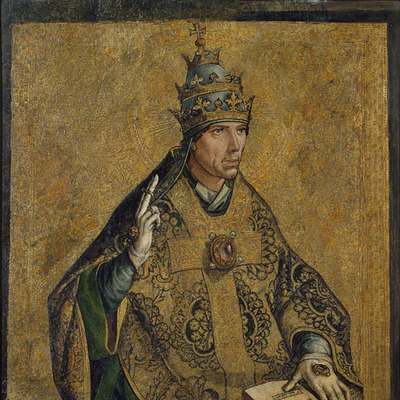 Gregory I
Gregorius Vergilio episcopo Arelatensi in Gallias missa per Iohannem presbyterum et Sabinianum diaconum.
O quam bona est caritas, quae absentia per imaginem praesentia sibimetipsis exhibet per amorem, divisa unit, confusa ordinat, inaequalia sociat, imperfecta consummat! Quam recte praedicator egregius vinculum perfectionis vocat, quia virtutes quidem ceterae perfectionem generant, sed tamen eas caritas etiam ligat, ut ab amantis mente dissolvi iam nequeant. Hac itaque virtute, frater carissime, plenum te esse repperio, sicut mihi de te et hi qui ex Gallicanis partibus veniunt et epistolae tuae ad me directae verba testantur. Quod vero in eis iuxta antiquum morem usum pallii ac vices sedis apostolicae postulasti, absit, ne aut transitoriae potestatis culmen aut exterioris cultus ornamentum in vicibus nostris ac pallio quaesisse te suspicere. Sed quia cunctis liquet,
unde in Galliarum regionibus fides sancta prodierit, cum priscam consuetudinem sedis apostolicae vestra fraternitas repetit, quid aliud quam bona suboles ad sinum matris recurrit? Libenti ergo animo postulata concedimus, ne aut vobis quicquam de debito honore subtrahere aut praecellentissimi filii nostri Childeberti regis petitionem contempsisse videamur. Sed iam nunc studio maiori res indiget, ut, cum honor crescit, etiam sollicitudo proficiat et erga ceterorum custodiam vigilantia excrescat, vitae quoque merita subiectis in exemplum veniant et numquam sua per suscepti honoris gratiam, sed lucra caelestis patriae vestra fraternitas exquirat. Nostis enim, quid beatus apostolus gemens dicat: 'Omnes enim quae sua sunt quaerunt, non quae Christi Iesu'.
Quibusdam namque narrantibus agnovi, quod in Galliarum vel Germaniae partibus nullus ad sacrum ordinem sine commodi datione perveniat. Quod si ita est, flens dico, gemens denuntio, quia, cum sacerdotalis ordo intus cecidit, foris quoque diu stare non poterit. Scimus quippe ex evangelio, quid redemptor noster per semet-ipsum fecerit, quia ingressus templum cathedras vendentium columbas evertit. Columbas enim vendere est de spiritu sancto, quem Deus omnipotens consubstantialem sibi per impositionem manuum hominibus tribuit, commodum temporale percipere. Ex quo, ut praedixi, malo iam innuitur, quid sequatur, quia in templo Dei columbas vendere praesumpserunt, eorum Deo iudice cathedrae ceciderunt. Nam ipse quoque qui ad sacrum honorem perducitur, iam in ipsa provectus sui radice vitiatus, paratior est aliis vendere quod emit. Et ubi est quod scriptum est: 'Gratis accepistis, gratis date'? Et cum prima contra sanctam ecclesiam simoniaca heresis sit exorta, cur non perpenditur, cur non videtur, quia eum quem quis cum pretio ordinat provehendo agit, ut hereticus fiat?
Alia quoque nobis est res valde detestabilis nuntiata, quod quidam ex laico habitu per appetitum gloriae temporalis defunctis episcopis tonsurantur et fiunt subito
in rebus iam notum est, qualis ad sacerdotium venit, qui repente de laico habitu ad sacrum transit ducatum; et qui miles numquam extitit, dux religiosorum fieri non pertimescit. Quam iste suam praedicationem habiturus est, qui fortasse numquam audivit alienam? Aut quando aliena mala corrigat, qui nec deflevit sua? Et cum ad sacros ordines Paulus apostolus neophytum venire prohibeat, sciendum nobis est, quia, sicut tunc neophytus vocabatur, qui adhuc nova erat plantatus in fide, ita nunc inter neophytos deputamus, qui adhuc novus est in sancta conversatione.
Scimus autem, quod aedificati parietes non prius tignorum pondus accipiunt, nisi a novitatis suae humore siccentur, ne, si ante pondera quam solidentur accipiant, cunctam simul fabricam ad terram deponant. Et cum ad aedificium arbusta succidimus, ut prius viriditatis humor exsiccari debeat, expectamus, ne, si eis adhuc recentibus fabricae pondus imponitur, ex ipsa novitate curventur et confracta citius corruant, quae inmature in altum levata videbantur. Cur ergo hoc non subtiliter in hominibus custoditur, quod in lignis quoque ac lapidibus tanta consideratione perpenditur?
Qua de re necesse est, ut vestra fraternitas praecellentissimum filium nostrum Childebertum regem ammonere studeat, ut huius peccati maculam a regno suo funditus repellat, quatenus omnipotens Deus tanto illi apud se maiora retribuat, quanto eum conspicit et amare quod ipse diligit et vitare quod odit.
Itaque fraternitati tuae vices nostras in ecclesiis, quae sub regno sunt praecellentissimi filii nostri Childebertis iuxta antiquum morem Deo auctore committimus singulis metropolitis secundum priscam consuetudinem proprio honore servato. Pallium quoque transmisimus, quo fraternitas tua intra ecclesiam ad sola missarum sollemnia utatur. Sicubi autem longius episcoporum quisquam pergere forte voluerit, sine tuae sanctitatis auctoritate ei ad loca alia transire non liceat.
Si qua vero inquisitio de fide vel fortasse aliarum rerum inter episcopos causa emerserit, quae discerni difficilius possit, collectis duodecim episcopis ventiletur atque decidatur. Sin autem decidi nequiverit, discussa veritate ad nostrum iudicium referatur.
Omnipotens autem Deus sua vos protectione custodiat honoremque perceptum vos in moribus servare concedat.
Gregory to Virgilius, Bishop of Arles, sent to Gaul through the priest John and the deacon Sabinianus.
How good is charity, which through love presents absent things to itself as present through an image, unites what is divided, orders what is confused, joins together what is unequal, and brings to completion what is imperfect! How rightly does that eminent preacher [Paul] call it the bond of perfection, for the other virtues do indeed beget perfection, yet charity also binds them fast, so that they can no longer be dissolved from the mind of one who loves. By this virtue, then, dearest brother, I find you to be filled, as both those who come to me from the regions of Gaul and the words of your letters directed to me bear witness. Now as to your request in those same letters, in keeping with ancient custom, for the use of the pallium and the delegation of the Apostolic See [vicariate], God forbid that I should suspect you of having sought in our vicariate and pallium either the summit of transitory power or the adornment of external display. But since it is clear to all
from what source the holy faith arose in the regions of Gaul, when your fraternity seeks again the ancient custom of the Apostolic See, what else does it do but return, as a good offspring, to the bosom of its mother? We therefore grant your request with a willing spirit, lest we seem either to withhold from you any part of the honor due to you or to have shown contempt for the petition of our most excellent son King Childebert. But now the matter requires greater diligence, so that as honor increases, so too solicitude may grow, and vigilance over the care of others may increase; that the merits of your life may come before your subjects as an example, and that your fraternity may seek never its own gain through the favor of the honor received, but the rewards of the heavenly homeland. For you know what the blessed apostle says with a groan: “For all seek the things that are their own, not the things that are Jesus Christ’s” [Philippians 2:21].
For I have learned from certain persons reporting to me that in the regions of Gaul and Germany no one attains holy orders without the giving of a payment. If this is so, I say it weeping, I declare it with groaning: for when the priestly order has fallen within, it will not long be able to stand firm without either. We know indeed from the Gospel what our Redeemer did in his own person, for he entered the Temple and overturned the seats of those who sold doves [Matthew 21:12]. To sell doves is to receive temporal payment for the Holy Spirit, whom almighty God bestows on men through the laying on of hands, the Spirit being consubstantial with him. From this evil, as I said before, what follows is already made plain: because they presumed to sell doves in the Temple of God, by God’s judgment their seats have fallen. For even the one who is promoted to sacred dignity is already corrupted at the very root of his advancement, and is the more ready to sell to others what he himself bought. And where is what is written: “Freely you have received, freely give” [Matthew 10:8]? And since the simoniacal heresy was the first to arise against the holy Church, why is it not weighed, why is it not seen, that one who ordains and promotes another for payment acts so as to make him a heretic?
Another matter most detestable has also been reported to us: that certain persons from a lay state, through ambition for temporal glory, when bishops die, receive the tonsure and suddenly become
It is already clear from what has been said what manner of man comes to the priesthood who passes suddenly from a secular life into sacred leadership; and he who was never a soldier does not hesitate to become the commander of the religious. What sort of preaching will such a man offer, who has perhaps never listened to another’s? Or when will he correct the faults of others, who has not even wept over his own? And since the Apostle Paul forbids a neophyte from coming to holy orders [1 Timothy 3:6], we must understand that, just as in those days one was called a neophyte who had only recently been planted in the faith, so now we count among the neophytes anyone who is still new to the holy way of life.
We know, moreover, that freshly built walls do not first receive the weight of the roof-beams until they have dried out from the moisture of their newness, lest, if they take on burdens before they have solidified, they bring the entire structure down to the ground at once. And when we cut timber for building, we wait for the moisture of its greenness to dry out first, lest, if the weight of the structure is laid upon it while it is still fresh, it bend under that very newness and, having cracked, quickly collapse — timber that had appeared to be raised up prematurely to a great height. Why, then, is this principle not carefully observed in human beings, which is weighed with such deliberation even in the case of wood and stone?
For this reason it is necessary that your fraternity take pains to admonish our most excellent son King Childebert to drive the stain of this sin utterly from his kingdom, so that almighty God may repay him with all the greater rewards in his own sight, in proportion as he sees him both loving what God himself loves and shunning what he hates.
Accordingly, in the churches that lie within the kingdom of our most excellent son Childebert, we entrust to your fraternity our own authority in accordance with ancient custom, God being the author, with the proper honor of the individual metropolitans preserved according to the ancient usage. We have also sent the pallium, which your fraternity is to wear within the church only during the solemn celebration of Masses. If any bishop whatsoever should chance to wish to travel to a more distant place, he shall not be permitted to pass to other localities without the authorization of your holiness.
If any inquiry concerning the faith, or perhaps some other matter, should arise among the bishops that proves difficult to resolve, let it be aired and decided by a gathering of twelve bishops. But if it cannot be decided [by them], let the truth be examined and the matter referred to our judgment.
May almighty God guard you under his protection and grant that you preserve in your conduct the honor you have received.