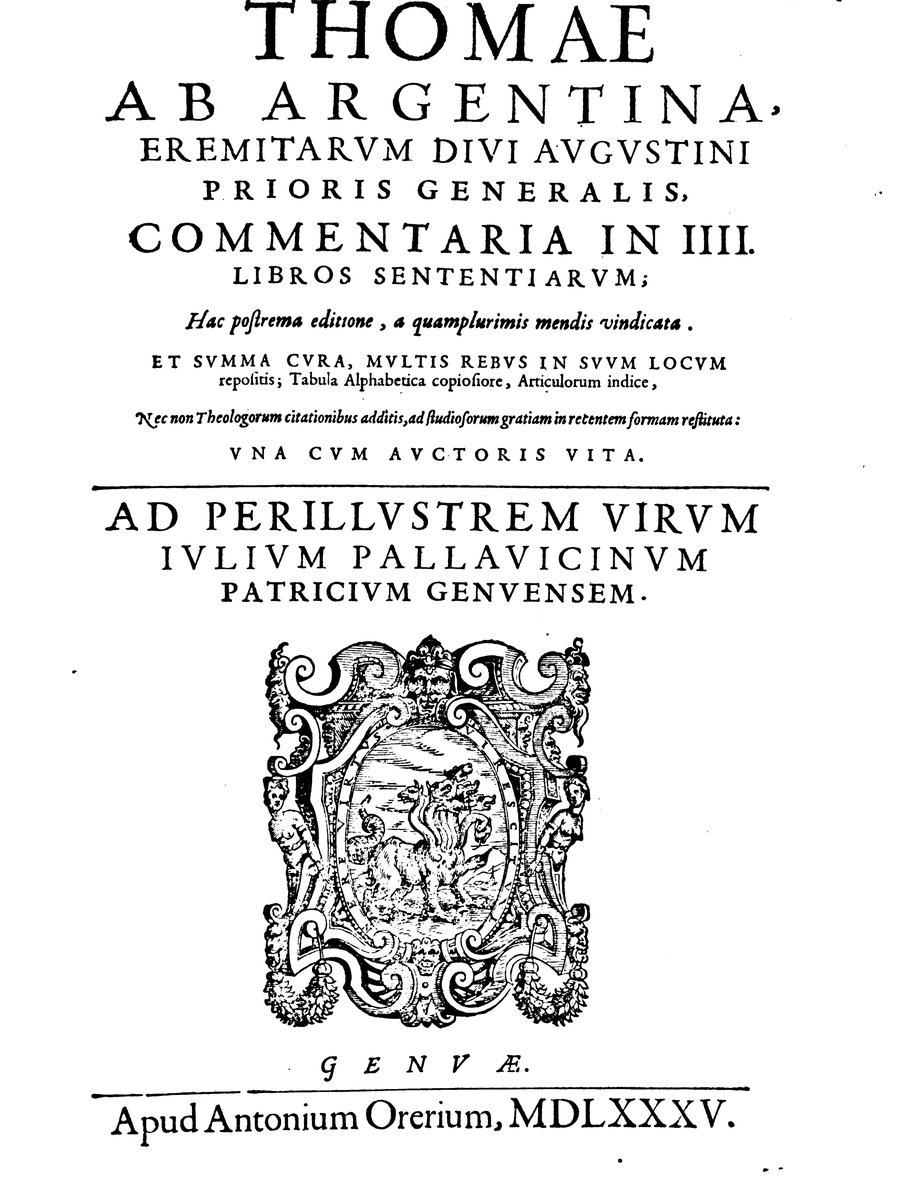
Distinction 25: On the Conferral and Reception of Orders
Distinctio Vigesima Quinta: De Ordinum Collatione et Receptione
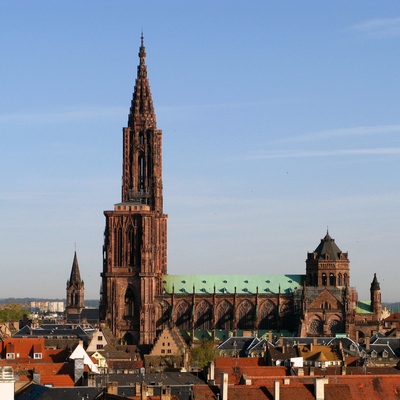 Thomas of Strasbourg
Distinctio XXV.
Resoluta huius distinctionis diuisio, in qua de ordinum collatione & receptione determinatur.
Solet etiam quæri. Postquàm Magister determinauit de ordinum differentia, & distinctione; nunc in ista 25. dist. tractat de ordinum collatione, & receptione. Et diuiditur in duas partes: nam primo tractat de conferentis potestate. Secundo de recipientis habilitate, ibi, Sacri inquit. Prima in duas: quia primo, ostendit quomodo ad ordinum collationem se habeant hæretici. Secundo, quomodo ad idem se habeant illi, qui emptione, vel venditione efficiuntur Simoniaci, ibi, De Simoniacis vero. Prima in tres: quia primo mouet hanc quæstionem, vtrum hæretici possint tradere ordinis sacramentum. Secundo ad vtramque potestatem quæstionis ex multis auctoribus ducit argumentum. Tertio respondet ad quæstionem iuxta variarum opinionum varium documentum. Secunda ibi, Videtur enim quidam. Tertia, ibi, Hæc aute ita. Secunda istarum diuiditur in duas partes: quia primo, arguit ad partem negatiuam. Secundo ad partem affirmatiuam, ibi, E contra autem alii. Tertia pars, in qua respondet ad quæstionem, diuiditur in 4. partes, secundum quod Magister adducit 4. opiniones. Secunda ibi, Alii vero. Tertia ibi, Quidam vero. Quarta, ibi, Nonnulli vero. Sequitur illa pars, De Simoniacis vero. Et diuiditur in duas partes: nam primo peccati Simoniæ innuit grauitatem. Secundo, iuxta triplicem Simoniæ speciem, ostendit inflictam a Iure multiplicem pœnalitatem, ibi, Simoniace. Prima in tres: nam primo ostendit Simoniacæ prauitatis deformitatem. Secundo innuit ratione scientiæ, & ignorantiæ in Simonia esse magnam varietatem. Et tertio cuiusdam instantiæ tollit difficultatem. Secunda ibi, Differunt tamen. Tertia ibi, Si vero. Circa istam distinctionem quæro.
An ordinator pecuniam exigens ab ordinatis fit Simoniacus.
D.Th.in.1.scrip.4.sen.di.25.q.1.a.1.2.3.in 2 scrip.4.sen.dist.25.q.2.art.1.idem prima secundæ q.100.a.6 Item Alex.de Ales.par.2.q.169 per totam. & q.120.M.4.art.2.casu 2.3.par.3.q.36.M.5.a.4.D.Bon.di.25.a.1.q.1.2.3.4 1.per totum Scot.dist.25.q.2.Bac.dist.23.q.4.5.6.7.Dur.di.25.q.2.3.4.Biel.di.25.q.1.2.
VTRVM ordinator, exigens pecuniam ab ordinatis, fit Simoniacus. Videtur, quod non, quia seminanti spiritualia de Iure debentur temporalia: sed Episcopus, tradens ordines, seminat spiritualia: ergo &c. Maior patet per Apostolum 1. Cor. 9. Minor etiam patet; quia sacramentum ordinis est res spiritualis.
Contra, quicunque ex pacto dat rem spiritualem pro re temporali, ille est Simoniacus: talis ordinator ex pacto dat rem spiritualem pro re temporali. Maior patet ex diffinitione Simoniæ, quæ infra ponetur. Patet etiam minor: quia manifesta pecuniæ exactio videtur æquipollere pacto. Hic primo videndum est de ordinatoris potestate. Secundo de aliquorum ordinantium inhabilitate. Tertio de ordinandorum qualitate. Et quarto gratia quæsiti videnda sunt aliqua de Simoniaca prauitate,
Quamuis de iure communi solus Episcopus sacramentum ordinis conferre valeat, nullus tamen simplex presbyter Episcopum consecrare. Vnde licet Episcopus hæreticus, vel subiectus pænæ canonicæ, aut ecclesiasticæ censuræ inhabilis reddatur ad conferendum licite sacramentum ordinis, absolute tamen conata forma, & intentione catholicæ ecclesiæ.
De ordinatoris potestate.
QUANTUM ad primum pono duas conclusiones.
Prima est, quod solus Episcopus de iure communi potest ordinare, seu ordinis sacramentum conferre. Quia non requirit minorem potestatem duces disponere, & ordinare, quam milites ascribere: Sed in collatione sacramenti confirmationis ascribuntur milites ecclesiæ militantis, & in collatione sacramenti ordinis disponuntur duces ipsorum fidelium: Cum igitur solus Episcopus, de iure communi possit conferre sacramentum confirmationis, vt patet ex dictis in dist. 7. ergo sola potestas Episcopalis de iure communi sufficit ad conferendum sacramentum ordinis.
Præterea, consecratio vasorum ad diuinum cultum spectantium non requirit maiorem potestatem, quam consecratio ministrorum talibus consecratis vasis vtentium: sed vasa, puta calices de iure communi non possunt consecrari, nisi ab Episcopo: ergo nec clerici, & sacerdotes huiusmodi vasis vtentes, possunt ordinari, nisi ab Episcopo. Et ista videtur esse intentio Isi. in li. ethi. vbi ait, Episcopus summus sacerdos, & Pontifex maximus nominatur: ipse enim efficit sacerdotes, & leuitas, & omnes ecclesiasticos disponit.
Forte dicetur, quod quando aliqua vocabula sunt synonyma, tunc significatum vnius non est maioris potestatis, quam significatum alterius: sed hoc nomen Episcopus, & hoc nomen præsbyter, sunt vocabula synonyma. Maior patet: quia synonyma sunt, quorum nomina sunt plura, res autem una. Patet etiam minor in multis locis epistolarum Apostoli, vbi ipse Apostolus pro eodem videtur accipere nomen Episcopi, & nomen præsbyteri. Vnde in principio epistolæ ad Philip. ait, Paulus, & Timotheus serui Iesu Christi, omnibus sanctis in Christo Iesu, qui sunt Philippis cum Episcopis, & diaconibus, gratia vobis, & pax &c. Vbi expresse patet, quod per Episcopos intelligit præsbyteros: quia vnius ciuitatis non sunt plures Episcopi, nisi per Episcopos intelligamus præsbyteros. Sed Philippis, ad quam ibi scribit Apostolus, fuit vna ciuitas. Et idem patet Act. 20. vbi Apostolus alloquens præsbyteros ciuitatis Ephesinæ, ait, Attendite vobis, & gregi, in quo vos spiritus sanctus posuit Episcopos regere ecclesiam dei.
Etiam econuerso, nomine præsbyteri Apostolus exprimit Episcopum 1. ad Thi. 4, dicens, Noli negligere gratiam, quæ data est tibi per impositionem manuum præsbyteri, idest, Episcopi, per quem Timotheus fuit ordinatus.
Propter has, & consimiles auctoritates, quædam opinio ponit, quod ista duo nomina, scilicet præsbyter, & Episcopus, olim fuerunt synonyma. Sed istud non valet: quia ab exordio sanctæ Matris ecclesiæ semper fuerunt aliqui gradus inter præsbyteros, quia Christus instituit Petrum principem ceterorum, & ideo appellauit eum Cephas, quod interpretatur caput. Etiam 12. Apostolos in altiori gradu videtur constituisse, quam 72. discipulos, & ideo Apostoli tenuerunt statum Episcoporum, sed
zer in decre. dist. 21. c. in nouo testamento.
Neganda est igitur minor praedictae instantiae. Ad probationem dicendum, quod ista vocabula Episcopus, & presbyter, dupliciter possunt considerari. Vno modo, quantum ad eorum etymologiam: Alio modo, quantum ad eorum impositionem, & significationem propriam. Primo modo potest vnum istorum vocabulorum quandoque accipi pro altero: quia Episcopus dicitur quasi, superintendens, vt patet hic in littera: sed presbyter, dicitur quasi praebens iter. Cum ergo ille idem, qui est dux spiritualis, praebens iter populo dei, debeat intendere super ipso populo, & econuerso, cuius est intendere super populo debeat verbo, & exemplo iter praebere populo: ideo auctoritates scripturarum quandoque vno istorum vocabulorum vtuntur pro altero, & econuerso. Si secundo modo, tunc hoc nomen, prasbyter, est vniuersalius, & in plus se habet, quam hoc nomen, Episcopus: quia hoc nomen, Episcopus, non est impositum ad significandum quemlibet praesbyterum: sed solum illum, qui taliter est super intendens, quod iurisdictionem habet super omnes alios, tam clericos, quam laicos infra suam dioecesim commorantes. Etiam non solum in huiusmodi potestate iurisdictionis, verumetiam in potestate confirmationis, & potestate consecrationis Episcopus excedit simplicem praesbyterum: quia ipse solus potest de iure communi sacramentum confirmationis dare, ac clericos, & prasbyteros ordinare, seu consecrare.
Sed contra istud, & per consequens contra principalem conclusionem ex dictis aliquorum doctorum potest argui sic. Cuiuscunque potestas se extendit ad principale, & ad illud, quod est maius, illius potestas poterit se extendere ad accessorium, & ad illud, quod est minus: sed potestas cuiuslibet praesbyteri sufficienter se extendit ad consecrationem sacramenti altaris, quod est maius sacramento ordinis, & respectu eius sacramentum ordinis est accessorium: ergo potestas cuiuslibet praesbyteri sufficienter se extendit ad consecrandum, & conferendum sacramentum ordinis.
- Praeterea, non est minoris vigoris potestas spiritualis, quam corporalis: Sed tantus est vigor potestatis rerum corporalium, quod vnumquodque perfectum in sua specie potest sibi simile generare, vt patet. 2. de anima: ergo habens perfectam potestatem praesbyteri poterit sibi similem alium praesbyterum ordinare.
- Praeterea, Episcopus potest consecrare Episcopum: ergo prasbyter potest consecrare praesbyterum. vel minus diaconum, vel subdiaconum, aut alios clericos inferiores. Antecedens patet: probatur consequentia quantum ad primam partem consequentis, quia aequaliter se habet prasbyter ad praesbyterum, sicut Episcopus ad Episcopum. Et quantum ad secundam partem: quia plus excedit potestas praesbyteri potestatem diaconi, quam potestas vnius Episcopi potestatem alterius Episcopi, & per consequens actus hierarchicae dignitatis, puta ordinare, non minus conuenit presbytero respectu diaconi, quam Episcopo, respectu Episcopi.
- Praeterea, praesbyteri Cardinales possunt conferre ordines minores: ergo conferre sacramentum ordinis non spectat ad solos Episcopos. Antecedens communiter conceditur. Etiam consequentia patet: quia praesbyteri Cardinales non sunt Episcopi, sicut nec diaconi Cardinales sunt praesbyteri.
Ad primum potest dici, quod maior non est vera, maxime quando maius, & minus, non sunt eiusdem rationis, ita, quod maius non claudit in se minus; quod patet in naturalibus: quia licet maius sit ratiocinari, quam volare: tamen non sequitur, homo potest ratiocinari, ergo potest volare, & hoc pro tanto: quia ratiocinari, & volare, non sunt eiusdem rationis: nec ratiocinari claudit in se volare. Patet etiam in artificialibus: quia licet ars frœnefactiua fit minor arte militari, & accessorie se ha-
beat respectu eius, inquantum omne illud, quod appellatur accessorium, respectu alterius, quod aliquo modo ordinatur ad ipsum: & tamen non sequitur habens artem militarem scit militare, ergo scit frœnum facere. Cum igitur potestas consecrandi corpus Christi, & potestas ordinandi, non sint eiusdem rationis: ideo patet, quod maior in proposito est falsa. Etiam minor non est vera: quia ratione implicationis, tunc potestas conferendi ordines est maior potestate consecrandi corpus Christi: nam potens ordinare potest consecrare; eodem enim die, quo ordinat, etiam consecrat corpus Christi, sed non econuerso.
Ad secundum dicendum, quod licet potestas spiritualis non fit minoris vigoris, quam corporalis, absolute loquendo, immo est maioris vigoris, quia potest in aliquem effectum, in quem non potest potestas corporalis: tamen, quantum ad facere sibi simile, est minoris vigoris: quia sicut praepositus Imperialis curiae potest filium sibi similem generare: tamen non potest sibi similem praepositum constituere, quia talis institutio, vel pertinet immediate ad Imperatorem, vel ad aliquem superiorem officialem: sic quia spiritualis potestas, de qua loquimur, constituit hominem in officio, & gradu determinato, ideo non semper in talibus simile habet efficere suum simile. Ad hoc enim non sufficit potestas sufficientiae, qua, scilicet potestate potest esse in tali officio: verumetiam requiritur potestas redundantiae, qua potestate possit alterum sibi simile instituere. Cum ergo huiusmodi potestas redundantiae non fit in quolibet sacerdote: ideo non quilibet sacerdos potest ordines conferre. Ad formam etiam argumenti dicendum, quod maior non est vera, inquantum per minorem propositionem applicatur ad propositum: quia vigor spiritualis potestatis non constituit sibi simile, nisi insit cum quadam redundantia, qualiter non inuenitur potestas spiritualis, de qua ad praesens loquimur, in quolibet suo subiecto, sed solum in maioribus praelatis. Vnde si quilibet sacerdos posset ordinare, seu ordines conferre, tunc ordo non esset ordo, quin potius fieret horror, & confusio: Propter quod dixit Apostolus ad Heb. 7. Sine vlla contradictione, quod minus est, benedicitur a maiori.
Ad 3 nego consequentiam. Ad probationem primae partis dicendum, quod licet aequaliter se habeat presbyter ad presbyterum, sicut Episcopus ad Episcopum in essendo, non tamen in consecrando, vt patet ex iam dictis.
Ad secundam probationem dicendum, quod in gradibus officiorum, & ordinum, non quodlibet excedens potestatem alterum instituere in tali gradu, quem excedit. Dato enim quod Campiductor, seu dux Imperialis exercitus excedat dignitate Portarium Imperialis cubiculi, tamen non interest sua instituere talem Portarium, & hoc pro tanto, quia licet ipse Dux habeat potestatem sufficientem pro executione sui proprii officii, tamen non habet potestatem redundantem, qua sibi competat Portarium instituere Regalis, vel Imperialis cubiculi: sic in proposito &c.
Ad 4. dicendum, quod dato quod praesbyteri Cardinales possint conferre quandoque ordines minores, hoc tamen non conuenit eis de iure communi, sicut Episcopis, sed potius de gratia speciali; & hoc non est contra praemissam conclusionem.
est, quod simplex præsbyter non potest consecrare Episcopum: quia nemo potest dare quod dignoscitur non habere, vt ait Aug. in li. de libero arbitrio: Sed simplex presbyter non habet Episcopalem dignitatem, ergo per consecrationem non potest eam dare.
- Praeterea, ordinans Episcopum non potest esse minoris auctoritatis, quam ordinans diaconum, vel subdiaconum: sed nec de iure communi, nec de gratia speciali potest fieri, quod aliquis conferat ordinem diaconatus, vel subdiaconatus, nisi ipse sit Episcopus, vt communiter dicunt doctores, ergo non existens Episcopus non potest consecrare Episcopum.
- Praeterea,
Præterea, ista conclusio expresse habetur 73. dist. Episcopi. Satis etiam habetur ex dictis Apostoli Heb. 7. cum ait, Sine vlla contradictione, quod minus est, benedicitur a maiore: Sed simplex præsbyter non est maior Episcopo: ergo non potest eum benedicere, nec
Instantia
per consequens consecrare, vel ordinare: quia huiusmodi consecratio est quædam spiritualis benedictio.
Forte dicetur, quod secundum statutum Iuris, Cardinalis Hostiensis habet consecrare Papam: ergo minor potest consecrare maiorem, & per consequens a simili, præsbyter potest Episcopum consecrare. Consequentia patet: quia Cardinalis est minor, quam Papa.
Respondeo, quod eo ipso, quod Hostiensi hoc com-
Solutio.
petit ex ordinatione facta per Papam, & omnes Cardinales: ideo illud, quod facit, quasi in persona omnium facit, & per consequens, vt sic, non benedicitur ibi maior a minori: quia, vt agit in persona omnium prædictorum non est minor eo, quem benedicit, dato quod sit minor eo, prout secundum se consideratur.
Nota. QUANTUM ad secundum articuli est advertendum, quod aliquis potest inhabilis respectu alicuius actus excercendi, duobus modis. Vno modo, quia non potest illum actum licite exercere, & hoc modo solum dicimur posse, quod iuste possumus. Alio modo, absolute, & simpliciter, puta, quando nihil potest efficere, dato, quod totum illud faciat, quod in se est. Et secundum hoc pono duas conclusiones.
Concl. 1.
Prima est, quod Episcopus hæreticus, vel alias subiectus pœnæ canonicæ, vel ecclesiasticæ censuræ, est inhabilis ad conferendum sacramentum ordinis primo modo iam dicto.
Quia illud, quod non potest conferri sine mortali peccato, tam conferentis, quam eius, cui confertur, hoc non confertur iuste, vel licite, & per consequens, conferens respectu illius collationis dicitur inhabilis primo modo iam dicto: Sed sacramentum ordinis non potest conferri ab Episcopo hæretico, vel alias canonicæ pœne subiecto; puta ab Episcopo suspenso, excommunicato, interdito, irregulari, deposito, vel degradato, sine peccato mortali conferentis, ac etiam recipientis: ideo &c. Maior patet: quia quod iuste, & licite fit, hoc sine peccato fit: ergo a destructione consequentis, quod non fit sine peccato, hoc nec licite fit, nec iuste. Minor etiam patet: quia temerarie faciens contra prohibitionem sanctæ Matris ecclesiæ, peccat mortaliter: sed prædictis casibus positis, tunc tam conferens, quam scienter ab eo recipiens peccat contra prohibitionem ecclesiæ: quia, per statuta sanctæ Matris ecclesiæ, in Iure canonico quilibet prædictorum prohibetur ab executione sui officii, & per consequens, a sacramentorum collatione, excepto solo sacramento baptismi in articulo necessitatis; & per consequens quilibet fidelis intelligitur esse prohibitus, ne ab aliquo prædictorum aliquod sacramentum recipiat, nisi solum baptismum in articulo necessitatis, ergo &c.
2 Præterea, nullus hæreticus, vel prædictis pœnis subiectus, potest licite sacramentum ordinis suscipere: ergo nullus hæreticus, vel prædictis pœnis subiectus, potest sacramentum ordinis conferre. Antecedens patet: quia si alicui prædictorum liceret suscipere sacramentum ordinis, hoc maxime videretur de suspenso, qui nondum est excommunicatus, vel irregularis. Sed hoc non: quia durante suspensione ab officio iam suscepto, non licet ei transire ad altiorem gradum: quia cui prohibita est executio gradus inferioris, eidem intelligitur esse prohibita susceptio gradus superioris. Sed in licita, & ordinata su-
sceptione ordinum semper itur de inferiori ad superiorem gradum. Consequentia etiam patet: quia non minus libera, & non impedita potestas requiritur in dante, & conferente sacramentum, quam in recipiente, cum agens esse debeat præstantius patiente, vt patet iii. de anima. Et ista conclusio probari potest, expresse per auctoritates Innocentii, Gregorii, Cypriani, Hieronymi, & Leonis, quæ ponitur hic in littera in primo ca. istius 25. distinctionis ad minus pro illa parte, quantum ista conclusio accipit de hæreticis.
Secunda conclusio est, quod, secundo modo loquendo de inhabilitate, tunc nullus prædictorum est inha-
Secunda
bilis ad conferendum sacramentum ordinis, supposito,
conclusio.
quod servet in ordinando formam ecclesiæ catholicæ, & intendat conferre sacramentum ordinis, sicut intenditur in ecclesia: quia sicut se habet sacerdos ad potestatem consecrandi corpus Christi, sic Episcopus ad potestatem ordines conferendi: sed quilibet sacerdos, quamuiscunque sit hæreticus, vel prædictis pœnis subiectus, vere retinet potestatem conficiendi corpus Christi, & vere conficit, si seruat formam ecclesiæ, & intendit proferendo formam verborum super debita materia, quod intendit ecclesia, vt patet ex his, quæ dixi superius distin. 13. artic. 2. ergo quilibet Episcopus, quamuiscunque sit hæreticus, vel canonicis pœnis subiectus, vere confert sacramentum ordinis, dummodo ordinando servet formam ecclesiæ, & intendat, quod intendit ecclesia.
Forte dicetur, si ordinando teneret formam ecclesiæ, & intenderet quod intendit ecclesia, tunc ipse non esset
Instantia
hæreticus.
Nego hanc consequentiam: quia quamuis in hoc ca-
Solutio:
su non esset hæreticus, tamen in multis aliis posset esse hæreticus, & ab ecclesia præcisus, & condemnatus.
Præterea, pro ista conclusione sunt evidentes auctoritates August. & Gre. quæ ponuntur in 2. ca. istius distin.
Forte dicetur, quod nullus prædictorum potest con-
Instantia
ferre sacramentum pœnitentiæ: ergo nullus prædictorum potest sacerdotem ordinare. Antecedens patet ex his, quæ dixi dist. 19. artic. 3. conclusione. 2. Consequentia probatur, quia dans ordinem sacerdotalem dat auctoritatem conferendi sacramentum pænitentiæ: sed nihil dat, quod non habet: ergo si ipse non potest absolvere, tunc potestatem absolvendi non poterit alteri tribuere, nec per consequens presbyterum ordinare.
2 Præterea, contra istam conclusionem videntur valde apparenter militare omnes auctoritates primi cap. istius dist.
3 Præterea, quando aliquæ potestates sic se habent, quod vna est inferior, & dependet ab alia, tanquam a superiori, tunc inferior non efficit aliquid, nisi maneat coniuncta cum potestate superiori: sed potestas Episcopi dependet a potestate Papæ, & sanctæ matris ecclesiæ: ergo episcopus præcisus ab ecclesia non potest conferre sacramentum ordinis.
4 Præterea, Episcopus præcisus ab ecclesia exclusus est a sacramentorum participatione: ergo exclusus esse videtur a sacramentorum collatione. Consequentia patet: quia multo minus est sacramentum participare, quam sacramentum conferre. Antecedens etiam patet, quia da oppositum, tunc non esset præcisus ab ecclesia.
Ad primum nego consequentiam.
Ad probationem dicendum, quod posito quod aliquis prædictorum ordinando sacerdotem, aliquo modo det
Solutio.
potestatem conferendi sacramentum pænitentiæ, tamen non dat eam liberam, sed ligatam, sicut etiam ipse habet huiusmodi potestatem ligatam. Si enim daret huiusmodi potestatem, seu auctoritatem non ligatam, tunc daret quod non haberet, quod est impossibile. Vnde quilibet ordinatus ab aliquo prædictorum est suspensus ab executione sibi collatæ potestatis, donec secum fuerit dispensatum,
tum, super eo, quod contra prohibitionem ecclesiae ab aliquo praedictorum praesumpsit recipere ordinis sacramentum.
Forte dicetur, quod sicut in quolibet praedictorum est ligata auctoritas, seu potestas absoluendi, sic est in eo ligata potestas ordinandi: Sed propter ligationem potestatis absoluendi, ipse non potest absoluere, & si absolvit, totum, quod facit, censetur irritum, & inane, quia ille, quem absolvit, non est absolutus: ergo, propter ligationem potestatis ordinandi, ipse non poterit in actum ordinationis. & dato, quod attentet ille, qui recipit ab eo ordinem, non erit ordinatus. Maior et: quia vtraque potestas ex hoc intelligitur esse ligata, quia eius executio est sibi ipso iure prohibita: Sed idem ius, quod prohibet quemlibet istorum, ne absolvat, etiam prohibet eum, ne ordinet: quia quilibet praedictorum est ipso iure suspensus ab executione sui officii: ergo &c. Minor est concessa per me, & communiter conceditur ab omnibus.
Respondeo, ad maiorem, quod licet in quolibet praedictorum Episcoporum, tam potestas absoluendi, quam potestas ordinandi sit ligata per iuris prohibitionem quantum ad executionem: tamen potestas absoluendi, seu conferendi sacramentum poenitentiae magis, vel pluribus modis ligatur per huiusmodi prohibitionem, quam potestas ordinandi, vel quodcunque aliud sacramentum conferendi. Nam in omnibus aliis sacramentis tanta est distantia inter veritatem sacramenti, & eius vtilitatem, quod possibile est aliquem recipere sacramenti veritatem, qui tamen non recipit sacramenti vtilitatem, puta gratia, & caritate: In solo autem sacramento poenitentiae veritas & vtilitas, non possunt ab inuice separari. Veritas enim istius sacramenti consistit in hoc, quod paenitens absoluitur a peccatis: sed peccatorum absolutio non potest esse sine gratia, & caritate. Et inde est quod nullus ficte accedens ad sacramentum recipit huiusmodi sacramentum vere, quauis cetera sacramenta fictus, puta homo, qui est in proposito mortaliter peccandi, vere possit recipere. Et ideo quandocunque ex sententia iuris, vel iudicis potestas absoluendi est in aliquo sacerdote ligata, tunc talis sacerdos nec de iure, nec de facto potest absoluere. Non de iure: quia supponitur, quod eius potestas iuste sit ligata. Nec de facto, quia quandocunque aliquod sacramentum confertur, vel recipitur de facto, & non de iure, tunc ita confertur, & recipitur sacramenti veritas; quod tamen non confertur, nec recipitur sacramenti vtilitas: Sed, vt iam patuit, veritas sacramenti poenitentiae nec conferri potest, nec recipi sine caritate, seu gratia, quae est res, & vtilitas cuiuslibet sacramenti: ergo &c. Etiam ille, qui pro sacramento poenitentiae accedit ad praedictum sacerdotem, sciens eum esse ligatum, ille vtique ficte accedit: quia contra prohibitionem ecclesiae facit: propter quod non potest recipere gratiam, quae est vtilitas sacramenti paenitentiae, nec per consequens recipiet sacramentum, seu sacramenti paenitentiae veritatem, propter indiuiduam connexionem vtilitatis cum veritate istius sacramenti. E contrario autem fit in collatione aliorum sacramentorum: quia dato, quod aliquis scienter recipiat sacramentum ordinis, vel confirmationis, & sic de aliis, ab eo, quem cognoscit de iure esse prohibitum a collatione sacramentorum, licet hoc faciendo mortaliter peccet, & ficte accedat, nec per consequens recipiat sacramenti vtilitatem, scilicet gratiam, & caritatem: quia tamen huiusmodi sacramentorum veritas est separabilis ab eorum vtilitate: ideo quamuis non de iure, tamen de facto ille vere confert, & iste vere recipit huiusmodi sacramentum. Et ista videtur esse intentio expressa B. August. lib 2 contra Parmenianum, vbi loquens de haereticis, & ab ecclesia praecisis ait. Nulla iam quaestio est, quin habeant, & dare possint, sed perniciose habent, pernicioseque dant: quia extra vinculum pacis sunt. Et quod ordinatus a tali Episcopo verum recipit
ordinis sacramentum, probat ibidem August. per hoc, quod taliter ordinati, quando redeunt ad ecclesiae unitatem, non reordinantur. Et eandem rationem tangit. B. Gre. dicens. Sicut qui baptizatus est semel, iterum baptizari non debet, ita qui consecratus est semel in eodem ordine nec non valet iterum consecrari. Et ex his etiam apparet, quod inter 4 opiniones, quas magister recitat c. 3. istius dist. tertia opi. tenenda est: quia consentanee loquitur ad iam dictam veritatem.
Ad 2. poterit dici quod huiusmodi auctoritates intelligendae sunt iuxta veritatem, quam posui in 1. conclusione: Non enim possunt licite, & iuste, ac cum salute animae dantis, vel recipientis conferre ordinis sacramentum; & ideo eorum benedictio dicitur maledictio, quia quod cum mortali peccato fit, hoc cum maledictione dei fit: & ordinatus dicitur non recipere: quia nihil ibi recipit, quod sibi cedat ad salutem animae. Etiam posset dici, quod illae auctoritates intelligendae sunt de talibus hereticis, qui in conferendo sacramenta, non vtuntur tali forma, qua vtitur sancta mater ecclesia, vel qui non intendunt illud conferre, quod intendit ecclesia.
Ad 3. dicendum, quod potestatem inferiorem dependere a superiori potest dupliciter intelligi, vno modo in fieri, & conseruari; alio modo in fieri, sed non in conseruari. primo modo maior est vera, sed non secundo modo; nunc autem ita est, quod licet in conferendo sacramentum poenitentiae, potestas sacerdotalis dependeat primo modo non solum a potestate dei, sed etiam a potestate ecclesiae: tamen in conferendo cetera sacramenta, licet dependeat a potestate ecclesiae secundo modo: non tamen primo modo.
Ad cuius intellectum est aduertendum, quod potestas collata alicui ecclesiasticae personae, quadrupliciter se potest habere: quia quandoque innititur soli ordini, sicut potestas conficiendi sacramentum Eucharistiae; quandoque innititur ordini cum annexa indelebili dignitate, sicut potestas ordinandi, vel confirmandi: quandoque innititur soli iurisdictioni, sicut potestas excommunicandi: quandoque innititur simul ordini, & iurisdictioni, sicut potestas conferendi sacramentum poenitentiae. Sicut enim patuit superius dist. 17. q. 2. artic. 3. non sufficit habere ordinem, & claues ecclesiae, ad hoc, quod aliquis in foro poenitentiae possit absoluere; sed etiam requiritur, quod habeat iurisdictionem vel ordinariam, vel delegatam super illos, quos absolvit. Cum igitur iurisdictio spiritualis cuiuslibet sacerdotis dependeat a summo pontifice, apud quem solum residet iurisdictionis plenitudo, tam in fieri, quam in conseruari, ipse enim quotidie potest dare, & auferre huiusmodi iurisdictionem, prout ad statum ecclesiae gubernandum ipse viderit expedire: ideo potestas excommunicandi, quae praecise innititur iurisdictioni, dependet a potestate ecclesiae, seu summi Pontificis non solum in fieri, verumetiam in conseruari, quia non minus dependet illud, quod innititur, quam dependeat illud, cui innititur. Et eadem ratione potestas absoluendi in foro paenitentiae, inquantum innititur iurisdictioni, dependet tam in fieri, quam in conseruari a potestate ecclesiae. Et hinc est, quod subtracta iurisdictione per sententiam iuris, vel iudicis a praelato, vel sacerdote, tunc non possunt excommunicare, nec poenitentias salutares iniungere; & si de facto attentant, irritum est, & inane quod faciunt; quia potestas, qua hec facere deberent, non est eis conseruata, sed potius irritata ab eo, a quo dependet huiusmodi potestatis conseruatio.
Forte dices, me superius dixisse, quod claues sacerdotales tolli non possunt, sed claues sunt ipsa potestas absoluendi.
Respondeo, sicut dixi distinct. 14. articul. 3. quod licet claues tolli non possint, quantum ad essentiam: tamen tolli possunt, quantum ad executionem. Et ratio illius dicti potest trahi ex his, quae hic dixi, quia claues
claues quantum ad essentiam innituntur ordini, et sacerdotali characteri, qui non possunt tolli: sed quantum ad executionem, concernunt iurisdictione ecclesiastica, cui innituntur, que per superiorem prelatum, et maxime per summum Pontificem tolli potest: Econtrario autem ordo sacerdotalis, et dignitas per consecrationem Episcopo communicata, quibus innititur potestas ordinandi, sunt indelebilia, nec dependent a militante ecclesia, quantum ad conservari, sed a solo deo, et per consequens per nullam prohibitionem ecclesie effectus illius potestatis potest simpliciter impediri, dato, quod impediatur quantum ad salutem, et vtilitatem tam conferentis, quam recipientis huiusmodi effectum, posito, quod vterque faciat contra prohibitionem sancte matris ecclesie. Et eadem ratione non potest simpliciter impediri effectus potestatis conferendi alia sacramenta, quando potestas innititur soli ordini, et non iurisdictioni.
Ad quartum dicendum, quod concesso toto argumento, nihil habetur contra conclusionem, quia sicut precisus ab ecclesia de iure exclusus est a sacramentorum participatione: si tamen vltra hoc se ingerit in communione fidelium, ipse vere recipit sacramentum, excepto solo sacramento pœnitentie, sic excluditur de iure a collatione sacramentorum, quamuis vere conferat sacramentum, si contra prohibitionem iuris de facto contulerit.
QVANTVM ad tertium articulum, quo quæritur de qualitate, seu conditione ordinandorum, est sciendum, quod de his, que requiruntur ex parte ipsius ordinandi, multipliciter possumus loqui, quia quædam requiruntur non de necessitate, sed solum de honestate, seu congruitate.
Aliqua vero requiruntur de necessitate, et hoc dupliciter, quia quædam requiruntur de necessitate sacramenti, puta, illa sine quibus ordinandus non recipit sacramentum ordinis, quamuis circa ipsum fiat extrinsecus, quod per ordinatorem fieri debet circa ordinandum. Aliqua vero requiruntur de necessitate precepti, quamuis non requirantur de necessitate sacramenti, puta talia, que vel affirmatiue, vel negatiue in iure precipiuntur obseruari ex parte ipsius ordinandi. Et secundum hoc pono tres conclusiones.
Prima est, quod si ordinandus attigerit annos discretionis, et habet vsum rationis in receptione minorum ordinum, est requisitum non de necessitate, sed de honestate sacramenti, quia illud, quod decet, et congruit obseruare circa quemlibet ordinandum, hoc in illo, qui recipit minores ordines, videtur esse requisitum, et si non de necessitate, saltem de honestate. Sed decens est, et congruum, vt quilibet recipiens ordinis sacramentum cognoscat, et discernat officium, in quo constituitur collatione huius sacramenti: Hoc autem fieri non potest, nisi ordinandus attigerit annos discretionis, et aliquo modo habeat vsum rationis, ergo etc.
Sed contra istud est quedam antiqua opinio, que ponit, quod vsus rationis sit de necessitate sacramenti in receptione cuiuslibet ordinis.
1 Quia vsus rationis requiritur de necessitate sacramenti in sacramento matrimonii: ergo et in sacramento ordinis. Antecedens patet, quia in matrimonio requiritur mutuus consensus, qui sine vsu rationis fieri non potest. Probatur consequentia, quia quanto sacramentum est dignius, tanto magis ad eius susceptionem requiritur vsus rationis. Sed sacramentum ordinis est dignius sacramento matrimonii, quia in collatione cuiuslibet ordinis constituitur ille, qui ordinatur in aliquo spirituali officio, quod non fit in matrimonio.
2 Preterea, quando vsus alicuius officii non potest alicui competere, tunc frustra sibi committitur huiusmodi officium: Sed vsus nullius ordinis potest competere ei, qui careret vsu rationis, ergo inaniter, et frustra confertur ordo ei, qui caret vsu rationis.
Preterea, non intendens recipere sacramentum ordinis, ille non recipit huiusmodi sacramentum; sed non habens vsum rationis, non intendit recipere sacramentum ordinis. Minor patet, quia intentio presupponit vsum rationis. Probatur maior, quia non minus requiritur intentio recipiendi sacramentum in eo, qui recipit ipsum, quam intentio dandi, seu conferendi in eo, qui confert ipsum. Sed ad hoc, quod ordinator conferat sacramentum ordinis, necesse est, quod intendat ipsum conferre: ergo etc.
Preterea, tempus, et etas determinantur quantum ad susceptionem ordinis in li.decre.dist.77, sed hoc non fieret, si vsus rationis non est necessarius ad susceptionem ordinis.
Sed ista opinio modernis temporibus non tenetur, quia satis communiter ordines minores conferuntur his, qui sunt minores annis, et non habent vsum rationis.
Preterea, extra de clerico ordinato per saltum, dicitur, quod talis clericus infra annos discretionis promotus fuerat ad minores ordines, et tamen postea sine iteratione illorum ordinum concessum est illi clerico in huiusmodi ordinibus ministrare; quod tamen Papa nullatenus fecisset, si non reputasset illum clericum ordines minores recepisse, antequam vsum rationis haberet, puta cum erat minor annis.
Ad primum igitur motiuum istius opinionis dicendum, quod consequentia non est vera. Ad probationem nego maiorem, quia sacramentum baptismi est magis dignum, et gratiosum, quam sacramentum matrimonii, et tamen in receptione baptismi non requiritur de necessitate sacramenti vsus rationis, alias paruuli non possent vere baptizari.
Ad secundum dicendum, quod licet maior sit vera, quando ille, cui confertur officium ita ineptus est ad habendum vsum illius officii, quod nec pro tunc sibi potest competere; nec separatus, quod vmquam in futurum valeat huiusmodi officium exercere: tamen falsa est, si verisimiliter speratur, quod quandoque in futurum ipse possit congrue huiusmodi officium vsitare. Sed nunc ita est, quod licet puer, nondum habens annos discretionis, non possit exercere officium minorum ordinum, tamen hoc poterit in futurum.
Ad 3. dicendum, quod illa non intentio, qua dicitur aliquis non intendere susceptionem ordinis, potest multis modis contingere. Vno modo propter actum positiuum elicitum, puta quia intendit non suscipere ordinem, et expresse refutat huiusmodi receptionem. Alio modo, propter inaduertentiam, puta, quia de hoc non cogitat actualiter, quando recipit ordinem. Tertio modo, quia pro tunc non habet vsum rationis, qua possit intendere huiusmodi receptionem. Modo licet maior sit vera primo modo, tamen aliis duobus modis non est vera.
Ad probationem dicendum, quod quamuis maior aliquo modo sit vera de adultis, tamen non est vera de paruulis: vnde satis communiter dicitur, quod in sacramentis, in quibus character imprimitur, intentio suscipientis non est de necessitate sacramenti, sicut apparet de sacramento baptismi, et confirmationis, que vt plurimum conferuntur paruulis, qui sunt minores annis.
Forte dicetur, si istud esset verum, tunc paruulus non habens intentionem suscipiendi ordinem sacerdotii, posset huiusmodi ordinem suscipere, si ab Episcopo ordinaretur: Sed consequens est inconueniens. Consequentia patet, quia non minus imprimitur character in collatione ordinis maioris, quam in collatione baptismi, vel confirmationis, aut cuiuscumque ordinis minoris.
Respondeo, quod licet illud consequens sit inconueniens, tamen non est impossibile, quia quamuis tempus discretionis...
discretionis, quo homo potest habere liberum usum rationis, sit de necessitate precepti, quantum ad receptionem cuiuslibet sacri ordinis: tamen non est de necessitate sacramenti. Vnde dato, quod aliquis minor annis, puta non habens 14 annos, ordinaretur sacerdos, quamuis præsentator, quam ordinator grauiter peccarent: tamen quando ille puer veniret ad annos discretionis non esset reordinandus, sed sola habita dispensatione supra illo forifacto circa ipsum commisso, ipse posset in ordine sacerdoti licite ministrare.
Ad quartum dicendum, quod illa determinatio temporis non est a iure inducta propter sacramenti necessitatem, quia ipsa non obseruata adhuc confertur sacramentum, quia secundum illam determinationem, sacerdos ordinandus deberet esse 30 annorum, quod tamen communiter non seruatur.
Conclusio secunda est, quod ordinandus sit sexus masculini. hoc est de necessitate sacramenti: quia illa persona, vel ille sexus non est capax sacramenti ordinis, cui ex apostolica ordinatione docere in ecclesia semper est inhibitum, & habere caput velatum in ecclesia, quando orat, est præceptum: Sexus femineus est huiusmodi: ergo de necessitate sacramenti esse videtur, vt ordinandus sit sexus masculini. Maior patet, quia ordinato competit docere in ecclesia, & hoc vel actu, puta, si est sacerdos, aut diaconus, quia etiam diacono competit predicare Euangelium, vel potentia, si est in ceteris ordinibus infra ordinem diaconatus.
Etiam nulli ordinato competit semper habere caput velatum in ecclesia, quando orat, vt de se patet. Minor etiam probari potest ex dictis Apostoli, quia mulier debet orare velato capite, vt dicit Apostolus. 1 ad Corin. 11. nec debet docere, quia ait Apostolus. 1. Tim. 2. mulierem docere in ecclesia non permitto.
Sed oppositum istius conclusionis tenuit secta quorundam, qui vocati sunt Cathafriges, qui pro suo errore palliando adducunt auctoritates vtriusque canonis, scilicet iuris, & scripturæ sacræ.
1 Iuris quidem, quia 27. q. 1. præcipitur, vt diaconissa non ordinetur, antequam sit annorum 40. ergo diaconatus ordo quandoque potest conferri ipsi mulieri. Et in eadem quæstione precipitur, ne aliquis rapiat, vel sollicitet diaconissam. Item dist. 32. instruitur præsbytera, qualiter debeat regere domum: ergo videtur, quod ordo præsbyteratus possit conferri, & de facto quandoque fuerit collatus mulieri.
2 Præterea, si ordo repugnaret sexui femineo, hoc maxime esset pro tanto quia mulieri non posset competere potestas iudicandi: sed hoc non obstat, quia ut patet iudicum 4 Delbora iudicauit populum Israel, & ei præfuit multis annis: ergo secundum sacram scripturam ordo non repugnat mulieri.
3 Præterea, istud confirmant ratione sic. Quantum ad animam non est distinctio inter uirum, & mulierem: Sed ordo non respicit hominem, quantum ad corpus: sed potius, quantum ad animam, cum sit quedam potestas spiritualis: ergo quantum ad aptitudinem recipiendi ordinem non videtur esse distinctio inter virum, & mulierem.
4 Præterea, quandocumque sunt aliqua plura passa eiusdem speciei, tunc qua ratione idem agens potest aliquem effectum producere in vno illorum passorum, eadem ratione confimilem effectum potest producere in altero: Sed uir, & mulier sunt eiusdem speciei: ergo qua ratione aliquis Episcopus potest viro conferre sacramentum ordinis, eadem ratione potest mulieri conferre idem sacramentum.
Sed ista opinio stare non potest, quia Christus Matri suæ, non obstante, quod esset nobilissima, & sanctissima creatura, sacramentum ordinis non contulit: ergo nullam mulierem huiusmodi sacramenti voluit esse capacem.
Antecedens est notum, quia ut patet ex superius dictis, Christus sacramentum ordinis contulit tantummodo
do uiris. consequentia etiam patet, quia Christus, tamquam bonus filius, Matrem suam honorauit pre cunctis creaturis, & per consequens si secundum diuinam ordinationem mulier esset capax istius sacramenti, Christus nequaquam hunc gradum honoris subtraxisset a veneranda, & dilectissima matre sua.
Ad primum motiuum illorum dicendum, quod antiquitus aliquæ moniales dicebantur diaconissæ, non pro tanto, quod ordinem diaconatus haberent, sed propter hoc, quod licentiatæ fuerunt ad legendam Homiliam in officio matutinali: præsbytera vero in regno Græcorum dicitur vxor præsbyteri; In ecclesia vero Romana præsbytera solebat dici abbatissa, vel quælibet alia honesta matrona, quæ aliis prebet iter moribus, & exemplis. Et sic non dicitur præsbytera ab ordine præsbyteratus, sed solum ab etymologia nominis.
Ad secundum dicendum, quod potestas iudicandi est duplex, Vna in temporalibus, Alia in spiritualibus. Prima non repugnat mulieri, quia multæ fuerunt mulieres multam, & magnam habentes temporalium potestatem, & adhuc sunt in diuersis partibus mundi. Talis etiam erat potestas ipsius Delboræ, de qua procedit argumentum. Sed potestas spiritualis iudicii nulli competit mulieri, nec per consequens ordo, cuius potestas est simpliciter spiritualis.
Ad tertium dicendum, quod licet inter virum, & mulierem non sit distinctio, quantum ad animam in his, quæ spectant ad æternæ vitæ meritum, quia ut sic, siue sit vir, siue mulier, quicumque homo deum magis diligit, & virtuosius in hoc mundo se gerit, ille in uita æterna maius premium habebit. Et iuxta hunc sensum ait Apostolus, In Christo Iesu non est seruus, neque liber non est masculus, neque femina: Est tamen distinctio inter uirum, & mulierem quantum ad animam in his, quæ spectant ad officium, maxime si tale est officium, cuius exercitium prosequitur anima mediante corpore, & mediantibus corporalibus operationibus exterius transeuntibus, quale est officium cuiuslibet ordinis. Et ideo quamuis ordo sit quædam spiritualis potestas, tamen ratione annexi officii non est communicabilis ex diuina ordinatione ipsi mulieri.
Ad quartum dicendum, quod maior non est vera, loquendo de agente instrumentali, & maxime respectu talis effectus, qui non attingitur a causa instrumentali, nisi secundum extrinsecam dispositionem sibi competentem ex ordinatione principalis agentis libere, & contingenter inducentis huiusmodi effectum. His enim conditionibus stantibus, tunc non obstante similitudine passorum instrumento potest competere actio respectu vnius, præter hoc, quod sibi competat respectu alterius, secundum quod ordinatio principalis agentis determinat instrumentum ad vnum illorum passorum, & non ad alterum. Sed quantum ad collationem characteris, seu potestatis, de qua pro nunc loquimur, Episcopus ordinans est instrumentum dei, disponens extrinsece ex diuina ordinatione sexum masculinum, & non femininum pro prædictæ potestatis receptione: ergo &c.
Conclusio 3. est, quod de necessitate præcepti, quamuis non de necessitate sacramenti est, quod ordinandus non patiatur aliquam pœnam canonicam iuste sibi inflictam, puta, quod non sit suspensus, excommunicatus, irregularis, interdictus, infamis, depositus, vel degradatus, quæ omnia possunt probari ex diuersis allegationibus iuris, quas ad presens causa breuitatis omitto.
Circa irregularitatem tamen est aduertendum, quod sub ista pæna ualde multi comprehenduntur, qui omnes de necessitate præcepti a receptione istius sacramenti excluduntur. Propter quod sciendum, quod tripliciter in genere potest homo irregularitatem incurrere: vno modo ex criminibus, alio modo, sine criminibus; & tertio modo, ex aliquibus quodammodo indifferenter se habentibus, puta, quia quandoque sunt criminosa, & quandoque non sunt criminosa.
Primum contigit quadrupliciter. Primo propter Simoniam, puta, quando quis emit ordinem, vel beneficium. In huiusmodi enim casibus Simoniae quandoque solus Papa potest dispensare, ut patet extra de simonia.c. nobis. Et idem patet 1.q.1.
Secundum crimen, quo irregularitas contrahitur, est furtum in aliquo ordine, puta cum Episcopus præcipit, quod tales, qui hoc, uel hoc fecerunt, non accedant ad ordines suscipiendos & tamen aliquis contra huiusmodi prohibitionem scienter accedit, & furtiue suscipit ordinem: talis efficitur irregularis, ut patet extra de eo, qui furtiue ordines suscipit.
Tertium crimen est in co, qui ministrat in ordine non suscepto, maxime si est sacer ordo, & sollemnis ministratio. Quod enim talis sit irregularis, patet extra de clerico non ordinato ministrante.
Quartum crimen, ratione cuius homo efficitur irregularis, est contumaciter se habere in non seruando canonicas pœnas, & istud patet extra de clerico excommunicato, vel deposito ministrante. Et hoc, quod ibi dicitur de excommunicatione, intelligendum est de maiori excommunicatione, quia sicut ibidem dicitur.c.licet.quauis hic, qui in minori excommunicatione celebrat, grauiter peccet: nullius tamen irregularitatis nota incurrit.
Secundum contingit tripliciter. Sequitur enim irregularitas seruitutem, quamuis seruitus no sit crimen. Vnde quilibet seruus proprius prohibetur ipso iure, ne sacramentum ordinis suscipiat, nisi de voluntate domini sui sit redditus libertati ut patet extra de seruis non ordinandis. Sequitur etiam illegitime natum, quamuis huiusmodi illegitimatio non sit ex crimine illius, quo taliter nascitur, & istud patet extra de filiis presbyterorum non ordinandis.
Sequitur etiam tertio corpore vitiatum, vel in aliquo membro notabili enormiter truncatum, vel graui, & immundo morbo laborantem, & debilitatum. Tales enim sunt irregulares, nec debet suscipere ordines, ut patet extra de corpore vitiatis, & extra de clerico debilitato.
Tertium contingit dupliciter, scilicet per homicidium, & bigamiam: Quorum utrumque quandoque est sine peccato, & quandoque cum peccato. Quod patet de homicidio, quia iustus iudex quandoque nocentes homines vero iudicio, & sine peccato potest morti tradere: & nihilominus tam iudex, quam testis, & notarius, sententiam scribens, & consul iudicis, omnes sunt irregulares, ut patet extra de homicidio voluntario. Et habetur etiam de hac materia 50.dist.c. miror & 55.dist.c.vl.
Quod autem homicidium quandoque sit peccatum, puta, cum nocens occidit innocentem, hoc patet de se, quia est contra mandatum dei. Quod etiam talis sit irregularis, patet in locis iam proxime allegatis. Quod autem bigamia inducat irregularitatem, hoc patet extra de bigamis. Quod etiam possit esse sine peccato, patet, quia contrahens matrimonium cum muliere corrupta, efficitur bigamus, licet hoc potest quis facere sine peccato, ut patebit, infra de matrimonio. Quod etiam quandoque bigamia accidat alicui cum peccato, patet, quia posito casu, quod aliquis ducat vxorem virginem, ex hoc non contrahit bigamiam; sed si postea illa mulier de scitu mariti sui peccauerit cum alio viro, tunc in primo concubitu, quo legitimus maritus peccauerit cum huiusmodi vxore sua adultera, ipse contrahit bigamiam, & hoc, ut plurimum, non caret peccato, maxime si ratione suae saturandae libidinis fouet scienter adulteram, & non corrigit, neque repudiat eam.
QVANTVM ad quartum articulum sunt duo videnda. Primo, quid sit Simonia. Secundo vtrum in
omni emptione, & venditione rei spiritualis committatur Simonia.
Quo ad primum est sciendum, quod satis communiter doctores hanc dicunt esse diffinitionem Simoniae. Simonia est studiosa voluntas emendi, seu uendendi aliquid spirituale, vel annexum spirituali. Que descriptio satis rationabiliter data est. Quia sicut habitus virtuosi cognoscuntur; & per consequens diffiniuntur per suos actus per obiecta, sic etiam habitus vitiosi: & ideo in proposito Simonia primo hic diffinitur per actum interiorem, cum premittitur studiosa voluntas. Secundo per actum exteriorem, cum additur, vendendi, vel emendi. Tertio per obiectum, cum adiungitur aliquid spirituale, vel annexum spirituali.
Sed contra istam diffinitionem instatur ab aliquib. sic. Simonia dicitur a Simone Mago: sed Simon non videtur voluisse vendere spiritualia: sed voluit ea emere ab Apostolis, ut patet Apost.in act. ergo male ponitur voluntas vendendi in diffinitione Simoniae, que dicta est ab illo Simone.
Præterea sola voluntas emendi, seu vendendi spirituale, non inducit irregularitatem: ergo huiusmodi voluntas non est Simonia. Antecedens patet, quia voluntas talis potest expiari per pænitentiam absque prælati suspensatione, quod fieri non posset, si irregularitatem induceret. Consequentia etiam patet, quia ut prædictis. Simonia inducit irregularitatem.
Præterea, qui precibus, vel obsequio ordinem, vel beneficium acquirit, ille Simoniam committit: sed ille nec vendit, nec emit: ergo non diffinitur Simonia sufficienter per voluntatem emendi, vel vendendi.
Præterea, iuspatronatus est quid spirituale, & pot Simonia: ergo non bene diffinitur per voluntatem vendendi spirituale. Consequentia patet. Probatur antecedens, quantum ad primam partem, quia auctoritas conferendi ecclesiasticum beneficium, est ius spirituale: sed iuspatronatus est huiusmodi auctoritas. Patet etiam quo ad secundam partem, scilicet, quod possit vendi sine Simonio, quia sepe videmus de facto, quod venditur: & tamen vendentes, super hoc non reprehenduntur.
Præterea, calix consecratus potest vendi vsq; Simonia no bene diffinitur per venditionem eius, annexum spirituali. Antecedens patet, quia legitur de Ambrosio, quod fecit vendi calices pro redemptione captiuorum, & sustentatione pauperum, quod nequaquam fecisset vir tantæ sanctitatis, si Simonia committeretur in venditione calicis. patet etia consequentia, quia consecratum esse est quid spirituale, sicut & ipsa consecratio: sed calix consecratus non potest separari a consecrato esse.
Ad primum dicendum, quod Simon pro tanto voluit emere ab Apostolis spiritualem potestatem, ut eam vlterius posset vendere: & ideo non solum habuit voluntatem emendi, sed etiam vendendi: propter quod vere dicuntur Simoniaci non solum qui spiritualia emunt: sed etiam, qui ea vendunt. Et secundum hoc patet, quod Simonia, quam vis dicatur a Simone tamen bene diffinitur per voluntatem emendi, & vendendi ipsum spirituale. Si quis tamen omnino uellet solus ementes spirituale Simoniacos appellare, ille posset vendentes nominare, Giezitas, a Giezi famulo Elisæi, qui pro sanitate ad preces ipsius Elisæi collata ipsi Naaman Syro accepit munera, ut patet. 4.Reg.5.
Ad secundum dicendum, quod voluntas emendi, vel vendendi spirituale, potest dupliciter accipi, vno modo precise sine omni exteriori expressione. Alio modo, prout est aliquo modo exterius expressa, puta, quia ita solicita est circa hoc ipsa voluntas, quod verbo, nutu, vel signo exterius insinuatur. Primo modo non inducit Simoniam in foro ecclesie, quamuis habens talem voluntatem sit uere Simoniacus coram deo, seu in foro dei. Secunda voluntas facit hominem Simoniacum non solum
solum coram deo, sed etiam in foro ecclesiae. Et quia isto secundo modo videtur poni voluntas in diffinitione Simoniae, quia voluntas tunc potest dici studiosa, quando eius studium, vel sollicitudo apparet exterius verbo, vel signo. Et ideo si in argumento per solam voluntatem accipitur voluntas primo modo, tunc neganda est consequentia, quia Simonia in foro dei potest esse sine irregularitate relaxanda in exteriori foro ecclesiae. Si autem accipitur secundo modo, sicut etiam debet accipi in proposito, quia in diffinitione Simoniae non ponitur sola voluntas, sed studiosa voluntas, tunc antecedens est falsum, quia, ut iam dictum est, studiosa voluntas, prout ex suo studio est expressa, & declarata, exterius inducit irregularitatem.
Ad tertium dicendum, quod si preces fuerint tales, vel obsequium tale, quod inducunt Simoniam, tunc huiusmodi preces, vel obsequium equipollent precio, & ideo in talibus precibus, & obsequiis, quamuis non sint emptio, & venditio formaliter, tamen sunt aequipollenter. Vnde bene dicit Greg. triplex esse munus, scilicet munus a manu, puta, pecunia, vel aliae res temporales; & munus a lingua, puta, preces, vel fauor; & munus ab obsequio, puta, famulatus alicui impensus. Et in quolibet istorum quandoque committitur Simonia, quandoque vero non. Quod primo potest videri de munere a manu, quia talis, qui accipit rem temporalem pro spirituali, vel tenetur ad conferendum illud spirituale, sicut sacerdos plebanus tenetur puerum sui subditi baptizare, & tunc si non vult sine munere conferre huiusmodi spirituale, vere est Simoniacus. Vel non tenet, & hoc dupliciter, quia quando talis homo exigit munus, vel per hoc intendit illud spirituale sub precio ponere, & tunc etiam iste est Simoniacus; vel intendit stipendium corporalis laboris, & tunc non est Simoniacus. Etiam potest distingui de munere a lingua, quia aut ille, qui precibus suis alterum promouet ad ordinem, vel ad beneficium, petit scienter pro indigno, motus solum ratione carnali, puta, quia ille pro quo petit, est consanguineus suus, vel amicus, & tunc committit Simoniam; aut petit pro digno, & tunc non committit Simoniam, maxime si respectum habet ad dignitatem eius, quem promouet.
Similiter potest distingui de munere ab obsequio, quia vel obsequium est spirituale, puta quia est Capellanus, vel instructor & Magister, ratione cuius sibi confertur beneficium, & tunc non committitur Simonia, quia non datur spirituale pro temporali, sed potius pro spirituali. Vel est obsequium temporale, & hoc dupliciter: quia vel est obsequium honestum, nec sic committitur Simonia, maxime si persona, cui prouidetur, sit digna, & ad hoc consideratio prouidentis dirigatur; vel obsequium est inhonestum, & tunc committitur Simonia.
Ad quartum dicendum, quod ius patronatus per se non potest vendi sine Simonia, potest tamen vendi temporale dominium, cum quo absque Simonia potest transiire ius patronatus, dummodo huiusmodi temporale dominium non vendatur eo carius, quod cum eo transit ius patronatus: quia si propter hoc carius venderetur, tunc huiusmodi contractus non careret uitio Simoniae.
Ad quintum dicendum, quod si calix venditur ad usum alterius ecclesiae, tunc potest integer manens vendi, ita tamen, quod in venditione nullus respectus habeatur ad consecrationem, sed solum ad materiam, & ad opus artificis. Si enim propter consecrationem venderetur eo carius, tunc committeretur Simonia. Si autem venditur personae saeculari non ad usum alterius ecclesiae, tunc debet frangi, antequam vendatur, ut sic consecratio tollatur, quia non licet calicem consecratum tractari ab homine non consecrato.
Forte dicetur, quod saltem hic venditur annexum spirituali, quia dominium est annexum iuri patronatus, & calix, dum manet integer, est annexus consecrationi, quod videtur esse Simonia, iuxta praedictam diffinitionem.
Respondeo, quod venditio illius, quod est annexum spirituali, non inducit Simoniam, nisi vendatur inquantum
annexum est, puta si in venditione habetur respectus ad spirituale, & propter huiusmodi annexionem carius venditur ipsum temporale.
Quantum ad secundum quaesitum in isto 4. articulo sciendum, quod aliqua dicuntur spiritualia dupliciter: vno modo, quia ordinantur, & referuntur ad spirituale animam, puta, ad animam rationalem, sicut sunt scientia, consilium, & similia, & in venditione talium non committitur Simonia, quamuis alias quandoque in talibus venditionibus grauiter peccetur. Alio modo, quia ordinantur ad spiritualem gratiam: Et hoc dupliciter, quia vel talia sunt spiritualia per essentiam, sicut sunt dona gratiae; et circa hoc non potest committi Simonia, quia nec de iure, nec de facto vendi possunt. Vel sunt spiritualia causaliter, sicut sunt sacramenta, quae aliquo modo sunt causa spiritualis gratiae, quae recipienti sacramenta confertur in eorum collatione. Et circa haec potest Simonia committi, quia licet non de iure, tamen de facto vendi possunt.
1 Forte dices, quod matrimonium est verum sacramentum, & tamen in contractu matrimonii fit pactio de re temporali absque Simonia: quia si in hoc contrahentes matrimonium contraherent Simoniam, tunc ecclesia prohiberet huiusmodi pactiones.
2 Praeterea, missa est res valde spiritualis: & tamen saepe datur pecunia pro missa celebranda.
3 Praeterea, homo non videtur peccare, nec per consequens Simoniam committere in eo, quod rem spiritualem prefert rebus temporalibus: sed dans temporalia pro spiritualibus praefert spiritualia temporalibus. ergo non videtur contrahere Simoniam.
Ad primum dicendum, quod huiusmodi pactio non debet fieri pro ipso sacramento matrimonii, nec pro benedictione contrahentium: quia cum illa sint spiritualia, si praecise pro illis exigeretur res temporalis, tunc committeretur Simonia. Sed quia personae contrahentes tam pro se, quam pro generanda prole, indigent rebus temporalibus: ideo ad hoc respectum considerationis dirigendo, potest fieri pactio de re temporali, quandocumque agitur de matrimonio contrahendo.
Ad secundum dicendum, quod ille, qui simpliciter, & praecise emeret, vel venderet missam, peccaret, & Simoniam committeret; nihilominus tamen dicenti missam pro laboribus suis potest dari pecunia, vel alia res temporalis sine peccato, quia nemo tenetur propriis stipendiis militare.
Et sub hoc sensu ait Apostolus, quod seminanti spiritualia debentur temporalia.
Ad tertium nego minorem, quia ille, qui aestimat rem spiritualem posse comparari precio temporali, non praefert spirituale: sed potius aequat ipsum rei temporali, quia appreciatum aequatur ipsi precio.
Sed quid sentiendum est de claustralibus, & maxime de quibusdam monialibus Alemaniae, quae valde expresse petunt res temporales ab his, qui recipi debent ad earum collegium, cum tamen status religionis sit res spiritualis.
Ad istud respondet S. Thomas de Aquino in scripto quarti lib. sententiarum dist. 24. dicens, quod quando possesiones alicuius loci religiosi non sufficiunt ad sustentandum plures personas, quam eas, scilicet quas actu habet, tunc potest exigi ab illo, qui in illo loco desiderat seruire deo, non quasi precium religionis, sed vt habeat monasterium, vnde ei possit prouidere: & sic non committitur Simonia. Si autem sine grauamine ecclesiae potest recipi, tunc Simoniacum est aliquid pro receptione exigere.
Ad argumentum principale patet ex dictis in principio istius secundae inquisitionis.
Distinction XXV.
The division of this distinction resolved, in which the conferral and reception of orders is treated.
It is also customary to inquire. After the Master treated the difference and distinction of orders, he now in this 25th distinction treats of the conferral and reception of orders. And it is divided into two parts: for first he treats of the power of the one conferring. Second, of the fitness of the one receiving, at the words, He says “sacred.” The first [part] is divided into two: because first, he shows how heretics stand with respect to the conferral of orders. Second, how those stand with respect to the same who are made simoniacs by purchase or sale, at the words, But concerning simoniacs. The first [of these] is divided into three: because first he raises the question of whether heretics can confer the sacrament of order. Second, he draws arguments for both sides of the question from many authorities. Third, he responds to the question in accordance with the varied teaching of various opinions. The second [begins] at, For a certain view seems. The third at, But these things thus. The second of these divisions is divided into two parts: because first, he argues for the negative side. Second, for the affirmative side, at the words, But others on the contrary. The third part, in which he responds to the question, is divided into four parts, in accordance with the four opinions the Master adduces. The second [begins] at, But others. The third at, But certain ones. The fourth at, But some. There follows that part, But concerning simoniacs. And it is divided into two parts: for first he indicates the gravity of the sin of simony. Second, in accordance with the threefold species of simony, he shows the manifold penalty inflicted by law, at the words, Simoniacally. The first [part] is divided into three: for first he shows the deformity of simoniacal wickedness. Second he indicates that by reason of knowledge and ignorance there is great variety in simony. And third he removes the difficulty of a certain objection. The second [begins] at, They differ, however. The third at, But if. Concerning this distinction I inquire.
Whether an ordainer who demands money from those he ordains becomes a simoniac.
[References: Thomas Aquinas, Commentary on Book 4 of the Sentences, dist. 25, q. 1, aa. 1–3; Second Commentary, dist. 25, q. 2, a. 1; same, Summa Theologiae I–II, q. 100, a. 6. Also Alexander of Hales, part 2, q. 169 throughout, and q. 120, member 4, a. 2, cases 2–3; part 3, q. 36, member 5, a. 4. Bonaventura, dist. 25, a. 1, qq. 1–4 throughout. Scotus, dist. 25, q. 2. Bacon, dist. 23, qq. 4–7. Durand, dist. 25, qq. 2–4. Biel, dist. 25, qq. 1–2.]
WHETHER an ordainer who demands money from those he ordains becomes a simoniac. It seems that he does not, because those who sow spiritual things are owed temporal things by law [de iure]: but a bishop who confers orders sows spiritual things; therefore, etc. The major premise is clear from the Apostle, 1 Corinthians 9. The minor is also clear, because the sacrament of order is a spiritual thing.
On the contrary: whoever by pact [ex pacto] gives a spiritual thing in exchange for a temporal thing is a simoniac; such an ordainer gives a spiritual thing for a temporal thing by pact. The major premise is clear from the definition of simony, which will be set forth below. The minor is also clear, because an open exaction of money seems to be equivalent to a pact. Here we must first examine the power of the ordainer. Second, the unfitness of certain ordainers. Third, the qualifications of those to be ordained. And fourth, for the sake of the question under consideration, certain things about simoniacal wickedness must be examined.
Although by common law only a bishop can confer the sacrament of order, and no mere presbyter can consecrate a bishop, yet although a heretical bishop, or one subject to canonical penalty or ecclesiastical censure, is rendered unfit to confer the sacrament of order licitly, nevertheless [he remains capable of doing so] in an absolute sense, with the form and intention of the Catholic Church duly maintained.
On the power of the ordainer.
WITH respect to the first [point] I set forth two conclusions.
The first is that by common law only a bishop can ordain, or confer the sacrament of order. For it requires no less power to dispose and ordain commanders than to enroll soldiers: but in the conferral of the sacrament of confirmation, soldiers of the Church militant are enrolled, and in the conferral of the sacrament of order, the commanders of those very faithful are disposed; since therefore only a bishop, by common law, can confer the sacrament of confirmation, as is clear from what was said in dist. 7, therefore episcopal power alone suffices by common law for the conferral of the sacrament of order.
Furthermore, the consecration of vessels pertaining to divine worship does not require greater power than the consecration of the ministers who use such consecrated vessels: but vessels, for example chalices, cannot by common law be consecrated except by a bishop; therefore neither can clerics and priests who use such vessels be ordained except by a bishop. And this seems to be the intention of Isidorus in his Etymologiae, where he says: the bishop is named the high priest and supreme pontiff; for he himself makes priests and Levites, and disposes all ecclesiastical persons.
Perhaps it will be said that when certain words are synonyms, then the thing signified by one is not of greater power than the thing signified by the other: but the word “bishop” and the word “presbyter” are synonymous terms. The major premise is clear, because synonyms are [words] whose names are many but whose thing is one. The minor is also clear in many places in the Apostle’s letters, where the Apostle himself seems to take the name “bishop” and the name “presbyter” as the same. Hence at the beginning of the letter to the Philippians he says: “Paul and Timothy, servants of Jesus Christ, to all the saints in Christ Jesus who are at Philippi, with the bishops and deacons: grace to you and peace,” etc. [Philippians 1:1]. Where it is plainly evident that by “bishops” he understands “presbyters,” because a single city does not have multiple bishops, unless by “bishops” we understand presbyters. But Philippi, to which the Apostle writes there, was one city. And the same is clear in Acts 20, where the Apostle, addressing the presbyters of the city of Ephesus, says: “Take heed to yourselves and to the flock, in which the Holy Spirit has placed you as bishops to rule the Church of God.”
Also conversely, by the name “presbyter” the Apostle expresses the office of bishop — 1 Timothy 4 [v. 14], saying: “Do not neglect the grace that was given to you through the laying on of hands of the presbyter,” that is, of the bishop, through whom Timothy was ordained.
On account of these and similar authorities, a certain opinion holds that these two names, namely “presbyter” and “bishop,” were once synonymous. But this does not hold: because from the very beginning of Holy Mother Church there were always certain gradations among presbyters, because Christ established Peter as prince of the others, and therefore called him Cephas, which is interpreted as “head.” Also he seems to have placed the twelve Apostles in a higher rank than the seventy-two disciples, and therefore the Apostles held the status of bishops, but
[as Gratian notes] in the Decretum, dist. 21, c. In novo testamento [In the New Testament].
The minor of the aforesaid objection must therefore be denied. In response to its proof it must be said that the terms “bishop” and “presbyter” can be considered in two ways. One way, with respect to their etymology; another way, with respect to their proper imposition and signification. In the first way, one of these terms can sometimes be taken for the other: because “bishop” means, as it were, one who oversees, as is clear from the text here; but “presbyter” means, as it were, one who provides a way [praebens iter]. Since therefore the same person who is a spiritual leader, providing a way to the people of God, ought to attend to that same people, and conversely, one whose task it is to attend to the people ought by word and example to provide a way to the people — for this reason the authorities of Scripture sometimes use one of these terms for the other, and vice versa. If [we consider them] in the second way, then the name “presbyter” is more universal and extends further than the name “bishop”: because the name “bishop” is not imposed to signify just any presbyter, but only one who is so placed in oversight that he has jurisdiction over all others, both clerics and laypeople, dwelling within his diocese. Also not only in such jurisdictional power, but also in the power of confirmation and the power of consecration, a bishop exceeds a simple presbyter: for he alone can by common law give the sacrament of confirmation, and ordain or consecrate clerics and priests.
But against this, and consequently against the principal conclusion, one can argue from the statements of certain doctors as follows. Whoever’s power extends to what is principal and to what is greater, that person’s power will be able to extend to what is accessory and to what is lesser: but the power of any presbyter extends sufficiently to the consecration of the sacrament of the altar, which is greater than the sacrament of order, and with respect to it the sacrament of order is accessory; therefore the power of any presbyter extends sufficiently to consecrating and conferring the sacrament of order.
- Furthermore, spiritual power is not of lesser force than bodily power: but the vigor of bodily power over things corporeal is such that whatever is perfect in its species can generate something like itself, as is clear from Book 2 On the Soul [of Aristotle]; therefore one possessing the perfect power of a presbyter will be able to ordain another presbyter like himself.
- Furthermore, a bishop can consecrate a bishop; therefore a presbyter can consecrate a presbyter, or at least a deacon, or subdeacon, or other lower clerics. The antecedent is clear; the consequence is proved as to its first part, because a presbyter stands in the same relation to a presbyter as a bishop stands to a bishop. And as to its second part: because the power of a presbyter exceeds the power of a deacon more than the power of one bishop exceeds the power of another bishop, and consequently the act of hierarchical dignity, namely ordaining, belongs to a presbyter with respect to a deacon no less than it belongs to a bishop with respect to another bishop.
- Furthermore, Cardinal presbyters [presbyteri Cardinales] can confer minor orders; therefore conferring the sacrament of order does not belong to bishops alone. The antecedent is commonly conceded. The consequence is also clear, because Cardinal presbyters are not bishops, just as Cardinal deacons are not presbyters.
To the first [argument] it can be said that the major premise is not true, especially when the greater and the lesser are not of the same nature, such that the greater does not include the lesser within itself; which is evident in natural things: because although it is greater to reason than to fly, it does not follow that a man can reason, therefore he can fly — and this for the very reason that reasoning and flying are not of the same nature, nor does reasoning include flying within itself. This is also evident in artificial things: because although the art of bridle-making is subordinate to the art of war, and stands in an accessory relation to it,
inasmuch as everything that is called accessory with respect to another is ordered toward it in some way — yet it does not follow that one who has the art of war knows how to make a bridle. Since therefore the power of consecrating the body of Christ and the power of ordaining are not of the same nature, it is clear that the major premise in the matter at hand is false. Also the minor is not true: because by reason of implication [ratione implicationis], the power of conferring orders is in that case greater than the power of consecrating the body of Christ — for one who can ordain can also consecrate; for on the very day on which he ordains, he also consecrates the body of Christ, but not vice versa.
To the second [argument] it must be said that although spiritual power is not of lesser force than bodily power — indeed, speaking absolutely, it is of greater force, since it can produce an effect that bodily power cannot — nevertheless, with respect to making something like itself, it is of lesser force: because just as a prefect of the Imperial court can beget a son like himself, yet he cannot appoint a prefect like himself, since such an appointment either belongs immediately to the Emperor or to some superior official — so also because the spiritual power of which we speak establishes a man in a determined office and rank, it therefore does not always in such matters have the capacity to produce its like. For this purpose not even the power of sufficiency suffices — by which power, namely, one can hold such an office — but the power of redundance is also required, by which power one can establish another like oneself. Since therefore such a power of redundance is not found in every priest, not every priest can confer orders. In reply to the form of the argument it must also be said that the major premise is not true, insofar as it is applied to the matter at hand by the minor proposition: because spiritual power does not establish something like itself unless it is present with a certain redundance, and in such a way the spiritual power of which we are speaking is not found in just any of its subjects, but only in the greater prelates. Hence if every priest could ordain, or confer orders, then order would not be order — rather, horror and confusion would ensue. On account of which the Apostle said, in Hebrews 7: “Without any contradiction, what is lesser is blessed by the greater.” [Hebrews 7:7]
To the third [argument] I deny the consequence. In response to the proof of its first part it must be said that although a presbyter stands in the same relation to a presbyter as a bishop to a bishop in being, this is not the case in consecrating, as is clear from what has already been said.
To the second proof it must be said that in the ranks of offices and orders, not everything that exceeds another in power [thereby] has the capacity to establish another in the rank it exceeds. For even if a field commander [Campiductor], or a general [dux] of the Imperial army, exceeds in dignity the doorkeeper of the Imperial chamber, it is nonetheless not his business to establish such a doorkeeper — and this for the very reason that, although the general has sufficient power for the execution of his own proper office, he does not have the redundant power by which it would be his place to appoint a doorkeeper of the Royal or Imperial chamber. And so in the matter at hand, etc.
To the fourth [argument] it must be said that even granted that Cardinal presbyters can sometimes confer minor orders, this nonetheless does not belong to them by common law as it does to bishops, but rather by special grace; and this is not contrary to the aforesaid conclusion.
is that a simple presbyter cannot consecrate a bishop: because no one can give what he is known not to possess, as Augustinus says in the book On Free Will [De libero arbitrio]: but a simple presbyter does not have episcopal dignity, therefore by consecration he cannot confer it.
- Furthermore, one who ordains a bishop cannot be of lesser authority than one who ordains a deacon or subdeacon: but neither by common law nor by special grace can it happen that anyone confer the order of deaconate or subdeaconate unless he is himself a bishop, as the doctors commonly say; therefore one who is not a bishop cannot consecrate a bishop.
- Furthermore,
Furthermore, this conclusion is expressly found at dist. 73, cap. Episcopi [in the Decretum]. It is also sufficiently established from the words of the Apostle in Hebrews 7, where he says: “Without any contradiction, the lesser is blessed by the greater” [Heb. 7:7]. But a simple presbyter is not greater than a bishop; therefore he cannot bless him, nor
Objection
by consequence consecrate or ordain him, since such consecration is a kind of spiritual blessing.
It will perhaps be said that, according to the statute of law, the Cardinal of Ostia has the right to consecrate the Pope; therefore a lesser person can consecrate a greater, and by the same reasoning a presbyter can consecrate a bishop. The inference is clear, because a cardinal is lesser than the Pope.
I reply that precisely because this right belongs to the Bishop of Ostia by an ordinance made by the Pope and all the cardinals,
Reply.
whatever he does, he does as though in the person of all of them; and consequently, acting in that capacity, the greater is not here blessed by the lesser — for insofar as he acts in the person of all the aforesaid, he is not lesser than the one he blesses, even granted that he is lesser when considered in himself alone.
Note. AS REGARDS the second article, it must be observed that a person can be incapable with respect to the performance of some act in two ways. In one way, because he cannot perform that act lawfully — and in this sense we are said to be able to do only what we can do justly. In another way, absolutely and simply, namely when he can accomplish nothing [of effect], even though he does everything that lies within him. In accordance with this, I set forth two conclusions.
Concl. 1.
The first is that a heretical bishop, or one otherwise subject to canonical penalty or ecclesiastical censure, is incapable of conferring the sacrament of orders in the first of the aforesaid ways.
For that which cannot be conferred without mortal sin on the part of both the conferrer and the one upon whom it is conferred, is not conferred justly or lawfully — and consequently the conferrer with respect to that conferral is said to be incapable in the first way aforesaid. But the sacrament of orders cannot be conferred by a heretical bishop, or one otherwise subject to canonical penalty — such as a bishop who is suspended, excommunicated, interdicted, irregular, deposed, or degraded — without mortal sin on the part of both conferrer and recipient; therefore, etc. The major premise is clear: for what is done justly and lawfully is done without sin; therefore, by contraposition, what is not done without sin is done neither lawfully nor justly. The minor premise is also clear: for one who rashly acts against the prohibition of holy mother Church sins mortally. But in the aforesaid cases, both the conferrer and the one who knowingly receives from him sin against the prohibition of the Church — for by the statutes of holy mother Church, each of the aforesaid persons is in canon law prohibited from exercising his office, and consequently from the conferral of sacraments, with the sole exception of the sacrament of baptism in a case of necessity; and consequently every faithful person is understood to be prohibited from receiving any sacrament from any of the aforesaid, except baptism alone in a case of necessity; therefore, etc.
- Furthermore, no heretic or person subject to the aforesaid penalties can lawfully receive the sacrament of orders; therefore no heretic or person subject to the aforesaid penalties can confer the sacrament of orders. The antecedent is clear: for if it were lawful for any of the aforesaid to receive the sacrament of orders, this would seem most evident in the case of a suspended person, who has not yet been excommunicated or declared irregular. But this is not the case: for while suspended from an office already received, it is not lawful for him to advance to a higher grade, since one who is prohibited from executing a lower grade is thereby understood to be prohibited from receiving a higher grade. But in the lawful and orderly re-
ception of orders one always proceeds from a lower to a higher grade. The inference is also clear: for no less free and unimpeded power is required in the one who gives and confers a sacrament than in the one who receives it, since the agent must be more excellent than the patient, as is apparent from De anima, bk. 3 [Aristotle, De anima III]. And this conclusion can be proved expressly by the authorities of Innocentius [I], Gregorius [I], Cyprianus, Hieronymus, and Leo [I], which are set down here in the text at the first chapter of this distinction 25, at least as regards what this conclusion takes from the [authorities concerning] heretics.
The second conclusion is that, speaking in the second way concerning incapacity, none of the aforesaid persons is inca-
Second
pable of conferring the sacrament of orders, provided that
conclusion.
he observes in ordaining the form of the Catholic Church and intends to confer the sacrament of orders as it is intended in the Church. For as the priest stands with respect to the power of consecrating the body of Christ, so the bishop stands with respect to the power of conferring orders. But any priest whatsoever, however heretical he may be or subject to the aforesaid penalties, truly retains the power of confecting the body of Christ and truly confects it if he observes the form of the Church and intends, in pronouncing the words of the form over the due matter, what the Church intends — as is clear from what I said above at dist. 13, art. 2. Therefore any bishop whatsoever, however heretical or subject to canonical penalties, truly confers the sacrament of orders, provided that in ordaining he observes the form of the Church and intends what the Church intends.
It will perhaps be said: if in ordaining he were to observe the form of the Church and intend what the Church intends, then he would not be
Objection
a heretic.
I deny this inference; for although in this
Reply:
particular case he would not be a heretic, he could nonetheless in many other matters be a heretic, cut off and condemned by the Church.
Furthermore, in support of this conclusion there are clear authorities of Augustinus and Gregorius [I], which are placed at the second chapter of this distinction.
It will perhaps be said that none of the aforesaid can con-
Objection
fer the sacrament of penance; therefore none of the aforesaid can ordain a priest. The antecedent is clear from what I said at dist. 19, art. 3, concl. 2. The inference is proved: because one who confers sacerdotal ordination grants the authority to confer the sacrament of penance; but no one gives what he does not have; therefore if he himself cannot absolve, he will not be able to bestow on another the power of absolving, nor consequently to ordain a presbyter.
- Furthermore, all the authorities of the first chapter of this distinction appear to militate quite strongly against this conclusion.
- Furthermore, when certain powers are so related that one is inferior and depends upon another as upon a superior, then the inferior accomplishes nothing unless it remains conjoined with the superior power. But the power of the bishop depends upon the power of the Pope and of holy mother Church; therefore a bishop cut off from the Church cannot confer the sacrament of orders.
- Furthermore, a bishop cut off from the Church is excluded from participation in the sacraments; therefore he appears to be excluded from the conferral of sacraments. The inference is clear: for it is far less to participate in a sacrament than to confer one. The antecedent is also clear: for if you grant the opposite, then he would not have been cut off from the Church.
To the first objection, I deny the inference.
To the proof, I say that granted that one of the aforesaid, in ordaining a priest, in some manner gives
Reply.
the power of conferring the sacrament of penance, he nevertheless does not give it free but bound — just as he himself also has such power in a bound state. For if he were to give such power or authority in an unbound state, he would be giving what he does not have, which is impossible. Hence anyone ordained by one of the aforesaid is suspended from the exercise of the power conferred upon him, until a dispensation has been granted to him
with respect to the fact that he presumed, against the prohibition of the Church, to receive the sacrament of orders from one of the aforesaid.
It will perhaps be said: just as in any of the aforesaid the authority or power of absolving is bound, so also in him is the power of ordaining bound. But on account of the binding of the power of absolving, he cannot absolve, and if he does absolve, everything he does is held to be void and null, because the one he absolved is not absolved; therefore, on account of the binding of the power of ordaining, he will not be able to perform the act of ordination, and granted that one who receives orders from him attempts it, he will not be ordained. The major premise holds: because both powers are understood to be bound for this reason, namely that their exercise is prohibited to him by the law itself. But the same law that prohibits each of the aforesaid from absolving also prohibits him from ordaining, since each of the aforesaid is suspended by the law itself from the exercise of his office; therefore, etc. The minor premise is granted by me and is commonly granted by all.
I reply to the major premise: although in any of the aforesaid bishops, both the power of absolving and the power of ordaining are bound by legal prohibition as to their exercise, nevertheless the power of absolving — or of conferring the sacrament of penance — is bound more, or in more ways, by such prohibition than is the power of ordaining or of conferring any other sacrament. For in all the other sacraments there is such a distance between the reality of the sacrament and its benefit that it is possible for someone to receive the reality of the sacrament who nevertheless does not receive the benefit of the sacrament, namely grace and charity. But in the sacrament of penance alone, reality and benefit cannot be separated from each other. For the reality of this sacrament consists in the fact that the penitent is absolved from sins; but absolution from sins cannot exist without grace and charity. And hence it follows that no one who approaches a sacrament insincerely [ficte] receives that sacrament truly — whereas the other sacraments an insincere person, such as one who is resolved to commit mortal sin, can truly receive. And therefore, whenever by the sentence of law or of a judge the power of absolving is bound in some priest, such a priest can neither by right nor in fact absolve. Not by right: because it is supposed that his power has been justly bound. Nor in fact: because whenever a sacrament is conferred or received in fact but not by right, it is so conferred and received as to the reality of the sacrament, yet the benefit of the sacrament is nevertheless neither conferred nor received. But, as has now been made clear, the reality of the sacrament of penance can neither be conferred nor received without charity or grace, which is the thing [res] and benefit of every sacrament; therefore, etc. Moreover, one who approaches the aforesaid priest for the sacrament of penance, knowing him to be bound, approaches insincerely — for he acts against the prohibition of the Church — and on this account cannot receive the grace that is the benefit of the sacrament of penance, nor consequently will he receive the sacrament or the reality of the sacrament of penance, on account of the inseparable connection of benefit with the reality of this sacrament. The opposite, however, holds in the conferral of the other sacraments: for granted that someone knowingly receives the sacrament of orders, or of confirmation, and so forth, from one whom he knows to be by right prohibited from conferring sacraments — though in so doing he sins mortally and approaches insincerely, and consequently does not receive the benefit of the sacrament, namely grace and charity — yet because the reality of these sacraments is separable from their benefit, even if not by right, yet in fact the one truly confers and the other truly receives such a sacrament. And this appears to be the express intention of blessed Augustinus, bk. 2 Against Parmenianus [Contra Epistulam Parmeniani II], where, speaking of heretics and those cut off from the Church, he says: “There is now no question but that they have [the sacraments] and can give them, but they have them perniciously and give them perniciously, because they are outside the bond of peace.” And that one ordained by such a bishop truly receives
the sacrament of orders, Augustinus proves in the same place by the fact that those ordained in this manner, when they return to the unity of the Church, are not reordained. And blessed Gregorius [I] touches upon the same reasoning, saying: “Just as one who has been baptized once ought not to be baptized again, so one who has been consecrated once in the same order cannot and should not be consecrated again.” And from these considerations it is also apparent that, among the four opinions which the Master [Peter Lombard] sets out at chapter 3 of this distinction, the third opinion is to be held — for it speaks consistently with the truth just stated.
To the 2nd [objection] it can be said that those authorities are to be understood in accordance with the truth I set forth in the first conclusion. For [the heretics and those subject to canonical penalties] cannot confer the sacrament of orders lawfully and justly, and with the salvation of the soul of the giver or receiver; and therefore their blessing is called a curse, because what is done with mortal sin is done with God’s curse; and the one ordained is said to receive nothing, because he receives nothing there that redounds to the salvation of his soul. It could also be said that those authorities are to be understood of those heretics who, in conferring sacraments, do not use the form that holy mother Church uses, or who do not intend to confer what the Church intends.
To the 3rd [objection] it must be said that the dependence of an inferior power upon a superior can be understood in two ways: in one way, as to coming-to-be and as to conservation; in another way, as to coming-to-be but not as to conservation. In the first way, the major premise is true, but not in the second way. Now the situation is such that while in conferring the sacrament of penance the sacerdotal power depends in the first way not only upon the power of God but also upon the power of the Church, yet in conferring the other sacraments it depends upon the power of the Church in the second way — but not in the first way.
For the understanding of this it must be observed that the power conferred upon some ecclesiastical person can stand in four relations: sometimes it rests on order alone, as the power of confecting the sacrament of the Eucharist; sometimes it rests on order together with an annexed indelible dignity, as the power of ordaining or confirming; sometimes it rests on jurisdiction alone, as the power of excommunicating; sometimes it rests simultaneously on order and jurisdiction, as the power of conferring the sacrament of penance. For as was established above at dist. 17, q. 2, art. 3, it does not suffice to possess order and the keys of the Church in order to be able to absolve someone in the forum of penance; it is further required that one has jurisdiction — either ordinary or delegated — over those one absolves. Since, therefore, the spiritual jurisdiction of any priest depends upon the supreme pontiff, in whom alone resides the fullness of jurisdiction both as to coming-to-be and as to conservation — for he can daily give and take away such jurisdiction as he sees fit for the governance of the state of the Church — therefore the power of excommunicating, which rests precisely on jurisdiction, depends upon the power of the Church or of the supreme pontiff not only as to coming-to-be but also as to conservation, since that which rests upon something is no less dependent than that upon which it rests. And by the same reasoning the power of absolving in the forum of penance, insofar as it rests upon jurisdiction, depends upon the power of the Church both as to coming-to-be and as to conservation. And hence it follows that when jurisdiction is withdrawn by the sentence of law or of a judge from a prelate or priest, they then cannot excommunicate or impose salutary penances; and if they attempt it in fact, what they do is void and null, because the power by which they ought to do these things is not preserved to them, but rather has been nullified by him upon whom the conservation of such power depends.
Perhaps you will say that I stated above that the sacerdotal keys cannot be taken away, but that the keys are this very power of absolving.
I reply, as I said at dist. 14, art. 3, that although the keys cannot be taken away as to their essence, yet they can be taken away as to their exercise. And the reason for this statement can be drawn from what I have said here, because the keys
the keys [of the church] as to their essence rest upon the order and sacerdotal character, which cannot be taken away; but as to their execution, they bear upon ecclesiastical jurisdiction, upon which they rest, and which can be taken away by a superior prelate and above all by the Supreme Pontiff. By contrast, the sacerdotal order and dignity communicated to a bishop through consecration — upon which the power of ordaining rests — are indelible and do not depend upon the church militant as to their preservation, but upon God alone; and consequently no prohibition of the church can simply impede the effect of that power, even if it may impede it with respect to the salvation and profit of both the one conferring and the one receiving such an effect, assuming that both act contrary to the prohibition of Holy Mother Church. And by the same reasoning, the effect of the power of conferring other sacraments — when that power rests upon order alone and not upon jurisdiction — cannot simply be impeded.
To the fourth objection it must be said that, even granting the entire argument, nothing is thereby gained against the conclusion. For just as one who is cut off from the church is by right excluded from participation in the sacraments — yet if he thrusts himself beyond this into communion with the faithful, he truly receives the sacrament, with the sole exception of the sacrament of penance — so too he is by right excluded from the conferral of sacraments, though he truly confers the sacrament if, contrary to the prohibition of law, he in fact confers it.
As for the third article, in which the question concerns the quality or condition of those to be ordained, it should be known that we can speak in many ways about the things required on the part of the ordinand himself, for some things are required not of necessity but only of propriety or fittingness.
Other things, however, are required of necessity, and this in two ways: for some things are required of the necessity of the sacrament — that is, things without which the ordinand does not receive the sacrament of order, even if all that the ordainer ought to do with respect to the ordinand is done outwardly. Other things are required of the necessity of precept, even though they are not required of the necessity of the sacrament — namely, such things as are prescribed to be observed, either affirmatively or negatively, by law on the part of the ordinand himself. In accordance with this I set forth three conclusions.
The first is that, if the ordinand has attained the age of discretion and has the use of reason at the reception of minor orders, this is required not of the necessity but of the propriety of the sacrament; for that which is fitting and appropriate to observe with respect to any ordinand whatsoever seems to be required also in the case of one receiving minor orders — if not of necessity, at least of propriety. But it is fitting and appropriate that whoever receives the sacrament of order should know and discern the office into which he is placed by the conferral of this sacrament; and this cannot come about unless the ordinand has attained the age of discretion and has the use of reason in some degree. Therefore, etc.
Against this, however, there is a certain ancient opinion which holds that the use of reason is required of the necessity of the sacrament in the reception of any order whatsoever.
[In support of this:] 1. The use of reason is required of the necessity of the sacrament in the sacrament of matrimony; therefore also in the sacrament of order. The antecedent is clear, because matrimony requires mutual consent, which cannot occur without the use of reason. The consequence is proved, because the more dignified a sacrament is, the more the use of reason is required for its reception. But the sacrament of order is more dignified than the sacrament of matrimony, because in the conferral of any order the one who is ordained is placed in some spiritual office, which does not occur in matrimony.
- Furthermore, when the use of some office cannot belong to a person, then that office is committed to him in vain; but the use of no order can belong to one who lacks the use of reason; therefore order is conferred in vain and to no purpose upon one who lacks the use of reason.
Furthermore, one who does not intend to receive the sacrament of order does not receive that sacrament; but one who lacks the use of reason does not intend to receive the sacrament of order. The minor is clear, because intention presupposes the use of reason. The major is proved, because the intention to receive the sacrament in the one who receives it is required no less than the intention to give or confer it in the one who confers it. But in order for an ordainer to confer the sacrament of order, it is necessary that he intend to confer it; therefore, etc.
Furthermore, a definite time and age are determined with respect to the reception of orders in the book of Decrees, dist. 77; but this would not be the case if the use of reason were not necessary for the reception of orders.
But this opinion is not held in modern times, because it is common enough for minor orders to be conferred upon those who are under age and lack the use of reason.
Furthermore, in the Decretals, under the title de clerico ordinato per saltum [on a cleric ordained by skipping a grade], it is stated that a certain cleric had been promoted to minor orders while under the age of discretion, and yet afterward permission was granted to that cleric to minister in those orders without their repetition. This, however, the Pope would by no means have done if he had not judged that cleric to have received the minor orders before he had the use of reason — that is, when he was under age.
To the first supporting argument of this opinion, therefore, it must be said that the inference does not hold. Against the proof I deny the major, because the sacrament of baptism is more dignified and gracious than the sacrament of matrimony, and yet in the reception of baptism the use of reason is not required of the necessity of the sacrament — otherwise infants could not be truly baptized.
To the second it must be said that, although the major is true when the one upon whom an office is conferred is so incapable of having the use of that office that neither for the present can it belong to him, nor, when separated [from his present condition], will he ever in the future be able to exercise such an office, nevertheless it is false if there is a reasonable hope that at some future time he will be able to exercise such an office fittingly. But the present case is such that, although a boy who has not yet attained the age of discretion cannot exercise the office of minor orders, he will nevertheless be able to do so in the future.
To the third it must be said that the lack of intention by which someone is said not to intend the reception of order can come about in many ways. In one way through a positive act elicited, for instance when he intends not to receive the order and explicitly refuses such a reception. In another way, through inattention — for instance, because he is not actually thinking of this when he receives the order. In a third way, because he does not at that time have the use of reason by which he could intend such a reception. Now although the major is true in the first way, it is not true in the other two ways.
To the proof it must be said that, although the major may in some way be true of adults, it is nevertheless not true of infants; whence it is commonly enough said that in sacraments in which a character is imprinted, the intention of the recipient is not required of the necessity of the sacrament — as is apparent from the sacrament of baptism and confirmation, which for the most part are conferred upon infants who are under age.
It will perhaps be objected: if this were true, then an infant lacking the intention to receive the order of the priesthood could receive that order if ordained by a bishop; but the consequent is absurd. The inference is clear, because a character is imprinted in the conferral of a higher order no less than in the conferral of baptism, or confirmation, or any minor order.
I reply that, although that consequent is absurd, it is nevertheless not impossible; because, although the age of discretion [continues below...]
of discretion — at which a person can have the free use of reason — is required of the necessity of precept for the reception of any sacred order, it is nevertheless not required of the necessity of the sacrament. Hence, granted that someone under age, say not yet having fourteen years, were ordained a priest, although both the presenter and the ordainer would sin gravely, nonetheless when that boy came to the age of discretion, he would not need to be reordained; but only after obtaining a dispensation for the offense committed regarding him, he could lawfully minister in the order of the priesthood.
To the fourth it must be said that this determination of time was not introduced by law on account of the necessity of the sacrament, because the sacrament is still conferred even if that requirement is not observed — since according to that determination, a priest to be ordained ought to be thirty years old, yet this is not commonly observed.
The second conclusion is that the ordinand must be of the male sex; this is required of the necessity of the sacrament. For that person, or that sex, to whom it has always been forbidden by apostolic ordinance to teach in the church, and who is commanded to have the head veiled in church when praying, is not capable of the sacrament of order; the female sex is of this kind; therefore it seems to be required of the necessity of the sacrament that the ordinand be of the male sex. The major is clear, because it belongs to one ordained to teach in the church, either in act — as in the case of a priest or deacon, since even to a deacon it belongs to preach the Gospel — or in capacity, if one is in the other orders below the order of the diaconate.
Furthermore, it belongs to no one ordained always to have the head veiled in church when praying, as is self-evident. The minor can also be proved from the words of the Apostle, because a woman ought to pray with veiled head, as the Apostle says in 1 Corinthians 11; nor ought she to teach, because the Apostle says in 1 Timothy 2: I do not permit a woman to teach in the church.
But the opposite of this conclusion was held by the sect of certain people called the Cataphrygians, who, to cloak their error, adduce authorities from both canons — that is, from law and from sacred scripture.
- From law indeed, because in Decretum C.27 q.1 it is prescribed that a deaconess should not be ordained before she is forty years old; therefore the order of the diaconate can sometimes be conferred upon a woman. And in the same question it is prescribed that no one should seize or solicit a deaconess. Likewise, in dist. 32, a presbytera is instructed how she ought to govern her household; therefore it seems that the order of the presbyterate can be conferred, and that it has in fact sometimes been conferred upon, a woman.
- Furthermore, if order were incompatible with the female sex, this would be above all because the power of judging could not belong to a woman; but this is no obstacle, because as is clear from Judges 4, Deborah judged the people of Israel and presided over them for many years; therefore according to sacred scripture order is not incompatible with a woman.
- Furthermore, they confirm this by the following argument. With respect to the soul, there is no distinction between man and woman; but order does not regard a person with respect to the body, but rather with respect to the soul, since it is a kind of spiritual power; therefore with respect to the capacity to receive orders there seems to be no distinction between man and woman.
- Furthermore, whenever there are several patients of the same species, then by the same reasoning that the same agent can produce a given effect in one of those patients, it can produce a like effect in another; but man and woman are of the same species; therefore by the same reasoning that a bishop can confer the sacrament of order upon a man, he can confer the same sacrament upon a woman.
But this opinion cannot stand, because Christ did not confer the sacrament of order upon his Mother, notwithstanding that she was the most noble and most holy creature; therefore he did not wish any woman to be capable of this sacrament.
The antecedent is known, because as is clear from what has been said above, Christ conferred the sacrament of order only [upon men — continued below].
upon men. The inference is also clear, because Christ, as a good son, honored his Mother above all creatures, and consequently, if according to divine ordinance a woman were capable of this sacrament, Christ would by no means have withheld this degree of honor from his venerable and most beloved mother.
To the first argument of those [who hold the opposite] it must be said that in antiquity certain nuns were called deaconesses, not because they held the order of the diaconate, but because they were licensed to read the Homily at the morning office. A presbytera, moreover, among the Greeks is the wife of a priest; in the Roman Church, however, a presbytera used to be called an abbess, or any other respectable matron who provides a path of conduct and example for others. And so she is not called a presbytera from the order of the presbyterate, but only from the etymology of the name.
To the second it must be said that the power of judging is twofold: one in temporal matters, and the other in spiritual matters. The first is not incompatible with a woman, because many women have had great and extensive temporal power and still do in various parts of the world. Such also was the power of Deborah, from whom the argument proceeds. But spiritual judicial power belongs to no woman, and consequently neither does order, whose power is simply spiritual.
To the third it must be said that, although there is no distinction between man and woman with respect to the soul in those things that pertain to the merit of eternal life — since in this regard, whether one is a man or a woman, whoever loves God more and conducts himself more virtuously in this world will have a greater reward in eternal life; and in accordance with this the Apostle says: In Christ Jesus there is neither slave nor free, neither male nor female — there is nevertheless a distinction between man and woman with respect to the soul in those things that pertain to office, especially if such an office is one whose exercise the soul pursues by means of the body and by means of bodily operations that pass outwardly, as is the case with the office of any order. And therefore, although order is a certain spiritual power, yet by reason of the annexed office it is not communicable to a woman by divine ordinance.
To the fourth it must be said that the major is not true when speaking of an instrumental agent, and especially with respect to such an effect as is attained by the instrumental cause only according to the external disposition belonging to it by the ordinance of the principal agent, who freely and contingently induces such an effect. When these conditions hold, then notwithstanding the similarity of the patients, an action with respect to one of them can belong to the instrument beyond what belongs to it with respect to the other, according as the ordinance of the principal agent determines the instrument toward one of those patients and not the other. But as regards the conferral of the character or power of which we now speak, the ordaining bishop is an instrument of God, externally disposing — by divine ordinance — the male sex and not the female for the reception of the aforesaid power; therefore, etc.
Conclusion 3 is that it is required of the necessity of precept, though not of the necessity of the sacrament, that the ordinand not be subject to any canonical penalty justly imposed upon him — for instance, that he not be suspended, excommunicated, irregular, interdicted, infamous, deposed, or degraded. All of these can be proved from various citations of law, which for the sake of brevity I here omit.
Regarding irregularity in particular, however, it should be noted that under this penalty a very great many people are comprehended, all of whom are excluded by the necessity of precept from the reception of this sacrament. For this reason it should be known that in general a person can incur irregularity in three ways: in one way through crimes; in another way without crimes; and in a third way through things that are in some manner indifferent — that is, because they are sometimes criminal and sometimes not criminal.
The first case occurs in four ways. First, on account of simony — for instance, when someone purchases an order or a benefice. In cases of simony of this kind, sometimes the Pope alone can dispense, as is clear from Extra, “De simonia,” c. “Nobis” [X.5.3.20]; and the same is clear from Decretum 1.q.1 [C.1 q.1].
The second crime by which irregularity is contracted is theft in the reception of an order — for example, when a bishop commands that those who have done such-and-such a thing are not to present themselves for ordination, and yet someone knowingly acts against such a prohibition and receives orders clandestinely: such a person becomes irregular, as is clear from Extra, “De eo qui furtive ordines suscipit” [X.1.11].
The third crime is in one who ministers in an order he has not received, especially if it is a sacred order and the ministration solemn. That such a person is irregular is clear from Extra, “De clerico non ordinato ministrante” [X.3.43].
The fourth crime by reason of which a man becomes irregular is conducting oneself contumaciously in failing to observe canonical penalties; and this is clear from Extra, “De clerico excommunicato vel deposito ministrante” [X.3.44]. And what is said there about excommunication is to be understood of major excommunication, because, as is likewise said there in c. “Licet,” although one who celebrates in minor excommunication sins gravely, he nonetheless incurs no taint of irregularity.
The second case occurs in three ways. For irregularity follows upon serfdom, even though serfdom is not itself a crime. Hence any bonded serf is prohibited by the law itself from receiving the sacrament of orders, unless he has been restored to freedom with the consent of his lord, as is clear from Extra, “De servis non ordinandis” [X.1.18]. Irregularity also follows upon illegitimate birth, even though such illegitimacy is not the fault of the one born in that condition; and this is clear from Extra, “De filiis presbyterorum non ordinandis” [X.1.17].
It follows also, third, upon bodily defect — either the loss of a notable member through grievous mutilation, or debilitation from a serious and loathsome disease. Such persons are irregular and ought not to receive orders, as is clear from Extra, “De corpore vitiatis” [X.1.20] and Extra, “De clerico debilitato.”
The third case occurs in two ways — namely, through homicide and bigamy — each of which is sometimes without sin and sometimes with sin. This is evident for homicide, because a just judge may sometimes lawfully put guilty men to death by true judgment and without sin; and nonetheless both the judge and the witness, and the notary who records the sentence, and the counsellor of the judge, are all irregular, as is clear from Extra, “De homicidio voluntario” [X.5.12]. The matter is also treated at Decretum dist. 50, c. “Miror,” and dist. 55, c. ult. [D.50 c.25, D.55 c.ult.].
That homicide is sometimes a sin — for instance, when a guilty person kills an innocent one — is self-evident, since it is against the commandment of God. That such a person is also irregular is clear from the same passages just cited. That bigamy induces irregularity is clear from Extra, “De bigamis” [X.1.21]. That it can exist without sin is also clear, because a man who marries a woman previously corrupted becomes a bigamist, though he may do so without sin, as will be shown below, in the treatment of matrimony. That bigamy may sometimes befall someone with sin is also evident: for suppose that a man marries a virgin wife and thereby does not contract bigamy; but if that woman subsequently commits adultery with another man to her husband’s knowledge, then in the first act of intercourse in which the legitimate husband cohabits with his now-adulterous wife, he contracts bigamy — and this is not usually without sin, especially if out of a desire to satisfy his lust he knowingly continues to harbor an adulteress without correcting or repudiating her.
As for the fourth article, two things are to be examined. First, what simony is. Second, whether
simony is committed in every purchase and sale of a spiritual thing.
As for the first, it should be known that doctors quite commonly give this as the definition of simony: Simony is the deliberate will to buy or sell something spiritual or annexed to a spiritual thing. This description is reasonably well given. For just as virtuous habits are known — and consequently defined — by their acts and their objects, so too are vicious habits; and therefore in the present case simony is defined first by an interior act, when “deliberate will” is placed first; second by an exterior act, when “to sell or to buy” is added; and third by the object, when “something spiritual or annexed to a spiritual thing” is appended.
But against this definition certain objections are raised as follows. Simony takes its name from Simon Magus; but Simon does not seem to have wished to sell spiritual things — rather, he wished to buy them from the Apostles, as is clear from the Acts of the Apostles [Acts 8:18–19]. Therefore the will to sell is wrongly included in the definition of simony, which is named after that Simon.
Furthermore, the mere will to buy or sell a spiritual thing does not induce irregularity; therefore such a will is not simony. The antecedent is clear, because such a will can be expiated by penance without a suspension by a superior — which could not be done if it induced irregularity. The consequence is also clear, because, as has been said above, simony does induce irregularity.
Furthermore, one who obtains an order or benefice through prayers or favor commits simony; but such a person neither sells nor buys; therefore simony is not sufficiently defined by the will to buy or sell.
Furthermore, the right of patronage is something spiritual, and yet it can be sold without simony; therefore it is not well defined by the will to sell a spiritual thing. The consequence is clear. The antecedent is proved as to the first part: because the authority to confer an ecclesiastical benefice is a spiritual right, and the right of patronage is precisely such an authority. It is also clear as to the second part — namely, that it can be sold without simony — because we often see in practice that it is sold, and yet those who sell it are not on this account reproved.
Furthermore, a consecrated chalice can be sold without simony, and therefore simony is not well defined by the sale of something annexed to a spiritual thing. The antecedent is clear, because we read of Ambrosius that he had chalices sold for the ransom of captives and the support of the poor [cf. Ambrosius, De officiis 2.28] — which a man of such great holiness would by no means have done if simony were committed in the sale of a chalice. The consequence is also clear, because being consecrated is something spiritual, just as consecration itself is; but a consecrated chalice cannot be separated from its being consecrated.
To the first objection it must be said that Simon wished to buy spiritual power from the Apostles precisely in order that he might afterwards sell it; and therefore he had not only the will to buy but also the will to sell. On this account, not only those who buy spiritual things are rightly called simoniacs, but also those who sell them. And accordingly it is clear that, although simony takes its name from Simon, it is nonetheless well defined by the will to buy and to sell the spiritual thing itself. If, however, someone wished to call only those who buy spiritual things simoniacs, he could name those who sell them Gehazites, after Gehazi, the servant of Elisha, who received gifts from Naaman the Syrian for the healing granted to him at the prayers of Elisha himself, as is clear from 2 Kings 5 [2 Kgs 5:20–27].
To the second objection it must be said that the will to buy or sell a spiritual thing can be understood in two ways: one way, precisely, without any exterior expression; another way, as it is expressed outwardly in some manner — for instance, because the will is so intent upon this that it is signaled outwardly by word, nod, or sign. In the first way it does not induce simony in the forum of the Church, although one who has such a will is truly a simoniac before God, that is, in the forum of God. The second [kind of] will makes a man a simoniac not only
before God alone, but also in the forum of the Church. And because the will seems to be posited in the definition of simony in this second sense — since a will can be called deliberate [studiosa] when its earnestness or solicitude appears outwardly in word or sign — therefore, if in the argument the will is taken in the first sense alone, then the consequence must be denied, because simony in the forum of God can exist without the irregularity that is to be remitted in the external forum of the Church. But if it is taken in the second sense, as it ought indeed to be taken in the present context, since what is posited in the definition of simony is not mere will but deliberate will, then the antecedent is false, because, as has just been said, a deliberate will — inasmuch as its earnestness has been expressed and declared outwardly — does induce irregularity.
To the third objection it must be said that if the prayers are of such a character, or the favor of such a kind, that they induce simony, then such prayers or favor are equivalent to payment, and therefore in such prayers and favors, although they are not formally a buying and selling, they are so equivalently. Hence Gregorius rightly says that there is a threefold gift: the gift of the hand — for example, money or other temporal things; the gift of the tongue — for example, prayers or influence; and the gift of service — for example, service rendered to someone [cf. Gregorius, Moralia in Iob 18.15]. And in each of these simony is sometimes committed, and sometimes not. This can be seen first with regard to the gift of the hand: a person who accepts a temporal thing for a spiritual one either is bound to confer that spiritual thing — as a parish priest is bound to baptize the child of his parishioner — and then, if he is unwilling to confer that spiritual thing without a gift, he is truly a simoniac; or he is not so bound, and this in two further ways, because when such a person demands a gift he either intends thereby to put that spiritual thing up for a price, in which case he is also a simoniac, or he intends it as a stipend for his bodily labor, in which case he is not a simoniac. One can also make a distinction with regard to the gift of the tongue: either the one who by his prayers promotes another to an order or a benefice petitions knowingly for an unworthy person, moved solely by carnal attachment — for instance, because the person for whom he petitions is his kinsman or friend — in which case he commits simony; or he petitions for a worthy person, and then he does not commit simony, especially if his consideration is directed toward the merit of the one he is promoting.
A similar distinction can be made with regard to the gift of service: either the service is spiritual — for instance, because the person is a chaplain or instructor and master [magister], by reason of which a benefice is conferred on him — and then simony is not committed, because the spiritual thing is not given for a temporal but rather for a spiritual one; or the service is temporal, and this in two further ways: either the service is honorable, and then simony is not committed, especially if the person provided for is worthy and the consideration of the one making provision is directed to that end; or the service is dishonorable, and then simony is committed.
To the fourth objection it must be said that the right of patronage cannot in itself be sold without simony; however, the temporal lordship [associated with a property] can be sold, together with which the right of patronage may pass without simony — provided that the said temporal lordship is not sold at a higher price because the right of patronage passes with it, since if it were sold at a higher price on that account, such a contract would not be free from the vice of simony.
To the fifth objection it must be said that if a chalice is sold for the use of another church, it can be sold while remaining intact — provided, however, that in the sale no regard is had to the consecration, but only to the material and the craftsman’s work. For if it were sold at a higher price on account of the consecration, simony would be committed. But if it is sold to a secular person not for the use of another church, it must first be broken before it is sold, so that the consecration is removed, because it is not lawful for a consecrated chalice to be handled by an unconsecrated person.
Perhaps it will be said that at least in this case something annexed to a spiritual thing is being sold — since lordship is annexed to the right of patronage, and the chalice, while it remains intact, is annexed to its consecration — which seems to constitute simony according to the aforesaid definition.
I reply that the sale of something annexed to a spiritual thing does not induce simony, unless it is sold insofar as
it is annexed — that is, if in the sale regard is had to the spiritual thing, and the temporal thing is sold at a higher price because of that annexation.
As for the second question in this fourth article, it should be known that certain things are called spiritual in two ways: one way, because they are ordered and referred to what is spiritual in the sense of the rational soul — such as knowledge, counsel, and the like — and in the sale of such things simony is not committed, although in other respects one sometimes sins gravely in such transactions. Another way, because they are ordered toward spiritual grace; and this in two further ways, because either such things are spiritual by essence, as are the gifts of grace, and with respect to these simony cannot be committed, because they can be sold neither by right nor in fact; or they are spiritual causally, as are the sacraments, which are in some manner a cause of the spiritual grace conferred upon recipients in their administration. And with respect to these, simony can be committed, because, although not by right, they can nonetheless be sold in fact.
1 Perhaps you will say that matrimony is a true sacrament, and yet in the marriage contract a stipulation is made concerning a temporal thing without simony — for if those contracting matrimony were thereby to commit simony, the Church would prohibit such stipulations.
2 Furthermore, the Mass is a thing of great spiritual value, and yet money is frequently given for a Mass to be celebrated.
3 Furthermore, a man does not seem to sin, nor consequently to commit simony, in preferring a spiritual thing to temporal things; but one who gives temporal things for spiritual things is preferring spiritual things to temporal ones. Therefore he does not seem to contract simony.
To the first objection it must be said that such a stipulation ought not to be made for the sacrament of matrimony itself, nor for the blessing of the contracting parties — for since those are spiritual things, if a temporal thing were demanded precisely for them, simony would be committed. But because the contracting parties, both for themselves and for the offspring they intend to generate, stand in need of temporal things, a stipulation concerning a temporal thing can therefore be made, with consideration directed toward that end, whenever the contraction of matrimony is at issue.
To the second objection it must be said that one who were simply and precisely to buy or sell a Mass would sin and commit simony; nonetheless, money or another temporal thing can be given without sin to one who celebrates Mass for his labors, because no one is obliged to serve at his own expense.
And in this sense the Apostle says that those who sow spiritual things are owed temporal things [1 Cor 9:11].
To the third objection I deny the minor, because one who judges that a spiritual thing can be matched to a temporal price does not prefer the spiritual; rather, he equates it to the temporal thing, since what is appraised is made equal to its price.
But what is to be thought of claustral religious — and especially of certain nuns in Germany — who quite openly demand temporal things from those who are to be received into their community, given that the religious state is a spiritual thing?
To this, Thomas de Aquino replies in his commentary on book four of the Sentences, dist. 24 [In IV Sent. d.24], saying that when the possessions of a religious house are insufficient to support more persons than it currently has, then from one who desires to serve God in that place there can be required [a contribution] — not as a price for the religious life, but so that the monastery may have the means to provide for him — and in this way simony is not committed. But if he can be received without burden to the house, then it is simoniacal to exact anything for his reception.
To the principal argument, the answer is clear from what has been said at the beginning of this second inquiry.