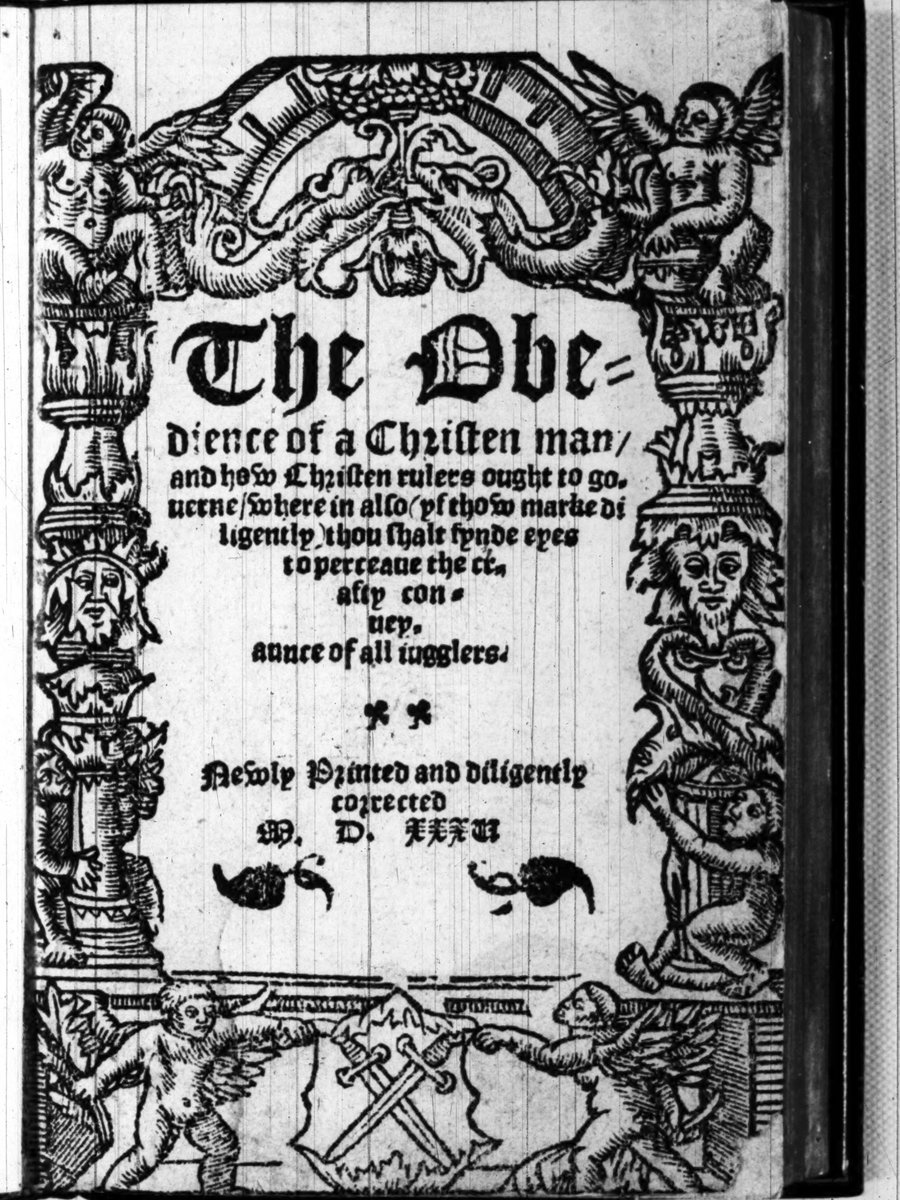
Of Matrimony, and the Pope's Dispensations
 William Tyndale
Of Matrimony, and the Pope's Dispensations
The maryage also of the childern per
teyneth to their elders/as thou mayst se. i Corith. vii. and thorow out all the scriptures/by the auctorite of the said commaundement/childe obeye father and mother. Which thinge the hethe and gentils haue euer kepte and to this daye kepe/to the great shame and rebuke of ye Christen: in asmoch as the weddinges of our virgins (shame it is to speake it)ar moare like to the saute of a bitche/then the marienge of a reasonable creature. Se not we dayly. iii. or. iiii. calenginge one woman before the commissary or officeall/of yf not one hath the content of her father and mother. And yet he that hath most money / hath best right and shall haue her in the despite of all her frendes and in dismaunce of gods ordinaunces
Moreouer when she is geue by the iudge to the one partie and also maried euen then afterwardes shall the contrarie parte sue before an hyer iudge or an other that succeadeth the same and for money deuorce her againe. So shamfully doeth the couetousnes and ambicion of our prelates mocke with the lawes of god. I passe ouer yt silence how many peres thei will prolonge the sentence with cauillacions and sutteltie/if they be well monyed on both parties/and if a damsell promise. ij. how shamfull councell thei will geue the. and secõd also how the religious of satan do sep
arate vnseparable matrimonie. For after thou art lawfully maryed at the commaundemente of father & mother & with the consent of all thy frendes: yet if thou wilt be desgysed like vnto one of them & swere obedience to their tradicions/ thou mayst disobeye father & mother / breake the othe which thou hast sworne to God before his holy congregacion & withdraw loue & charite the hiest of gods commaundementes and that dutye and seruice which thou owest to thy wyfe, wherof Christ can not dispence with the. For Christ is not against god/ but with God & came not to breake gods ordinaunces/ but to fulfill them. That is he came to overcome the with kidnes & to make the to do of very loue the thinge which the law compelleth the to do. For loue only and to do seruice to thy neyghbour is the fulfillinge of the law in the sight of God. To be a monke or a frere/ thou mayst thus forsake thy wife before thou hast lyne with her/ but not to be a seculer prest. And yet after thou art professed/ the Pope for money will dispence with the/ both for thy cote & all thi obedience/ & make a seculer prest of the: likewise as it is simony to sell a benefice (as thei call it) but to resigne apon a pencion & then to redeme the same/ is no simony at all. Oh craftie iugglers & mockers with the worde of god.
Of Matrimony, and the Pope’s Dispensations
The marriage of children also be[longs]
to their elders, as you may see in 1 Corinthians 7 and throughout all the scriptures, by the authority of the said commandment, “Child, obey father and mother.” This thing the heathen and gentiles have always kept, and to this day keep, to the great shame and rebuke of the Christians—inasmuch as the weddings of our virgins (it is a shame to speak it) are more like the coupling of a bitch than the marrying of a reasonable creature. Do we not daily see three or four men contending for one woman before the commissary or official, even when not one of them has the consent of her father and mother? And yet he who has the most money has the best right, and shall have her in spite of all her friends and in defiance of God’s ordinances.
Moreover, when she has been given by the judge to the one party and even married, then afterward many times the contrary party shall sue before a higher judge, or before another who succeeds the same, and for money divorce her again. So shamefully do the covetousness and ambition of our prelates mock the laws of God. I pass over in silence how many years they will prolong the sentence with quibbles and subtlety, if they are well paid on both sides; and if a damsel pledge [herself] to two men, how shameful is the counsel they will give them. And secondly, also, how the religious orders of Satan do sep[arate]
inseparable matrimony. For after you are lawfully married at the commandment of father and mother, and with the consent of all your friends, yet if you will be disguised like one of them and swear obedience to their traditions, you may disobey father and mother, break the oath which you have sworn to God before his holy congregation, and withdraw love and charity—the highest of God’s commandments—and that duty and service which you owe to your wife, of which Christ cannot grant you any dispensation. For Christ is not against God, but with God, and came not to break God’s ordinances, but to fulfill them. That is, he came to overcome you with kindness, and to make you do out of pure love the thing which the law compels you to do. For love alone, and the doing of service to your neighbor, is the fulfilling of the law in the sight of God. To be a monk or a friar, you may thus forsake your wife before you have lain with her, but not to be a secular priest. And yet, after you are professed, the Pope for money will grant you a dispensation, both for your habit and all your obedience, and make a secular priest of you—just as it is simony to sell a benefice (as they call it), but to resign upon a pension and then to redeem the same is no simony at all. O crafty jugglers and mockers of the word of God!