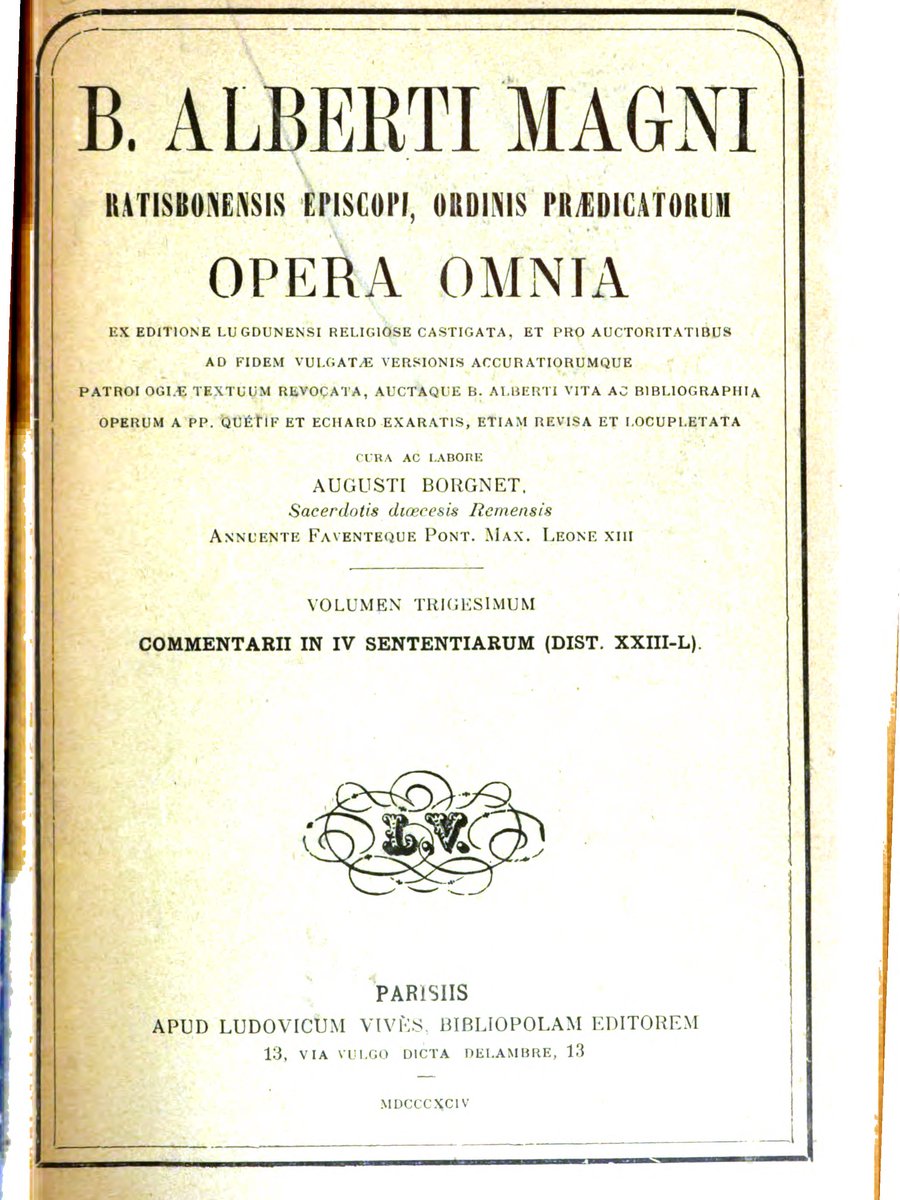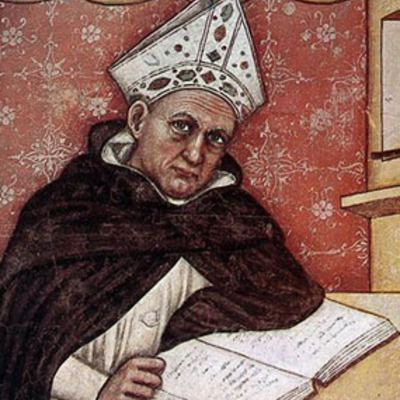
Albert the Great (Albertus Magnus, c. 1200–1280) was a German Dominican friar, philosopher, bishop of Regensburg, and one of the most learned figures of the thirteenth century, known as the Doctor Universalis. He was among the first medieval scholars to integrate the newly translated Aristotelian corpus into Christian thought, producing extensive paraphrases and commentaries on nearly all of Aristotle's works, as well as a massive Commentary on the Sentences of Peter Lombard, a Summa Theologiae, and treatises on natural philosophy, botany, and mineralogy. He taught at Paris and Cologne — where Thomas Aquinas was his most famous student — and shaped the Dominican intellectual tradition for generations. He was canonized in 1931 and declared a Doctor of the Church.