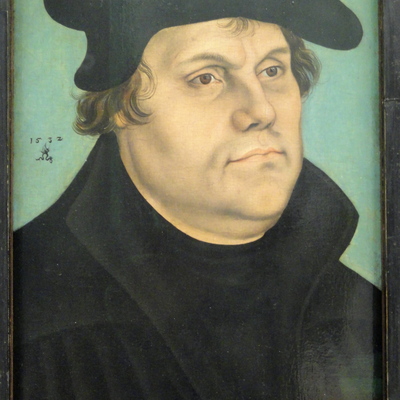
Martin Luther (1483–1546) was a German theologian, Augustinian friar, and professor of biblical theology at the University of Wittenberg, whose challenge to Catholic Church doctrine and practice ignited the Protestant Reformation. His Ninety-Five Theses (1517) sparked a controversy over indulgences that expanded into a comprehensive critique of papal authority, sacramental theology, and clerical corruption. Luther's translation of the Bible into German and his voluminous writings — collected in the 73-volume Weimar Edition (Kritische Gesamtausgabe) — shaped both Protestant theology and the German literary language. Among his most extensive works are the Lectures on Genesis, delivered between 1535 to 1545, which occupy ten volumes of the Weimar Edition.
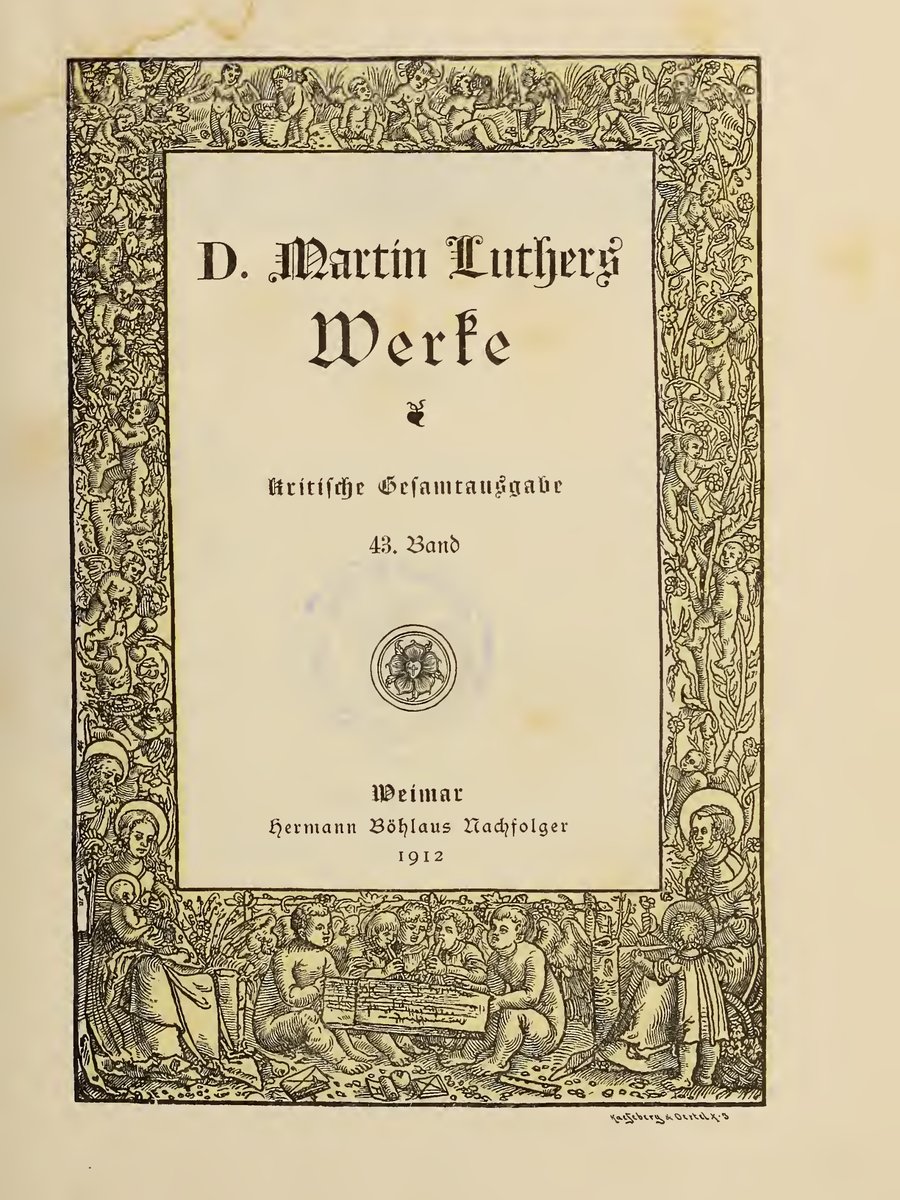
D. Martin Luther's Works: Critical Complete Edition, Volume 43
D. Martin Luthers Werke: Kritische Gesamtausgabe. 43. Band
Lectures on Genesis: Genesis 23:3–4
In Primum Librum Mose Enarrationes: Gen. 23, 3–4
Luther's commentary on Abraham's words to the sons of Heth—"I am a stranger and a sojourner among you"—uses the patriarch's humble request for burial rights as the occasion for an extended treatment of simony. Luther draws on the canonists' definition of simony and the proper use of ecclesiastical revenues, contrasting Abraham's approach with the corruption of Church officials who improperly acquire benefices, burial privileges, and property through simoniacal means. The passage engages extensively with the canonical tradition, Gratian, and the abuses of the papal church in the administration of sacramental and temporal goods.
Lectures on Genesis: Genesis 25:31–34
In Primum Librum Mose Enarrationes: Gen. 25, 31–34
Luther's commentary on the sale of Esau's birthright reads the episode as a typological account of simony: Esau, who despises his spiritual inheritance for a bowl of lentils, becomes the type of those who traffic in sacred goods for material gain, while Jacob represents the faithful recipient of divine promise. Luther develops this through extended comparison of Esau with papal and monastic hypocrisy, contrasting carnal ostentation with the hidden, suffering life of genuine faith, and using the passage to reflect on the proper valuation of spiritual succession and ecclesiastical office.