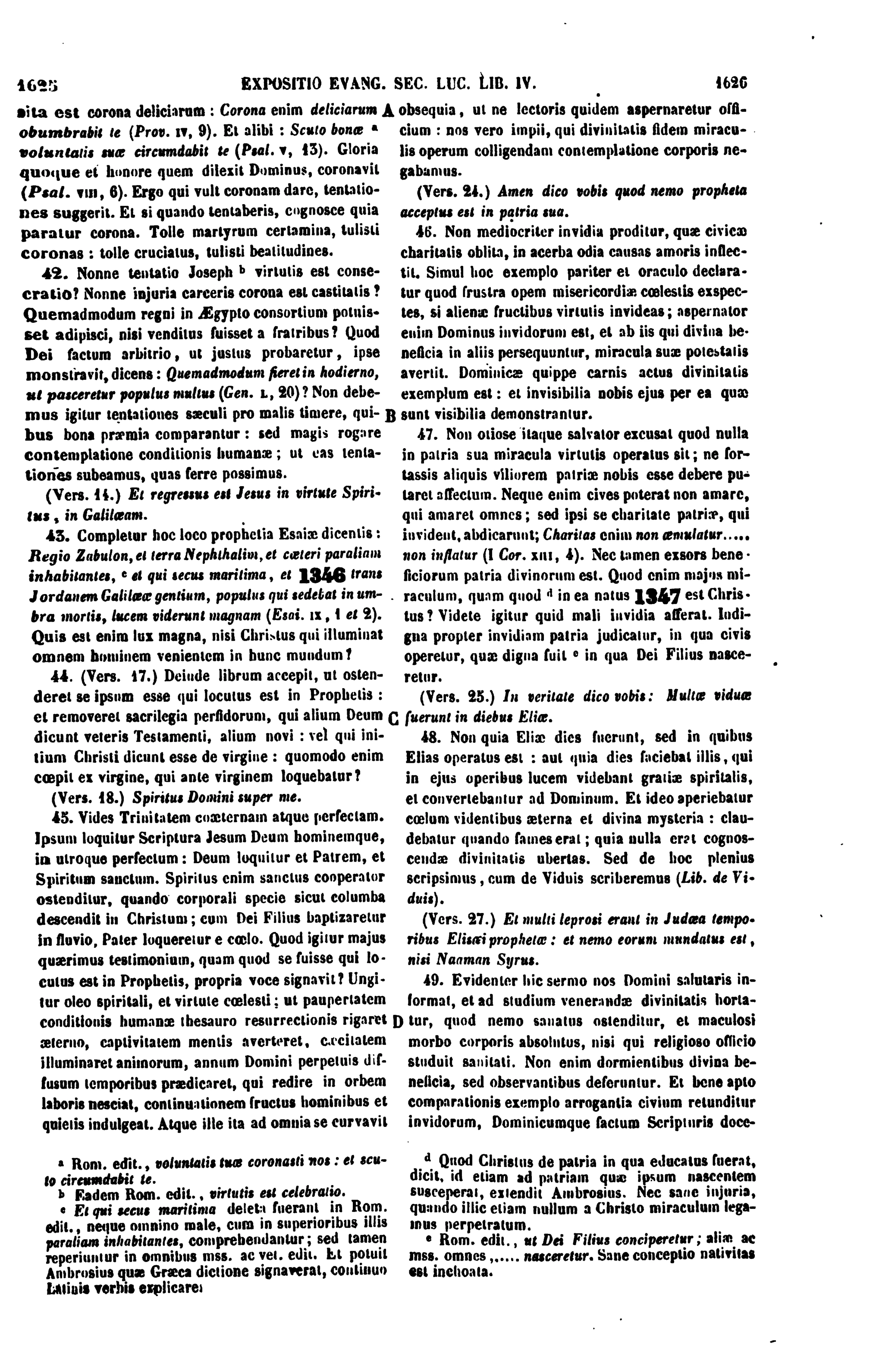
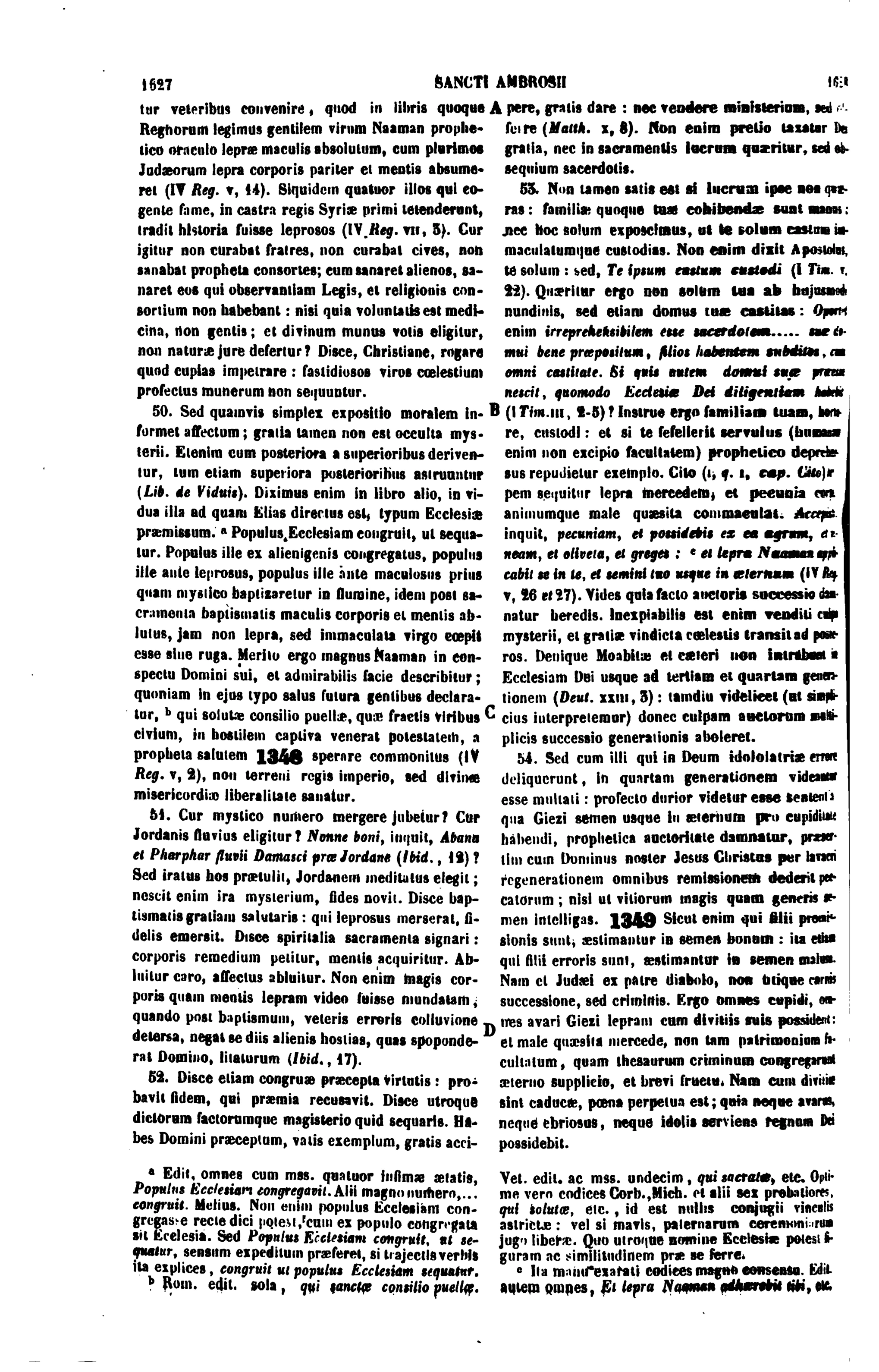
Complete Course of Patrology, Latin Series, Volume 15: The Complete Works of Saint Ambrose, Bishop of Milan, Volume One, Second Part
Patrologiae Cursus Completus, Series Latina, Tomus XV: Sancti Ambrosii Mediolanensis Episcopi Opera Omnia, Tomi Primi Pars Posterior
Volume 15 of J.-P. Migne's Patrologiae Cursus Completus, Series Latina, published in Paris in 1845. This volume is the second part of the first tome of Ambrose of Milan's Opera Omnia, gathering his major exegetical works on Scripture. It contains the Expositio in Psalmum CXVIII (a sustained commentary on Psalm 118 in twenty-two sermons), the Expositio Evangelii secundum Lucam (Ambrose's homiletic commentary on the Gospel of Luke in ten books), the Commentarius in Cantica Canticorum (a posthumous compilation drawn from Ambrose's writings on the Song of Songs), the De Excidio urbis Hierosolymitanae libri quinque (a Latin paraphrase of Josephus on the destruction of Jerusalem traditionally attributed to Ambrose, also known as Pseudo-Hegesippus), and an Anacephalaeosis of the same. The text follows the Maurist Benedictine recension, collated against Vatican, Gallican, and Belgian manuscripts, and is printed in the standard Patrologia Latina two-column format with sequentially numbered columns running from 1193 to 2290.
Author
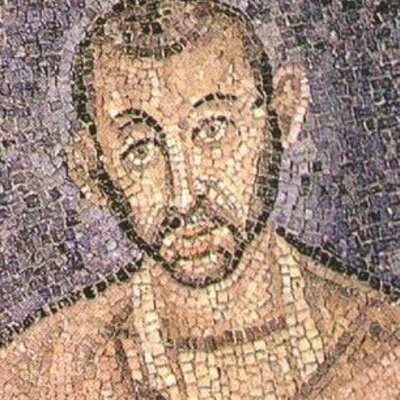
Ambrose of Milan
Ambrosius Mediolanensis
Readings
Commentary on the Gospel according to Luke, Book IV, §§52–54
Expositio Evangelii secundum Lucam, Liber IV, §§52–54
Three sections from Book IV of Ambrose's Expositio Evangelii secundum Lucam, drawing the lessons of Naaman's healing (2 Kings 5) into a teaching against simony. Commenting on Christ's command in Luke 4 — "Gratis accepistis, gratis date" — Ambrose insists that no price may be exacted in the dispensation of the sacraments and that the grace of healing is no man's to sell. The reading culminates with a denunciation of Gehazi, whose hereditary leprosy (4 Kings 5:27) Ambrose reads as the figure of all who, like Simon Magus, would profit from sacred ministry: such men are made foreign to the Kingdom of God, "neque ebriosus, neque idolis serviens regnum Dei possidebit" (1 Cor. 6:10).
Ambrose of Milan·389·Latin·Liber IV, §§52–54·col. 1627–1628Commentary on the Gospel according to Luke, Book IX, §19
Expositio Evangelii secundum Lucam, Liber IX, §19
A single section from Book IX of Ambrose's Expositio Evangelii secundum Lucam, on Christ's overturning of the seats of those who sold doves in the Temple (Luke 19:45–46; Matt. 21:12). Reading the gesture spiritually rather than literally — for "what dignity is there among doves?" — Ambrose connects the dove with the Holy Spirit descending at Christ's baptism, and so identifies the dove-sellers as those who "would peddle the grace of the Holy Spirit" (qui sancti Spiritus gratiam nundinentur). He invokes Christ's command "Freely you have received, freely give" (Matt. 10:8) and Peter's rebuke of Simon Magus — "Thy money perish with thee, because thou hast thought that the gift of God may be purchased with money: thou hast no part nor lot in this faith" (Acts 8:20–21) — to bar simoniacs from the company of the Church.
Ambrose of Milan·389·Latin·Liber IX, §19·col. 1798–1798