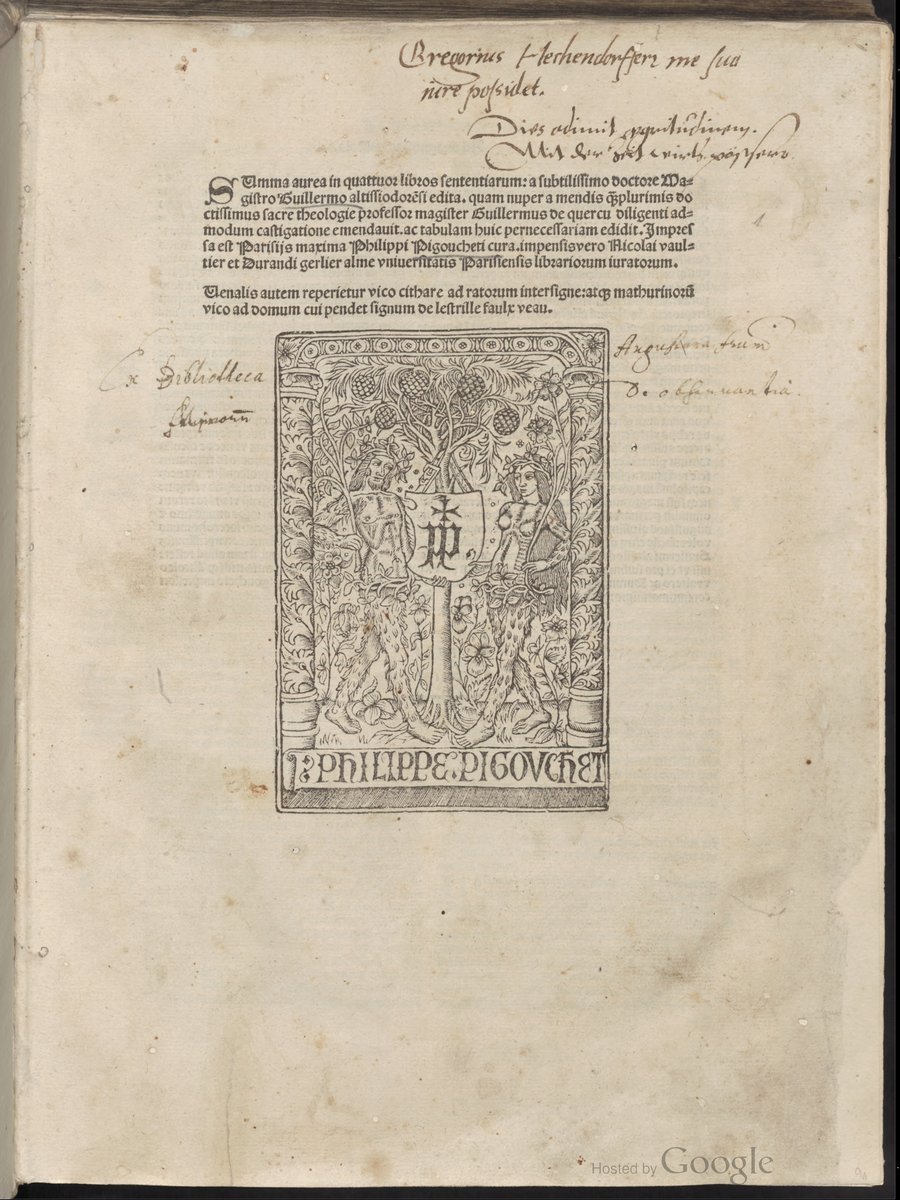
On Simony
De symonia
 William of Auxerre
De symonia. Tractatus vicesimusprimus
Dicto de usura, dicendum est de symonia. Circa quam primo videndum est qd sit symonia et in qua materia consistat. Secundo de spualibus casibus in quibus habet originem peccatum symonie: et illud capitulum dividit in multa capitula secundum diversitatem materiarum in quibus sunt huiusmodi casus. Tertio de executione ipsius symoniaci.
Symonia sic describitur. Symonia est studiosa voluntas emendi vel vendendi spuale vel iunctum spuali a quibusdam. Et sic describitur. Symonia est pactio de tpalibus propter spualia facienda vel econverso.
Circa primam diffinitionem queritur utrum iudex secularis comittat symoniam vendendo iusticiam. Videtur quod sic, quia preceptum est: diligite iusticiam qui iudicatis terram. Cum precepta sit iusticia diligi et videatur esse res spualis: cum iudex secularis vendit iusticiam, vendit rem spualem vel anexam spirituali, et comittit symoniam, vel symonia non est studiosa voluntas etc.
Sed contra. Super illum locum euangelii. Mensas nummulariorum et cathedras vendentium evertit. Dicit glossa quod venditores columbarum sunt prelati qui vendunt spiritussanctum: non comittit ergo peccatum symonie vendendo, nisi a prelatis quorum tantum est dare. Ergo non comittit peccatum symonie vendendo a iudice seculari. Item licitum est in articulo necessitatis vendere cruces et calices ecclesie et illa sunt spualia vel anexa spuali: ergo vel symonia non est peccatum, vel symonia non est studiosa voluntas etc.
Item regula est quod cuilibet licet redimere ius suum. Sit ergo quod aliquis habeat prebendam quam in rei veritate sua est, tamen deducta est in iudicium et sit quod nisi det pecuniam iudici non dabit sententiam pro ipso. Licet et in hoc casu dare pecuniam iudici ut rediat ius suum: et ita emit sententiam que est res spualis vel prebendam. Ergo vel non peccatum vel symonia non est studiosa voluntas etc.
Item dat lex quod licet aduocato vendere ius patrocinandi, ergo eadem ratione iudici iudicium iustum. Quod probatur: quia sicut iuste iudicare est opus iusticie, ita patrocinari est opus iusticie: preceptum est enim pupillos et viduas defendere. Ergo vel utrumque vendere vel neutrum.
Solutio: in hoc loco spuale solet diffiniri per distinctionem hoc modo. Spuale est quod habet spiritussanctus, vel quo datur, vel quo haberi significatur: quo habetur, scilicet ut virtus; quo datur ut sacramentum; quo haberi potest vel significatur ut donum prophetie et potestas faciendi miracula. Sed sine distinctione potest diffiniri spuale hoc
modo. Spuale est quo habetur spiritussanctus: virtutibus enim et sacramentis habetur, scilicet ad faciendum opera virtutum. Dono autem prophetie et potestate faciendi miracula habetur spiritussanctus ad faciendum opera quedam excellentia: illa ergo quatuor tantum spualia proprie loquendo, virtus, sacramentum, donum prophetie, et potestas faciendi miracula. Ius autem percipiendi decimas non est proprie spuale: sed annexum spuali, scilicet sacramento ordinis: episcopus enim inquantum episcopus habet ius percipiendi decimas.
Ad primum ergo dicimus quod iudex secularis non potest comittere symoniam vendendo, sed emendo potest: non enim potest dare spiritussanctum quia nec potest dare virtutes nec sacramenta: et ita nec vendere potest. Patet ergo solutio ad argumentationem illam: hec est enim interimenda iusticia quam facit iudex secularis, est res spiritualis: non enim reddere michi capam est res spualis.
Ad secundum dicimus quod est res impreciabilis de iure, sed non de facto, et est quoddam impreciabile de iure et de facto. Impreciabile de iure et de facto est virtus que non debet vendi: et ita est impreciabilis de facto: deus enim cuius est ipsa dare non posset vendere. Impreciabile de iure et non de facto est sacramentum: non enim debet vendi: tamen potest vendi: quia sacramentum dat deus per misterium sacerdotis: unde sacerdos potest vendere illud de facto, et non de iure: et de facto est calix et huiusmodi et illa nec sunt spualia nec anexa spualibus: quia anexum spuali proprie loquendo est quod est in eo in quo est spuale, et sunt quedam possessiones sacre et propter hoc si oporteat eas vendi laicis: debent redigi in massam ecclesie, aut possunt vendi sub eadem forma.
Ad tertio obiectionem dicimus quod licet illud redimat ius suum non tamen emit aliquid quod non facit de non suo. Ad ultimo obiectionem solutio. Comuniter quod licet aduocato vendere ius patrocinandi propter laborem annexum quia debet eum discurrere et suadere. Non est autem ita in iudice, et propter hoc non est simile.
Circa secundum capitulum queritur de spualibus in quibus habet esse symonia. Et hoc dividitur in tria. Est enim quoddam quod est spuale tantum. Quoddam quod est anexum tantum spuali: spuale et anexum spuali est predicatio: predicatio enim est spualis: quia per eam datur spiritussanctus, et est annexa spuali, est enim annexa ordini, quia sacerdotum proprie est predicare, vel ad minus ordinatorum: spualia sunt sacramenta ecclesie que non licet emere vel vendere. Anexum tantum spuali est ius percipiendi decimas et exequie mortalium et prebende et consimilia.
Circa primum casum dat regulam quod non licet predicare pro lucro temporali, vel inani gloria, vel favore humano. Est enim triplex munus ut dicit beatus gregorius, scilicet munus lingue, munus manus, et cordis. Si vero predicet aliquis pro aliquo illorum comittit symoniam.
Sed videtur quod licitum est predicare pro temporalibus: quia licite est orare pro temporalibus: orat enim ecclesia sic ut fructus terre dare et preservare digneris etc. Ergo licet predicare pro temporalibus: est enim orare spirituale, sicut et predicare. Item apostolus predicavit corinthiis pro temporalibus, videlicet ut faceret collectas sanctis pauperibus qui erat in iherusalem, ergo licet predicare pro temporalibus. Sed si hoc, ergo licet dare prebendam pro temporalibus: quia magis est predicare quam dare prebendam: quia per predicationem dat spiritussanctus, et per dationem prebende non datur.
Forte dicet ad hoc quod duplex est predicatio et duplex oratio: est enim quedam oratio spiritualis qua petimus sanctificari nomen dei in nobis, et alia spiritualia: quedam terrena qua petimus temporalia. Similiter est quedam predicatio spiritualis et illa non licet facere pro temporalibus: quedam terrena et illam licet fieri pro temporalibus. Sed contra. Illa predicatio quam monebat apostolus corinthiis, ad faciendum collectas talis erat: que pre
seminat parce et metet: sed constat quod hec predicatio spualis est. ergo predicatio apli que erat pro teporalibus est spualis. ergo nulla predicatio est terrena. Item. verba que ego loquor sps et vita sunt. ergo secundum hoc omnis predicatio est spualis. nulla ergo terrena. forte dicet quod non licet predicare principaliter pro tpali: sed secundario licet. ergo cum predicare sit magis spirituale quam dare prebendam licet dare prebendam pro tpali non principaliter: sed secundario: sicut si eps det aliquam prebendam alicui bono viro principaliter vt ecclesie illi deseruiat: et secundario dat ei vt ipse alicui cenobio det. c. li. vnde sustententur monachi qui ibi seruiunt deo. ergo dare sic prebendam non est peccatum. Item. probatur per aug. qui dicit quod alie et alie voluntates alios et alios habent fines: sed si ille referantur ad illum finem qui deus est recte sunt ille voluntates atque actiones. sed in huiusmodi actione: scilicet in huiusmodi datione prebende omnes fines referuntur ad deum: quia bonum est quod ipse deseruiat in ista ecclesia propter deum. Item bonum est vt det centum libras ad sustentationem pauperum monachorum vt libertus seruiant deo: vt vacet conteplationi. ergo quidquid ibi est in datione illa refertur ad supremum finem: ergo illa datio bona est. ergo dare prebendam pro tpali non solum licitum est: sed etiam bonum: quod manifeste falsum est. Solutio. non est predicandum pro tpali: quia hec dictio pro: notat causam primam principalem et imediatam. non enim dicit aug. debemus euangelizare vt manducemus: sed manducare vt euangelizemus vt cibus non sit primum quod appetitur: sed addatur illi quod principaliter appetitur. debet enim qui arat vt dicit apo. arare in spe: non pro spe. vt dicit glo. finis quorum principalis predicationis non debent esse temporalia aliquo modo: sed finis consecutiuus vel secundarius potest esse. potest enim aliquis principaliter predicare vt moueat homines ad opera pietatis. ad huiusmodi autem finem consequitur directio et pro petenti datio tpalium. vnde licet predicatorem sic predicantem habere respectum ad tpalia tanquam ad finem consecutiuum. et hoc modo licet predicatores de hospitali predicare de tpalibus: vt notetur per hanc dictionem pro causa consecutia et secundaria. Ad primum ergo dicimus quod non est simile de predicatione et oratione: quia aliqua oratio est terrena: sed nulla predicatio est terrena. Ad secundo obiectum dicimus quod apo. non predicauit pro teporali vt notetur causa principalis et imediata et propria: sed predicauit pro tpali vt notetur finis consecutiuus et secundarius qui mouebat ad pietatem in qua consistit dei similitudo. non est autem simile de donatione prebende qm ex operibus pietatis ad quam mouentur homines per predicationem directe et proprie consequitur datio tpalium. vnde non licet dare prebendam pro tpali aliquo modo tpale est: non enim potest cadere in datione prebende vt finis principalis nec vt finis consecutiuus et secundarius. si ergo ibi cadit vt precium: ponitur ergo sub pacto illo quod est adiunctum spuali: et ita committitur symonia. Nec est verum quod omnes voluntates ille que sunt in datione prebende de hac conditione vt accipiens prebendam det. c. marcas alicui cenobio referantur ad deum: quia caritas et omnis virtus refugit prebendam pro tpali tanquam pro precio. vnde hoc non potest fieri bono fine. vnde non potest ibi fieri relatio actionum sicut docet aug. et sic patet solutio ad omnia obiecta.
Queritur de illis casibus in quibus vendi videntur sacramenta ecclesie. Obicietur ergo de illo quod communiter fit ab ecclesia cum multis enim init testator cum ecclesia in articulo mortis de celebrando anniuersario: sed anniuersarium est
orationes ecclesie vel missarum celebratio. ergo dant tpalia pro orationibus ecclesie et missarum celebrationibus. ergo emunt sacramenta eucharistie: et ita emunt sacramentum ecclesie: ergo committunt symoniam. Similiter et ecclesia que pactum facit de celebrando anniuersario pro certis redditibus vendit sacramenta ecclesie et ita committit symoniam. Similiter obicitur de sacerdotibus qui ecclesiam accipiunt ad firmam a scholaribus qui vadunt ad scholas et ineunt pactum cum scholaribus pro certa pecunia vt in ecclesia deseruiant vt cantent missas et baptisent et cetera sacramenta ecclesie dent populo. isti sacerdotes videntur vendere sacramenta ecclesie. aliter enim non cantarent missas etc. nisi daretur eis tanta pecunia. ergo committunt symoniam. peccat ergo ecclesia que hoc sustinet. Sed obicitur de prelatis qui accipiunt pecuniam ab excommunicatis antequam absoluant eos: videntur enim vendere sacramenta ecclesie illis qui excoicati fuerant. ergo committunt symoniam. Solutio. tribus de causis accipit pecuniam ecclesia. Prima est propter deuotionem. Secunda est propter sustentationem et stipendium ministrorum ecclesie. Tertia est propter correctionem. Secundum primam causam soluitur prima obiectio: sed ad euidentiam illius solutionis: Notandum est quod dominus dixit moysi. fac michi tabernaculum secundum exemplar quod tibi in monte monstratum est per quod significatum quod ecclesia militans debet imitari ecclesiam triumphantem quantum potest: et sic faciunt sancti qui sunt in terra. imitantur ergo eos qui sunt in patria inquantum possunt. vnde ecclesiasticus. volatilia ad sibi similia congregantur. volatilia sunt sancti qui sunt in terra qui volant pennis virtutum. et congregantur ad sibi similia. id est. imitantur sanctos qui sunt in patria. in ecclesia enim triumphanti existentibus multum placet deuotio: et apud eos valet multum. dominus enim non pensat quantum sed ex quanto: sicut dicit glo. super illum locum luce. paupercula mulier misit in gazofilatio duo era munita: ipsum enim datum secundum se non placet deo: sed deuotio dantis et donum propter deuotionem. vnde propter deuotionem quam habebat thobias in sepeliendis mortuis obtulit angelus deo orationem eius et apo. ve imitans ecclesiam triumphantem dixit. Non quero datum sed fructum: fructus autem est in deuotione: propter deuotionem ergo que est spualis acquiritur regnum celorum non ex pecunia data secundum se. Ad primo ergo obiectum dicimus quod ecclesia debet facere anniuersarium istius non pro redditibus: sed pro deuotione penitentis: quia tamen non est militanti ecclesie nota deuotio penitentis in signum memorie deuotionis illius potest recipere redditus quos ille dat / vel in causam prouocatiuam deuotionis clericorum qui intersunt anniuersario: distributiones enim que fiunt in choro prouocant et excitant deuotionem in accipientibus denarios: ille qui vult anniuersarium suum fieri sic debet dicere/ peto suffragia ecclesie vestre ex deuotione peto suffragia et in signum deuotionis do vobis tamen: si vero respectus habet ad pecuniam tanquam ad causam principalem per quam fiat anniuersarium symonia est: non autem dicimus quod fiat sed quod fieri debeat. Ad secundo obiectum soluitur per secundam causam/ licet enim sacerdotibus firmarijs certam pecuniam accipere ad sustentationem et stipendium: dignus est enim operarius mercede sua vt dicit dominus in euangelio: et etiam apostolus. Qui altari seruit de altari viuat: et iterum. Qui arat debet in spe arare et non pro spe. vnde pro illa pecunia tanquam pro causa principali non licet sacerdoti conductiuo cantare missas et huiusmodi: sed licet pro pecunia nisi notetur causa non sine causa. Sed eodem modo dicendum est de episcopis archiepiscopis qui recipiunt procurationes et de pauperibus clericis qui legunt psalteria propter deum et de pauperibus prima abbatia ad quam venit aliquis petens fraternitatem: sed abbatia non habet vnde possit ipsum sustentare: in hoc autem casu bene licet petenti fraternitatem afferre secum vnde sustentetur in ab
batia quod diu vixerit et pecunia non est causa principalis quare recipiatur in fraternitate, sed causa sine qua non reciperetur: etiam hoc modo non est symonia, dummodo monachi redditus quos affert non compellant eum abbatie dimittere post mortem suam. tunc enim esset symonia, sed in beneplacito eius sit dimittere vel non dimittere. Ad tertio obiectum est solutio per tertia causa: prelatus enim non debet accipere pecuniam ab excomunicato pro absolutione, sed pro pena et correctione ne de cetero contemnat excomunicationem. quidam enim melius corrigunt per euacuatione burse quam aliter. honestum tamen est quod prelatus non impleat bursam suam de pecunia illa, sed det pauperibus ne videatur ex cupiditate accepisse. si enim ex cupiditate accipiat peccat mortaliter. Item obicitur de illis casibus in quibus videtur esse symonia ex venditione sacramenti. videtur quod symoniam committat qui cantat missam pro temporalibus: cantat enim pro fructibus terre missam et pro sanitate alicuius et pro pace temporali. omnia ista sunt temporalia. ponit ergo missam que spiritualis est sub precio temporali. ergo committit symoniam. Item cantat missam pro temporalibus: ergo consecrat pro temporalibus eucharistiam, sed eucharistia est bona gratia. ponit ergo gratiam bonam sub precio temporali: ergo committit symoniam. Item ecclesia laudat deum pro temporalibus, dicit enim post prandium: agimus tibi gratias omnipotens deus etc. intelligitur de beneficiis temporalibus: sed laus dei spiritualissima est, que est pars eterne beatitudinis. ergo ecclesia ponit spiritualissimum pro temporali precio. ergo committit symoniam. Item obicit de canonicis qui surgunt ad matutinas et currunt ad matutinas: hec faciunt vt habeant distributiones quotidianas: sed et misse et matutine spiritualia sunt, distributiones ille temporalia. ponunt ergo spiritualia sub precio temporali. ergo committunt symoniam. Sed contra: ipsi vendunt vt accipiant quod eis debetur. ergo non committunt symoniam. Item preceptum est in exodo: non apparebis vacuus in conspectu meo ter in anno, in pascha, in penthecoste, in scenophegia. hoc preceptum adhuc obseruat ecclesia. tenentur enim laici offerre sacerdotibus suis in tribus festis: in pascha, in penthecoste, in natali. et nisi offerant compelluntur a sacerdotibus ad reddendum oblationes. laici ergo tenentur dare temporalia sacerdotibus pro spiritualibus que eis dant sacerdotes. ergo licitum est dare temporalia pro spiritualibus: ergo licitum est emere spiritualia pro temporalibus. ergo licitum est vendere spiritualia pro temporalibus. eadem est enim ratio dandi temporalia in laicis et accipiendi a sacerdotibus. ergo licet vendere sacramenta ecclesie pro temporalibus. quod est contra predicta. Solutio. quattuor de causis dat deus temporalia. Prima causa necessitas. temporalia necessaria sunt ad hoc vt sustententur ministri dei. vnde malachias: inferte omnem decimam in horreum meum vt sit cibus in domo mea. Secunda causa est consolatio infirmorum. vnde in fine ysaie: sicut mater blanditur filio suo ita ego consolabor vos, scilicet beneficio temporalium. magna enim penuria facit pusillos peccare vel alios desperare. vnde in prouerbijs: mendicitatem et diuitias ne dederis michi, ne egestate compulsus furer et periurem nomen dei mei. Tertia causa est negociatio spiritualis. vnde euangelium: negociamini dum venio. propter hoc dat deus mamonam iniquitatis, id est inequalitatis siue superfluitatis, vt de illa superfluitate diuites dent pauperibus, et sic acquirant regnum celorum. hec est enim negociatio spiritualis. Quarta causa est prouocatio ad laudem dei: prouocant enim multi ad laudandum propter spiritualia sibi collata. istis quattuor modis licet hominibus vti necessariis, videlicet vel que necessaria vel consolatoria vel negociatoria vel tanquam prouocatia. Quinto autem
modo vtimur homines temporalibus cum eis vtuntur fine fruitionis et est abusus et peccatum, quia vt dicit augustinus, peccatum est vti fruendis et frui vtendis. vti ergo temporalibus vltimo modo peccatum est, sed quattuor primis modis non est peccatum. distinguenda est ergo significatio huius propositionis pro: cum dicitur ecclesia cantat missam pro temporalibus. si enim notet finem fruitionis falsa est. si vero materiam necessariam etc. vera est. hec enim est vera: ecclesia cantat missas pro temporalibus hoc modo intellecta: ecclesia in officio misse petit temporalia vt necessaria etc. et non sequitur ergo ponit spiritualia pro precio temporali. precedit enim ac si hec propositio pro notet finem fruitionis: hec enim non est concedenda. Ecclesia consecrat pro temporalibus, quia temporalia non sunt finis consecrationis hoc modo, immo corpus christi materia est consecrationis: vnde non valet hec argumentatio. ecclesia cantat missam pro temporalibus: quia in officio misse secundum aliquam partem possunt esse temporalia materia orationis, sed in consecratione non. posset tamen ipsa concedi per accidens. ecclesia consecrat pro temporalibus vt hec dictio pro notet causam: non materiam ipsius consecrationis, sed intentionis ad consecrandum. propter temporalia enim accepta tenetur sacerdos consecrare. patet ergo solutio ad primo obiectum. Ad secundo obiectum dicimus quod ecclesia laudat deum tanquam pro materia prouocatia, et sic patet quod non ponit spiritualia sub precio temporali. vnde temporalia non se habent ibi vt causa mercenaria. Ad tertio obiectum dicimus quod surgere ad matutinas vel currere ad ecclesiam non est spirituale. vnde licet ista facere pro temporalibus, sed cantare in ecclesia vel laudare deum pro temporalibus tanquam pro fine fruitionis vel materia mercimoniali symonia est. Ad quarto obiectum dicimus quod hec est duplex: laici tenentur dare temporalia pro spiritualibus, et hec determinatio pro spiritualibus potest determinare hoc verbum tenentur, vel hoc verbum dare. si hoc verbum tenetur vera est, secundum quod hec propositio pro notat causam efficientem, quia spiritualia que dantur a sacerdotibus sunt causa efficiens quare laici teneantur eis dare temporalia. hoc autem non est emere spiritualia. si vero determinat hoc verbum dare, iterum vera est secundum quod hec dictio pro notat causam finalem, spiritualia enim finis sunt temporalium, non autem precium: vnde non est ibi emptio. similiter hec est duplex: sacerdotes tenentur dare spiritualia pro temporalibus. si hec determinatio pro temporalibus determinet hoc verbum tenentur vera est secundum quod hec dictio pro notet causam efficientem motiuam. si vero determinet hoc verbum dare falsa est, quia hec dictio pro notat siue causam finalem siue materialem, et temporalia non sunt finis spiritualium. et ita non est eadem ratio in sacerdotibus et in laicis. licet ergo dare temporalia pro spiritualibus siue propositio notet causam finalem siue motiuam. sed hoc non intelligitur de spiritualibus bonis que eterna sunt, sed de bonis spiritualibus que dat sacerdos. Dubium est vtrum liceat pro illis finaliter dare temporalia siue emere illa. et videtur quod sic: quia in fine prouerbiorum dicit de muliere forti: considerauit agrum et emit eum. licet ergo emere agrum paradisi siue celeste hereditatem. Similiter in euangelio: Simile est regnum celorum homini negociatori querenti bonas margaritas: inuenta autem vna preciosa margarita abijt et vendidit omnia que habuit et emit eam. sic igitur licet emere regnum celorum et dare temporalia pro ipso. ergo multo fortius licet dare temporalia pro spiritualibus bonis que dat sacerdos, que minus spiritualia sunt quam regnum celorum. Item licet dare bona temporalia quibusdam bonis viris religiosis vt orent pro nobis, sed oratio spiritualis est. vnde petite et accipietis: quod intelligitur de petitione qua petitur spiritussanctus, non enim est verum de petitione temporalium: multi enim petunt temporalia que non accipiunt nec accepturi sunt, sed qui petit ex vero corde spiritumsanctum accipiet ipsum. ergo oratione datur spiritussanctus. ergo oratio est spiritualis. ergo licet dare temporalia pro oratione que est spiritualis. Eadem ratione licet dare
tpalia pro bonis spiritualibus que dat sacerdos: et ita licet emere sacrameta ecclesie. Item, licet dare tempozalia hoc fine vt habeat spussactus. Quod probatur per hoc quod dicit grego. interim fac boni quicquid potest: vt deus illustret cor tuum ad penitentiam. licet ergo dare tempozalia bona pauperibus: vt deus illustret cor infundendo spiritum sctm. licitum est ergo dare tempozalia pro spiritusancto: sed nichil adeo spirituale est vt spussactus: nec magis impreciabile. ergo multofortius licet dare bona tempozalia pro spiritualibus que dat sacerdos / et ita emere sacrameta ecclesie. Solutio. Ad primum dicimus quod non valet hec argumentatio. licet emere bona spiritualia que eterna sunt: ergo licet emere bona spiritualia que sacerdos dat: et hoc est quia bona eterna cadunt sub merito: sed gratia prima que datur per sacramenta ecclesie non cadit sub merito: aliter non esset gratia nisi sine merito daretur. regnum aut celorum venale est: et emitur moneta dei: scilicet per opera dei informata caritate. sed prima gratia non potest emi: quoniam ille qui non habet primam gratiam non habet aliquam monetam dei. sed monetam diaboli: scilicet numum peccati: vel si habet aliqua bona opera in genere illa pure tempozalia sunt et non attingunt ad gratiam que supra tempus est. Ad secundo obiectum dicimus quod hec est falsa. licet dare tempozalia viris religiosis vt ozent pro nobis. oratio enim non potest esse imediatus finis dationis tempozalium: sed quando dant tempozalia aliquibus propter deum provocant accipientes ad amiciciam: et ex amicicia provocantur ad ozandum. vnde patet quod oratio non est imediatus finis dationis tpalium: sed amicicia siue provocatio ad amiciciam: quando datio tpalium bene fit. Dicit enim tullius quod amicicia non est proprie nisi inter bonos / in malis enim secundum quod huiusmodi sunt non est aliquid diligibile. vnde dicit dominus in euagelio luce. facite vobis amicos de mamona iniquitatis. i. date pauperibus pro deo vt provocent ad amiciciam: et ex amicicia obligent ad ozandum pro vobis. patet ergo quod oratio non est imediatus finis dationis tpalium / imo sicut datio spiritualium gratuita debet esse: sic et datio tpalium gratuita debet esse. vnde aug. dicit de aplis. gratuitum panem accipiebant ab eis quibus gratuitam predicationem exhibebant. talis enim debet esse ratio dati et accepti. de qua loquitur apostolus ad philippenses dicens: Nulla mecum ecclesia cōicauit in ratione dati et accepti: nisi nos soli. Ad tertio obiectum dicimus quod non est simile: quoniam dare tpalia deo vt habeatur spussactus est provocare deum ad amiciciam: quoniam hoc est dare tempozalia pauperibus propter deum: sed dare tpalia homini secundum se sumptum non est provocare ipsum ad amiciciam. Ex predictis patet quod non est licitum dare tpalia pro missis tricenariis: siue pro triginta missis cantandis. vnde phibetur in synodis ne presbiteri aliquid accipiant antequam cantauerint missas illas. Sed quantumcumque dare est dare / et quantumcumque accipere est accipere. ergo sicut illicitum est antequam accipere tpalia pro missis cantandis: ita et post. qua ratione phibitum est antequam accipere. eadem ratione debet prohibere et post. Item, licitum est dare tpalia viris religiosis: vt ozent pro nobis: quia licet facere nobis amicos de mamona iniquitatis: sicut dictum est. ergo licitum est dare sacerdotibus et antequam cantent. Item, licitum est sicut dictum est dare aliquos redditus alicui ecclesie pro anniuersario celebrando. ergo licitum est tpalia dare sacerdotibus: non solum pro missis cantandis / vel post missas cantatas: sed etiam pro cantandis et etiam antequam cantent. Solutio. Ad primum dicimus quod nec antequam nec post licet accipere tpalia pro missis. vnde non sunt danda tpalia sacerdotibus etiam post missas cantatas pro ipsis missis. sed quia dignus est operarius mercede sua vt sit cibus in domo dni: phibitum aut est antequam accipere et non post propter speciem mali et propter scandalum vitandum. esset
enim species mali si acciperet ante: quia videret vendere spiritualia. Item, esset occasio symonie multis sacerdotibus: sed si sacerdos non haberet vnde viueret bene liceret ei daret propter deum tempozalia antequam etiam missas cantaret illas. et sic provocaretur ad amiciciam. et sic obligaretur ad celebrandum. sed sacerdotibus habentibus vnde viuant phibitum est in synodo ante accipere. Ad secundo obiectum dicimus quod non est simile de religiosis viris et de sacerdotibus: quoniam ibi non est species mali. et preterea viri religiosi melius nouerunt rationem dati et accepti quam sacerdotes. Ad tertium dicimus quod consuetudo generalis ecclesie est: vt antequam moziantur fideles testamentum faciant et legatum suum: et in illo legato quidam assignant redditus alicui ecclesie ad celebrandum diem anniuersarium mortis sue: et hoc non est species mali. et propter hoc non est simile de eo et de illo quod datur sacerdotibus antequam cantent missas.
Queritur postea vtrum liceat emere vel dare tempozalia pro baptismo et benedictione matrimoniali. videtur quod sic. quia sit ita quod alique mulieres deferant aliquem paruulum laborantem in extremis ad aliquem sacerdotem vt baptiset: et ille nolit baptisare cum nisi dent ei pecuniam. videtur quod in hoc casu debeant ei dare: quia nisi dent puer mozietur et damnabitur. Item, licet vnicuique redimere ius suum: ergo licet dare pecuniam in illo casu vt baptisetur puer. Si dicatur quod sacerdos symoniacus pro furioso habendus est: et ita pro nullo ideo ipse mulieres in illo casu debent baptisare illum paruulum cum non habeant sacerdotem. Contra. Ponatur quod non possint habere aquam a sacerdote: videtur quod tunc debeant dare pecuniam pro baptismo sacerdoti. Eadem est obiectio de illis quorum matrimonium tam promulgatum est: et non restat nisi vt habeant matrimonialem benedictionem: et sacerdos non vult dare eam nisi dent pecuniam ei: videtur quod liceat eis dare: ipsi enim non possunt benedicere. Sed contra. si dant pecuniam pro sacramentis emunt sacramenta: ergo committunt symoniam. Solutio. Ad primum casum de baptismo dicimus quod mulieres in illo casu possunt baptisare: sed si non habent aquam licet eis pecuniam dare sacerdoti non pro baptismo: sed pro remouenda furia siue obstaculo quo minus habent quod puero debetur. Ad secundum casum dicimus quod est recurrere ad superiorem: et si superior nolit eos benedicere sine pecunia / restant due vie: vna vt abstineant et hoc est consilium perfectorum: secunda vt si noluerint abstinere vt dent pecuniam sacerdoti non pro benedictione: sed pro remouendo obstaculo quo minus habent quod eis debetur: sed secundum hoc videtur quod si sint tres boni clerici et religiosi in aliquo episcopatu et episcopus eorum nolit eis dare prebendas sine pecunia quod liceat eis dare pecuniam vt remoueant obstaculum quo minus habent quod suum est: prebende enim alicuius episcopatus bonis debentur qui sunt de eodem episcopatu. Ad hoc dicimus quod non est simile: quia prebenda isti non debetur determiate vel illi: sed baptismus debetur isti vel benedictio matrimonialis debet isti: vbi tamen consuetudo est quod qui ministrat spiritualia potest accipere tempozalia post data spiritualia potest petere sacerdos tpalia quia dignus est operarius mercede sua. Ex predictis patet quod non licet dare tempozalia pro spiritualibus. vt hec dictio pro notet finem immediatum dationis temporalium: et sic
intelligitur cum proprie accipitur. Vnde proprie intellecta non debet concedi hec: licitum est dare temporalia pro spiritualibus; sed improprie, vt hec dictio "pro" notet finem non immediatum, sed quasi consequentem a latere, concedi potest hoc modo: licitum est dare temporalia intuitu obligationis que facta est propter dationem spiritualium. Obligatio est finis immediatus dationis temporalium, et spiritualia sunt quasi finis consequens a latere; et sic intelligenda est hec auctoritas: "Interim fac quidquid potes vt deus illustret cor tuum, da elemosinas propter deum, et sic prouocabitur deus ad illustrandum cor." Patet ergo quod illustratio cordis non est finis immediatus dationis elemosine, sed finis consecutiuus. Finis autem immediatus est placentia dei vel amor dei vel preceptum vel aliquod tale. Danda est elemosina quia bonum est dare ipsam, vel quia preceptum est, vel quia placet deo, et quia consequitur quod illustrat cor. Si enim ille qui dat elemosinam intendat quod ipsa sit precium illustrationis cordis, ibi est cogitatio illicita et intentio pessima. Patet ergo quod hec dictio "vt" non debet ibi notare finem immediatium.
Sed contra. dixerunt filii israel ad aaron: "Ob hanc causam offerimus in donariis domini anulos armillas et perichelidas vt depreceris pro nobis dominum." Hec erat intentio illorum, vt illa temporalia darent pro oratione que spiritualis est. Dabant temporalia illa pro spiritualibus, et laudantur in scripto illo; ergo licitum est dare temporalia pro spiritualibus.
Item videtur hoc quod fecit iudas machabeus, qui misit xij. dragmas argenti ierosolimis vt eas offerri faceret pro peccatis mortuorum, nisi enim eos qui ceciderant etc.; oblatione illa ergo fecit vt oraretur pro mortuis, sic dedit temporalia pro spiritualibus, et laudatur ipse in omnibus; ergo licitum est dare temporalia pro spiritualibus.
Solutio illorum patet per predicta. Ad primum ergo dicendum est quod cum filii israel intendebant quod deprecatio esset finis immediatus dationis illorum ornamentorum; immo offerebant illa in donariis domini quia videlicet illa placebant deo. Habebat illa oblatio suum finem immediatum preter deprecationem placentiam siue amorem domini; sed deprecatio fuit finis consecutiuus. Eodem modo dicimus de oblatione machabei: habuit enim tres fines, vnum immediatum, scilicet bonitatem ipsius oblationis vel placentiam dei, et duos consecutiuos: vnum orationem sacerdotum, alterum remissionem peccatorum quam deus dedit.
Consequenter dicendum est de symonia que habet fieri contra annexa spiritualibus. Queritur ergo de episcopo qui dat prebendam alicui consanguineo suo tantum causa consanguinitatis, vtrum committat symoniam. Videtur quod non: quia ibi non est voluntas vendendi rem spiritualem pro re temporali; ergo non committit symoniam.
Sed contra: iste episcopus dat annexum spirituali tantum pro re temporali; ergo committit symoniam.
Item, in hoc precepto "Gratis accepistis, gratis date" prohibetur symonia; sed iste episcopus facit contra hoc preceptum, quod probatur: quia ibi non diligit deum, dum propter se non seruit, et gratis si non dat prebendam propter deum non dat eam gratis; ergo iste episcopus committit symoniam.
Item, si daret prebendas multas multis nepotibus suis vt ipse imbursaret temporalia illarum prebendarum sicut milites
faciunt, committeret symoniam; similiter si daret prebendam episcopo alicui vt pater episcopi haberet temporalia illius prebende committeret symoniam; eadem ratione si daret prebendam alicui consanguineo vt ipse consanguineus habeat temporalia illius prebende, committit symoniam. Quod concedebat cantor parisiensis et omnes sequaces eius, ieremias: "Maledictus homo qui facit opus dei fraudulenter." Super quem locum dicit auctoritas quia fraudulenter opus dei facit qui pro munere facit illud.
Est autem triplex munus: munus cordis, scilicet fauor humanus; munus lingue, scilicet laus humana; et munus manus. Preter autem ista ponebat cantor alia duo, scilicet munus sanguinis, "ve enim illis qui edificant syon in sanguinibus", et munus timoris, quando per violentias et preces principum dat episcopus prebendam. Si pro aliquo istorum munerum dat episcopus prebendam, committit symoniam secundum cantorem. Vnde dicebat quod hec non est vera diffinitio symonie: "Symonia est studiosa voluntas vendendi etc.", sed sic debet diffiniri: "Symonia est collatio vel acceptio spiritualium non gratuita."
Videtur autem quod hec solutio vera sit. Quia ponatur quod ille idem episcopus det alicui prebendam pro pecunia et consanguineo suo det aliam tantum intuitu consanguinitatis: ex eadem cupiditate dat vtramque illarum prebendarum, quod probatur quia ex eadem caritate diligo summum bonum michi et proximo; ergo ex eadem cupiditate diligit ille episcopus pecuniam sibi et suo consanguineo; ergo idem peccatum est in datione vtriusque prebende; si in datione prebende pro pecunia est peccatum symonie; ergo in datione intuitu tantum consanguinitatis est peccatum symonie.
Sed contra: in actibus apostolorum, cum symon magus offerret pecuniam vt daret ei hanc potestatem vt cuicumque imponeret manus acciperet spiritum sanctum, dixit petrus: "Pecunia tua tecum sit in perditione, quia donum dei estimasti pecunia possideri." Voluit ergo symon emere donum spiritus sancti, et ex hoc commisit peccatum symonie. Similiter giezi voluit vendere donum spiritus sancti naaman syro, et ex hoc commisit peccatum symonie. Et in sacra scriptura non habemus exempla alia de symonia quam illa duo. Sed in illis duobus exemplis propria voluntatis male est emere vel vendere spirituale vel annexum spirituali; ergo cum voluntates differant specie per propria volita, et in propria voluntate symoniaca propriam volitum sit emere vel vendere spirituale vel annexum spirituali, in voluntate enim episcopi qui dat prebendam consanguineo tantum propter intuitum consanguinitatis non sit emere volitum vel vendere etc., ergo voluntas sua non est eiusdem speciei cum voluntate symoniaca; ergo non committit symoniam.
Quod concedimus secundum quod symonia proprie accipitur, peccat tamen mortaliter, quia "ve qui edificant syon in sanguinibus", et in eo triplex peccatum. Primum est nimia dilectio carnis sue. Secundum est cupiditas, quia nimis cupit temporalia consanguineo suo. Tertium est contemptus spiritualium, que dat tantum intuitu rei temporalis.
Ad primum obiectum dicimus quod non valet hec argumentatio: dat annexum spirituali pro re temporali, ergo committit symoniam. Sed est fallatia equiuocationis quia in prima hec dictio "pro" notat causam finalem vel efficientem et materiam, et proceditur ac si notaret causam mercimoniale. Talis enim causa proprie facit peccatum symonie. Ad secundum obiectum dicimus quod non valet hec argumentatio: non gratis diligit deum propter se tantum, ergo non gratis dat prebendam qui non dat tantum propter deum. Et hoc est: quia dare ecclesiam gratis non est eam dare propter deum tantum, sed est eam dare vt nichil inde habeatur; et hoc fit aliquando tantum ex naturali pietate. Simile est de prebenda. Vnde episcopus ille contra hoc preceptum non facit: "Gratis accepistis, gratis date";
sed contra multa alia facit: unde peccat. Ad tertio obiectum dicimus quod hec est falsa, iste episcopus ponit impreciabile sub precio: quia ibi non est mercimonia cum nichil intendat acquirere per illam dationem. Ad quarto obiectum dicimus quod non valet hec argumentatio: si daret alicui prebendam ut pater suus haberet temporalia, committeret symoniam: ergo si det consanguineo, ut consanguineus habeat temporalia committit symoniam: et hoc est: quia in primo casu est mercimonia, in secundo non. Ad ultimo obiectum dicimus quod non valet hec argumentatio: Ex ea cupiditate dat prebendam pro pecunia et dat prebendam consanguineo propter sanguinem: ergo si in una datione est symonia et in alia: et hoc est quia ex eadem cupiditate possunt oriri diuersa uicia: radix enim omnium malorum est cupiditas. Iuxta hoc solet obijci de giezi. probatur enim quod heliseus dederat: sed non dederat nisi sanitatem corporalem que non est res spiritualis: ergo noluit uendere rem spiritualem, uel annexam spirituali: ergo non commisit peccatum symonie. Preterea si commisit peccatum symonie, quare plus denominatur peccatum illud a symone quam a giezi. Solutio. Dicimus quod giezi noluit uendere sanitatem corporalem: sed datione illius sanitatis: que datio fuit spiritualis, siue opus spiritussancti: et propter hoc commisit peccatum symonie: peccatum uero illud magis denominatur a symone quam a giezi: quia magis peccauit symon magus quam giezi: tempore enim reuelate gratie quando omnia iam aperta erant peccauit: et propter hoc magis peccauit. per ultimos duos patet decretistas mentiri, quoniam dicunt quod non est symonia nisi ubi est pactum expressum exterius: quoniam in prima symonia non fuit aliqua pactio: sicut patet in symone mago, et in giezi qui primo leguntur symoniam commisisse, unus in uendendo, scilicet giezi, alius in emendo, scilicet symon. Item ponatur quod aliquis episcopus det prebendam alicui clerico qui ei seruiuit et debet tantum ei pro seruitio quo seruiuit ei. Queritur utrum illa datio sit symoniaca. uidetur quod non: quia dignus est mercenarius mercede sua: et apostolus dicit. Qui altario seruiunt, de alterio debent uiuere: et ad thymotheum dicit. Si quis suorum et maxime domesticorum curam non habet, fidem negauit, et infideli deterior. uidetur ergo quod liceat episcopo dare prebendam pro seruitio sibi impenso: ergo non committit symoniam in datione illa. Contra. Dat spirituale, et accipit temporale: ergo ponit impreciabile sub precio temporali: ergo committit symoniam. Ad hoc dixerunt quidam quod duplex est seruitium, seruicium licitum et seruitium illicitum: si pro illicito seruitio dat prebendam committit symoniam, si pro licito non. Sed contra. si licitum est dare prebendam, licitum est pro datione pecunie, ubi enim eadem causa, et idem effectus: et hoc falsum est: ergo primum. Alii dixerunt quod licitum est dare prebendam principaliter pro deo, et secundario pro seruitio licito, ut sit finis sub fine. Sed contra. Si uelimus scire de aliqua uoluntate, quam dicit esse bonam: quia refert ad supremum finem, licet per multa media querere: utrum sit bona, uel non, facienda est resolutio in illa media: et si in tali resolutione inueniat aliqua mala uoluntas: prima non erat bona, nec referebat principaliter ad deum. secundum doctrinam hanc augustini fiat resolutio hoc modo. iste episcopus uoluit dare isti prebendam: quia uoluit remunerare propter deum: in tali resolutione prima uoluntas mala est. unde non est uerum ut referat principaliter ad deum: sed si omnes licite, et primum licitum. Preterea si licitum est dare pro deo principaliter prebendam: et pro seruitio licito secundario: similiter licet dare preben-
dam, pro deo principaliter, et secundario pro pecunia ut sit finis sub fine. Potest enim aliquis episcopus esse indigens et accipere precium ab aliquo clerico propter deum sed si hoc uerum est nullus episcopus poterit conuinci de symonia: semper enim dicet quod prebendam dedit principaliter pro deo, et secundario pro pecunia. Propter hoc alii dixerunt quod non licet dare prebendam nec pro seruitio licito, nec pro seruitio illicito: ut hec dictio pro notet causam finalem: sed si notet causam incitatiuam licet dare prebendam pro seruitio licito: sicut aliquis uadit ad ecclesiam ad sonitum campane: et sonitus non est causa illius proprie motionis: sed tamen incitat ad eundum. Similiter seruitium incitat episcopum ad dandam prebendam: sed eadem ratione pecunia potest incitare ad dandam prebendam: et ita sicut prius non poterit episcopus conuinci de symonia. Solutio. Inter licita seruitia, quedam sunt temporalia siue corporalia: ut ire romam, tractare causas, et huiusmodi: et quedam spiritualia: sicut predicare et cantare missas: et huiusmodi pro spiritualibus seruitiis licet dare prebendam secundario et pro deo principaliter ut sit finis sub fine: hec enim est licita: iste dat prebendam propter predicationem si predicatio fit propter deum nec ponitur tunc spirituale sub precio temporali: sed pro seruitio temporali non licet dare prebendam: ut sit seruitium illud causa finalis siue principalis siue secundaria. uerum est tamen quod temporale seruitium incitat ad dandum magis uni quam alii. Sicut habemus quod pater magis diligendus est caritate quam nepos: et nepos quam domesticus et domesticus magis quam extraneus: tamen propinquitas non propria est materia dilectionis: sed quedam est causa incitatiua dilectionis que facit ordinem caritatis. eodem modo seruitium temporale incitat ad dandam prebendam et ordinem dationis prebendarum: facit enim quod magis est danda eis qui seruiunt quam eis qui non seruiunt: aliis paribus: sed seruicium non est uera causa huius. unde alexander papa monet quendam episcopum ut det prebendam cuidam clerico qui fideliter ei seruiuit: et hoc non propter seruitium: sed propter fidelitatem suam: hec enim est licita prebenda datur propter fidelitatem suam. unde dicebat cantor quod curie prelatorum probatoria sunt clericorum et possit esse in casu quod datio pecunie licite incitaret episcopum ad dandam prebendam alicui: sicut contigit mauricio episcopo qui dedit prebendam cuidam clerico intuitu beneficii temporalis quod pater illius episcopo contulerat in necessitate sua. Opera enim pietatis incitauerunt ipsum episcopum non ipsa pecunia. Sciendum autem quod in ipsa prebenda duo sunt. unum spirituale, aliud corporale. spirituale est fraternitas et in ipsa quantum in se est datur spiritussanctus. Orant enim fratres pro fratribus absentibus: et impossibile est multorum preces non exaudiri. ut dicit augustinus. Temporale est ius percipiendi fructus quod de necessitate annexum est illi fraternitati. unde sine hoc non potest prebenda esse: dicit decretum. Qui uendit alterum sine quo reliquum non prouenit neutrum inuenditum dereliquit. Sepultura mortuorum non est solum res annexa spirituali: sed etiam ipsa est spiritualis secundum quod sepultura est officium quod proprie pertinet ad sacerdotes. continet enim orationes spirituales quibus orat sacerdos pro anima defuncti quibus remittitur pena peccati. unde symonia est uendere sepulturam. et propter hoc non debent sacerdotes aliquid petere ante sepulturam: quia uel esset symonia uel ad minus species mali. sed post sepulturam possunt petere ubi est huiusmodi consuetudo: sed non pro sepultura: sed quia eis debetur. Sicut episcopus post dedicationem ecclesie potest petere procurationem. sed non pro dedicatione: sed quia ei debetur iuxta uerbum apostoli. Si seminamus uobis spiritualia non est magnum: si car-
nalia vestra metamus: bonum tamen esset vt hec consuetudo .s. accipiendi aliquid post sepulturam vel ante penitus removeretur ab ecclesia. Multi enim sacerdotes indiscreti scandalisantur inde: et committunt symoniam. sicut autem symonia est vendere sepulturam mortuorum: ita symonia est vendere terram benedictam ad sepeliendum mortuos dedicatam. vnde vituperatur ephron qui vendidit abrahe agrum in quo erat sepultura duplex in qua sepeliebantur mortui: et in signum cuius vituperij mutatum est eius nomen. vnde cum primum dictus sit ephron postea dictus est effraym in quo vt dicit hiero. signatur non esse perfecte virtutis qui potuit vendere memorias mortuorum. videtur ergo quod peccatum symoniacum commiserit. Sed contra. Totum quod vendidit temporale est non est ergo spirituale nec annexum spuali: ergo non commisit symoniam. Item. si commisit symoniam: ergo vendidit non vendendum: ergo abraham emit non emendum: et commisit symoniam emendo: sicut ephron vendendo. Item. videtur magis peccasse abraham quam ephron: quia ephron voluit ei dare gratis agrum ad sepeliendum mortuum suum: et abraham noluit accipere nisi pecunia mediante: ergo scandalisauit eum. et ita videtur magis peccasse quam ephron. Ad hoc dicunt quidam quod abraham emit quemdam magnum agrum in quo erat illa magna spelunca in qua sepeliebantur mortui. vnde non peccauit: quia transiuit spelunca illa cum vniuersitate. sicut cum aliquis emit villam cui annexum est ius patronatus alicuius ecclesie non committit symoniam: quia transit ius patronatus cum illa vniuersitate. Sed eadem ratione ephron non peccauit vendendo enim agrum etc. et cum illo transiuit spelunca. quare ergo mutatum est ei nomen. Ad hoc dicebat prepositinus quod non legitur quod ager ille consecratus fuerit sepulture: vel etiam spelunca illa ad hoc benedicta vel consecrata fuerit. sed antiqui patres in illa spelunca duplici faciebant se sepeliri sperantes se resurrecturos esse cum filio dei. Et dicebatur illa spelunca duplex: quia duas habebat mansiones. vnam superiorem in qua sepeliebantur viri: et aliam inferiorem in qua femine. vnde non esset illa terra benedicta: nec peccauit abraham emendo: nec ephron vendendo. Mutatum tamen est ei nomen: quia descendit a statu perfectionis ad statum imperfectionis. prius enim voluit dare quod est perfectorum. et postea vendidit carissime. Vnde primo dicebatur ephron .i. consecratus et perfectus: et postea dictus est effraym .i. infirmus et imperfectus. Eadem est ratio mutationis nois secundum aliam solutionem que dicit quod spelunca transiuit cum vniuersitate. Sicut autem symonia est vendere terram benedictam non propter terram: sed propter benedictionem que spiritualis est: ita symonia est in quibusdam minimis. vnde symonia est vendere panem benedictum: et aquam benedictam: spiritualis enim est et delet multa venialia.
Sed in alijs minimis questio est vtrum sit symonia: sicut cum cancellarius vendidit scholas: vel potestatem docendi. videtur quod sic. Cancellaria dignitas est ecclesiastica. vnde spiritualis est et est ei annexa potestas docendi et si episcopus vendidisset illam cancellariam symoniam comisisset: gratis ergo habuit cancellarius potestatem docendi: et gratis debet dare: ergo si vendit committit symoniam. Sed contra. Potestas docendi gramatica non est res spiritualis hanc enim potest habere
laicus: nec est annexa spirituali: et si venditur non committit symoniam. Item si gratis det eam cancellarius ille qui accipit gratis debet eam accipere: sed quod gratis accipit/ gratis debet dari: et committit symoniam si accipit pecuniam a pueris quos docet. Ad hoc dicunt quidam magistri quod symonia est ibi et licet scientia non sit res spiritualis proprie/ tamen est spiritualis quodammodo: est enim perfectio anime que spiritualis est et est donum dei et est necessaria ad habendum virtutes: neque licet aliquid accipere pro doctrina a pueris: sed pro labore: sicut sacerdos conductus accipit pro labore vt habeat vnde viuat. Sed contra hoc quod dictum est supra quod spirituale est quo habet spiritussanctus: sed habita licentia liberalium artium: aut posita potestate docendi non habetur spiritussanctus: hoc patet per se: ergo huiusmodi scientia vel potestas docendi huiusmodi scientiam non est res spiritualis/ vel annexa spirituali: ergo vendere vel emere eam non est symoniacum. Item prouerbiorum .xxiii. veritatem eme et noli sapientiam vendere: hic prohibet venditionem sapientie et non spiritualis. spiritualis enim vendenda est et danda ad vsuras: loquitur ergo salomon in hac auctoritate de venditione materiali: cum ergo dicit: eme veritatem etc: per quod vel precipitur emptio veritatis respondens venditioni prohibite: ergo licitum est emere materiali emptione veritatem siue cognitionem veritatis: et sic quod licitum est emere licitum est vendere: et emere vel vendere cognitionem veritatis non est symoniacum. Sed contra. Dicit in illa auctoritate: noli vendere sapientiam et doctrinam et intelligentiam: sapientia que est de liberalibus artibus: intelligentia .i. prudentias de considerabilibus: ergo peccatum est vendere doctrinam gramatice/ logice/ et sic de ceteris sed non nisi peccatum symoniacum: et vendere huiusmodi scientias symoniacum est. Item augustinus in libro de magisterio dicit quod alij magistri ab vno magistro proponunt signa .s. propositiones quarum significationibus cognitis consulunt audientes interiorem magistrum .i. rationem vtrum propositio proposita sit vera vel falsa et secundum quod ibi videt iudicat: patet ergo quod cognitio veritatis ab interiori sit magistro. interior enim magister cognitionem veritatis habet immediate a magistro verissimo qui deus est et hoc est quod dicit in euangelio. Spiritussanctus docebit vos omnem veritatem. cognitio ergo veritatis est immediate doni dei: et hoc patet per hoc quod dicit in exo. xxv. de bezebeel. Quicquid faber adinuenire potest dedit deus in corde eius. Et interlinearis dicat quod est donum dei: si enim scientia fabrilis que est mechanica est donum dei multo fortius scientia liberalium est doni dei: sed ex hoc peccauit symon: quia donum dei estimauit pecunia possideri: vt dicit beatus petrus in .viij. actuum: et peccatum symonie est vendere vel emere huiusmodi doctrinam. Item si non est symoniacum: queritur quare non: huiusmodi scientia habita non habetur spiritussanctus: probat quod hoc non impedit: potestas enim faciendi miracula habetur sine spiritusancto: et potestas prophetisandi quod patuit in balaam: et potestas loquendi linguis. Melius enim est prophetisare quam loqui linguis: tamen symoniacum est emere vel vendere huiusmodi potestates: et hoc: quia hoc est immediate donum dei: et cum scientia liberalium artium est immediate donum dei symonia est emere vel vendere illam. Item non licet iudici vendere iudicium nec testimonium licet tamen aduocato vendere iustum patrocinium. Sed quare hoc solet dici quod testis pro vtraque parte est iudex et propter hoc nec testi nec iudici licet pro iudicio vel testimonio aliquid accipere: sed aduocatus tantum
pro altera parte est. Sed contra. Aduocatus pro vtraque parte dicitur esse: quia non licet admiscere aliquid falsi in aduocatione sua: ergo est pro vtraque parte: et tamen licet ei vendere patrocinium suum. Videtur ergo quod licet testi vendere testimonium suum hac ratione: quia non licet vendere veritatem cognitam, nec iudici similiter licet vendere intelligentiam suam, tamen huiusmodi cognitio de vineis et de pratis est. si ergo huiusmodi cognitionem vendere symoniacum est: multomagis cognitionem liberalium artium symoniacum est emere vel vendere. Item. anima est melior in finitis mundis si essent: ergo et perfectio eius. scilicet scientia melior est infinitis mundis si essent: ergo impreciabilis: ergo qui vendit vel emit eam ponit impreciabile sub precio: ergo committit symoniam. quod concedimus predictis rationibus. Ad primo obiectum dicimus quod scientia est spiritualis et ipsa habita habetur spiritussanctus. Sed spiritussanctus habetur duobus modis. vno modo vt illuminans intellectum: et habetur habita scientia. alio modo inflammans affectum, et sic habetur per sacramenta ecclesie. Ad secundo obiectum dicimus quod veritas siue cognitio veritatis emenda est: non pecunia: sed eo modo quo modo docet salomon in iiij. prouer. dicens. Principium sapientie posside sapientiam: et in omni possessione tua acquire prudentiam. ac si diceret: si vis habere sapientiam accipe ipsam: quandoque enim offert se. vnde in vi. sapie. Assidentem autem foribus suis inueniet eam: et cum in possessione tua eam habueris acquire eam magis ac magis, ipsa enim per sapientiam emitur et acquiritur, vnde in euangelio. Inuenta autem vna preciosa margarita vendidit omnia que habuit et emit illam. vnde in prouer. Quid prodest stulto diuitias habere: cum sapientiam emere non possit. Constat quod non loquitur de emptione que fit per pecuniam: sed de emptione spirituali qua non potest stultus manens in stulticia sua emere sapientiam, et hoc est: quia ipsam non habet. Concedimus ergo quod emere vel vendere quacunque scientiam symoniacum est: sed secundum diuersos gradus nobilitatis scientiarum est minor et maior symonia. Dicimus ergo quod aduocato non licet vendere scientiam suam: neque consilium suum. similiter iudex et testis si accedant ad alias regiones possunt accipere expensas suas: sed pro iudicio suo et testimonio nichil licet accipere.
Queritur postea vtrum ecclesie decime possint esse symonia. Videtur quod non: quia ius percipiendi decimas tantum terrenum est: quia id quod subest illa natura tantum terrenum est. Jus enim percipiendi fructus alicuius domus tantum terrenum est. Cum ergo ius percipiendi decimas tantum terrenum sit: est ergo preciabile sub precio terreno: ergo si laici emant ius percipiendi decimas, vel clerici vendant illud laicis non committitur symonia. Item. milites habent ius percipiendi particampum: et est aliquando particampus decima gelimarum scilicet vel xi. vel xij. secundum diuersas consuetudines diuersarum regionum et ius istud tantum terrenum est: quia tantum terrenum subest ei. Eadem ratione ius percipiendi decimam gelimam tantum terrenum est et ita non est symoniacum laicos emere decimas. Sed contra. Jus percipiendi decimas est annexum spirituali, idest ordini: soli enim clerici habent ius percipiendi decimas: sed symonia est voluntas emendi vel vendendi spirituale vel annexum spirituali: ergo symoniacum est laicos vendere vel emere decimas. Item tota ecclesia dicit
quod laici non debent habere ius percipiendi decimas: sed magis spirituale est ius patronatus quam ius percipiendi decimas: ergo non debent habere ius patronatus: sed hoc in contrarium. est falsum: reges enim multa beneficia conferunt: et multi milites habent ius patronatus in ecclesiis: et hoc etiam ecclesia approbat. Item dicit decretalis quedam quod si miles aliquis vendit villam in qua ecclesie habet ius patronatus transit cum vniuersitate: sed secundum hoc videtur quod ius illud venditur: non enim transit ius illud in dominium villam ementis nisi eo modo quo transit villa: sed villa non transit nisi per venditionem: ergo nec ius patronatus nisi per venditionem: ergo ius patronatus venditur. Item istud vniuersum venditur: ergo quelibet pars illius vniuersitatis: ergo ius patronatus venditur saltem in vniuerso illo: ergo ibi est symonia. Forte dicet quod in vniuerso potest vendi: sed non secundum se. Sed contra. Non licet vendere prebendam et villam simul: ergo nec ius patronatus et villam simul. Item. ius patronatus impreciabile est secundum se: et multomagis impreciabile est in vniuerso: sicut ergo non debet vendi secundum se: sic non debet vendi in vniuerso. Solutio. Jus percipiendi decimas non est spirituale: sed annexum spirituali: leuitis enim dande sunt decime: sicut ezechielis ij. paralipomena xxij. vt possint vacare legi dei. vnde soli vacantes legi domini viuere debent sine labore corporali: post naturam enim corruptam dictum est homini: in sudore vultus tui vesceris pane tuo. vnde ipsi reges et principes a subditis accipiunt: quia tenentur pro eis laborare etiam corporaliter, videlicet eos defendendo et pro ipsis pugnando, et maleficos puniendo: leuite enim legi dei vacant et propter hoc debentur eis decime absque labore corporali. est ius percipiendi decimas annexum spirituali et impreciabile. vnde symonia committitur si vendatur vel ematur, et sic patet solutio ad duo primo obiecta. Ad tertio obiectum dicimus quod non valet hec argumentatio, laici non debent habere ius percipiendi decimas: ergo non possunt habere ius patronatus: quoniam ex iure patronatus nichil percipiunt. Preterea decime ad aliud constitute sunt. Ad vltimo obiectum dicunt quidam quod ius patronatus non est alicui spirituali annexum vel spirituale. Dicunt enim quod nichil aliud est patronatus quam habet laici quod potentia presentandi personam ydoneam quam debet recipere episcopus: et similiter deberet recipere si alius ydoneam personam presentaret. Sed quia videmus quod aliquid iuris acquiritur clerico presentato si sit ydonea persona propter hoc dicimus quod ius patronatus spirituale est: ergo non debet vendi vel emi. vnde si emat villam in qua est ius patronatus et propter hoc carius emat symonia est: sed si istud ius quasi pro nichilo habeat quantum ad illum contractum tunc dicitur transire cum vniuersitate nec est pars vniuersi quod venditur.
Circa tertium capitulum nichil amplius dicimus nisi quod symoniacus sit irregularis secundum institutionem ecclesie: intelligimus autem de symonia que subiacet iudicio ecclesie. videlicet de symonia que est in opere exteriori, non de symonia que est tantum in voluntate. instituit enim ecclesia vt si per timorem dei non dimittunt spiritualia vendere: saltem timore humano dimittant. huiusmodi autem symoniacus excommunicatus est minori excommunicatione: cuius excommunicatio non transit in aliam personam. Item irregularis est. vnde si exequatur officium suum peccat mortaliter. tamen si consecrat consecratum est: et si ordinat ordinatum est. caracterem enim habet vnde imprimit ipsum: sed illi qui ordinati sunt ab episcopo symoniaco si sciant se ordinatos a symoniaco
non debent exequi officium suum donec cum eis fuerit dispensatum: et quia capitulum illud pure decretalis est: ideo supersedemus.
On Simony. Tractatus Twenty-One
Having spoken of usury, we must now speak of simony. Concerning it, we must first see what simony is and in what matter it consists. Second, we must consider the spiritual cases in which the sin of simony has its origin; and this chapter is divided into many chapters according to the diversity of the matters in which such cases occur. Third, we must consider the punishment of the simoniac himself.
Simony is described as follows. Simony is a deliberate will to buy or sell something spiritual or something attached to the spiritual. And it is also described thus by some: simony is a pact concerning temporal things for the sake of obtaining spiritual things, or conversely.
Concerning the first definition, it is asked whether a secular judge commits simony by selling justice. It seems that he does, because it is commanded: “Love justice, you who judge the earth.” Since justice is commanded to be loved and seems to be a spiritual thing, when a secular judge sells justice, he sells a spiritual thing, or something attached to the spiritual, and therefore commits simony — or else simony is not a deliberate will, etc.
But on the other hand: on that passage of the Gospel, “He overturned the tables of the money changers and the seats of those who sold,” the gloss says that the sellers of doves are the prelates who sell the Holy Spirit. Therefore the sin of simony is committed in selling only by prelates, whose office alone it is to give. Therefore the sin of simony is not committed in selling by a secular judge. Likewise, it is lawful in a case of necessity to sell the crosses and chalices of the church, and these are spiritual things or attached to the spiritual; therefore either simony is not a sin, or simony is not a deliberate will, etc.
Likewise, the rule is that it is lawful for anyone to redeem his own right. Suppose then that someone has a prebend which in truth is his own, yet it has been brought into court, and suppose that unless he gives money to the judge, the judge will not give sentence in his favor. It is lawful even in this case to give money to the judge so that he may recover his right; and thus he buys the sentence, which is a spiritual thing, or the prebend. Therefore either it is not a sin, or simony is not a deliberate will, etc.
Likewise, the law grants that it is lawful for an advocate to sell the right of pleading; therefore by the same reasoning it is lawful for a judge to sell just judgment. This is proved: for just as to judge justly is a work of justice, so to plead is a work of justice — for it is commanded to defend orphans and widows. Therefore either both may be sold, or neither.
Solution: in this matter the spiritual is usually defined by a distinction in the following way. The spiritual is that which has the Holy Spirit, or that by which He is given, or that by which He is shown to be had: that by which He is had, namely as virtue; that by which He is given, as a sacrament; that by which He can be had or is shown to be had, as the gift of prophecy and the power of working miracles. But without distinction the spiritual can be defined
in the following way. The spiritual is that by which the Holy Spirit is had: for He is had through virtues and sacraments, namely for doing the works of the virtues. And through the gift of prophecy and the power of working miracles the Holy Spirit is had for doing certain excellent works. Therefore only these four are properly speaking spiritual: virtue, sacrament, the gift of prophecy, and the power of working miracles. But the right of receiving tithes is not properly spiritual but attached to the spiritual, namely to the sacrament of orders: for a bishop, insofar as he is a bishop, has the right of receiving tithes.
To the first, then, we say that a secular judge cannot commit simony by selling, but he can by buying: for he cannot give the Holy Spirit, since he can give neither virtues nor sacraments, and thus neither can he sell. The solution to that argument is therefore clear: for the justice which the secular judge dispenses is not a spiritual thing — to restore my cloak to me is not a spiritual thing.
To the second we say that there is a thing unsalable by law but not in fact, and there is something unsalable both by law and in fact. Unsalable both by law and in fact is virtue, which ought not to be sold; and thus it is unsalable in fact, for God, whose part it is to give it, cannot sell it. Unsalable by law but not in fact is the sacrament: for it ought not to be sold, yet it can be sold, because God gives the sacrament through the ministry of the priest; whence the priest can sell it in fact but not by right. And in fact there are the chalice and such things, and these are neither spiritual nor attached to the spiritual: for what is attached to the spiritual, properly speaking, is what is in that in which the spiritual is. And there are certain sacred possessions, and on this account, if it should be necessary to sell them to laymen, they ought to be brought back into the common holdings of the church, or they can be sold under the same form.
To the third objection we say that, although he redeems his own right, he nevertheless does not buy anything, because he is not making something his own out of what is not his own. To the last objection, the solution is the common one: that it is lawful for an advocate to sell the right of pleading on account of the labor attached to it, because he must run through the case and plead it. It is not so, however, with a judge, and for this reason the cases are not parallel.
Concerning the second chapter, it is asked about the spiritual things in which simony has its being. And this is divided into three. For there is something which is spiritual only. There is something which is only attached to the spiritual. Both spiritual and attached to the spiritual is preaching: for preaching is spiritual, because through it the Holy Spirit is given, and it is attached to the spiritual — for it is attached to orders, since it belongs properly to priests to preach, or at least to those in orders. Spiritual things are the sacraments of the church, which it is not lawful to buy or sell. Attached only to the spiritual is the right of receiving tithes, the funeral rites of the dead, prebends, and similar things.
Concerning the first case, he lays down the rule that it is not lawful to preach for the sake of temporal gain, vainglory, or human favor. For there is a threefold gift, as blessed Gregorius says, namely the gift of the tongue, the gift of the hand, and the gift of the heart. If anyone preaches for the sake of any of these, he commits simony.
But it seems that it is lawful to preach for temporal things, because it is lawful to pray for temporal things: for the Church prays thus, “vouchsafe to give and preserve the fruits of the earth,” etc. Therefore it is lawful to preach for temporal things, for prayer is spiritual, as is preaching. Likewise, the Apostle preached to the Corinthians for temporal things, namely that he might take up collections for the holy poor who were in Jerusalem; therefore it is lawful to preach for temporal things. But if so, then it is lawful to give a prebend for temporal things, for preaching is more than giving a prebend, since through preaching the Holy Spirit is given, but through the giving of a prebend He is not given.
Perhaps one will say to this that preaching is twofold and prayer is twofold: for there is a certain spiritual prayer by which we ask that the name of God be sanctified in us, and other spiritual things; and a certain earthly prayer by which we ask for temporal things. Similarly, there is a certain spiritual preaching, and this it is not lawful to perform for temporal things; and a certain earthly preaching, which it is lawful to perform for temporal things. But on the other hand: that preaching to which the Apostle was exhorting the Corinthians, namely to take up collections, was such as that [of which it is said]
sows sparingly will also reap sparingly; but it is clear that this preaching is spiritual. Therefore the Apostle’s preaching, which was undertaken for the sake of temporal goods, is spiritual; and therefore no preaching is earthly. Again: “the words that I speak are spirit and life.” Therefore, on this account, all preaching is spiritual and none is earthly. Perhaps someone will say that it is not lawful to preach principally for the sake of a temporal good, but it is lawful to do so secondarily. Therefore, since preaching is more spiritual than the giving of a prebend, it is lawful to give a prebend for a temporal good not principally but secondarily — as when a bishop gives some prebend to a good man principally so that he may serve that church, and secondarily gives it to him so that he himself may give a hundred pounds to some monastery, from which the monks who serve God there may be supported. Therefore to give a prebend in this way is not a sin. Again, the point is proved by Augustinus, who says that different wills have different ends; but if those wills are referred to that End which is God, then those wills and actions are upright. Now in this kind of action — that is, in this giving of a prebend — all the ends are referred to God, for it is good that the man himself serve in that church for God’s sake. Again, it is good that he should give a hundred pounds for the support of poor monks, so that they may serve God more freely and have leisure for contemplation. Therefore whatever is in that giving is referred to the supreme End; therefore that giving is good. Therefore to give a prebend for a temporal good is not only lawful but even good — which is manifestly false. Solution. One must not preach for the sake of a temporal good, because this preposition “for” denotes a first, principal, and immediate cause. For Augustinus does not say “we ought to evangelize in order that we may eat,” but “to eat in order that we may evangelize,” so that food is not the first thing sought, but is added to that which is principally sought. For he who ploughs ought, as the Apostle says, to plough in hope, not for hope, as the gloss says. The principal end of preaching ought in no way to be temporal things; but the consequent or secondary end may be. For someone may preach principally in order to move men to works of piety; and from this kind of end there follows the direction and, upon request, the giving of temporal goods. Hence it is permitted to a preacher preaching in this way to have regard for temporal goods as for a consequent end. And in this way it is permitted to the preachers of the hospital to preach about temporal goods — so that by this preposition “for” a consequent and secondary cause is denoted. To the first objection, then, we say that the case of preaching is not like that of prayer, for some prayer is earthly, but no preaching is earthly. To the second objection we say that the Apostle did not preach for a temporal good in such a way that a principal, immediate, and proper cause was denoted; but he preached for a temporal good in such a way that a consequent and secondary end was denoted — one that moved to piety, in which the likeness of God consists. The case of the giving of a prebend, however, is not the same, because from the works of piety to which men are moved by preaching there follows directly and properly the giving of temporal goods. Hence it is in no way lawful to give a prebend for a temporal good, since a temporal good cannot enter into the giving of a prebend either as the principal end or as a consequent and secondary end. If, therefore, it enters in there as a price, then it is placed under that pact which is attached to a spiritual thing, and so simony is committed. Nor is it true that all those acts of will which are at work in the giving of a prebend on the condition that the recipient should give a hundred marks to some monastery are referred to God; for charity and every virtue shrinks from a prebend given for a temporal good as for a price. Hence this cannot be done with a good end. Hence the referral of actions of which Augustinus teaches cannot take place here. And thus the solution to all the objections is plain.
The question is asked concerning those cases in which the sacraments of the church seem to be sold. The objection is raised, then, from what is commonly done by the church, for many testators enter into an agreement with the church at the point of death concerning the celebration of an anniversary; but an anniversary is
prayers of the church or the celebration of masses. Therefore they are giving temporal goods for the prayers of the church and the celebrations of masses. Therefore they are buying the sacraments of the Eucharist; and so they are buying a sacrament of the church; therefore they are committing simony. Likewise, the church that makes a pact concerning the celebration of an anniversary in exchange for certain revenues is selling the sacraments of the church, and so is committing simony. Likewise an objection is raised concerning priests who take a church on lease from scholars who go off to the schools, and enter into a pact with the scholars for a fixed sum of money to serve in the church — to sing masses, to baptize, and to administer the other sacraments of the church to the people. These priests seem to be selling the sacraments of the church, for otherwise they would not sing masses and so forth unless so much money were given to them. Therefore they are committing simony, and therefore the church that tolerates this is sinning. But there is also an objection concerning prelates who receive money from the excommunicated before they absolve them, for they seem to be selling the sacraments of the church to those who had been excommunicated. Therefore they are committing simony. Solution. The church takes money for three reasons. The first is on account of devotion. The second is for the support and stipend of the ministers of the church. The third is for the sake of correction. According to the first reason the first objection is resolved; but to make this solution clear, it must be noted that the Lord said to Moses, “Make for me a tabernacle according to the pattern that was shown to you on the mountain,” by which it is signified that the church militant ought to imitate the church triumphant as much as it can; and thus do the saints who are on earth — they imitate, then, those who are in the fatherland as much as they can. Hence Ecclesiasticus: “the birds gather to their like.” The birds are the saints who are on earth, who fly with the wings of the virtues; and they gather to their like — that is, they imitate the saints who are in the fatherland. For with those who exist in the church triumphant devotion is highly pleasing, and with them it counts for much. For the Lord does not weigh how much, but out of how much, as the gloss says on that passage in Luke, “the poor little woman cast two small coins into the treasury.” For the gift itself, taken in itself, is not pleasing to God; rather, what pleases is the devotion of the giver, and the gift on account of the devotion. Hence, on account of the devotion that Tobias had in burying the dead, the angel offered up his prayer to God. And the Apostle, imitating the church triumphant, said, “I do not seek the gift, but the fruit”; and the fruit is in devotion. On account of devotion, then, which is spiritual, the kingdom of heaven is acquired — not on account of money given taken in itself. To the first objection, then, we say that the church ought to celebrate that man’s anniversary not for the revenues, but for the devotion of the penitent. Yet because the devotion of the penitent is not known to the church militant, it can receive the revenues which he gives either as a sign in memory of his devotion, or as a cause provoking the devotion of the clerics who are present at the anniversary; for the distributions which are made in the choir provoke and stir up devotion in those who receive the pennies. He who wishes his anniversary to be celebrated ought to say it thus: “I ask for the suffrages of your church out of devotion; I ask for the suffrages, and as a sign of devotion I give you so much.” But if he has regard for the money as for the principal cause on account of which the anniversary is to be celebrated, it is simony. We do not, however, say that this is what happens, but only what ought to happen. The second objection is resolved through the second reason. For it is lawful for priests who hold a church on lease to receive a fixed sum of money for their support and stipend, for “the laborer is worthy of his hire,” as the Lord says in the Gospel, and likewise the Apostle: “he who serves the altar should live by the altar,” and again, “he who ploughs ought to plough in hope and not for hope.” Hence for this money, regarded as the principal cause, it is not lawful for the leasing priest to sing masses and the like; but it is lawful to do so for money, provided that it is not designated as the cause — not without [some legitimate] cause. And the same must be said of bishops and archbishops who receive procurations, and of poor clerics who read through psalters for God’s sake, and of the poor: take the case of the first abbey to which someone comes asking for fraternity, but the abbey does not have the means by which to support him. In this case it is well and lawful for the one asking for fraternity to bring along with him the means by which he may be supported in the ab
abbey, provided that he has lived for a long time and the money is not the principal cause for which he is received into the fraternity, but rather a cause without which he would not be received: even in this way it is not simony, provided that the revenues which the monk brings do not compel him to leave the abbey after his death. For in that case it would be simony; rather, it must be at his good pleasure to leave or not to leave. To the third objection the solution lies in the third cause: for a prelate ought not to accept money from an excommunicate in exchange for absolution, but for the sake of penalty and correction, lest he despise excommunication thereafter. For some are better corrected by the emptying of the purse than by other means. It is honorable, however, that the prelate not fill his own purse with that money, but give it to the poor, lest he seem to have accepted it out of cupidity. For if he accepts it out of cupidity, he sins mortally. Likewise objection is raised concerning those cases in which simony seems to occur through the sale of a sacrament. It seems that one who chants a mass for temporal goods commits simony: for he chants a mass for the fruits of the earth, and for someone’s health, and for temporal peace. All these are temporal goods. Therefore he sets the mass, which is spiritual, under a temporal price. Therefore he commits simony. Likewise he chants a mass for temporal goods: therefore he consecrates the Eucharist for temporal goods; but the Eucharist is a grace-giving good. Therefore he sets a grace-giving good under a temporal price: therefore he commits simony. Likewise the Church praises God for temporal goods, for after a meal she says: “We give you thanks, almighty God,” etc., which is understood of temporal benefits. But the praise of God is something most spiritual, since it is a part of eternal beatitude. Therefore the Church sets the most spiritual thing under a temporal price. Therefore she commits simony. Likewise objection is raised concerning canons who rise for matins and run to matins: they do these things in order to have the daily distributions. But masses and matins are spiritual things, while those distributions are temporal. Therefore they set spiritual things under a temporal price. Therefore they commit simony. But on the contrary: these men sell in order to receive what is owed to them. Therefore they do not commit simony. Likewise it is commanded in Exodus [Exod. 23:15]: “You shall not appear empty in my sight three times a year, at Passover, at Pentecost, at the Feast of Tabernacles.” This precept the Church still observes. For the laity are bound to make offerings to their priests on three feasts: at Easter, at Pentecost, and at the Nativity. And unless they offer, they are compelled by the priests to render the oblations. Therefore the laity are bound to give temporal goods to priests for the spiritual goods which the priests give them. Therefore it is lawful to give temporal goods for spiritual goods: therefore it is lawful to buy spiritual goods for temporal goods. Therefore it is lawful to sell spiritual goods for temporal goods. For the reason for the laity to give temporal goods and for the priests to receive them is the same. Therefore it is lawful to sell the sacraments of the Church for temporal goods. Which is contrary to what has been said. Solution. God gives temporal goods for four causes. The first cause is necessity. Temporal goods are necessary so that the ministers of God may be sustained. Whence Malachi [Mal. 3:10]: “Bring every tithe into my barn, that there may be food in my house.” The second cause is the consolation of the weak. Whence at the end of Isaiah [Isa. 66:13]: “As a mother caresses her son, so will I console you,” namely by the benefit of temporal goods. For great want causes the little ones to sin or others to despair. Whence in Proverbs [Prov. 30:8-9]: “Give me neither beggary nor riches, lest, compelled by want, I steal and forswear the name of my God.” The third cause is spiritual commerce. Whence the gospel [Luke 19:13]: “Trade until I come.” For this reason God gives the mammon of iniquity — that is, of inequality or superfluity — so that out of that superfluity the rich may give to the poor, and thus acquire the kingdom of heaven. For this is spiritual commerce. The fourth cause is provocation to the praise of God: for many are provoked to praise on account of spiritual goods conferred upon them. In these four ways men are permitted to use the necessaries, namely those that are necessary, or consoling, or commercial, or as it were provocative. But in a fifth
way men use temporal goods when they use them with the end of enjoyment, and this is an abuse and a sin; for as Augustinus says, it is a sin to use things to be enjoyed and to enjoy things to be used. Therefore to use temporal goods in this last way is a sin, but in the first four ways it is not a sin. Therefore the signification of the preposition “for” in this statement must be distinguished: when it is said, “the Church chants a mass for temporal goods.” For if it denotes the end of enjoyment, it is false. But if it denotes necessary subject-matter, etc., it is true. For this is true: “the Church chants masses for temporal goods,” understood in this way: in the office of the mass the Church requests temporal goods as necessary, etc., and it does not follow, “Therefore she sets a spiritual good for a temporal price.” For this would only follow if the preposition “for” in the statement denoted the end of enjoyment: which is not to be conceded. “The Church consecrates for temporal goods,” because temporal goods are not the end of the consecration in this way; rather, the body of Christ is the matter of the consecration. Whence this argument is invalid: the Church chants a mass for temporal goods — because in the office of the mass, according to some part of it, temporal goods can be the matter of prayer, but not so in the consecration. The statement could however be conceded per accidens: “the Church consecrates for temporal goods,” with the preposition “for” denoting the cause — not the matter of the consecration itself, but of the intention to consecrate. For on account of the temporal goods received, the priest is bound to consecrate. The solution to the first objection is thus clear. To the second objection we say that the Church praises God as for provocative subject-matter, and thus it is clear that she does not set spiritual goods under a temporal price. Whence the temporal goods do not stand there as a mercenary cause. To the third objection we say that to rise for matins or to hurry to church is not a spiritual thing. Whence it is permissible to do these things for temporal goods. But to chant in church or to praise God for temporal goods as for an end of enjoyment or as mercenary subject-matter is simony. To the fourth objection we say that this statement is twofold: “the laity are bound to give temporal goods for spiritual goods” — and this qualification “for spiritual goods” can qualify either the verb “are bound” or the verb “to give.” If it qualifies the verb “are bound,” it is true, insofar as the preposition “for” denotes efficient cause, since the spiritual goods which are given by the priests are the efficient cause why the laity are bound to give them temporal goods. But this is not to buy spiritual goods. If, however, it qualifies the verb “to give,” it is again true, insofar as the preposition “for” denotes final cause, for the spiritual goods are the end of the temporal goods, but not their price: whence there is no purchase there. Similarly this statement is twofold: “priests are bound to give spiritual goods for temporal goods.” If the qualification “for temporal goods” qualifies the verb “are bound,” it is true, insofar as the preposition “for” denotes motivating efficient cause. But if it qualifies the verb “to give,” it is false, because the preposition “for” denotes either final or material cause, and temporal goods are not the end of spiritual goods. And so the reasoning is not the same for priests as for the laity. It is therefore lawful to give temporal goods for spiritual goods, whether the preposition denotes final or motivating cause. But this is not to be understood of those spiritual goods which are eternal, but of the spiritual goods which the priest gives. There is a doubt whether it is lawful to give temporal goods for those spiritual goods as a final end, or to buy them. And it seems that it is: for at the end of Proverbs [Prov. 31:16] it says of the valiant woman: “She considered a field and bought it.” Therefore it is lawful to buy the field of paradise or the heavenly inheritance. Similarly in the gospel [Matt. 13:45-46]: “The kingdom of heaven is like a merchant seeking goodly pearls: and having found one precious pearl, he went and sold all that he had and bought it.” Thus, therefore, it is lawful to buy the kingdom of heaven and to give temporal goods for it. Therefore much more is it lawful to give temporal goods for the spiritual goods which the priest gives, which are less spiritual than the kingdom of heaven. Likewise it is lawful to give temporal goods to certain good religious men so that they may pray for us; but prayer is spiritual. Whence [Matt. 7:7]: “Ask, and you shall receive” — which is understood of the petition by which the Holy Spirit is requested, for it is not true of the petition for temporal goods: for many request temporal goods which they do not receive and are not going to receive; but he who asks the Holy Spirit from a true heart will receive him. Therefore the Holy Spirit is given through prayer. Therefore prayer is a spiritual thing. Therefore it is lawful to give temporal goods for prayer, which is spiritual. By the same reasoning it is lawful to give
temporal things for the spiritual goods that the priest gives; and so it is permitted to buy the sacraments of the Church. Likewise, it is permitted to give temporal things to this end, that one may have the Holy Spirit. This is proved by what Gregorius says: “Meanwhile, do whatever good you can, that God may illuminate your heart unto penitence.” Therefore it is permitted to give temporal goods to the poor, that God may illuminate one’s heart by infusing the Holy Spirit. Therefore it is permitted to give temporal things for the Holy Spirit; but nothing is so spiritual as the Holy Spirit, nor more beyond price. Therefore, much more strongly is it permitted to give temporal goods for the spiritual goods which the priest gives, and thus to buy the sacraments of the Church. Solution. To the first we say that this argument does not hold: “It is permitted to buy spiritual goods that are eternal; therefore it is permitted to buy the spiritual goods that the priest gives.” And this is because eternal goods fall under merit, but the first grace, which is given through the sacraments of the Church, does not fall under merit [since] otherwise it would not be grace unless it were given without merit. The kingdom of heaven, however, is for sale, and it is bought with God’s coin, namely by the works of God informed by charity. But the first grace cannot be bought, since one who does not have the first grace has no coin of God’s, but only the coin of the devil, namely the coin of sin; or if he has some good works of a sort, these are purely temporal and do not reach to grace, which is above time. To the second objection we say that this proposition is false: “It is permitted to give temporal things to religious men, that they may pray for us.” For prayer cannot be the immediate end of the giving of temporal things; but when they give temporal things to certain persons for God’s sake, they incite the recipients to friendship, and from friendship they are moved to pray. Hence it is clear that prayer is not the immediate end of the giving of temporal things, but rather friendship, or the inciting to friendship, when the giving of temporal things is rightly done. For Cicero says that friendship properly exists only among the good, since in the wicked, insofar as they are such, there is nothing lovable. Hence the Lord says in the Gospel of Luke, “Make for yourselves friends of the mammon of iniquity”[Luke 16:9]—that is, give to the poor for God’s sake, so that they may be incited to friendship, and out of friendship be bound to pray for you. It is clear, therefore, that prayer is not the immediate end of the giving of temporal things; indeed, just as the giving of spiritual things ought to be gratuitous, so the giving of temporal things ought to be gratuitous. Hence Augustinus says concerning the Apostles: “They received gratuitous bread from those to whom they offered gratuitous preaching.” For such ought to be the account of giving and receiving, of which the Apostle speaks to the Philippians, saying: “No church communicated with me in the account of giving and receiving, except you alone”[Phil. 4:15]. To the third objection we say that the case is not similar, since to give temporal things to God in order to have the Holy Spirit is to incite God to friendship, because this is to give temporal things to the poor for God’s sake; but to give temporal things to a man taken in himself is not to incite him to friendship. From what has been said it is clear that it is not permitted to give temporal things for trental Masses, or for thirty Masses to be sung. Hence it is forbidden in the synods that priests receive anything before they have sung those Masses. But however much giving is giving, and however much receiving is receiving; therefore, just as it is unlawful to receive temporal things before the Masses are sung, so also after. By the same reason that it is forbidden to receive beforehand, by the same reason it ought to be forbidden afterwards as well. Likewise, it is permitted to give temporal things to religious men that they may pray for us, because it is permitted to “make for ourselves friends of the mammon of iniquity,” as has been said. Therefore it is permitted to give to priests even before they sing. Likewise, as has been said, it is permitted to give certain revenues to some church for the celebration of an anniversary. Therefore it is permitted to give temporal things to priests, not only for Masses to be sung, or after Masses have been sung, but also for Masses to be sung, and even before they sing. Solution. To the first we say that neither before nor after is it permitted to receive temporal things for Masses. Hence temporal things are not to be given to priests even after Masses have been sung for those very Masses. But because “the laborer is worthy of his hire”[Luke 10:7], so that there may be food in the Lord’s house, it is forbidden to receive beforehand, but not afterwards, on account of the appearance of evil and to avoid scandal. For it would
be an appearance of evil if he received beforehand, because he would seem to be selling spiritual things. Likewise, it would be an occasion of simony to many priests. But if a priest had nothing on which to live, it would be permitted for him to receive temporal things given for God’s sake even before he sang those Masses; and thus he would be incited to friendship, and thus bound to celebrate. But for priests who have means to live on, it is forbidden in the synod to receive beforehand. To the second objection we say that the case of religious men and that of priests is not similar, since in the former there is no appearance of evil; and besides, religious men know better the account of giving and receiving than priests do. To the third we say that it is the general custom of the Church that before the faithful die they make their testament and their bequest, and in that bequest some assign revenues to some church for the celebration of the anniversary day of their death; and this is not an appearance of evil. And for this reason the case is not similar to that of what is given to priests before they sing Masses.
It is asked afterwards whether it is permitted to buy or to give temporal things for baptism and the nuptial blessing. It seems that it is. For let it be the case that some women bring a little child laboring in extremis to some priest that he may baptize him, and he is unwilling to baptize him unless they give him money. It seems that in this case they ought to give it to him, because unless they give it the child will die and be damned. Likewise, it is permitted to each person to redeem his own right; therefore it is permitted to give money in that case, that the child may be baptized. If it be said that a simoniac priest is to be reckoned as a madman, and thus as nothing, and that therefore the women themselves in that case ought to baptize that little child, since they have no priest—On the contrary: suppose that they cannot obtain water from a priest; it seems that then they ought to give money to the priest for the baptism. The same objection arises concerning those whose marriage has been so far promulgated, and nothing remains except that they should have the nuptial blessing, and the priest is unwilling to give it unless they give him money. It seems that it is permitted for them to give, since they themselves cannot bless. But on the contrary: if they give money for the sacraments, they buy the sacraments; therefore they commit simony. Solution. To the first case, concerning baptism, we say that in that case the women can baptize; but if they do not have water, it is permitted for them to give money to the priest, not for the baptism, but for the removal of the madness or obstacle on account of which they do not have what is owed to the child. To the second case we say that one must have recourse to a superior; and if the superior is unwilling to bless them without money, two ways remain: one, that they abstain, and this is the counsel of the perfect; the second, that if they are unwilling to abstain, they give money to the priest not for the blessing, but for the removal of the obstacle on account of which they do not have what is owed to them. But according to this it seems that if there are three good clerics, religious men, in some diocese, and their bishop is unwilling to give them prebends without money, it would be permitted to them to give money in order to remove the obstacle on account of which they do not have what is theirs; for the prebends of a diocese are owed to good men who are of that same diocese. To this we say that the case is not similar, because the prebend is not owed determinately to this man or that, but baptism is owed to this one, and the nuptial blessing is owed to this one. Yet where the custom is that one who ministers spiritual things may receive temporal things, after the spiritual things have been given the priest can ask for temporal things, because “the laborer is worthy of his hire”[Luke 10:7]. From what has been said it is clear that it is not permitted to give temporal things for spiritual things, so that this word “for” denotes the immediate end of the giving of temporal things—and thus
is understood when it is taken in the proper sense. Hence, taken properly, this proposition ought not to be conceded: “It is licit to give temporal things for spiritual things.” But in an improper sense — namely, so that the word “for” denotes not the immediate end but, as it were, a consequent end from the side — it can be conceded in this way: “It is licit to give temporal things in view of an obligation which is brought about on account of the giving of spiritual things.” The obligation is the immediate end of giving the temporal things, and the spiritual things are, as it were, a consequent end from the side. And in this way this authoritative text is to be understood: “Meanwhile, do whatever you can so that God may enlighten your heart; give alms for the sake of God, and in this way God will be moved to enlighten the heart.” It is clear, then, that the enlightening of the heart is not the immediate end of giving alms, but a consecutive end. The immediate end, however, is the pleasing of God, or the love of God, or the precept, or something of that sort. Alms are to be given because it is good to give them, or because it is commanded, or because it is pleasing to God, and because there follows from it the enlightening of the heart. For if the one who gives alms intends that the alms themselves be the price of the enlightening of the heart, there the thought is illicit and the intention utterly evil. It is clear, then, that the word “so that” [ut] ought not there to denote the immediate end.
But to the contrary: the sons of Israel said to Aaron, “For this reason we offer among the gifts of the Lord rings, bracelets, and anklets, that you may intercede for us with the Lord” [Numbers 31:50]. This was their intention: that they should give those temporal things for prayer, which is spiritual. They were giving those temporal things for spiritual things, and they are praised in that text; therefore it is licit to give temporal things for spiritual things.
Likewise, it seems so from what Judas Maccabeus did, who sent twelve drachmas of silver to Jerusalem so that he might have them offered for the sins of the dead — “for unless [he hoped] that those who had fallen” etc. [2 Maccabees 12:43–45]; by that offering, then, he caused prayer to be made for the dead, and so he gave temporal things for spiritual things, and he is praised in all things; therefore it is licit to give temporal things for spiritual things.
The solution to these is clear from what has already been said. To the first, then, it must be said that the sons of Israel did not intend that the intercession be the immediate end of giving those ornaments; rather, they offered them among the gifts of the Lord because, namely, they were pleasing to God. That offering had its own immediate end besides intercession — namely, the pleasing of the Lord or the love of the Lord — while the intercession was a consecutive end. We say the same about the offering of Maccabeus: for it had three ends, one immediate, namely the goodness of the offering itself or the pleasing of God, and two consecutive ones: one, the prayer of the priests; the other, the remission of sins which God granted.
Next we must speak of the simony which is committed against things annexed to spiritual things. The question, then, is about a bishop who gives a prebend to some kinsman of his solely on account of kinship — whether he commits simony. It seems that he does not, because there is no will to sell a spiritual thing for a temporal thing; therefore he does not commit simony.
But to the contrary: this bishop gives something annexed to a spiritual thing solely for a temporal thing; therefore he commits simony.
Again, in this precept — “Freely you have received, freely give” [Matthew 10:8] — simony is prohibited. But this bishop acts against this precept, which is proved thus: because in that case he does not love God, since he does not serve [God] for His own sake; and as for “freely”: if he does not give the prebend for the sake of God, he does not give it freely; therefore this bishop commits simony.
Again, if he were to give many prebends to many of his nephews so that he himself might pocket the temporal goods of those prebends, as knights
do, he would commit simony; likewise, if he were to give a prebend to some bishop so that the bishop’s father might have the temporal goods of that prebend, he would commit simony; by the same reasoning, if he gives a prebend to some kinsman so that that kinsman himself may have the temporal goods of that prebend, he commits simony. This the Cantor of Paris and all his followers conceded. Jeremiah: “Cursed is the man who does the work of God fraudulently” [Jeremiah 48:10]. On which passage the authority says that he does the work of God fraudulently who does it for a gift.
Now there is a threefold gift [munus]: the gift of the heart, namely human favor; the gift of the tongue, namely human praise; and the gift of the hand. But besides these the Cantor posited two others, namely the gift of blood — “woe indeed to those who build Sion in blood” [Micah 3:10] — and the gift of fear, when the bishop gives a prebend through the violence and entreaties of princes. If for any of these gifts the bishop gives a prebend, he commits simony, according to the Cantor. Hence he said that this is not the true definition of simony: “Simony is a deliberate will to sell” etc., but it should be defined thus: “Simony is the conferral or acceptance of spiritual things not freely given.”
This solution seems to be true. For suppose that the same bishop gives a prebend to someone for money, and to his kinsman gives another solely on account of kinship: he gives both of those prebends out of the same cupidity, which is proved thus — because out of the same charity I love the highest good for myself and for my neighbor; therefore out of the same cupidity that bishop loves money for himself and for his kinsman; therefore the sin is the same in the giving of each prebend; if in the giving of the prebend for money there is the sin of simony, therefore in the giving solely on account of kinship there is the sin of simony.
But to the contrary: in the Acts of the Apostles, when Simon Magus offered money so that [Peter] might give him this power, that on whomever he laid hands [that person] might receive the Holy Spirit, Peter said: “May your money be with you unto perdition, because you thought the gift of God could be possessed with money” [Acts 8:20]. Simon, then, wished to buy the gift of the Holy Spirit, and on this account he committed the sin of simony. Likewise Gehazi wished to sell the gift of the Holy Spirit to Naaman the Syrian, and on this account he committed the sin of simony. And in Sacred Scripture we have no other examples of simony than these two. But in those two examples the proper object of the evil will is to buy or sell a spiritual thing or something annexed to a spiritual thing; therefore, since wills differ in species by their proper objects, and in the proper simoniacal will the proper object willed is to buy or sell a spiritual thing or something annexed to a spiritual thing — whereas in the will of the bishop who gives a prebend to a kinsman solely on account of kinship the object willed is not to buy or sell, etc. — therefore his will is not of the same species as the simoniacal will; therefore he does not commit simony.
This we concede, insofar as simony is taken properly; he sins mortally nonetheless, because “woe to those who build Sion in blood,” and in him there is a threefold sin. The first is excessive love of his own flesh. The second is cupidity, because he covets temporal things too much for his kinsman. The third is contempt for spiritual things, which he gives solely in view of a temporal thing.
To the first objection we say that this argument is not valid: “He gives something annexed to a spiritual thing for a temporal thing; therefore he commits simony.” Rather, there is a fallacy of equivocation, because in the premise the word “for” denotes a final or efficient cause and matter [i.e. a material cause], but one proceeds as if it denoted the cause of a commercial exchange. For such a cause properly constitutes the sin of simony. To the second objection we say that this argument is not valid: “He does not freely love God for God’s own sake alone; therefore he does not freely give a prebend, who does not give it solely for the sake of God.” And the point is: to give a church freely is not to give it solely for the sake of God, but to give it so that nothing be received from it in return; and this sometimes happens solely from natural piety. The case is similar with a prebend. Hence that bishop does not act against this precept, “Freely you have received, freely give”;
but, on the contrary, he does many other things, on account of which he sins. To the third objection we reply that this is false: “that bishop puts what is beyond price under a price,” because there is no commerce there, since he intends to acquire nothing through that giving. To the fourth objection we reply that this argument does not hold: if he were to give a prebend to someone so that his [the recipient’s] father might have its temporal goods, he would commit simony; therefore if he gives it to a kinsman so that the kinsman may have the temporal goods, he commits simony. And this is so because in the first case there is commerce, in the second there is not. To the last objection we reply that this argument does not hold: from that cupidity he gives a prebend for money, and he gives a prebend to a kinsman on account of blood; therefore if there is simony in the one giving, there is simony also in the other. And this is so because from one and the same cupidity diverse vices can arise, for the root of all evils is cupidity. Concerning this an objection is commonly raised about Gehazi. For it is shown that Elisha had given [something]; but he had given only bodily health, which is not a spiritual thing; therefore he did not intend to sell a spiritual thing, nor one annexed to a spiritual thing; therefore he did not commit the sin of simony. Furthermore, if he committed the sin of simony, why is that sin named more from Simon than from Gehazi? Solution. We reply that Gehazi did not intend to sell bodily health, but the giving of that health, which giving was spiritual, that is, a work of the Holy Spirit; and on this account he committed the sin of simony. That sin, however, is named more from Simon than from Gehazi because Simon Magus sinned more gravely than Gehazi: for he sinned in the time of revealed grace, when all things were already manifest, and on this account he sinned more gravely. From the last two cases it is clear that the decretists lie when they say that there is no simony except where there is an outward expressed pact, since in the first simony there was no pact, as is plain in Simon Magus and in Gehazi, who are the first read to have committed simony — the one in selling, namely Gehazi, the other in buying, namely Simon. Likewise, let it be posited that some bishop gives a prebend to a certain cleric who has served him, and that he owes him so much for the service which he rendered. The question is whether that giving is simoniacal. It seems that it is not, because “the laborer is worthy of his hire” [Luke 10:7]; and the Apostle says, “Those who serve at the altar ought to live from the altar” [1 Corinthians 9:13]; and to Timothy he says, “If anyone does not have care of his own, and especially of his household, he has denied the faith and is worse than an infidel” [1 Timothy 5:8]. Therefore it seems lawful for the bishop to give a prebend for service rendered to him; therefore he does not commit simony in that giving. On the contrary: he gives a spiritual thing and receives a temporal one; therefore he places what is beyond price under a temporal price; therefore he commits simony. To this some have said that service is twofold: lawful service and unlawful service. If he gives a prebend for unlawful service, he commits simony; if for lawful service, he does not. But on the contrary: if it is lawful to give a prebend [for lawful service], it is lawful to give it for a payment of money, for where the cause is the same, the effect is also the same; but this is false; therefore the first [is false also]. Others have said that it is lawful to give a prebend principally for God, and secondarily for lawful service, so that there be an end under an end. But on the contrary: if we wish to know about some act of will, which one says is good because it is referred to the supreme end, although one must seek through many intermediaries whether it is good or not, a resolution must be made into those intermediaries; and if in such resolution some evil act of will is found, the first was not good, nor was it principally referred to God. According to this teaching of Augustinus, let the resolution be made in this way: that bishop willed to give that man the prebend because he willed to reward him for God’s sake. In such a resolution the first act of will is evil; hence it is not true that he refers it principally to God. But if all are lawful, then the first is lawful too. Furthermore, if it is lawful to give a prebend for God principally and for lawful service secondarily, similarly it is lawful to give a preben-
d for God principally and for money secondarily, so that there be an end under an end. For some bishop can be in need and accept a price from some cleric for God’s sake. But if this is true, no bishop will ever be convicted of simony, for he will always say that he gave the prebend principally for God, and secondarily for money. On account of this, others have said that it is not lawful to give a prebend either for lawful service or for unlawful service, provided this preposition “for” denotes a final cause; but if it denotes an inciting cause, it is lawful to give a prebend for lawful service — just as someone goes to church at the sound of the bell, and the sound is not properly the cause of his motion, but nevertheless incites him to go. In the same way service incites the bishop to give a prebend. But by the same reasoning money can incite him to give a prebend, and so, as before, the bishop will not be able to be convicted of simony. Solution. Among lawful services, some are temporal or bodily, such as going to Rome, handling lawsuits, and the like; and some are spiritual, such as preaching and singing Mass and the like. For spiritual services it is lawful to give a prebend secondarily and for God principally, so that there be an end under an end; for this is lawful: that man gives a prebend on account of preaching, if the preaching is done for God’s sake, nor is a spiritual thing then placed under a temporal price. But for temporal service it is not lawful to give a prebend such that that service be the final cause, whether principal or secondary. Yet it is true that temporal service incites one to give to one rather than another. Just as we hold that a father is to be loved with greater charity than a nephew, and a nephew than a household member, and a household member more than a stranger, yet kinship is not the proper matter of love, but is a certain inciting cause of love which makes the order of charity — in the same way temporal service incites one to give a prebend, and makes the order of giving prebends: it brings it about that prebends should rather be given to those who serve than to those who do not serve, other things being equal; but service is not the true cause of this. Hence Pope Alexander admonishes a certain bishop to give a prebend to a certain cleric who had faithfully served him, and this not on account of the service but on account of his fidelity: for this is a lawful prebend — it is given on account of his fidelity. Hence the Cantor used to say that the courts of prelates are the proving-grounds of clerics. And it could happen in some case that the giving of money would lawfully incite a bishop to give a prebend to someone, as happened in the case of Bishop Maurice, who gave a prebend to a certain cleric in view of a temporal benefit which the father of that cleric had conferred upon the bishop in his necessity. For works of piety incited the bishop, not the money itself. It must be known, however, that in the prebend itself there are two things: one spiritual, the other corporeal. The spiritual is the brotherhood, and in this, so far as in it lies, the Holy Spirit is given. For the brethren pray for absent brethren, and it is impossible that the prayers of many should not be heard, as Augustinus says. The temporal is the right of receiving the fruits, which is by necessity annexed to that brotherhood; hence without this the prebend cannot exist. The Decretum says: “Whoever sells one without which the other does not come about leaves neither unsold.” The burial of the dead is not only a thing annexed to a spiritual thing, but it is itself spiritual, inasmuch as burial is an office that properly pertains to priests. For it contains spiritual prayers by which the priest prays for the soul of the deceased, by which the punishment of sin is remitted. Hence it is simony to sell burial. And on this account priests ought not to demand anything before burial, because it would be either simony or at the least the appearance of evil. But after burial they can demand [something] where there is such a custom — yet not for the burial, but because it is owed to them. Just as a bishop after the dedication of a church can demand procuration, yet not for the dedication, but because it is owed to him according to the word of the Apostle: “If we sow spiritual things to you, it is no great thing if we reap your car- [1 Corinthians 9:11]
reap your carnal things. Nevertheless, it would be good if this custom — namely, of accepting anything after a burial or before — were entirely removed from the Church. For many indiscreet priests are scandalized by it and commit simony. Just as it is simony to sell the burial of the dead, so it is simony to sell blessed ground dedicated for the burial of the dead. Hence Ephron is censured, who sold to Abraham the field in which lay the double sepulchre in which the dead were buried; and as a sign of this censure his name was changed. Hence, whereas at first he was called Ephron, afterwards he was called Ephraim, by which, as Hieronymus says, it is signified that one who could sell the memorials of the dead was not of perfect virtue. It seems therefore that he committed the sin of simony. But on the contrary: everything he sold is temporal; it is therefore neither spiritual nor annexed to a spiritual thing; therefore he did not commit simony. Again, if he committed simony, then he sold what should not be sold; therefore Abraham bought what should not be bought, and committed simony in buying, just as Ephron did in selling. Again, Abraham seems to have sinned more than Ephron, because Ephron wished to give him the field gratis for burying his dead, and Abraham was unwilling to accept it except for a price; therefore he scandalized him, and so seems to have sinned more than Ephron. To this some say that Abraham bought a certain large field in which lay that great cave in which the dead were buried. Hence he did not sin, because that cave passed with the whole property — just as when someone buys an estate to which is annexed the right of patronage of some church, he does not commit simony, because the right of patronage passes with the whole property. But by the same reasoning Ephron did not sin in selling the field etc., and with it the cave passed. Why then was his name changed? To this Prepositinus used to say that one does not read that this field was consecrated for burial, nor was that cave blessed or consecrated for this purpose; but the ancient fathers had themselves buried in that double cave hoping that they would rise again with the Son of God. And that cave was called “double” because it had two chambers — one upper, in which the men were buried, and another lower, in which the women. Hence that ground was not blessed, nor did Abraham sin by buying nor Ephron by selling. Yet his name was changed because he descended from a state of perfection to a state of imperfection: for at first he wished to give what belongs to the perfect, and afterwards he sold it at the highest price. Hence at first he was called Ephron, that is, “consecrated and perfect,” and afterwards Ephraim, that is, “infirm and imperfect.” The same is the reason for the change of name according to another solution, which says that the cave passed with the whole property. Now just as it is simony to sell blessed ground — not on account of the ground, but on account of the blessing which is spiritual — so simony is found in certain very small matters. Hence it is simony to sell blessed bread and blessed water, for these are spiritual and wipe away many venial sins.
But concerning other very small matters there is the question whether it is simony, as when a chancellor sells the schools, or the power of teaching. It seems that it is. The chancellorship is an ecclesiastical dignity, hence spiritual, and the power of teaching is annexed to it; and if a bishop were to sell that chancellorship he would commit simony. Therefore the chancellor received the power of teaching gratis, and he ought to give it gratis; therefore if he sells it he commits simony. But on the contrary: the power of teaching grammar is not a spiritual thing — for a layman can have it,
and it is not annexed to a spiritual thing; and if it is sold he does not commit simony. Again, if that chancellor gives it gratis, the one who receives it gratis ought to receive it gratis; but what is received gratis ought to be given gratis, and he commits simony if he accepts money from the boys whom he teaches. To this certain masters say that there is simony here, and although knowledge is not properly a spiritual thing, nevertheless it is in some way spiritual: for it is a perfection of the soul, which is spiritual, and is a gift of God, and is necessary for having the virtues; nor is it permitted to accept anything from boys for the teaching, but for the labor — just as a hired priest accepts payment for his labor in order to have a livelihood. But against this is what was said above, that a spiritual thing is that by which one has the Holy Spirit; yet when one has obtained the license in the liberal arts, or has been granted the power of teaching, the Holy Spirit is not had — this is self-evident; therefore such knowledge, or the power of teaching such knowledge, is neither a spiritual thing nor annexed to a spiritual thing; therefore to sell or buy it is not simoniacal. Again, Proverbs 23 [Prov. 23:23]: “Buy truth, and do not sell wisdom.” Here the sale of wisdom is forbidden, and not of a spiritual thing — for a spiritual thing is rather to be sold and put out at interest [cf. Matt. 25:27]. Solomon therefore is speaking in this authoritative text of material sale; therefore when he says, “Buy truth,” etc., by this the buying of truth is enjoined as corresponding to the sale that is forbidden; therefore it is permitted to buy truth, or the knowledge of truth, by a material purchase; and thus what it is permitted to buy it is permitted to sell, and to buy or sell the knowledge of truth is not simoniacal. But on the contrary: he says in that authoritative text, “Do not sell wisdom and instruction and understanding” — wisdom, which concerns the liberal arts; understanding, that is, prudence concerning matters open to consideration; therefore it is a sin to sell the teaching of grammar, logic, and so on for the rest — but it is only the sin of simony; and to sell knowledge of this kind is simoniacal. Again, Augustinus in his book On the Master [De magistro] says that other masters, distinct from the one Master, propose signs (that is, propositions); and once the meanings of these signs are known, the hearers consult the inner Master (that is, reason) as to whether the proposition put forward is true or false, and [reason] judges according to what it sees there. It is plain therefore that the knowledge of truth comes from the inner Master; for the inner Master has the knowledge of truth immediately from the truest Master, who is God. And this is what he says in the Gospel: “The Holy Spirit will teach you all truth” [John 16:13]. The knowledge of truth therefore is immediately from the gift of God; and this is plain from what he says in Exodus 25 about Bezalel: “Whatever a craftsman can devise, God has placed in his heart” [cf. Exod. 31:3, 35:31]. And the Interlinear Gloss says that it is a gift of God; for if the craftsman’s knowledge, which is mechanical, is a gift of God, much more is the knowledge of the liberal arts a gift of God. But it was on this account that Simon sinned, because he thought the gift of God might be possessed with money, as blessed Peter says in Acts 8 [Acts 8:20]; and the sin of simony is to sell or buy such teaching. Again, if it is not simoniacal, it is asked why not: when such knowledge is had, the Holy Spirit is not had. He proves that this is no obstacle: for the power of working miracles is had without the Holy Spirit, and the power of prophesying, as appeared in Balaam, and the power of speaking with tongues. For it is better to prophesy than to speak with tongues [cf. 1 Cor. 14:5]; yet it is simoniacal to buy or sell powers of this kind, and this because such a power is immediately a gift of God. And since the knowledge of the liberal arts is immediately a gift of God, it is simony to buy or sell it. Again, it is not permitted to a judge to sell his judgment, nor to a witness his testimony; yet it is permitted to an advocate to sell his just advocacy. But why? It is customarily said that a witness is a judge for both parties, and on this account neither witness nor judge is permitted to accept anything for his judgment or testimony, but only an advocate,
is for one party. But on the contrary: an advocate is said to be for both parties, since it is not lawful to mix anything false into his pleading; therefore he is for both parties, and yet it is lawful for him to sell his advocacy. It seems therefore by this reasoning that it is lawful for a witness to sell his testimony. [But on the contrary,] it is not lawful to sell known truth, nor is it likewise lawful for a judge to sell his understanding, even though such knowledge is merely about vineyards and meadows. If therefore it is simoniacal to sell such knowledge, much more is it simoniacal to buy or sell knowledge of the liberal arts. Again, the soul is better than infinite worlds, if there were such; therefore its perfection too, namely knowledge, is better than infinite worlds, if there were such; therefore it is beyond price; therefore he who sells or buys it places what is beyond price under a price; therefore he commits simony. And this we concede on account of the aforesaid reasons. To the first objection we reply that knowledge is spiritual, and when it is possessed, the Holy Spirit is possessed. But the Holy Spirit is possessed in two ways: in one way as illuminating the intellect, and he is possessed when knowledge is possessed; in another way as inflaming the affections, and thus he is possessed through the sacraments of the Church. To the second objection we reply that truth or the knowledge of truth is to be bought — not with money, but in the way which Solomon teaches in Proverbs 4 [Prov. 4:7], saying, “The beginning of wisdom, get wisdom, and with all thy possession purchase prudence.” As if he were to say: if you wish to have wisdom, take it; for sometimes it offers itself. Hence in Wisdom 6 [Wisd. 6:15]: “He shall find her sitting at his doors”; and when you have her in your possession, acquire her more and more, for she is bought and acquired through wisdom itself. Hence in the Gospel [Matt. 13:46]: “Having found one precious pearl, he sold all that he had and bought it.” Hence in Proverbs [Prov. 17:16]: “What doth it profit a fool to have riches, seeing he cannot buy wisdom?” It is clear that he does not speak of the buying that is done with money, but of the spiritual buying by which a fool, remaining in his folly, cannot buy wisdom — and this is so because he does not have it. We therefore concede that to buy or sell any kind of knowledge is simoniacal; but according to the diverse degrees of the nobility of the sciences, the simony is lesser or greater. We say therefore that it is not lawful for an advocate to sell his knowledge or his counsel. Likewise a judge and a witness, if they travel to other regions, may receive their expenses; but for their judgment and testimony nothing may be received.
It is asked next whether ecclesiastical tithes can be the matter of simony. It seems that they cannot, because the right of receiving tithes is purely earthly, since that which underlies it is by nature purely earthly. For the right of receiving the produce of some house is purely earthly. Since therefore the right of receiving tithes is purely earthly, it can be priced under an earthly price; therefore if laymen buy the right of receiving tithes, or clerics sell it to laymen, no simony is committed. Again, knights have the right of receiving a particampus [a share of the field]; and the particampus is sometimes a tithe of the sheaves, namely either one in eleven or one in twelve, according to the diverse customs of diverse regions; and that right is purely earthly, since only what is earthly underlies it. By the same reasoning the right of receiving the tithed sheaf is purely earthly, and so it is not simoniacal for laymen to buy tithes. But on the contrary: the right of receiving tithes is annexed to a spiritual thing, that is, to holy orders, since only clerics have the right of receiving tithes; but simony is the will to buy or sell a spiritual thing, or one annexed to a spiritual thing; therefore it is simoniacal for laymen to sell or buy tithes. Again, the whole Church says
that laymen ought not to have the right of receiving tithes; but the right of patronage is more spiritual than the right of receiving tithes; therefore they ought not to have the right of patronage. But the contrary of this is false: for kings confer many benefices, and many knights have the right of patronage in churches, and the Church even approves this. Again, a certain decretal says that if some knight sells a village in which a church has the right of patronage, it passes with the whole property. But according to this it seems that that right is sold: for that right does not pass into the dominion of the buyer of the village except in the way the village passes; but the village does not pass except by sale; therefore neither does the right of patronage except by sale; therefore the right of patronage is sold. Again, this whole [property] is sold; therefore every part of that whole [is sold]; therefore the right of patronage is sold, at least within that whole; therefore there is simony there. Perhaps one will say that it can be sold within the whole, but not in itself. But on the contrary: it is not lawful to sell a prebend and a village together; therefore neither a right of patronage and a village together. Again, the right of patronage is beyond price in itself, and much more beyond price is it within the whole; just as therefore it ought not to be sold in itself, so it ought not to be sold within the whole. Solution. The right of receiving tithes is not spiritual, but annexed to a spiritual thing; for tithes are to be given to the Levites, as Ezekiel 2 [and] 2 Chronicles 22 [teach], so that they may be free for the law of God. Hence those alone who are free for the law of the Lord ought to live without bodily labor; for after nature was corrupted it was said to man, “In the sweat of thy face shalt thou eat thy bread” [Gen. 3:19]. Hence even kings and princes receive from their subjects, because they are bound to labor for them even bodily — namely by defending them and fighting for them, and punishing evildoers; for the Levites are free for the law of God, and for this reason tithes are owed to them without bodily labor. The right of receiving tithes is annexed to a spiritual thing and beyond price; hence simony is committed if it is sold or bought. And thus the solution to the first two objections is plain. To the third objection we reply that this argument does not hold: laymen ought not to have the right of receiving tithes, therefore they cannot have the right of patronage; for they receive nothing from the right of patronage. Moreover, tithes are instituted for another purpose. To the last objection some reply that the right of patronage is not annexed to anything spiritual, nor is it spiritual. For they say that patronage is nothing other than the power, possessed by a layman, of presenting a fit person whom the bishop ought to receive — and he would similarly be bound to receive him if another were to present a fit person. But since we see that some right is acquired by the cleric who is presented if he is a fit person, for this reason we say that the right of patronage is spiritual; therefore it ought not to be sold or bought. Hence if someone buys a village in which there is a right of patronage, and on this account buys it at a higher price, it is simony; but if he holds that right as if for nothing as regards that contract, then it is said to pass with the whole property, and is not a part of the whole that is sold.
Concerning the third chapter we say nothing further except that the simoniac is irregular according to the institution of the Church. We understand this, however, of simony which is subject to the judgment of the Church — that is, of simony which is in the outward act, not of simony which is only in the will. For the Church has instituted that if they do not abstain from selling spiritual things through the fear of God, at least they may abstain through human fear. Such a simoniac is excommunicated with the lesser excommunication, the excommunication of which does not pass over to another person. Again, he is irregular; hence if he carries out his office he sins mortally. Nevertheless, if he consecrates, the thing is consecrated, and if he ordains, the man is ordained, for he has the character whence he imprints it. But those who are ordained by a simoniacal bishop, if they know that they were ordained by a simoniac,
they ought not to carry out their office until a dispensation has been granted to them; and because that chapter is purely a matter of decretal law, we therefore pass over it.