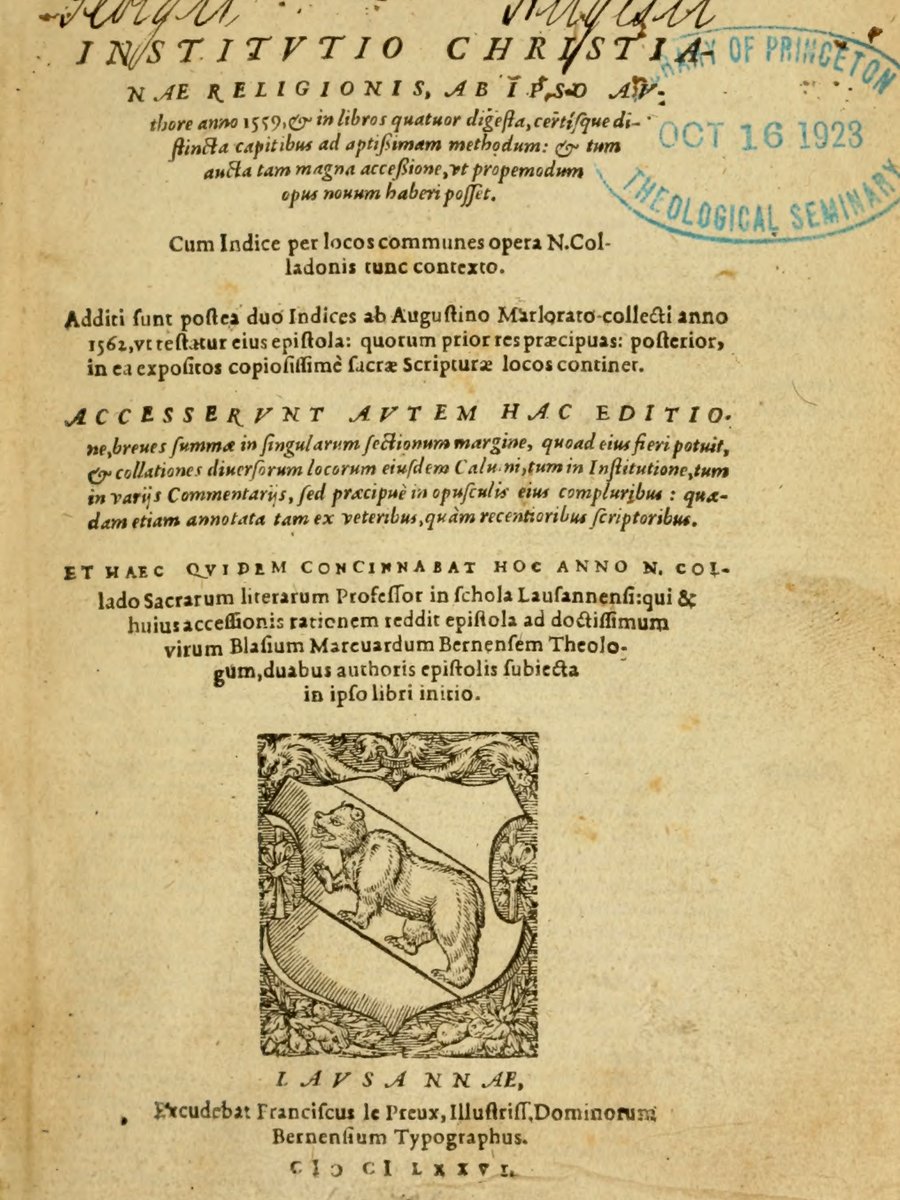
Prefatory Address to Francis, King of France
Praefatio ad Franciscum Regem Galliarum
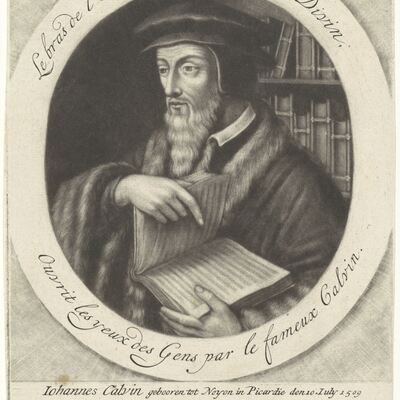 John Calvin
POTENTISSIMO, ILLVSTRISSIMOQUE MONARCHAE, Francisco, Francorum Regi Christianissimo, principi suo, Ioannes Caluinus pacem ac salutem in Christo precatur.
Quum huic operi manum primùm admouerem, nihil minus cogitabam, Rex clarissime, quam scribere quæ maiestati tuæ postea offerrentur. Tantùm erat animus, rudimenta quædam tradere, quibus formarentur ad veram pietatem qui aliquo religionis studio tanguntur. Atq; hunc laborem Gallis nostris potissimùm desudabam, quorum permultos esurire & sitire Christùm intelligebam: paucissimos autem videbam qui vel modica eius cognitione rite imbuti essent. Hâc mihi fuisse propositam rationem liber ipse loquitur, ad simplicé scilicet rudémque docendi formam compositus. Verum quum perspicerem vsque eo quorundam improborum furorem invaluisse in regno tuo, vt nullus sanæ doctrinæ istic sit locus: factum est mihi operæpretium visus sum si eadem opera & institutionem iis darem, & confessionem apud te elegerem, vnde discas qualis sit doctrina in quam tanta rabie exardescunt furiosi illi, qui ferro & ignibus regnum tuum hodie turbât. Neque enim verebor fateri, hîc me summam ferè eius ipsius doctrinæ complexum esse quam illi carcere, exilio, pro-scriptione, incendio mulctandam, quam terra mari que exterminandam vociferantur. Equidé scio quàm atrocibus delationibus aures animumque tuum impleuerint, vt causam nostram tibi quam odiosissimam redderent: sed id tibi pro tua clementia perpendendum est, nullam neque in dictis, neque in factis innocentiam fore, si accusasse sufficiat. Sané si quis faciendæ inuidiæ causa, doctrinam hanc, cuius rationem tibi reddere conor, omnium ordinum calculis damnatâ, multis fori præiudiciis confossam iamdudum fuisse causetur, nihil aliud dixerit quàm partim aduersariorum factione & potentia violenter deiecta: partim mendaciis, technis, calumniis, insidiose fraudulentérq; oppressam. Vis est, quòd indicta causa sanguinariæ sententiæ aduersus illam feruntur: fraus, quòd seditionis & maleficij præter meritum insimulatur. Nequis hæc iniuria nos queri existimet, ipse nobis testis esse potes, Rex nobilissime, quàm mendacibus calumniis quotidie apud te traducatur, quòd non aliorsum spectet nisi vt Regibus sua sceptra è manibus extorqueat, tribunalia, iudiciáque omnia præcipitet, subuertat ordines omnes & politias, pacem & quietem populi perturbet, leges omnes abroget, dominia & possessiones dissipet, omnia deniq; sursum deorsum voluat. Ettamen minimam portiunculam audis. Horréda enim quædam in vulgus sparguntur, quæ si vera essent, meritò illam cum suis authoribus mille ignibus ac crucibus dignam vniuersus mundus iudicet. Quis iam miretur publicum odium in illam accensum esse, vbi iniquissimis istis criminationibus fides habetur? En cur in nostram ipsorum doctrinæq; nostræ damnationem
omnes ordines consentiant ac conspirent. Hoc affectu correpti, qui ad iudicandu sedent, præiudicia, quæ domo attulerunt, pro sententiis pronuntiant: & se rite perfunctos suis partibus putant si neminem ad suppliciu trahi iubeant, nisi aut sua confessione aut solidis testimoniis conuictum. At cuius criminis? Damnate (aiunt) istius doctrinæ. At quo iure damnata est? Id autem erat defensionis præsidiu, non doctrinam ipsam abnegare, sed pro vera tueri. Hic mussitandi quoque facultas præciditur. Quare non pro Euangelio inique postulo, Rex inuictissime, vt integram causæ istius cognitionem suscipias: quæ perturbate hactenus nulloque iuris ordine, & impotenti astu magis quam legitima grauitate tractata est, vel quoquomodo exagitata. Neque hic me priuatam defensionem meditari existimes, qua falsum in patriam reditum mihi conficiam: quam tametsi quo decet humanitatis affectu prosequor, vt nunc tamen res sunt, ea non moleste careo. Verum communem pioru omnium, adeoque ipsam Christi causam complector, quæ modis omnibus hodie in regno tuo proscissa ac protrita, velut deplorata iacet, Pharisæoru id quidem quorundam tyrannide magis quam tua conscientia. Sed qui id fiat, hic dicere nihil attinet: afflicta certe iacet. Hoc enim profecerunt impij, vt Christi veritas, si no vt fugata dissipataqu intereat, certe vt sepulta & ignobilis lateat: paupercula vero Ecclesia aut crudelibus cædibus absumpta sit, aut exiliis abacta, aut minis ac terroribus perculsa, ne hiscere quidem audeat. Et instant etiamnum qua solent insania & ferocitate, fortiter in parietem iam inclinatum, & ruinam quam fecerunt incumbentes. Nullus interim prodit qui talibus furiis patrocinium suum opponat. Quod siqui veritati maxime fauere videri volunt, ignoscendum esse censent errori & imprudentiæ imperitorum hominum. Sic enim modesti homines loquuntur, errorem & imprudentiam vocantes quam norunt certissimam esse Dei veritatem: imperitos homines, quorum ingenium non adeo despicabile Christo fuisse vident, quin cælestis suæ sapientiæ mysteriis dignatus sit. Adeo omnes pudet Euangelij. Tuum autem erit serenissime Rex, nec aures, nec animum a tam iusto patrocinio auertere: præsertim vbi de re tanta agitur: nempe quomodo Dei gloriæ sua constet in terris incolumitas, quomodo suam dignitatem Dei veritas retineat, quomodo regnum Christo sartum tectumque inter nos maneat. Digna auribus tuis, digna tua cognitione, digna tuo tribunali. Siquidem & verum Regem hæc cogitatio facit, agnoscere se in regni administratione Dei ministrum. Nec iam regnum ille sed latrocinium exercet qui non in hoc regnat vt Dei gloriæ seruiat. Porro fallitur qui diuturnam prosperitatem expectat eius regni, quod Dei sceptro, hoc est, sancto eius verbo, non regitur: quando cæleste oraculum excidere non potest, quo edictum est dissipatum iri populum vbi defecerit prophetia. Nec te ab hoc studio abducere debet humilitatis nostræ contemptus. Nos quidem quam pauperculi imus & abiecti homunciones, probe nobis conscij sumus: coram Deo, scilicet, miseri peccatores, in hominum conspectu despectissimi: mundi (si vis) excrementa quædam & reiectamenta, aut siquid adhuc vilius nominari potest: vt, quo apud Deum gloriemur, nihil restet, præter vnam eius misericordiam, qua in spem æternæ salutis nullo nostro merito asciti simus: apud homines vero non ita multu, preter nostram infirmitatem, quam vel nutu confiteri, summa in eos ignominia est. Sed doctrinam nostram supra omnem mundi gloriam sublimem: supra omnem potestatem, inuictam stare oportet: quia non nostra est, sed Dei viuentis, ac Christi eius, quem Pater Regem constituit, vt a mari vsque ad mare dominetur, & a fluminibus vsque ad terminos orbis terrarum. Et sic quidem dominetur, vt totam terram, cum ferreo suo atque æreo robore, cum splendore aureo & argenteo, sola oris sui
sui virga percussam non secus comminuat quam figulina vascula: quemadmodum de magnificentia regni ipsius vaticinantur Prophetæ. Reclamant quidem aduersarij, falso nos prætendere verbum Dei, cuius sceleratissimi simus corruptores. Hæc vero quàm sit non modo malitiosa calumnia, sed insignis quoq; impudentia, ipse, confessionem nostram legendo, pro tua prudentia iudicare poteris. Nonnihil tamen hic etiam dicendum est quod tibi ad lectionem ipsam, vel studium attentionemque excitet, vel certè viam sternat. Paulus, quum ad fidei analogiam omnem prophetiam formatam esse voluit, certissimam amussim posuit qua probari Scripturæ interpretatio debeat. Ad hanc itaque fidei regulam si nostra exigantur, in manibus est victoria. Quid enim melius atque aptius fidei conuenit quam agnoscere nos omni virtute nudos, vt a Deo vestiamur: omni bono vacuos, vt ab ipso impleamur? nos peccatis seruos, vt ab ipso liberemur? nos cæcos, vt ab ipso illuminemur? nos claudos, vt ab ipso dirigamur? nos debiles, vt ab ipso sustentemur? nobis omnem gloriandi materiam detrahere, vt solus ipse gloriosus emineat & nos in ipso gloriemur? Hæc atque id genus reliqua quum a nobis dicuntur, interpellant illi, quiritanturque hoc modo subuetti cæcum nescio quod lumen naturæ, fictas præparationes, liberum arbitrium, & meritoria salutis æternæ opera, cum suis etiam supererogationibus: quia ferre non possunt integram omnis boni, virtutis, iustitiæ, sapientiæ laudem ac gloriam apud Deum residere. At non legimus reprehensos qui nimium e fonte aquæ viuæ hauserint: contrà grauiter obiurgantur qui foderunt sibi puteos contritos, & qui continere aquam non valent. quid fidei conuenientius quàm Deum sibi polliceri propitium Patrem, vbi Christus frater ac propitiator agnoscitur? quàm omnia læta ac prospera securè ab eo expectare, cuius inenarrabilis erga nos dilectio eo progressa est vt proprio Filio non pepercerit quin pro nobis ipsum traderet? quàm in certa expectatione salutis & vitæ æternæ acquiescere, vbi Christus a Patre datus cogitatur, in quo tales thesauri sunt abscondi? Hic nobis manum iniiciunt, & illam fiduciæ certitudinem arrogantia & presumptione non carere clamant. At, vt nihil de nobis, ita omnia de Deo præsumenda sunt: nec alia ratione vana gloria spoliamur nisi vt in Domino discamus gloriari. Quid vltra? Percurre, fortissime Rex, omnes nostræ causæ partes, & quouis sceleratorum hominum genere nequiores nos existima, nisi planè comperias, in hoc nos laborare, & probris affici quia spem reponimus in Deo vino: quia hanc credimus esse vitam æternam, nosse vnum verù Deum, & quem ille misit Iesum Christum. Propter hanc spem, alij nostrum vinculis constringuntur, alij virgis cæduntur, alij in ludibrium circunducuntur, alij proscribuntur, alij sæuissimè torquentur, alij fuga elabuntur: omnes rerum angustia premimur, diris execrationibus deuouemur, maledictis laceramur, indignissimis modis tractamur. Intuere iam in aduersarios nostros (de ordine sacrificorum loquor, quorum nutu & arbitrio alij nobiscum inimicitias exercent) & mecum paulisper reputa quo studio serantur. Veram religionem, quæ Scripturis tradita est, quæque inter omnes constare debuerat, facile & sibi & aliis ignorare, negligere, despicere permittunt: parumque referre putant quid quisque de Deo & Christo teneat, vel non teneat, modò implicita, vt aiunt, fide suam mentem Ecclesiæ iudicio submittat: nec valdè afficiuntur si Dei gloriam manifestis blasphemiis pollui contingat, modò nequis aduersus sedis Apostolicæ primatum & sanctæ matris Ecclesiæ authoritatem digitum tollat. Cur ergo tanta æquitate & acerbitate pro missa, purgatorio, peregrinationibus, & id genus nugis belligerantur, vt sine eorum explicatissima, vt ita dicam, fide saluam
fore pietatem negent, quum tamen nihil eorum a verbo Dei esse probent? Cur nisi quia illis Deus veter est, culina religio: quibus sublatis, non modo non Christianos, sed ne homines quidem futuros se credunt? Tametsi enim alij splendide se ingurgitant, alij tenuibus crustulis victitant, omnes tamen ex eadem viuunt olla, quæ sine illis fomentis non frigeret modo, sed penitus conglaciaret. Ideo vt quisque eorum pro ventre est maxime solicitus, ita pro sua fide deprehenditur bellator acerrimus. Denique huc ad vnum omnes incumbunt, vel vt regnum incolume, vel vt ventrem confertum retineant: nemo vel minimam synceri zeli dat significationem. Nec sic tamen desinunt doctrinam nostram incessere & quibus possunt nominibus criminari & infamare, quo vel inuisam vel suspectam reddant. Nouam appellant: & nuper natam, dubiam esse & incertam cauillantur: rogant quibus confirmata sit miraculis: quærunt an sit æquum vt contra tot sanctorum Patrum consensum, & vetustissima confuetudinem obtineat: vrgent vt schismaticam esse fateamur, quæ contra Ecclesiam præliü moueat: vel Ecclesiam multis seculis intermortuam fuisse, quibus nihil tale auditum fuit. Postremo nihil opus esse aiunt multis argumentis: qualis enim sit iudicari a fructibus posse: vtpote quæ tantum sectarum aceruum, tot seditionum turbas, tantam vitiorum licentiam peperit. Scilicet perquam illis facile est apud credulam imperitamque multitudinem desertæ causæ insultare: verum si nobis quoque mutuæ essent dicendi vices, deferueret profecto hæc acrimonia qua sic in nos plenis buccis, ac tam licenter quàm impune despumant. Principio nouam quod appellant, Deo sunt vehementer iniurij, cuius sacrum verbum nouitatis insimulari non merebatur. Illis quidem nouam esse minime dubito, quibus & Christus nouus est & Euangelium nouum: sed qui illam Pauli concionem veterem esse nouerunt, Iesum Christum mortuum propter peccata nostra, resurrexisse propter iustificationem nostram, nihil apud nos deprehendent nouum. Quod diu incognita sepultaque latuit, humanæ impietatis crimen est: nunc quum Dei benignitate nobis redditur, saltem postliminij iure suam antiquitatem recipere debebat. Ex eodem ignorantiæ fonte pro dubia incertaque habent: hoc profecto est quod Dominus per Prophetam suum conqueritur, Bouem cognouisse possessorem suum, & asinum præsepe dominorum suorum: se non agnosci a populo suo. Verum vt vero in eius incertitudinem ludat, si sua illis proprio sanguine, vitæque dispendio obsignanda esset, liceret spectare quanti ab illis fiat. Longe alia nostra fiducia est, quæ nec mortis terrores, nec adeo ipsum Dei tribunal formidat. Quod miracula a nobis postulant, improbe faciunt: non enim recens aliquod Euangelium cudimus, sed illud ipsum retinemus cuius confirmandæ veritati seruiunt omnia quæ vnquam & Christus & Apostoli miracula ediderunt. At id præ nobis habent singulare, quod assiduis in hunc vsque diem miraculis fidem suam confirmare possunt. Imo potius allegant miracula, quæ animum alioqui bene compositum labefactare queant: adeo aut friuola sunt & ridicula, aut vana & mendacia. Nec tamen, etiamsi valde prodigiosa essent, contra Dei veritatem vllius momenti esse oportebat: quando & nomen Dei sanctificari vbique & semper conuenit, siue portentis, siue naturali rerum ordine. Speciosior forsan esse fucus poterat, nisi de fine visuque miraculorum legitimo Scriptura nos admoneret Signa enim quæ Apostolorum prædicationem sequuta sunt, in eius confirmationem edita fuisse docet Marcus: sic & Lucas Dominum sermoni gratiæ suæ reddidisse testimonium narrat, quum signa & portenta fierent per Apostolorum manus. Cui simillimum est illud Apostoli, Salutem annuntiato Euangelio fuisse confirmatam, contestante Domino signis
signis & portentis & variis virtutibus. Quæ vero audimus Euangelij esse signacula, eane ad diruendam Euangelij fidem conuertemus? quæ veritati tantum obsignandæ sunt destinata an mendaciis confirmandis accommodabimus? Proinde doctrinam, quæ præcedere ab Euangelista dicitur, priore loco examinari exploratique par est. quæ si probata fuerit, tum demum a miraculis suæ confirmationem sumere debet. Probæ autem doctrinæ, authore Christo, ithæc nota est, si non in hominum, sed Dei gloriam quærendam vergit. Hanc quum doctrinæ probationem Christus asserat, perperam censentur miracula quæ alio quàm ad illustrandum vnius Dei nomen trahuntur. Et meminisse nos decet, sua esse Satanæ miracula, quæ tametsi præstigia sunt magis quàm veræ virtutes, sunt tamen eiusmodi quæ imprudentes & imperitos deludant. Magi & incantatores miraculis semper claruerunt. idololatriam stupenda miracula aluerunt: quæ tamen nec magorum, nec idololatrarum superstitionem nobis approbant. Atque hoc olim ariete vulgi simplicitatem concutiebant Donatistæ, quod miraculis pollerent. Idem ergo nunc nostris aduersariis respondemus quod tunc Donatistis Augustinus, Dominum contra istos mirabiliarios, cautos nos fecisse: quum prædixit venturos Pseudoprophetas, qui signis mendacibus variisque prodigiis in errorem electos, si fieri posset, inducant. Et Paulus admonuit, Antichristi regnum futurum cum omni potentia & signis & prodigiis mendacibus. At hæc (inquiunt) miracula non ab idolis, non a maleficis, non a pseudoprophetis: sed a sanctis fiant. Quasi vero non nouerimus hanc esse Satanæ artem, transfigurare se in Angelum lucis. Olim Ægyptiis sepultum apud se Ieremiam sacrificiis aliisque diuinis honoribus prosecuti sunt. nonne sancto Dei Prophetæ ad idololatriam abutebantur? & tamen tali sepulchri veneratione consequebantur, ve curationem a tactu serpentum putarent iustam illius mercedem esse. Quid dicemus? nisi fuisse hanc semperque fore iustissimam Dei vindictam, iis qui dilectionem veritatis non receperunt, mittere efficaciam illusionis, vt credant mendacio. Miracula ergo nobis minime desunt, eaque certa nec cauillis obnoxia. Quæ autem illi pro se obtendunt, meræ sunt Satanæ illusiones, quando a vero Dei sui cultu ad vanitatem populum abducunt.
- Præterea calumniose nobis Patres opponunt (antiquos & melioris adhuc seculi scriptores intelligo) acsi eos haberent suæ impietatis suffragatores. quorum authoritate si dirimendum certamen esset, melior victoræ pars (vt modestissime etiam loquar) ad nos inclinaret. Verùm quum multa præclare & sapienter ab illis Patribus scripta sint, in quibusdam vero iis acciderit quod hominibus solet, isti pij scilicet filij, qua sunt & ingenii & iudicij & animi dexteritate, eorum tantum lapsus & errores adorant: quæ benedicta sunt, vel non obseruant, vel dissimulant, vel corrumpunt: vt dicas prorsus illis curæ fuisse, in auro legere stercora. Tum improbis clamoribus nos obruunt, ceu Patrum contemptores & aduersarios. Nos vero adeo illos non contemnimus, vt si id præsentis instituti esset, nullo negotio mihi liceat meliorem eorum partem quæ hodie a nobis dicuntur, ipsorum suffragiis comprobare.
- Sic tamen in eorum scriptis versámur, vt semper meminerimus, omnia nostra esse, quæ nobis seruiant, non dominentur: nos autem vnius Christi, cui per omnia, sine exceptione, parendum sit. Hunc dilectum qui non tenet, nihil in religione constitutum habebit, quando multa ignorarunt sancti viri illi: sæpe inter se conflictantur, iterdum etiam secum ipsi pugnant.
- Non sine causa (inquiunt) a Solomone admonemur ne transgredíamur antiquos terminos quos posuerunt patres nostri. At non eadem est regula in agrorum limitibus & obedientia fidei: quam sic comparatam
esse oportet vt obliuiscatur populum suum & domum patris sui. Quod si tantopere gestiunt αλληγορειν, cur non Apostolos potius, quam alios quosuis, Patres interpretantur, a quibus praescriptos terminos nefas sit reuellere? sic enim interpretatus est Hieronymus, cuius verba in suos canones retulerunt. Quod si eorum, quos intelligunt, fixos volunt esse terminos: cur ipsi, quoties liber, adeo licenter transgrediuntur? Ex etiam Patrum, qui erant, quorum alter dixit, Deum nostrum non edere neque bibere: itaque non habere opus calicibus neque discis: alter, sacra aurum non quaerere, neque auro placere quae auro non emuntur. Transgrediuntur ergo limitem quum in sacris tantopere auro, argento, ebore, marmere, lapillis, sericis delectantur, nec rite Deum coli putant nisi omnia exquisito splendore vel potius insano luxu diffluat. Pater erat qui dixit, ideo se libere carnes edere quo die caeteri abstinebant, quia Christianus esset. Itaque fines transiliunt quum diris animam deuouent quae per quadragesimam carnem gustauerit. Patres erant, quorum vnus dixit, monachum, qui manibus suis non laboret, violento, aut si mauis lationi, iudicari aequalem: alter, non licere monachis ex alieno viuere, etiamsi assidui sint in contemplationibus, in orationibus, in studiis. Et huc limitem transgressi sunt, quum otiosos ac delicatos monachorum ventres in lustris ac fornicibus collocarunt, qui aliena substantia saginaretur. Pater erat qui dixit horrendam esse abominationem, videre depictam vel Christi vel sancti vllius imaginem in Christianorum templis. Neque id hominis vnius voce pronuntiatum est, sed ab Ecclesiastico etiam Concilio decretum, ne quod colitur, in parietibus depingatur. Plurimum abest quin se intra hos fines contineant, quando non relinquunt angulum imaginibus vacuum. Alius Pater consuluit vt officio humanitatis erga mortuos in sepultura defuncti, sineremus eos quiescere. Hos limites perrumpunt quum perpetuam mortuorum solicitudinem incutiunt. Ex Patribus erat qui substantiam panis & vini testatur in Eucharistia ita permanere & non desistere, sicut manet in Christo Domino substantia & natura hominis, iuncta diuina. Igitur modum praetereunt qui fingunt definere substantiam panis & vini verbis Domini recitatis, vt in corpus ac sanguinem transsubstantietur. Patres erant qui vniuersae Ecclesiae vnam duntaxat Eucharistiam exhibebant, atque vt inde arcebant flagitiosos & sceleratos, ita grauissime damnabat omnes eos qui praesentes ea non communicarent. Hos fines quam procul submouerunt? quum non templa tantum, sed etiam priuatas domos Missis suis replent, ad eas spectandas quosuis admittunt, & eo quemque libentius, quo largius quisque numerat, quantumuis impuri sint & scelerati: ad fidem in Christum, & fidem Sacramentorum communionem inuitant neminem: quin potius suum opus pro gratia & merito Christi venditant. Patres erant, quorum vnus ab vsu sacrae Christi Cenae in totum submouendos decreuit qui alterius speciei participatione contenti, ab altera abstinebant: alter fortiter pugnat, non denegandum populo Christiano Domini sui sanguinem, pro cuius confessione sanguinem suum effundere iubetur. Hos quoque terminos sustulerunt, quum inuiolabili lege idipsum iusserunt quod ille excommunicatione puniebat, hic valida ratione improbabat. Pater erat qui temeritatem esse asseruit, de re obscura in vtramuis partem definire sine claris atque euidentibus Scripturae testimoniis. Hunc terminum obliti sunt quum tot constitutiones, tot Canones, tot magistrales determinationes sine vllo Dei verbo statuerunt. Pater erat qui Montano inter alias haereses exprobrauit quod primus ieiuniorum leges imposuisset. Hunc quoque terminum longe excessere quum ieiunia strictissimis legibus sanxerunt. Pater erat qui negauit Ecclesiae ministris
ministris interdicendum coniugium, castitatem pronuntiauit, cum propria vxore concubitum. & Patres erant qui eius authoritati assenserunt. His finibus egressi sunt quum suis sacrificis cælibatum seuere indixerunt. Pater erat qui censuit vnum Christum audiendum esse, de quo dictum sit, Ipsum audite: nec respiciendum quid alij ante nos aut dixerint, aut fecerint, sed quid (qui primus omnium est) Christus præceperit. Hunc finem neque ipsi sibi præstituunt, neque aliis præstitutum habere permittunt, dum quo suis potius & sibi & aliis magistros quam Christum præficiunt. Pater erat, qui contendit Ecclesiam non debere se Christo præponere, quia ille semper veraciter iudicet: Ecclesiastici autem iudices, sicut homines, plerunque fallantur. hoc etiam fine perrupto, asserere non dubitant totam Scripturæ authoritatem ab Ecclesiæ arbitrio pendere. Patres omnes vno pectore execrati sunt & vno ore detestati, sanctum Dei verbum sophistarum argutiis contaminari & dialecticorum rixis implicari. An isti iis limitibus se continent, dum nihil aliud in tota vita moliuntur, quam infinitis contentionibus & plusquam sophisticis iurgiis Scripturæ simplicitatem inuoluere & impedire? vt si nunc Patres suscitantur & huiusmodi iurgandi artem audiant, quam speculatiuam theologiam appellant isti, nihil minus credant quam de Deo haberi disputationem. Verum latius iustis spatiis sese oratio nostra effunderet, si recensere vellem quam petulanter isti Patrum iugum, quorum obseruantes filij videri volunt, excutiant. Menses profecto atque anni me deficerent. Et adeo perdita sunt, deplorataque impudentia, vt nos castigare ausint quod terminos antiquos transgredi non dubitemus. Iam vero quod nos ad consuetudinem vocant, nihil efficiunt. Iniustissime enim nobiscum agitur, si consuetudini cedendum esset. Equidem si recta essent hominum iudicia, consuetudo a bonis petenda erat. Verum longe aliter sæpiuscule agi contingit, quod enim a multis fieri conspectum est, consuetudinis ius mox obtinet. Atqui vix vnquam tam bene habuerunt res humanæ vt pluribus placeret meliora. Ergo ex priuatis multorum vitiis publicus error plerunque factus est, uel potius communis vitiorum consensus: que nunc boni isti viri pro lege esse volunt. Vident qui oculos habent, non vnum mare malorum inundasse, multas fonticas pestes inuasisse orbem, omnia in præceps ruere: vt aut prorsus res humanæ deplorandæ sint, aut tantis malis iniicienda manus, vel potius vis afferenda. Et abigitur remedium non alia ratione nisi quia iampridem malis assueuimus. Sed locum sane habeat in hominum societate publicus error: in regno tamen Dei sola eius æterna veritas audienda & spectanda est cui, nulla annorum serie, nulla consuetudine, nulla coniuratione præscribi potest. Sic quondam electos Dei docebat Isaias ne diceret Conspiratio, ad omnia in quibus populus dicebat Conspiratio. hoc est, Ne in sceleratum populi consensum vna ipsi conspirarent, neve timore eius timerent ac formidarent: sed potius vt Dominum exercitui sanctificaret, & ipse esset timor eorum & pauor. Nunc itaque, vt volent, & præterita secula & præsentia exempla nobis obiectent: si Dominum exercituum sanctificauerimus, non valde terrebimur. Siue enim in simile impietate multa secula consenserint, fortis est qui vltionem in tertiam & quartam generationem faciat: siue totus simul orbis in eadem nequitiam conspiret, experimento docuit quis sit eorum exitus qui cum multitudine delinquunt, quum vniuersum hominum genus diluuio perdidit, seruato Noe cum modica familia, qui per suam vnius fidem totum orbem condemnaret. Denique praua consuetudo non secus ac publica quædam est pestis, in qua non minus pereunt qui in turba cadunt. Adhæc expendere decebat quod alicubi dicit Cyprianus, eos qui ignoratione peccant, etsi non possint omni se culpa eximere, videri tamen posse
quoquomodo excusabiles: oblatam autem Dei beneficio veritatem qui pertinaciter respuant, nihil habere quod obtendant. Dilemmate suo non adeo vehementer nos premunt vt fateri adigant vel Ecclesiam fuisse aliquandiu intermortuam, vel nunc cum Ecclesia nobis licem esse. Vixit sane Christi Ecclesia, & viuet quandiu Christus regnabit ad dexteram Patris, cuius manu sustinetur, cuius praesidio defenditur, cuius virtute suam incolumitatem retinet. Prastabit enim ille indubie quod semel recepit, se adfuturum suis vsq; ad consummationem seculi. Aduersus eam nulla nunc nobis pugna est: siquidem Deum vnum & Christum Dominum vno consensu cum omni fidelium populo, colimus & adoramus: qualiter semper ab omnibus piis adoratus est. Sed non parum a vero ipsi aberrant, dum Ecclesiam non agnoscunt nisi quam praesenti oculo cernant, & eam iis sinibus circumscribere conantur quibus minime inclusa est. In his cardinibus controversia nostra vertitur: primum quod Ecclesiae formam semper apparere & spectabilem esse contendunt: deinde quod formam ipsam in sede Romanae Ecclesiae & Praesulum suorum ordine constituant. Nos contra asserimus, & Ecclesiam nulla apparente forma constare posse, nec formam externo illo splendore, quem stulte admirantur, sed longe alia nota contineri: nempe pura verbi Dei praedicatione, & legitima sacramentorum administratione. Fremunt nisi Ecclesia digito semper ostendatur. Sed quam saepe in populo Iudaeorum sic deformari contigit, vt nulla species emineret? quam putamus formam resplenduisse, quum Helias solum se relictum deploraret? quandiu ab aduentu Christi deformis latuit? quoties ab eo tempore bellis, seditionibus, haeresibus sic oppressa est vt nulla parte fulgeret? An si eo tempore vixissent, credidissent viuam esse Ecclesiam: sed audiuit Elias salua esse septem millia virorum qui non curvauerant genu coram Baal. Nec dubium nobis esse debet quin semper in terris regnauerit Christus ex quo coelum ascendit. Notabilem vero aliquam formam si tum piis oculis requisissent, nonne protinus concidissent animis? Et sane id iam summi vitij loco in suo seculo ducebat Hilarius, quod stulta Episcopalis dignitatis admiratione occupati, latentem sub ea larua exitialem pestem non animaduerterent. sic enim loquitur, Vnum moneo, cauete Antichristum: male enim vos parietum amor coepit: male Ecclesiam Dei in tectis aedificiisque veneramini: male sub iis, pacis nomen ingeritis. Anne ambiguum est in iis Antichristum esse sessurum? Montes mihi, & syluae, & lacus, & carceres, & voragines sunt tutiores: in iis enim Prophetae aut manentes aut demissi prophetabant. Quid autem hodie in cornutis suis Episcopis mundus veneratur, nisi quoniam sanctos esse religionis praesules autumant, quos celebribus vrbibus videt praesidere? Abijce ergo tam stupidam aestimationem. Quin potius permittamus hoc Domino, vt quando ipse solus nouit qui sui sint, interdum etiam Ecclesiae suae exteriorem notitiam ab hominum aspectu auferat. Est, fateor, horribilis illa Dei vindicta super terram: sed si ita meretur hominum impietas, cur iustae Dei vltioni obsistere nitimur? Sic anteactis seculis Dominus hominum ingratitudinem vlus est. nam quia veritati suae obedire noluerant, & lucem suam extinxerant, eos excaecatos sensu, & absurdis mendaciis ludi, & altis tenebris immergi passus est, vt nulla verae Ecclesiae facies extaret. interim tamen suos & dispersos & delitescentes, in mediis erroribus & tenebris ab exitio seruauit. Nec mirum: didicit enim seruare & in ipsa confusione Babylonis, & flamma fornacis ardentis. Quod autem formam Ecclesiae nescio qua vana pompa censeri volunt, id quam periculosum sit paucis indicabo magis quam enarrabo, ne orationem in immensum extraham. Pontifex, inquiunt, qui sedem Apostolicam tenet, & qui ab eo anti-
antistites sunt inducti & consecrati, insulis modo & lituis insigniti sint, Ecclesiam repraesentant, & pro Ecclesia haberi debent. ideo nec errare possunt. Qui sic? quia pastores sunt Ecclesiae, & consecrati Domino. Et Aaron, ceterique praefecti Israel nonne pastores erant: Aaron vero & filii eius iam Sacerdotes designati, erraverunt tamen, quum vitulum fabricauerunt. Cur secundum hanc rationem, Ecclesiam non repraesentassent quadringenti illi prophetae qui Achab mentiebatur? At Ecclesia stabat a partibus Michae, solitarius quidem & contemptibilis, sed ex cuius ore verum egrediebatur. Nonne & nomen & faciem Ecclesiae pre sese ferebant Prophetae, quum vno impetu adversus Ieremiam insurgerent, & minaces iactarent fieri non posse vt periret Lex a Sacerdote, consilium a sapiente, verbum a propheta? Adversus totam prophetarum nationem solus Ieremias missus, qui a Domino denunciet fore vt Lex pereat a Sacerdote, consilium a sapiente, verbum a Propheta. Nonne talis splendor refulsebat in eo concilio quod Pontifices, Scribae & Pharisaei collegerant, consilia de interficiendo Christo captantes? Eant nunc, & in externa fastu haereant, vt Christum & omnes Dei Prophetas faciant schismaticos: Satan rursum ministros faciant Spiritus sancti organa. Quod si ex animo loquuntur, respondeant mihi bona fide, vbinam gentium ac locorum Ecclesiam residere existiment ex quo Basiliensis Concilij decreto deiectus & abdicatus est Pontificatu Eugenius, subrogato in eius locum Amedeo? Negare, vel si rumpantur, nequeunt, Concilium quantum ad externos ritus attinet, fuisse legitimum: nec ab vno tantum Pontifice, sed a duobus indictum. Damnatus est illic Eugenius schismatis, rebellionis, pertinaciae, cum toto Cardinalium & Episcoporum grege qui cum eo Concilii dissolutionem admoliti erant. Postea tamen Principum favore sublevatus, salvum Pontificatum recepit. Illa Amedei electio, generalis & sacrosanctae Synodi authoritate rite peracta, in fumum abiit: nisi quod ipse galero cardinalitio, ceu canis latrans iniecta offa, placatus est. Ex illorum haereticorum rebellium, pertinacium, gremio prodiit quicquid postea Paparum, Cardinalium, Episcoporum, Abbatum, Presbyterorum fuit. Hic deprehensi haerent necesse est. Vtram enim in partem Ecclesiae nomen conferent: negabuntne Concilium generale fuisse, cui nihil ad exteriorem maiestatem deerat? nempe quod duobus diplomatibus sollenniter indictum, praesidente Romanae sedis Legato, consecratum, rerum omnium ordine bene compositum, eadem semper dignitate ad extremum perseuerauit. Fatebuntur schismaticum Eugenium cum tota sua cohorte, a qua omnes sanctificati sunt? Aut igitur Ecclesiae formam aliter definiant: aut quotquot sunt, habebuntur a nobis schismatici, qui scientes volentes ab haereticis ordinati sunt. Quod si nunquam antea compertum fuisset, externis pompis non alligari Ecclesiam, ipsi prolixo documento nobis esse possunt, qui sub specioso illo Ecclesiae titulo tandiu se orbi superciliose venditarunt, quum tamen essent exitiales Ecclesiae pestes. De moribus non loquor, & tragicis illis facinoribus, quibus scatet tota eorum vita: quando Pharisaeos se esse aiunt, qui sint audiendi non imitandi. Ipsam, ipsam doctrinam, cui id deberi aiunt quod sunt Ecclesia, exitialem animarum carnificinam, facem, ruinam, & excidium Ecclesiae esse non obscure cognosces, si legendis nostris aliquantum operae dederis. Postremo non satis candide faciunt quum invidiose commemorant quantas turbas, tumultus, contentiones secum traxerit nostrae doctrinae praedicatio, & quos nunc in multis fructus ferat. nam horum malorum culpa indigne in ipsam derivatur, quae in Satanae malitiam torqueri debuerat. Est hic divini verbi quidam quasi genius, vt nunquam emergat, quieto ac dormiente Satana. haec certissima & in primis fidelis
nota, qua discernitur a mendacibus doctrinis, que se facile produnt dum æquis omnium auribus recipiuntur, & a mundo plaudente audiuntur. Sic seculis aliquot, quibus profundis tenebris submersa fuerunt omnia, huic mundi domino cuncti fere mortales ludus erant ac iocus, nec secus ac Sardanapalus aliquis in alta pace desidebat ac deliciabatur. quid enim aliud quam risisset ac lusisset, tranquilla ac pacata regni possessione? At vero vbi lux e supernis affulgens tenebras eius aliquantum discussit, vbi fortis ille regnum eius turbauit ac perculit, tum vero solitum suum torporem excutere cœpit, & arma corripere. Et primum quidem hominum manus concitauit, quibus illucescentem veritatem violenter opprimerent, per quas vbi nihil profectum est, ad insidias se conuertit: dissidia, & dogmatum contentiones per catabaptistas suos, & alia nebulonum portenta excitauit, quibus eam obscuraret, tande & extingueret. Et nunc vtraque machina ipsam tentare perseucrat. siquidem & verum illud semen vi ac manu hominum euellere conatur, & suis zizaniis (quantum in se est) nititur obcæcare, ne crescat, & fructum reddat. Id tamen ipsum frustra, si monitorem Dominum audimus, qui & eius artes multo ante nobis aperuit, ne incautos deprehenderet, & contra omnes eius machinas satis firmis praesidiis armauit. Cæterum, in ipsum Dei verbum inuidiam conferre, aut seditionum quas improbi & rebelles, aut sanctarum, quas impostores contra excitant, quanta est malignitas? Nouum tamen exemplum non est. Interrogabatur Elias annon is esset qui turbabat Israel. Christus seditiosus Iudæis erat. Apostolis crimen impingebatur commotionis popularis. Quid aliud agunt qui hodie omnes turbas, tumultus, contentiones quæ in nos ebulliunt, nobis imputant? Talibus autem quid respondendum sit, docuit nos Elias, nos non esse qui vel errores spargimus vel tumultus commouemus: sed eos ipsos qui Dei virtuti obluctantur. Verum vt illud vnum ad retundendam eorum temeritatem satis est: ita rursum aliorum imbecillitati occurrendum, quos talibus offendiculis commoueri, & perturbatos vacillare non raro contingit. Illi vero ne hac perturbatione labascant, ac de gradu deiiciantur, sciant eadem expertos esse suo seculo Apostolos quæ nunc vsu nobis veniunt. Erant indocti & instabiles, qui ad suam ipsorum perniciem deprauarent quæ a Paulo diuinitus scripta erant, vt ait Petrus. Erant Dei contemptores, qui quum audiebant abundasse peccatum vt gratia exundaret, statim ingerebant, Manebimus in peccato, vt gratia abundet. Quum audiebant fideles non esse sub Lege, protinus occinebant, Peccabimus, quia non sumus sub Lege, sed sub gratia. Erant qui illum mali suasorem arguebant. Subintrabant multi pseudoapostoli, qui dirueret Ecclesias quas ipse ædificauerat. Quidam per inuidiam & contentionem, nec syncere Euangelium prædicabant, malitiose etiam: cogitantes se pressuram suscitare vinculis eius: Alicubi non multus erat Euangelij profectus. Omnes quæ sua erant, quærebant, non quæ Iesu Christi. Alij retrorsum abibant, canes ad vomitum, & sues ad volutabrum luti. Plerique libertatem Spiritus rapiebant ad licentiam carnis. Insinuabant sese multi fratres, a quibus deinde piis imminebant pericula. Inter ipsos fratres variæ concertationes suscitabantur. Qui hic Apostolis agendum erat? annon vel ad tempus dissimulandum, vel potius omittendum illud Euangelium ac deserendum erat, quod tot litium videbant esse seminarium, tot periculorum materiam, tot scandalorum occasionem? At in huiusmodi angustiis succurrebat, Christum esse lapidem offensionis, & petram scandali, positam in ruinam & resurrectionem multorum, & in signum cui contradiceretur. qua fiducia armati per omnia tumultuum offensionumque discrimina audacter progrediebantur. Eadé & nos cogitatione sustentari decet, quando hunc perpetuum
petuum Euangelij genium esse testatur Paulus, vt sit odor mortis in mortem iis qui pereunt:tametsi in hunc potius vsum nobis destinatum erat, vt odor esset vitæ in vitam, ac potentia Dei in salutem fidelium. quod ipsum nos quo que certè experiremur, nisi nostra ingratitudine corrumperemur hoc tam singulare Dei beneficium, ac in exitium nostrum verteremus quod nobis vnicum salutis præsidium esse debuerat. Sed ad te reuertor, ô Rex. Nihil te moueant vanæ illæ delationes, quibus terrorem tibi iniicere nituntur nostri aduersarij. Non aliud hoc nouo Euangelio, (sic enim appellant) captari ac quæri, nisi seditionum opportunitatem ac vitiorum omnium impunitatem. Neque enim diuisionis Deus noster author est, sed pacis: & Filius Dei non peccati minister est, qui venit ad dissoluenda opera diaboli. Et nos talium cupiditatum immeritò accusamur, quarum ne minimam quidem suspicionem vnquam dedimus. Scilicet nos regnorum inuersionem meditamur: quorum nulla vnquam factiosa vox audita est, & vita semper quieta simplexque cognita fuit, quu sub te viueremus: & qui nunc etiam domo profugi, tibi tamen regnoq; tuo fausta omnia precari non definimus. Scilicet nos impunitam vitiorum petulantiam aucupamur, quorum in moribus etsi multa reprehendi possunt, nihil tamen tanta insultatione dignum, nec tam infeliciter (gratia Dei)in Euangelio profecimus quin istis obtrectatoribus vita nostra, castitatis, benignitatis, misericordiæ, continentiæ, patientiæ, modestiæ, & virtutis cuiusuis exemplum esse possit. Nos sane Deum syncere timere & colere re ipsa palàm est, quando tum vita tum morte nostra nomen eius sanctificari petimus, & ipsa inuidia coacta est quibusdam nostrum innocentiæ & ciuilis integritatis testimonium dare: in quibus id vnum morte plectebatur quod singulari in laude ponendum erat. Quòd si qui sub prætextu Euangelij tumultuantur (quales hactenus aliquos in regno tuo fuisse non compertum est) si qui vitiorum suorum licentiæ, libertatem gratiæ Dei prætexunt, (quales permultos noui) sunt leges & legum pœnæ, quibus pro meritis grauiter coerceantur: modo ne interim Euangelium Dei ob scelestorum hominum nequitiam malè audiat. Habes, Rex, satis multis expositam calumniatorum virulentam iniquitatem, ne in eorum delationes vltra modum credula aure propędas. vereor etiam ne nimis multis: quando hæc iam præfatio ad iustæ pene apologiæ modum accedit: qua non defensionem texere, sed duntaxat ad ipsam causæ actionem audiendam animum tuum præmollire studui, aduersum quidem nunc & alienatum à nobis, addo etiam inflammatum: sed cuius gratiam recolligere nos posse confidimus si hanc nostram confessionem, quam pro defensione apud tuam maiestatem esse volumus, placidus compositusque semel legeris. Sin verò ita aures tuas occupant maleuolorum susurri, vt nullus sit reis pro se dicendi locus: importune ve id illæ furiæ, te connivente, semper vinculis, flagris, equuleis sectionibus, incendiis sæuiunt, nos qui semper velut oues mactationis destinatæ, ad extrema quæque redigemur: si tamen, vt in patientia nostra possideamus animas nostras, & manum Domini Fortem expectemus: quæ indubie tempore aderit, & sese armata exeret tum ad pauperes ex afflictione eruendos, tum etiam ad vindicandos qui tanta securitate nunc exultant, contemptores. Dominus, Rex regum thronum tuum iustitia stabiliat, & solium tuum æquitate.
TO THE MOST POWERFUL AND MOST ILLUSTRIOUS MONARCH, Francis, Most Christian King of the French, his prince, John Calvin prays for peace and salvation in Christ.
When I first set my hand to this work, most illustrious King, I had no thought at all of writing something that would afterward be offered to your Majesty. My purpose was only to convey certain rudiments by which those who are touched by any zeal for religion might be formed to true piety. And this labor I was sweating out chiefly for our French countrymen, of whom I perceived very many to be hungering and thirsting for Christ, yet I saw very few who had been rightly imbued even with a modest knowledge of him. The book itself speaks to what I had set before me as my aim — composed, that is, for a simple and unpolished form of teaching. But when I perceived that the fury of certain wicked men had so prevailed in your kingdom that there was no room there for sound doctrine, I was moved to think it worthwhile to use the same work both to give instruction to those people and to make my confession before you, so that you might learn the character of the teaching against which those madmen are inflamed with such great rage — men who today trouble your kingdom with sword and fire. For I shall not be afraid to confess that what I have here set forth is very nearly the sum of that very doctrine which they cry out must be punished with prison, exile, proscription, and fire, and exterminated from land and sea. I am well aware of how dreadful are the accusations with which they have filled your ears and your mind, so as to make our cause most odious to you. But this you must weigh, in accordance with your clemency: that no innocence, whether in words or in deeds, will stand if it is sufficient merely to accuse. Indeed, if someone should allege, for the purpose of exciting hatred, that this doctrine — the account of which I am now endeavoring to render to you — was long ago condemned by the votes of all the estates and has been pierced through with many judicial prejudgments, he will have said nothing more than that it was partly violently overthrown by the faction and power of our adversaries, and partly suppressed by lies, tricks, calumnies, and treacherous fraud. It is an act of violence that bloodthirsty sentences are pronounced against it without hearing of the case; a fraud that it is charged — beyond its desert — with sedition and wickedness. Let no one think that we complain of these wrongs unjustly: you yourself, most noble King, can be our witness of how daily, by lying calumnies, it is misrepresented to you as aiming at nothing other than to wrest the scepters from the hands of kings, to overturn all tribunals and courts, to subvert all orders and civil polities, to disturb the peace and quiet of the people, to annul all laws, to scatter all lordships and possessions, and finally to turn everything upside down. And yet you hear the smallest fraction of it. For certain horrors are spread abroad among the common people which, if they were true, would cause the whole world rightly to judge it worthy of a thousand fires and crosses, along with its authors. Who would now wonder that public hatred has been kindled against it, when faith is given to such utterly false accusations? Behold the reason why all the estates together consent and conspire to condemn us and our doctrine.
Seized by this disposition, those who sit in judgment pronounce as verdicts the prejudices they brought from home, and think they have properly discharged their duties if no one is led to punishment unless convicted either by his own confession or by solid testimony. But convicted of what crime? “Condemn him!” — they say — “for this doctrine.” But by what right has it been condemned? Yet this was the chief defense: not to deny the doctrine itself, but to defend it as true. Here even the ability to murmur is cut off. Therefore, most unconquered King, I am not asking on behalf of the Gospel anything unjust — only that you take up a full cognizance of this cause, which has until now been handled in a confused manner, with no legal order, and by insolent cunning rather than by lawful gravity, or in whatever way tossed about and harassed. Do not think that I am here planning a private defense by which I might fabricate for myself a false return to my homeland — which, though I pursue it with the affection of humanity that is appropriate, yet in the present state of affairs I do not miss with great distress. Rather, I embrace the common cause of all the pious, and indeed the cause of Christ himself, which in every way lies today in your kingdom — torn apart and trampled down, left as if in despair — by the tyranny, that is, of certain Pharisees more than by your own conscience. But what brings this about, there is no point in saying here; certainly it lies prostrate and afflicted. For the impious have accomplished this much: that the truth of Christ, if not perishing as driven out and scattered, yet lurks as buried and obscure; while the poor little Church is either consumed by cruel massacres, or driven away by exiles, or struck down by threats and terrors, so that it does not dare even to open its mouth. And still they press on with their accustomed madness and ferocity, pushing hard against a wall already leaning, and pressing upon the ruin they have made. No one meanwhile comes forward to oppose such furies with his advocacy. And if any seem to wish to appear most favorable to truth, they think that the error and imprudence of ignorant men must be excused. For in such terms do temperate men speak — calling “error and imprudence” what they know with certainty to be the truth of God; calling “ignorant men” those whose intellect they see was not so contemptible to Christ but that he deigned to honor them with the mysteries of his heavenly wisdom. So much are all ashamed of the Gospel. But it will be for you, most serene King, not to turn aside your ears or your mind from so just a defense — especially where the matter at stake is so great: namely, how the glory of God may remain safe and unharmed on earth, how the truth of God may retain its dignity, how the kingdom of Christ may remain whole and intact among us. These things are worthy of your ears, worthy of your knowledge, worthy of your tribunal. For this very consideration also makes a true king: to recognize that in the administration of his kingdom he is the minister of God. Nor does he any longer exercise a kingdom but a robbery who does not reign to this end — to serve the glory of God. Moreover, he is deceived who expects lasting prosperity for that kingdom which is not governed by the scepter of God — that is, by his holy Word — since the heavenly oracle cannot fail, by which it has been decreed that the people will be scattered where prophecy has ceased. Nor should contempt for our lowliness draw you away from this concern. We are indeed most fully conscious within ourselves of how poor and abject little men we are: before God, certainly, wretched sinners; in the sight of men, the most despised; the filth of the world (if you wish) and its off-scouring, or if anything still more vile can be named — so that nothing remains for us to glory in before God except his mercy alone, by which we have been admitted, through no merit of our own, to the hope of eternal salvation; and before men not very much, except our weakness, which it is the greatest ignominy toward them even to acknowledge with a nod. But our doctrine must stand exalted above all the glory of the world, invincible above all power; because it is not ours, but that of the living God, and of his Christ, whom the Father has established as King to have dominion from sea to sea and from the rivers to the ends of the earth. And to have dominion in such a way that he might shatter the whole earth, with its iron and bronze strength and its golden and silver splendor, with the rod of his mouth alone —
struck down by the rod of his mouth no differently than earthen vessels are shattered — just as the Prophets foretell concerning the magnificence of his kingdom. Our adversaries object, indeed, that we falsely claim the word of God, being the most wicked of its corrupters. Yet how malicious a slander this is — and how remarkable an instance of shamelessness — you yourself, most prudent king, will be able to judge by reading our confession. Something must nonetheless be said here that may either stir you to read it attentively and with care, or at least prepare the way. When Paul wished all prophecy to be formed according to the analogy of faith, he set down the surest standard by which the interpretation of Scripture ought to be tested. If our [teachings] are measured against this rule of faith, the victory is in our hands. For what agrees better and more fittingly with faith than to acknowledge ourselves stripped of every virtue, that God may clothe us; empty of all good, that he may fill us; slaves to sin, that he may free us; blind, that he may enlighten us; lame, that he may direct us; weak, that he may sustain us? To strip away from ourselves every occasion of boasting, that he alone may stand forth glorious and we may glory in him? When we say these things and the like, our opponents interrupt and cry out that we are somehow overturning that blind, supposed light of nature, fictitious preparations [for grace], free will, and the meritorious works of eternal salvation, together with their works of supererogation — because they cannot bear that the full praise and glory of every good, virtue, righteousness, and wisdom should reside with God [alone]. Yet we do not read that those who drew too deeply from the fountain of living water were rebuked; on the contrary, those who dug for themselves broken cisterns that cannot hold water are sternly reproved. What is more consistent with faith than to trust that God is a propitious Father when Christ is acknowledged as brother and propitiator? Than to await all things good and prosperous with confidence from him whose inexpressible love toward us advanced so far that he did not spare his own Son but delivered him up for us? Than to rest in certain expectation of salvation and eternal life when Christ, given by the Father, is contemplated as the one in whom such treasures are hidden? Here they lay hands upon us and cry that such confidence of assurance is not free from arrogance and presumption. But, while we presume nothing of ourselves, we ought to presume all things of God; and it is by no other means that we are stripped of vain glory than by learning to glory in the Lord. What more? Survey, most valiant king, all the particulars of our cause, and judge us more wicked than any class of criminal, unless you clearly discover that we labor and suffer reproach for this reason: that we place our hope in the living God; that we believe this to be eternal life, to know the one true God and Jesus Christ whom he has sent. For this hope, some of us are bound in chains, others beaten with rods, others led about in mockery, others proscribed, others most cruelly tortured, others escape by flight; we are all pressed by want of means, cursed with dreadful imprecations, lacerated with abuse, treated in the most unworthy manner. Look now upon our adversaries — I speak of the order of the priests, by whose nod and pleasure others wage enmity against us — and reckon with me for a moment what zeal drives them. The true religion, handed down in the Scriptures, which ought to be agreed upon by all, they easily allow themselves and others to ignore, neglect, and despise; and they think it matters little what anyone holds or does not hold concerning God and Christ, provided only that they submit their minds to the judgment of the Church by implicit faith, as they call it. They are not greatly troubled if the glory of God happens to be polluted by manifest blasphemies, so long as no one raises a finger against the primacy of the Apostolic See and the authority of holy mother Church. Why then do they wage war with such unvarying zeal and bitterness for the mass, purgatory, pilgrimages, and trifles of that sort, declaring that there is no salvation without the most explicit faith [as I may call it] in these things,
when they prove none of these things from the word of God? Why, unless it is because for them God is their belly and religion their kitchen, without which they believe they would be not merely un-Christian but not even human? For although some gorge themselves splendidly and others subsist on thin scraps, they all live from the same pot, which without such fuel would not merely grow cold but would freeze entirely solid. Therefore, as each of them is most anxious for his belly, so he is found the most ardent champion of his faith. In the end they all bend their efforts to this single aim: either to keep their kingdom intact or their belly full; not one gives the least sign of genuine zeal. And yet they do not cease to assail our doctrine and to accuse and defame it by every name they can, to make it either odious or suspect. They call it new, and newly born, and cavil that it is doubtful and uncertain; they ask what miracles confirm it; they inquire whether it is reasonable that it should prevail against the consensus of so many holy Fathers and the most ancient custom; they press us to admit that it is schismatic, waging war against the Church — or else that the Church had been dead for many centuries, during which nothing of the sort was heard. Finally, they say there is no need of many arguments: the character of the doctrine can be judged by its fruits, seeing that it has produced such a heap of sects, such tumults of seditions, such license of vices. It is of course quite easy for them to insult an undefended cause before a credulous and ignorant multitude; but if we had equal turns at speaking, this bitterness with which they foam against us so loudly and as freely as with impunity would certainly subside. First, in calling it new, they do great wrong to God, whose holy word did not deserve to be accused of novelty. That it is new to them I have no doubt at all, since Christ himself is new to them and the Gospel is new; but those who know that old proclamation of Paul — that Jesus Christ died for our sins and rose for our justification — will find nothing new among us. That it lay hidden and buried for a long time is the fault of human impiety; now that through God’s kindness it is restored to us, it ought at least to recover its antiquity by right of postliminium. From the same source of ignorance they regard it as doubtful and uncertain: this is surely what the Lord complains of through his Prophet — that the ox knows its owner and the donkey its master’s crib, while he is not acknowledged by his own people. Yet, to mock the truth as uncertain — if they were required to seal their claim with their own blood and at the cost of their lives, one might see what store they set by it. Our confidence is far otherwise: it fears neither the terrors of death nor the very tribunal of God. That they demand miracles of us is a wicked demand; for we are not forging some new Gospel, but are holding fast to that very Gospel whose truth all the miracles that Christ and the Apostles ever performed were meant to confirm. Yet they claim this singular advantage over us: that they are able to confirm their faith with miracles unceasing to this very day. Rather, they produce miracles that might unsettle a mind otherwise well composed — so frivolous and ridiculous are they, or so vain and false. And yet, even if they were most prodigious, they ought to carry no weight against the truth of God, since it is fitting that the name of God be hallowed everywhere and always, whether by portents or by the natural order of things. The imposture might perhaps have appeared more plausible, were it not that Scripture warns us concerning the lawful purpose and object of miracles. For Mark teaches that the signs that followed the preaching of the Apostles were performed to confirm it; and likewise Luke relates that the Lord bore witness to the word of his grace when signs and wonders were done by the hands of the Apostles. Most similar to this is the word of the Apostle, that the salvation announced in the Gospel was confirmed by the Lord bearing witness with signs
with signs and wonders and various mighty works. Shall we then take what we hear to be the seals of the Gospel and turn them against the faith of the Gospel? Shall we accommodate what was appointed only to confirm the truth to the confirming of lies? It is therefore right that the doctrine, which the Evangelist says must come first, be examined and tested before all else; and if it shall have been approved, then at last it ought to receive its confirmation from miracles. Now the mark of sound doctrine, on the authority of Christ himself, is this: that it tends not to the seeking of men’s glory, but of God’s. Since Christ affirms this as the test of doctrine, miracles are wrongly esteemed when they are drawn in any other direction than to the glorifying of the name of God alone. We should also remember that Satan has his miracles, which, although they are more properly illusions than true works of power, are nevertheless of such a kind as to deceive the unwary and unlearned. Sorcerers and enchanters have always been renowned for miracles. Idolatry has been nourished by stupendous miracles — which nevertheless commend to us neither the superstition of sorcerers nor that of idolaters. And it was with this battering-ram that the Donatists once shook the simplicity of the common people, namely, that they abounded in miracles. We therefore give the same answer to our adversaries now as Augustine once gave to the Donatists: that the Lord has put us on our guard against those workers of wonders, since he foretold that false prophets would come who by lying signs and various wonders would lead astray, if possible, even the elect. And Paul has warned us that the reign of Antichrist would come with all power and signs and lying wonders. “But these miracles,” they say, “are performed not by idols, not by sorcerers, not by false prophets — but by saints.” As if we did not know that this is Satan’s art, to transform himself into an angel of light. The Egyptians long ago buried Jeremiah among themselves and honored him with sacrifices and other divine honors. Were they not abusing a holy prophet of God for the purposes of idolatry? And yet by such veneration of his tomb they obtained what they thought was a just reward of it: a cure from the bite of serpents. What shall we say? Only that this has always been and will always be the most just vengeance of God upon those who have not received the love of the truth: to send upon them a strong delusion, that they should believe a lie. Therefore miracles are by no means lacking to us, and those certain and not open to cavil. But what our adversaries bring forward on their side are mere delusions of Satan, since they draw the people away from the true worship of their God toward vanity.
Moreover, they reproach us deceitfully with the Fathers — meaning the ancient writers of a better age — as if they had them as advocates for their impiety. If the contest were to be decided by their authority, the better part of the victory (to speak with all modesty) would incline to us. But since the Fathers have written many things wisely and excellently, while in some matters they have experienced what is common to all men, these godly sons of theirs, with the cleverness of wit, judgment, and disposition that they possess, adore only their lapses and errors; what is well said they either do not observe, or conceal, or corrupt — so that you would say their entire concern has been to gather dung from gold. Then they overwhelm us with shameless clamors, as though we were despisers and enemies of the Fathers. We, however, so far from despising them, could easily — were that my present purpose — confirm the better part of what we today maintain by the testimony of the Fathers themselves.
Yet we engage with their writings in such a way that we always bear in mind: that all things are ours, to serve us and not to rule over us; but that we ourselves belong to Christ alone, to whom in all things, without exception, obedience is due. Whoever does not hold fast to this dear Christ will have nothing settled in religion, for those holy men were ignorant of many things; they often conflict with one another, and sometimes even contradict themselves.
“Not without reason,” they say, “are we admonished by Solomon not to remove the ancient landmarks which our fathers have set.” But the rule for field boundaries and the obedience of faith are not the same: faith must be so disposed
as to forget its own people and its father’s house. And if they are so eager to allegorize, why do they not interpret the Apostles, rather than any others, as the Fathers from whose appointed landmarks it would be impious to depart? For so Hieronymus interpreted it, whose words they themselves received into their canons. But if they wish the landmarks of those they have in mind to be fixed: why do they themselves, whenever it pleases them, transgress them so freely? Among the Fathers themselves there were those — one of whom said that our God neither eats nor drinks, and therefore has no need of chalices and dishes; another, that holy things do not seek gold, nor do those things that gold cannot buy please [God] through gold. They therefore transgress the landmark when they take such great delight in sacred things of gold, silver, ivory, marble, gems, and silks, and think God cannot be rightly worshiped unless everything overflows in exquisite splendor — or rather in mad extravagance. There was a Father who said that he freely ate meat on the day when others abstained, because he was a Christian. They therefore leap over the boundary when they devote to hell the soul that has tasted meat during Lent. There were Fathers, of whom one said that a monk who does not labor with his own hands is to be judged equal to one who commits robbery — or, if you prefer, to a brigand; another, that it is not lawful for monks to live at another’s expense, even if they are assiduous in contemplation, in prayers, and in studies. They have also transgressed this landmark when they settled the idle and pampered bellies of monks in their dens and vaults, to be fattened on the substance of others. There was a Father who declared it a horrible abomination to see the image of Christ or of any saint painted in Christian churches. And this was not pronounced by the voice of one man alone, but decreed also by an ecclesiastical council, that what is worshiped should not be depicted on walls. They fall far short of keeping themselves within these boundaries, since they leave no corner empty of images. Another Father counseled that, having performed the duty of humanity toward the dead in burying the departed, we should let them rest in peace. They break through these landmarks when they burden people with perpetual anxiety for the dead. Among the Fathers was one who testifies that the substance of bread and wine remains in the Eucharist and does not cease, just as the substance and nature of humanity remains in Christ the Lord, united to the divine nature. They therefore transgress the boundary who imagine that the substance of bread and wine ceases when the Lord’s words are recited, so as to be transubstantiated into his body and blood. There were Fathers who administered one Eucharist only to the whole Church assembled, and who, as they excluded the wicked and criminal from it, so they most severely condemned all those who were present and did not communicate. How far have they removed these boundaries? — filling not only churches but even private houses with their masses, admitting any spectators whatsoever, and the more willingly the more any person pays, however impure and wicked they may be; inviting no one to faith in Christ and to fellowship in the Sacraments; but rather selling their own work in place of the grace and merit of Christ. There were Fathers of whom one decreed that those who were content to partake of one kind only, and abstained from the other, were to be wholly removed from the use of Christ’s holy Supper; another forcefully argues that the blood of Christ the Lord is not to be denied to the Christian people, for whose confession they are commanded to shed their own blood. These landmarks also they have abolished, having commanded by inviolable law the very thing that the one punished with excommunication and the other condemned with forceful reasoning. There was a Father who declared it to be rashness to make any determination on an obscure matter on either side without clear and evident testimonies of Scripture. They have forgotten this landmark when they established so many constitutions, so many canons, so many magisterial determinations without any word of God. There was a Father who reproached Montanus among other heresies for being the first to have imposed laws of fasting. They have greatly exceeded this landmark also when they established fasts by the most rigorous laws. There was a Father who denied that the ministers of the Church should be forbidden to marry, and declared that cohabitation with one’s own wife is chastity. And there were Fathers who assented to his authority.
They have transgressed the boundary by severely imposing celibacy upon their priests. There was a Father who held that Christ alone must be heard, of whom it was said, “Hear him”; and that one must not look to what others before us have said or done, but to what Christ — who is first of all — has commanded. This boundary they neither set for themselves nor allow others to hold, inasmuch as they prefer to set up their own masters rather than Christ — for themselves and for others. There was a Father who contended that the Church ought not to set itself above Christ, since he always judges truthfully, while ecclesiastical judges, being men, frequently err. Breaking through this boundary as well, they do not hesitate to assert that the entire authority of Scripture depends on the Church’s judgment. All the Fathers with one heart execrated and with one voice detested the contamination of God’s holy word by the quibbles of sophists and its entanglement in the wranglings of dialecticians. But do these men keep themselves within those limits, when all their lifelong effort is nothing but to involve and obstruct the simplicity of Scripture with endless controversies and more than sophistical squabbles? — so that if the Fathers were now raised up and heard the art of disputation which these men call “speculative theology,” they would be the last to believe that a discussion was being held about God. But our discourse would spread far beyond due bounds if I wished to recount how insolently these men shake off the yoke of the Fathers, whose dutiful sons they wish to appear. Months and years would fail me. And their shamelessness is so irretrievable and desperate that they dare to censure us for not hesitating to transgress the ancient boundaries. As for their appeal to custom, it accomplishes nothing. It would indeed be most unjust to us if we were required to yield to custom. Certainly, if human judgments were sound, custom ought to be sought from the good. But it commonly falls out far otherwise: for what is observed to be done by many quickly obtains the force of custom. Yet human affairs have rarely been so well ordered that the better things pleased the majority. Therefore from the private vices of many, a public error has commonly arisen — or rather a common consensus of vices — which these good men now wish to have the force of law. Those who have eyes can see that not one sea of evils has flooded in, that many spreading plagues have invaded the world, that everything rushes headlong — so that either human affairs are utterly to be lamented, or a hand must be laid upon such great evils, or rather force brought to bear. And the remedy is driven away for no other reason than that we have long since grown accustomed to the evils. But let public error hold its place in human society; in the kingdom of God, however, only his eternal truth is to be heard and regarded — a truth to which no succession of years, no custom, no conspiracy can prescribe [a statute of limitations]. So formerly Isaiah was teaching God’s elect not to say “Conspiracy” concerning all the things of which the people said “Conspiracy” — that is, not to conspire themselves in the people’s wicked consent, nor to fear and dread their fear — but rather to sanctify the Lord of hosts, and to let him be their fear and their dread. Now therefore, however they may cast at us the examples of past ages and the present, if we have sanctified the Lord of hosts, we shall not be greatly terrified. For whether many centuries have agreed in a like impiety, he is mighty who brings punishment to the third and fourth generation; or whether the whole world at once conspires in the same wickedness, he has shown by experience what the end is of those who sin with the multitude — when he destroyed the entire human race with the flood, preserving Noah with his small household, who by his faith alone would condemn the whole world. Finally, a corrupt custom is like a common pestilence, in which those who fall in the crowd perish no less [than others]. Moreover, it was fitting to weigh what Cyprianus says somewhere: that those who sin in ignorance, though they cannot entirely clear themselves of blame, yet may seem in some measure excusable —
— but those who stubbornly reject the truth offered by God’s grace have nothing to offer in their defense. Their dilemma does not press us so hard as to compel us to confess either that the Church was at some point dead, or that we are now in conflict with the Church. To be sure, the Church of Christ has lived and will live as long as Christ reigns at the right hand of the Father — sustained by his hand, defended by his protection, preserved in safety by his power. For he will without doubt fulfill what he once promised: that he will be present with his own until the consummation of the age. We wage no warfare against the Church: for we worship and adore one God and Christ the Lord with one consent together with all the people of the faithful — as he has always been worshiped by all the godly. But our opponents stray not a little from the truth when they refuse to acknowledge a Church unless they can see it with their present eye, and when they try to confine it within boundaries within which it is by no means enclosed. On these hinges our controversy turns: first, they contend that the Church’s form must always be visible and manifest; second, they locate that very form in the see of the Roman Church and the order of its prelates. We on the contrary assert both that the Church can exist without any visible form, and that the form is not contained in that external splendor which they foolishly admire, but in a far different mark — namely, the pure preaching of God’s word and the lawful administration of the sacraments. They clamor unless the Church can always be pointed out with the finger. But how often did it happen among the Jewish people that it was so deformed that no visible appearance was prominent? What form do we suppose shone forth when Elijah lamented that he alone was left? How long after the coming of Christ did it lie hidden without form? How many times since then has it been so oppressed by wars, seditions, and heresies that it shone forth in no part? Had they lived at that time, would they have believed the Church to be alive? But Elijah heard that seven thousand men were preserved who had not bowed the knee before Baal. Nor need we doubt that Christ has always reigned on earth since he ascended into heaven. But if at those times the godly had sought any notable visible form, would they not instantly have despaired? And indeed Hilarius in his own age already counted it as the height of wickedness that, preoccupied with a foolish admiration for episcopal dignity, people did not perceive the deadly plague lurking beneath that mask. For thus he speaks: “This one thing I warn: beware of Antichrist; for the love of walls has wrongly taken hold of you; you wrongly venerate the Church of God in rooftops and buildings; you wrongly bring in the name of peace beneath them. Is it doubtful that Antichrist will sit in these? I have mountains for myself, and forests, and lakes, and dungeons, and chasms, which are safer: for in these the Prophets, abiding in them or cast into them, prophesied.” But what does the world today venerate in its horned bishops, unless because it supposes those to be holy rulers of religion whom it sees presiding over famous cities? Dismiss, then, so foolish an opinion. Rather let us leave this to the Lord — that since he alone knows who are his, he sometimes also withdraws the outward appearance of his Church from human sight. This, I confess, is a terrible judgment of God upon the earth: but if human impiety deserves it, why do we strive to resist God’s just punishment? Thus in past ages the Lord took vengeance on human ingratitude: for because they had refused to obey his truth and had extinguished his light, he suffered them to be blinded in understanding, to be mocked by absurd lies, and to be plunged in deep darkness — so that no face of the true Church remained visible. Yet in the meantime he preserved his own, scattered and hiding, in the midst of errors and darkness, from destruction. Nor is this surprising: for he has shown [he knows] how to save even in the confusion of Babylon and the flame of the burning furnace. Now as for their wish that the form of the Church be judged by some vain pomp, I will indicate rather than fully narrate — lest I extend my discourse immeasurably — how dangerous this is. The Pope, they say, who holds the Apostolic See, and those ordained by him —
those prelates who have been introduced and consecrated [in succession from the Apostolic See], distinguished only by their mitres and croziers, represent the Church and ought to be received as the Church — and therefore they cannot err. How so? Because they are pastors of the Church and consecrated to the Lord. But were not Aaron and the other rulers of Israel pastors? Yet Aaron and his sons, though already designated priests, nevertheless erred when they fashioned the calf. Why, by this reasoning, would those four hundred prophets who lied to Ahab not have represented the Church? Yet the Church stood on the side of Micaiah — solitary and contemptible, yet from whose mouth the truth proceeded. Did not the prophets bear before them the name and face of the Church when they rose up against Jeremiah with one impulse and threatened menacingly that it could not be that the law should perish from the priest, counsel from the wise, or the word from the prophet? Against the entire nation of the prophets, Jeremiah alone was sent by the Lord to announce that the law would perish from the priest, counsel from the wise, and the word from the prophet. Did not such splendor shine in that council which the chief priests, scribes, and Pharisees had gathered, taking counsel how to kill Christ? Let them go now and cleave to external pomp, so as to make Christ and all God’s prophets schismatics, and to make Satan’s ministers in turn the instruments of the Holy Spirit. But if they speak sincerely, let them answer me in good faith: in what region and place do they think the Church resides from the time that Eugenius was deposed and stripped of the papacy by the decree of the Council of Basel, and Amedeus was substituted in his place? They cannot deny — even if they burst — that the Council, as far as external rites are concerned, was legitimate: it was convened not by one pope alone but by two. Eugenius was there condemned for schism, rebellion, and obstinacy, together with the whole herd of cardinals and bishops who had conspired with him to dissolve the Council. Yet afterward, raised up by the favor of princes, he recovered his pontificate. That election of Amedeus, duly carried out by the authority of a general and sacrosanct synod, went up in smoke — except that he himself was placated with the cardinal’s hat thrown to him like a bone tossed to a barking dog. From the bosom of those heretics, rebels, and contumacious men came forth all who afterward were popes, cardinals, bishops, abbots, and priests. Here they are caught and stuck fast. To which side will they assign the name of the Church? Will they deny that it was a general council, wanting nothing for external majesty — one solemnly convened by two papal documents, consecrated under the presidency of the Legate of the Roman see, well ordered in all its proceedings, and persevering in the same dignity to the very end? Will they confess that Eugenius was a schismatic along with his whole cohort, from whom all [their clergy] have been consecrated? Either then let them define the form of the Church otherwise — or all of them, however many they are, will be held by us to be schismatics, who knowingly and willingly were ordained by heretics. But if it had never been established before that the Church is not bound to external pomp, they themselves could furnish us with a lengthy proof of it, who for so long arrogantly sold themselves to the world under that specious title of the Church, while in reality they were deadly plagues upon the Church. I do not speak of their morals and those tragic crimes with which their whole life abounds, since they say they are Pharisees who should be heard but not imitated. You will recognize clearly enough — if you give some time to reading our writings — that that very doctrine itself — that very doctrine, to which they say they owe their standing as the Church — is a deadly slaughterhouse of souls, a firebrand, a ruin, and the destruction of the Church. Finally, they do not deal candidly enough when they spitefully recount how many disturbances, tumults, and contentions the preaching of our doctrine has dragged in its wake, and what fruits it now bears in many places. For the blame for these evils is unjustly shifted onto the doctrine itself, when it ought to be turned against Satan’s malice. In this there is a certain genius, as it were, of the divine word — that it never emerges while Satan is quiet and asleep. This is its surest and most trustworthy
mark by which it is distinguished from false doctrines, which readily betray themselves when they are received with willing ears by all and heard to the applause of the world. So it was for several centuries, when everything was submerged in deep darkness: nearly all mortals were sport and jest to that lord of this world, and he sat at ease and took his pleasure like some Sardanapalus in profound peace. For what else would he have done but laugh and play, in tranquil and undisturbed possession of his kingdom? But when the light shining down from above had somewhat dispersed his darkness, when that Strong One [cf. Luke 11:22] had troubled and overthrown his kingdom, then indeed he began to shake off his accustomed torpor and to take up arms. And first he stirred up the hands of men to violently suppress the truth as it was dawning; when through these means nothing was accomplished, he turned to ambushes — he stirred up dissensions and doctrinal controversies through his Anabaptists and other monstrous riff-raff, by which he might obscure it, and at last extinguish it. And now he persists in assailing it with both engines at once: for he strives to uproot that true seed by the force and violence of men, and labors with his tares (as far as in him lies) to overshadow it, so that it may not grow and bear fruit. But this is all in vain, if we heed the Lord’s warning, who has long since disclosed [Satan’s] arts to us lest he find us unprepared, and has armed us with defenses strong enough against all his stratagems. Moreover, what great malice is it to cast odium upon God’s very word because of the seditions which the wicked and rebellious stir up, or the holy [contentions] which impostors stir up against it? Yet the example is not new. Elijah was asked whether he was not the one who was troubling Israel. Christ was [deemed] seditious among the Jews. The charge of popular insurrection was laid against the Apostles. What else do those do today who impute to us all the disturbances, tumults, and contentions that boil up against us? But what answer should be made to such persons, Elijah has taught us: that we are not the ones who scatter errors or stir up tumults, but those very ones who struggle against the power of God. But while that one response is sufficient to blunt their rashness, I must also address the weakness of others, who are not infrequently shaken by such stumbling-blocks and waver in their perplexity. That they may not give way under this disturbance and be thrown off their footing, let them know that the Apostles in their own age experienced the same things that now befall us. There were the unlearned and unstable who, to their own destruction, perverted what Paul had written by divine inspiration, as Peter says. There were despisers of God who, when they heard that sin had abounded that grace might more abound, immediately objected: “Shall we continue in sin that grace may abound?” When they heard that the faithful are not under the law, they at once retorted: “We shall sin, because we are not under the law but under grace.” There were those who accused him of being an instigator of evil. Many false apostles crept in to tear down the churches he had built. Some preached the Gospel insincerely — even maliciously — out of envy and contention, thinking to add affliction to his chains. In some places there was not much progress of the Gospel. All sought their own things, not the things of Jesus Christ. Some went back, the dog to his vomit and the sow to the wallowing-place of mud. Many seized the liberty of the Spirit as a license for the flesh. Many crept in as brothers, from whom dangers afterward threatened the godly. Among the brethren themselves various contentions were stirred up. What was the Apostles’ course of action here? Should they not have dissembled for a time — or rather abandoned and deserted that Gospel which they saw to be the seedbed of so many quarrels, the material of so many dangers, the occasion of so many scandals? But in such straits this came to their aid: that Christ is a stone of stumbling and a rock of offense, set for the fall and rising again of many, and for a sign that shall be spoken against [cf. Luke 2:34; 1 Peter 2:8]. Armed with this confidence they pressed boldly forward through all the hazards of tumults and offenses. We too ought to be sustained by the same thought, when we consider this perpetual
character of the Gospel: that it is a fragrance of death unto death for those who perish — though it was appointed for us rather to be a fragrance of life unto life, and the power of God unto salvation for the faithful. We ourselves would certainly experience this, were we not corrupting so singular a benefit of God by our ingratitude and turning to our destruction what ought to have been our one refuge of salvation. But I return to you, O King. Let not those vain accusations move you, by which our adversaries strive to cast terror upon you — that nothing is sought or aimed at by this new Gospel (so they call it) but an occasion for sedition and impunity for every vice. For our God is not a God of division but of peace; and the Son of God is not a minister of sin, who came to destroy the works of the devil. And we are unjustly charged with such desires, of which we have never given even the slightest suspicion. We, forsooth, are plotting the overthrow of kingdoms — we from whom no factious voice has ever been heard, whose life under your rule has always been known as quiet and simple, and who even now, exiles from our homeland, do not cease to wish all blessings upon you and your kingdom. We, forsooth, are hunting for an unpunished license of vices — we in whose conduct, though much may be criticized, there is nothing worthy of such insults, nor have we so unhappily (by God’s grace) advanced in the Gospel that our life cannot be to these detractors an example of chastity, kindness, mercy, self-restraint, patience, modesty, and every virtue. That we truly fear and worship God is openly evident, since both in life and in death we seek to have his name sanctified; and envy itself has been compelled to render testimony of the innocence and civil integrity of some among us — those in whom the very thing that deserved singular praise was being punished with death. But if there are those who make tumult under the pretext of the Gospel (as some such have heretofore been found in your kingdom), if any use the freedom of God’s grace as a pretext for the license of their vices (many such I know), there are laws and the penalties of laws by which they may be severely restrained according to their deserts — only let not the Gospel of God be ill-spoken of on account of the wickedness of wicked men. You have now, O King, a sufficiently full exposition of the virulent malice of the calumniators, that you may not lend too credulous an ear to their accusations. I also fear it has been too lengthy, since this preface has already grown to the length of almost a proper apology — in which my aim was not to compose a formal defense, but only to soften your mind toward hearing the cause itself, a mind now indeed hostile and estranged from us, inflamed besides — yet one whose favor I am confident we can recover, if you will once read this our confession (which we intend as our defense before your Majesty) in a calm and composed spirit. But if the whispers of the malevolent so fill your ears that no place is given to the accused to speak for themselves, and if those furies, with your connivance, continue always to rage relentlessly against us with chains, scourges, the rack, dismemberments, and burnings — we who are as sheep appointed for slaughter and shall be driven to every extremity — yet may we in our patience possess our souls and await the strong hand of the Lord, which will without doubt come in due time, armed both to rescue the poor from their affliction and to take vengeance on those contemners who now exult in such great security. May the Lord, the King of kings, establish your throne in justice and your seat in equity.