Institutes of the Christian Religion
Institutio Christianae Religionis
Calvin's Institutio Christianae Religionis, first published in 1536 and substantially revised in 1559 into its definitive four-book Latin form, is the foundational systematic theology of the Reformed tradition. Organized according to the structure of the Apostles' Creed, the four books treat the knowledge of God as Creator, God as Redeemer in Christ, the manner of receiving the grace of Christ, and the external means by which God invites us into fellowship with Christ. This 1576 Lausanne edition was printed by Franciscus le Preux for the Bernese authorities and prepared by Nicolas Colladon, who added a topical index and marginal cross-references, together with two scripture concordances collected by Augustin Marlorat in 1562.
Author
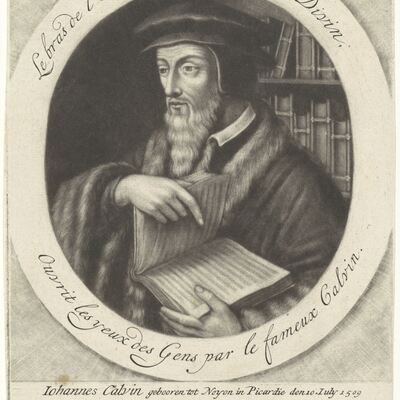
John Calvin
Ioannes Calvinus
Readings
That all the ancients communicated under both kinds
Veteres omnes sub utraque specie communicasse
Paragraph 49 of Book IV, Chapter 17 of Calvin's Institutes marshals patristic evidence that both elements of the Eucharist were always administered to all communicants in the ancient church. Calvin cites Gregory I, Gelasius, Cyprian, and others to show that withholding the cup from the laity was considered sacrilege. He argues that the Roman practice of communion under one kind violates both the explicit command of Christ and the universal custom of the church for over a millennium.
John Calvin·1559·Latin·Liber IV, Caput XVII, §49·p. 2.716–2.717That the ancient form of church government was completely subverted by papal tyranny
Antiquam regiminis formam omnino pessum datam fuisse tyrannide Papatus
Book IV, Chapter 5 of Calvin's Institutes demonstrates that the papal system of church governance has nothing in common with the ancient church. Calvin surveys how the early church elected its bishops by clergy and people together, how no bishop claimed primacy over others, how councils were conducted without papal domination, and how clerical offices were held without the pluralism, non-residence, and luxury of the contemporary papacy. He concludes by contrasting the ancient diaconal care for the poor with the current diversion of church revenues to ornamentation and episcopal display.
John Calvin·1559·Latin·Liber IV, Caput V·p. 2.541–2.551Prefatory Address to Francis, King of France
Praefatio ad Franciscum Regem Galliarum
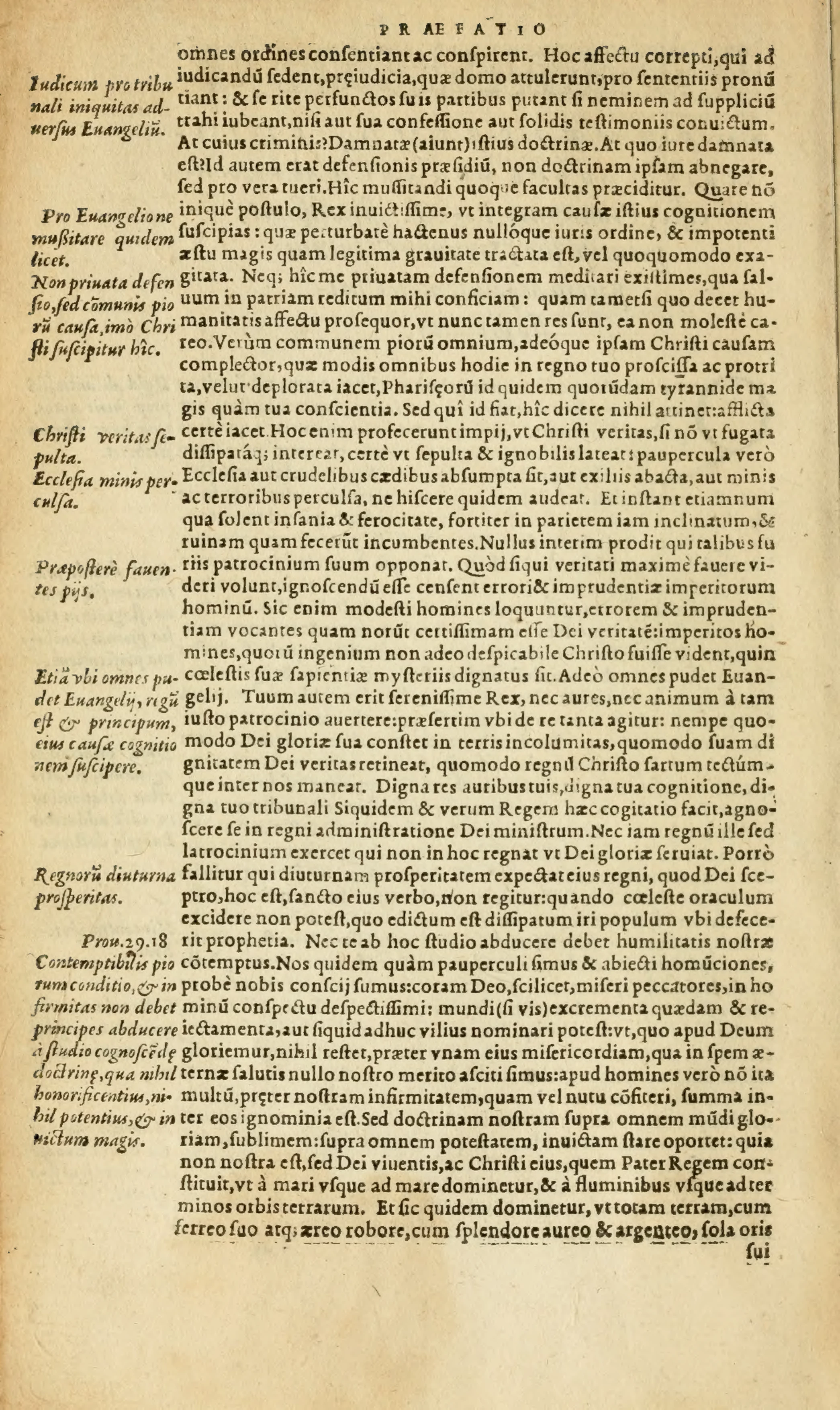
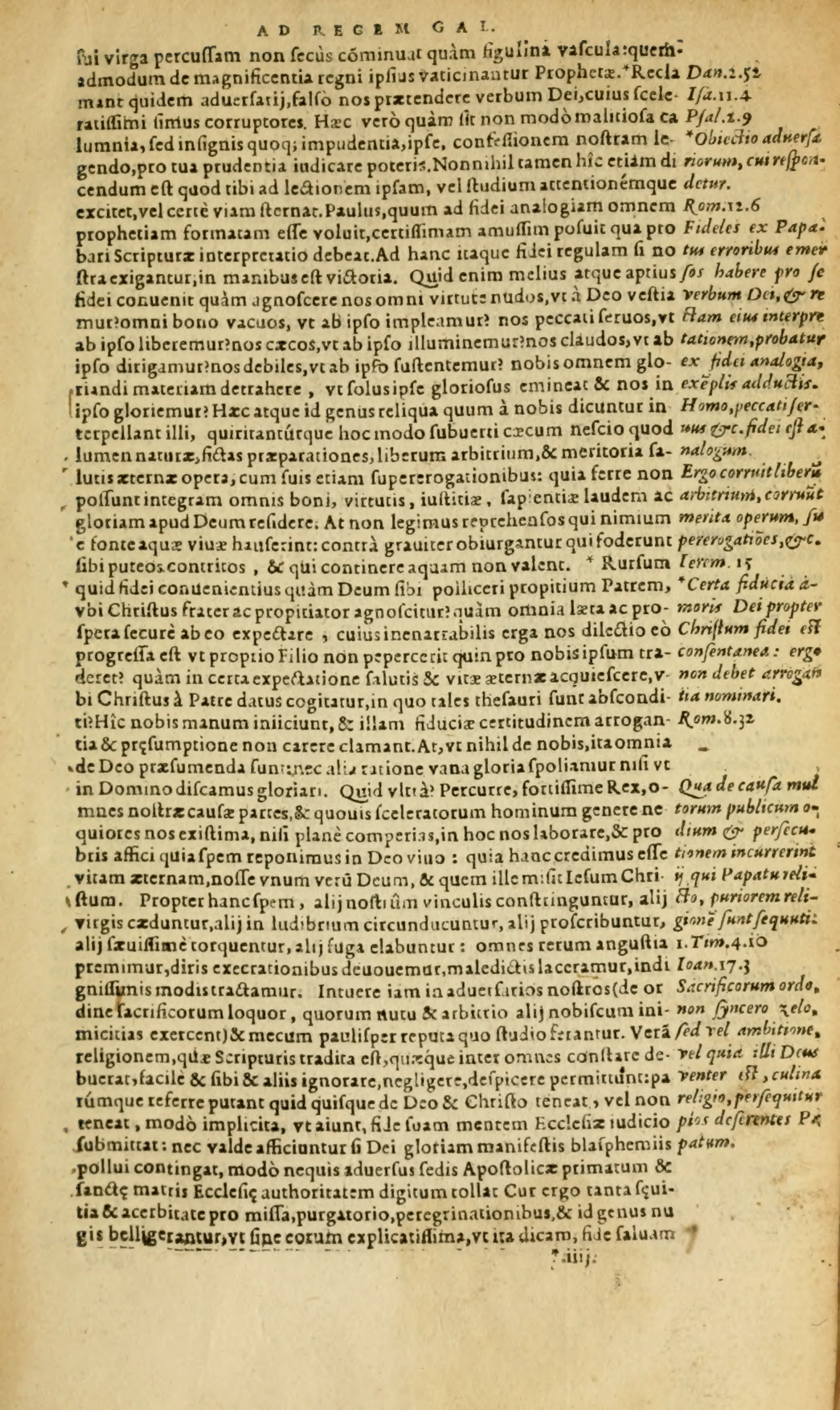
Calvin's prefatory letter to Francis I, King of France (originally Basel, 1 August 1536), defending the Reformed faith against charges of sedition and heresy. Written when the persecution of French Protestants was intensifying, Calvin argues that the reformers are falsely accused of promoting disorder and licentiousness, that the true disorder comes from those who suppress the Gospel by fire and sword, and that the king should grant the Reformed cause a fair hearing. He answers the main slanders against evangelical doctrine—on original sin, justification, the sacraments, and Christian liberty—and closes with a prayer for the king and an appeal to divine judgment.
John Calvin·1536·Latin·Praefatio·fol. 3r–8r