Libellus on the Fact That the Prince of This World Has Now Been Judged
Libellus de eo, quod princeps mundi huius iam iudicatus sit
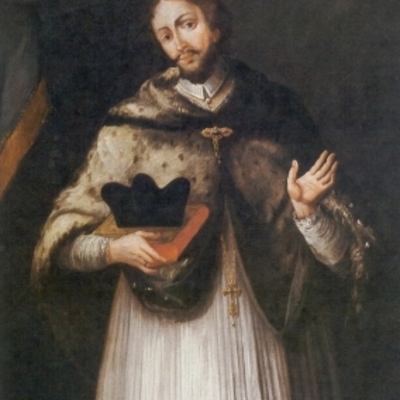 Gerhoch of Reichersberg
Libellus de eo, quod princeps mundi huius iam iudicatus sit
(Liber de Simoniacis.)
Bernardo venerabili Clare Valle abbati frater Gerhohus salutem in Christo.
In curia Babenbergensi non poteram desiderabili presentia tua frui, prout volui. Nam impediente causarum tumultu de multis pauca venerunt in questionem, super quibus tuam paternam desiderabam responsionem, ut meis interrogationibus tuisque responsionibus invicem collatis atque ad unam finalem causam dilectionis relatis id ipsum sapere atque id ipsum dicere possemus, donec Deus revelaret, si quid aliter
saperemus. Hoc autem ideo non dico, quod te aliter veritas habet, sed quia multos multum movet, quod nos qui velut exploratores ab uno domino missi sumus, non per omnia unum et id ipsum dicamus. Iosue et Caleph populum Israel confortantibus ad exterminandos habitatores promissionis alii exploratores qui fuerant cum eis dicebant: Nequaquam valemus ascendere, quia fortior nobis est, ita nunc Romane sedis pontificibus Nycolao II, Alexandro II, Gregorio VII, ceterisque illorum successoribus nostri temporis papam Innocentium confortantibus Dei populum ad exterminationem symoniacorum et aliorum, quibus dum aecclesiastica simul et officia et beneficia sunt interdicta, quasi terra promissionis est eis abiudicata. Confortantibus, inquam, istis Dei populum ad expugnationem talium, non desunt eruditi scripturarum lectores tamquam terre promissionis exploratores illis exploratoribus consona dicentes qui dixerunt: Nequaquam ad hunc populum valemus ascendere, quia fortior nobis est. Vidimus ibi monstra quedam filiorum Enach de genere giganteo, quibus comparati quasi locuste eramus. Contra hos, licet per ora paucorum clamat spiritus, qui erat in Iosue atque Caleph: Ne timeatis populum terrae huius, quia sicut panem ita eos possumus devorare, recessit ab illis omne presidium, dominus nobiscum est, nolite metuere. Ut igitur potius cum paucis veritati consonem, quam cum multis errem, per tuam paternam prudentiam instrui cupio, an in his, que continet subsequens libellus, veritatis et sobrietatis verba loquar, an aliud tibi videatur, sicut a nonnullis putatur, eo quod in curia Babenbergensi nec mihi nec adversariis meis fortiter astitisti. Opto autem hunc libellum sigillo nostro clausum sic illibatum ad te pervenire, ut examinetur te primo et si iudicas, solo lectore. Si autem videbitur spiritui pietatis habitatori tui pectoris, ut ad plurimorum veniat noticiam, tunc rogo, si que sunt in eo corrigenda, vel tu corrigas vel mihi corrigenda suggeras. Poteris enim per dominum Adam scripta quevis ad me transmittere, quod et rogo, ne pigriteris facere, quoniam opuscula tua diligo et spiritui veritatis per te mundum arguenti gratias agere soleo. Ab hac itaque gratiarum actione sit huius libelli nostri exordium, Deo regente spiritum et calamum nostrum. Explicit prologus.
Gratias ago spiritui veritatis, qui tam in dictis, quam in scriptis tuis arguit mundum de peccato et de iusticia: de peccato quidem, quia non credunt in Christum, qui licet verbis confiteantur, factis tamen negant eum, de iusticia vero quam sic divine gracie assignas, ut non magis liceat homini gloriari de iusticia sibi divinitus collata quam de illa Christi obedientia, de qua pendet omnis nostra iusticia. Quae autem est illa obedientia, nisi quam ipse designans ait: Ad patrem vado et iam non videbitis me. Dixit enim hoc ea nocte, qua tradebatur ad mortem, vadens per ipsam mortis obedientiam ad patrem suisque sequacibus totam huius obedientiae relinquens utilitatem. De illa enim Christi obedientia tota christianorum consistit iusticia iuxta illud
apostoli: Sicut per unius inobedientiam hominis peccatores constituti sunt multi, ita et per unius obedicionem iusti constituentur multi. Quis ergo iustus de sua in se glorietur iusticia, quam neque humana industria neque liberum arbitrium, sed sola Christi operatur obedientia, illa nimirum obedientia, qua ivit ad patrem et iam non videmus eum. De illa quippe obedientia libero nostro arbitrio tanta in Christum credentibus et pro hac ipsa obedientia ipsum diligentibus confertur gratia, ut ipsi libero arbitrio liberum quoque insit consilium ad id sectandum, quod et per liberum arbitrium discernitur et per liberum consilium approbatur iuste agendum ita, ut ipsa hominis iusticia de presignata Christi obedientia non dubitetur derivata. Quocirca recte spiritus veritatis arguit mundum de hac iusticia non solum in his qui eam negligunt, sed in his et multo magis in his qui eam suis viribus asscribunt, quia videlicet et illi sunt inexcusabiles propter liberum arbitrium nulla, ut tu in quodam libello tuo asseris, necessitate ad peccandum astrictum et isti damnabiles propter vanae gloriae appetitum.
Etenim postquam Christus ad patrem ivit per iter obedientie, quod nostre iustificationis fons et causa efficiens existit, quisquis a modo audita Christi victoria servit peccato, illud tale est quale hoc fuisset, si Goliath gigas prostrato et toto Philistaeorum exercitu fugato populus Israel magis elegisset subesse ac servire Philisteis, quam potiri acquisita libertate per David manu fortem. Qui autem Christi victoriam vel quantulamcunque iusticiam illius victorie consecutivam vel etiam laudem seu gloriam iusticiae debitam sibi arrogant, similes inveniuntur superbo Saulo humili David nimis invidenti et gloriam ipsius David sibimet arrogare cupienti. Iratus est enim Saul dicens: Mihi mille dederunt et David Xm milia. Irascuntur et nunc multi, si non eis offeratur gloria soli Deo debita, quia gloriam ab invicem accipiunt et gloriam, quae a solo Deo est, negligunt. Hos, ut predixi, tam in dictis quam in scriptis tuis arguit spiritus veritatis probans hominis iusticiam soli divinae gratiae attribuendam. Recolo nunc illud apostoli dictum a te in curia Babenbergensi vehementer michi inculcatum: Regi seculorum inmortali invisibili, soli Deo honor et gloria, et illud angelicum: Gloria in excelsis Deo. Que duo testimonia de ore apostolico et angelico rapta forsitan ideo mihi obtendisti, ne gloriam soli Deo debitam ego miser captando perderem gratiam pacis imprecatam hominibus bone voluntatis. Gaudeo, piissime et reverende pater, de tua circa me sollicitudine, verumptamen Deo gratias non mihi sum conscius de humane ac vanae gloriae aviditate. Non, inquam, mihi sum conscius, sed non in hoc sum iustificatus. Qui enim iudicat me, Dominus est, cuius et hoc ipsum donum in me est quod, ut mihi de me videtur, pro minimo mihi est, ut a vobis diiudicer aut ab humano die, sed neque me ipsum iudico, quia iudicium divinum de omnibus factis, dictis et cogitatis meis tremens expecto, aucto mihi tremore de tua paterna ammonitione, qua dixisti singulos nostrum debere considerare, qualis vel quantus fructus proveniret de suo in verbo Dei labore. Haec poteras dicere securus tamquam conscius tibi magnorum fructuum, qui te plantante ac rigante, Deo vero incrementum dante, provenerunt per laborem tuum, quem habes circa Dei verbum. Ego vero tremens hec dicta tua recogito, qui de multo labore meo paucos manipulos colligo, ad illorum conparationem qui multum trahunt post se discipulorum gregem vel ad vitam heremiticam vel ad aliam conversationem a mundo longe distinctam eorumque vite assimilatam, qui cum Heliseo propheta de agrestibus herbis in solitudine vixerunt, quando propter
multas fornicationes impiae Iezabelis locum sanctae conversationi in urbibus habere non potuerunt, utpote regnante tunc ydolatria etiam in ipsa Hierusalem. De civitate sancta, per Athaliam predicte Iezabelis filiam, comite Ioram propter cuius inmundiciam in regno Iuda grassantes Ochozias, Ioas et Amasias de libro generationis Iesu Christi succisi sunt, ubi dicitur: Ioram autem genuit Oziam. Tunc ergo alienati Iuda et Israel tanta regum et reginarum nequicia, ut propter verbi Dei saltem vivendi, quod ex quo data est eis licentia docendi sub eis, licentiam docendi saltem vivendi, morte Zachariae prophetae inter templum et altare occisi comprobatur, multa prophetarum, quorum Helias et Heliseus precipui fuerunt, errabant in montibus et in cavernis terre, quorum tu pater et tui similes videmini exempla sequi in silvis habitando et quos potestis ad id ipsum invitando. Quid enim, si austeritas vestium ciborumque agrestium, quibus utimini, consideretur, de antiquis exemplis Helyae vobis deesse indicetur, nisi forte zelus ille nimius, quo ipse Iezabelis nimium erat infestus, quorum una die octingentos quinquaginta interfecit, non tamen, antequam sacrificia eorum igne divino carere demonstravit. Neque enim rex aut populus ab eisdem falsis prophetis dementatus facile permisisset occidi tot sacerdotes, nisi primo fuisset ostensum, quantum a sacrificio Heliae distabat eorum sacrificium. Hoc autem demonstrato, quod non operaretur ignis divinus in sacrificio, neque rex neque populus eos defendebat, sed eos omni auxilio destitutos Helias occidebat. Cuius utinam vos zelum haberetis primo in hereticorum sacrificiis cassandis, deinde in eisdem gladio verbi, quo valenter estis armati, iugulandis! Ut enim de uno scismaticorum seu hereticorum vexillifero agam, quomodo cogitatis a Petro Leonis populum sibi adherentem separare, quamdiu ipse ab aecclesia precisus creditur idem sacrificium, quod nos offerimus, offerre nec a nobis in sacrificando magis differre, quam differunt in aecclesia mali et boni sacerdotes, quos excepta sola salutis efficientia constat omnino in sacrificando a bonis indifferentes. Non enim sufficit ad expugnandos hereticos, quod eos per hoc a malis catholicis distinguimus, quia eorum sacrificia nec ipsis prosunt, nec eorum communicatoribus, cum in aecclesia pravi sacerdotes necdum interdicti etsi non sibi salutem, tamen operantur suis communicatoribus et missarum auditoribus. Non, inquam, hoc sufficit, cum in hoc solo glorientur heretici, in quo et olim gloriabantur magi Pharaonis, videlicet in signis omnino similibus, nisi in quantum ea distinguit solus Dei digitus. Quid enim sunt sacramenta, nisi rerum sacrarum signa, quibus per hereticos symoniacos aliosque separatos ab aecclesia dementatur Pharao et tota Egyptus, id est omnis hic mundus in maligno positus, quia necdum apparet, quod sacramentis et signis, licet omnino similibus, non ubique cooperatur invisibilis Dei digitus, qui a multis asseritur inesse sacramentis omnibus, tam extra aecclesiam quam intra celebratis. Quod tamen vos, Deo gratias, non conamini astruere, sed inter diversas et adversas partes ita vos medium soletis exhibere, ut neque affirmantes neque infirmantes prenotatum sensum inveniatis: ob hoc forsitan, quia vos cum Helya declinando insidias Iezabelis in spelunca silentii super hac questione vultis latere, captata vobis et vestris quadam securitate, quam non possetis habere, si quemadmodum de peccato et de iusticia mundum arguitis, ita quoque de iudicio cum velletis arguere, astruendo scilicet, quod princeps huius mundi non solum in seipso, sed etiam in quibusdam membris suis iam iudicatus est. Quod cum ita vel sit vel vobis esse videatur, gaudemus quidem de vestra securitate, gaudemus vobis
omnes homines esse amicos, etiam ipsos christianae religionis inimicos, dummodo vos constet eorum pravitatibus inimicari et adversari, quantumlibet sentiatis vos ab eis amari. Sed multum per omnem modum illi nos exhilarant, qui cum Helya non solum latitare, sed et cum eodem solent in hoc se manifestare, ut sacrificia falsorum pro- phetarum annichilent et eosdem spiritus gladio iugulent. Quid autem de illis dicam, 5 qui nunquam latitant cum Helya, sed semper in urbibus morantur cum Ysaya, Zacharia, Ieremia ceterisque prophetis, qui nullos vel paucos habuere discipulos: et tamen eos in faciem resistentes iniquis hominibus hoc solum reddit coram Deo gloriosos, quod ludibria et verbera experti, insuper et vincula et carceres, lapidati sunt, secti sunt, temptati sunt, in occasione gladii mortui sunt? Imitatores talium sitiens anima mea nusquam dulcius 10 reficitur, quam cum presides apostolicae sedis intuetur. Per hos enim contritus est Symon magus, per hos a sacri altaris ministerio repelluntur greges sodalium, scilicet vel cum Nycolao, Ebione et Paulo Samosateno fornicantium, vel cum ipso Symone mago et Iuda mercatore pessimo in domo Dei negociantium. Ut enim de ceteris nunc taceam, in quibus princeps mundi huius iam iudicatus est, 15 quis impium Symonem cum suis sequacibus totiens damnatum denuo censeat vocandum in iudicium tanquam adhuc iudicandum, cum in eo princeps mundi huius iam ita sit iudicatus, ut de illius toleratoribus Victori episcopo scribens dicat sanctus Gregorius: Quisquis ad hoc facinus — videlicet symoniace aut neophitorum hereseos — emendandum officii sui consideratione vehementer non arserit, cum illo se non dubitet habere portionem, 20 a quo prius hoc piaculare flagitium sumpsit exordium. Sane hoc notari cupimus, quod non in causis dubiis vel personis ignoratis dicimus mundi huius principem damnatum, cum talium personarum tales causae divinum extremi examinis expectent iudicium. Sed in his tantum causis vel personis dicimus mundi huius principem damnatum, de quibus evidenter a sede apostolica invenimus iudicatum. Hec enim sedes cautis utendo circum- 25 scriptionibus, non perdit iustum cum impio: unde ab illius presulibus non alii cum Nycolao vel Symone mago iudicantur, vel Nycolaite aut symoniaci heretici nominantur, nisi qui in erroris sui secta indurati synodalibus sanctorum patrum diffinitionibus et decretalibus eorum statutis scienter et manifeste inobedientes, apostatarumque perti- nacia eis recalcitrantes, studio et voluntate refragantur. In tales dudum data est ana- 30 thematis sententia, eorumque penitus interdicta sunt officia, quamvis in convictu, salu- tatione ac ceteris huiusmodi adhuc eis communicare permittatur aecclesia, quia, si etiam in talibus interdicerentur, oportuerat nos exire de hoc mundo Nicolaitis et symo- niacis pleno. Quis enim clericos conducticios eorumque conductores dubitet esse symoniacos et hereticos negociatores? Quis altaris ministros fornicantes et interdicta 35 sibi officia usurpantes, talemque presumptionem contra sedis apostolicae doctrinam pertinaciter defensantes dubitet hereticos, utpote a Romana aecclesia discordes eique rebelles? Verum, quia tales incestuosos et presumptuosos difficile nimis est exami- nare, quid videlicet sint huius presumptionis et inobedientiae, quam in interdictis offi- ciis committunt, pertinaces defensores, et ob hoc heretici nominandi ac publice vitandi, 40 maxime si eos vitandos docent proprii sui episcopi, et qui non publice sint vitandi, sed caute declinandi: maxime quia vel non defendunt aut docent faciendum quod faciunt, vel quia eos, licet a Romana sede interdictos, proprii episcopi adhuc sufferunt: rectius fortasse huiusmodi homines inter pravos et interdictos catholicos, quam inter exclusos hereticos computamus. Quamvis anno dominicae incarnationis MLVIIII cele- 45
brata sinodo, presidente papa Nycolao II, idem papa in tractatu totius concilii Nycolaitas nominasse perversitatemque ipsam haeresim appellasse.
Cum itaque auctoritate huius Romani pontificis et concilii prenotatos incestuosos et presumptuosos proscribere inter ceteros hereticos, tamen quia, ut dixi, vix possunt examinari, contenti sumus eos pravos et interdictos nominari et id solum de talibus observari, ut nemo Romanae sedi oboediens audire eorum officia terribiliter ab eadem sede interdicta, quia, ut a primo Samuele scriptum est, peccatum ariolandi incurrit quisquis dum christianum se asserit, sed apostolicae sedi contempuit. Sed hanc obedientiam facile possunt observare qui habent opportuniorem locum et libertatem, omnia obedientes apostolicae sedi, vitando scilicet et vitandos docendo quorum illa sedes officia prohibet audiri: ubi vero episcopi similes angelo Tyatire nolunt mulierem Iezabel, que se dicit propheten, de suis terminis expellere, sed permittunt eam interdicta sacrificia edere pariterque fornicari ac servos Dei seducere, ibi oportet catholicos aut persecutionem pati ab ista Iezabele, aut fugere sicut antiquam Iezabelem fugit Helias, aut ita suam cautelam et Romanae sedis obedientiam occultare ab ista Iezabele, sicut quondam VII milia virorum ante Baal genu non incurvantium suam cautelam occultabant regnante Iezabele. Haec de incestuosis clericis dicta sufficiant.
Si quis vero in lepra symonie ita notabilem et insignem se reddiderit, ut ex felle amaritudinis et obligatione impietatis agnosci possit, hunc non dubito, ut hereticum et hostem aecclesiae cavendum, utpote in ipso Symone mago a beato Petro multisque successoribus eius proscriptum et damnatum, quoniam, testante Gelasio papa, cum quilibet cuiuscunque perversitatis auctores ac doctores anathemati addicerentur, omnes eorum complices et sectatores pariter sunt anathematizati et gladio spiritus amputati, atque antequam nascerentur predamnati, sicut Chanaan filius Cham maledictus antequam natus, dicente Noe: Maledictus Chanaan servus servorum erit fratribus suis. Quare in impio patris derisore Cham adhuc non natus maledictus est filius eius Chanaan, nisi quia in damnato quolibet heresiarcha intelligi debet omnis posteritas eius maledicta? Lege, si vacat, epistolam Gelasii pape ad Eufemium, et invenies uniuscuiusque semel damnatae pravitatis non solum auctores, sed et successores et successorum communicatores pari modo vitandos. Dicit enim inter cetera ipse beatus papa Gelasius in illa epistola: Si aliquis recte sapiens de fide catholica communicat hereticis vel successoribus eorum, non est fas eum inter catholicorum altaria nominare. Idem Orientalibus episcopis: Omnes complices, sectatores, communicatores damnate semel pravitatis pari sorte censentur. Item omnibus episcopis Dardaniae: Patres nostri auctore cuiuslibet erroris pariter cum errore damnato sufficere iudicarunt, ut quisquis aliquando huius erroris communicator existeret, principali eius sententia damnatus esset, quando manifeste quilibet vel professione sua vel communione posset agnosci. Et post pauca: Forma fidei communionisque catholicae Nyceno prolata concilio Arrianos omnes, vel quisquis in hanc pestem sive consensu, sive communione deciderit, sine retractatione excludit. Idem in sequentibus: Ipse error, qui semel est cum suo auctore damnatus in participe quolibet prave communionis effecti et execrationem gestat et penam. Nonne per
hunc Romanum pontificem talia dicentem spiritus veritatis arguit mundum de iudicio, nimirum ostendens, quod princeps mundi huius iam iudicatus est, non solum in ipsis heresium damnatarum auctoribus, sed et in omnibus eorum sectatoribus, successoribus, communicatoribus? Hoc principis huius mundi iudicium iam factum bene prospexit Romana diligentia, docens conductitios clericos in nullis aecclesiis tolerandos, utpote in impio Balaam primo conductitio damnatos, et sub eiusdem Balaam detestando nomine in Apocalipsi Iohannis apostoli et in epistolis Petri apostoli, ac Iude apostoli notatos, immo et in Symone mago multotiens anathematizatos. Istos conducticios tamquam filios ancille mater libera quandoque iudicabat dicens Deo patri: Eice ancillam et filium eius, immo et plures filios concubinarum, quibus etsi ex paterna Dei patientia proveniunt, munera et lucra multa, dum et agrum agro et domui domum coniungunt ad hereditatem solis filiis libere matris promissam non admittent? Sed eicientur foras a filiorum nobilium consortio, sive ipsi conductores imitentur Balach regem sive conducti imitentur Balaam ariolum, qui mercedem iniquitatis amavit. Contra quorum insipientiam quia satis loquitur asina cupiens cavere gladium, quem talibus intentari videt, nos huiusmodi Balachitas et Balaamitas quasi paleas aridas eterno igni servandas in partem sequestremus, hoc solo contenti, ut ab eis utpote inordinate ambulantibus declinemus nec de sacramentis per eos celebratis quicquam disputemus, quoniam supra inter pravos et interdictos catholicos eos computari posse concessimus, exceptis eorum pravis et pertinacibus defensoribus, nunc ad ipsos calamum vertamus quos hereticos esse non dubitamus, quosque recte symoniacos hereticos nominamus: etiamsi semel damnatam, immo multotiens precisam non defendant negociationem, quomodo eam Symon magus non defendit, qui, licet esset in felle amaritudinis et obligatione iniquitatis, tamen dixit apostolis: Precamini vos pro me ad Dominum, ut nichil veniat super me horum que dixistis. Quamquam ergo ad iudicium sint vocandi qui de symonia pulsati, neque symoniace actionis neque symoniacae pactionis lepra sunt manifeste maculati, ut habeant locum defensionis qui adhuc habent vocem negationis; illi tamen clerici conducticii eorumque conductores tam manifesti sunt in domo Dei negociatores, ut non solum actio, sed etiam pactio symoniaca ita sit in his manifesta, quatenus pro certo debeat constare, illos iamdudum cum Symone et in Symone mago damnatos esse, neque sortem ullam eis in sacerdocio Christi esse, dicente ad Symonem magum Symone Petro: Non est tibi pars, neque sors in sermone isto, cor enim tuum non est rectum coram Deo. Similis enim causa simili subiacet sententie. Nunquid enim Petrus magum illum damnans non eandem causam expressit, quam nunc inter conducticios et conductores esse nemo est qui negare possit? Cor enim, inquit, tuum non est rectum coram Deo. Sic et nunc si querant conducticii quare a Petri vicario sint proscripti, dictum sibi reputent quod Symoni mago dictum est: 'Cor enim vestrum non est rectum coram Deo'. In quo non est rectum? Videlicet, quia donum Dei existimastis peccunia possideri.
Libet, admota scripturarum lucerna propius, demonstrante ipso lumine quod illuminat omnem hominem, intueri, quare pre omnibus hereticis acrius dampnati sunt symoniaci. Quia cum omnes heresiarche pravitatem suam pertinaciter defendentes legantur damnati, in solum Symonem magum etiam pro venia rogantem deprompta
est maledictio, non quia donum Dei pecunia possederit, sed quia hoc posse fieri existimavit, quod est istud donum tam inaestimabile, ut heretico vel damnationis vel perditionis filius indicetur quisquis illud existimat precio possideri vel emi vel poni, ut ille filius perditionis, cui dictum est a Petro: Pecunia tua tecum sit in perditionem. Non sic, non ita vehementer damnatus est alter ille filius perditionis venditor Christi, ut una cum ipso perderetur precium sanguinis Christi. Nam ipso quodam precio mercatore perdito, magna utilitas provisa est de ipso sanguinis precio, dum secundum auctoritatem propheticae scripture comparatus est inde ager figuli in sepulturam peregrinorum. Symoni vero dicitur: Pecunia tua tecum sit in perditionem, a quo animadvertere possimus scelere Iudae scelus Symonis maius esse. Nam Iudas quidem vendidit Christum, quem utpote mortalem non intellexit esse ipsum Deum coaeternum: quod hinc facile perpendimus, quia ipsa nocte qua Christus tradebatur, discipulos ita increpatos legimus: Tanto tempore vobiscum sum, et non cognovistis me? Si hoc bonis discipulis dici potuit, quanto magis illi, quem ne Christum deum sceret avaricia, que sapientium quoque oculos obcecat, obcecavit? In recompensationem namque, ut sibi videbatur perditi unguenti, quod ipse dixerat trecentis denariis potuisse venundari, stimulante avaricia contentus est huius precii, id est denariorum trecentorum decimam Christo vendito acquirere, hoc est XXX denarios, qui sunt trecentorum denariorum decimatio. Quam cecus venditor qui pro tam vili precio vendidit illum, cuius ut in Canticis canticorum legitur: Caput est aurum optimum et manus tornatiles aureae plenae hyacinthis, longe preciosiores XXX argenteis, immo qui est illa sapientia, de qua dicitur: Preciosior est cunctis opibus, et omnia que desiderantur huic non valent comparari! Attamen quemadmodum dicitur huius mundi principibus, quia si cognovissent, nunquam Dominum gloriae crucifixissent, ita de isto dici potest, quia, si Christi aureum caput, manus aureas et cetera in eo desiderabilia mortalitate carnis obtecta perspexisset, nunquam Dominum gloriae pro tam vili vendidisset. Neque tamen per ea quae dicimus Iudas mercator pessimus excusatur, qui, etsi aliud nichil de Christo scire potuit, nisi quod homo innocens et bonorum operum factor extitit, hunc talem pro XXX denariis vendendo ad mortem digne ac merito hereditavit a psalmista in illum predictatas XXX maledictiones, quarum prima est: Constitue super eum peccatorem, ultima: Operiantur sicut diplois confusione sua. Veruntamen tam iste Iudas, quam etiam cuncti heretici, qui peccaverunt in personam Filii, tolerabilius periudicantur his qui peccaverunt in personam Spiritus sancti. Verbi gratia tolerabilius peccavit Arrius in sua blasphemia dicendo creaturam esse Filium, quam impius Macedonius dicendo creaturam esse Spiritum sanctum. Ut enim Arrius Christum creaturam diceret, ipsius Christi verbis de se secundum humanitatem prolatis et ab ipso Arrio non recte intellectis, primo induci potuit, verbi gratia cum dicit Christus, quia Pater maior me est: sed ubi trecentorum XVIII patrum sententiam consonam de Patris et Filii consubstantialitate in uno Spiritu prolatam et indubitata sancti Spiritus auctoritate corroboratam pertinaciter oppugnans indignum se vitae eternae iudicavit, non solummodo in Filium, sed in Spiritum quoque sanctum Arrius ipse peccavit. Est enim indubitata sancti Spiritus auctoritas, unanimis patrum orthodoxorum in aliqua sententia id ipsum dicentium, id ipsum sapientium censura, quam si quis contempnens discordante spiritu sic agitur, ut ex dispersione ad congregationem quam Spiritus sanctus operatur nunquam redeat; ipse, beato Augustino teste, verbum dicit contra Spiritum sanctum, neque in hoc seculo neque in futuro remittendum. Sic sic Arrius vel alius quilibet heresiarcha, seu etiam scismatis inveterati defensor aliquis, dum nimis amando suam sententiam vel invidendo melius dicentibus factus est pertinax et obstinatus,
initia errorum, quibus fortasse non peccabatur in Spiritum sanctum, erroribus ipsis augmentum capientibus incidit in sancti Spiritus blasphemiam, neque in hoc neque in futuro seculo remittendam. Symon vero magus vel alius quilibet symoniacus in ipsa symoniace negociationis inceptione, qua donum Dei existimatur pecunia possideri, convincitur esse blasphemator Spiritus sancti. Nam quod Spiritus sanctus donum Dei dicatur et sit, ita est evidens, ut probatione non egeat. Unde illud quod mulieri Samaritane Christus dixit: Si scires donum Dei, et quis est qui loquitur tecum, tu forsitan petisses ab eo, et dedisset tibi aquam vivam, ita invenimus a magnis doctoribus expositum, ut donum Dei, de quo Christus ait, non aliud intelligamus quam Spiritum sanctum. Quod cum ita sit, quisquis donum Dei existimat pecunia possideri, ipse Spiritum sanctum, qui eque ut Pater et Filius est creator omnium, redigit sub precium utique a sancto Spiritu creatore creatum. Cum ergo creatorem creature vili aut confert aut supponit, longe deterius Arrio delinquit, quoniam ille Filium Dei asseruit quidem esse creaturam, sed tamen excellentissimam, cui nec angelicam dignitatem concessit equiparandam. Symoniacus autem donum Dei, hoc est Spiritum sanctum, credens et existimans quasi rem propriam posse ab homine pecunia emi, cum omne quod quasi proprium possidetur ab homine sit vilius et inferius homine, Spiritum sanctum qui donum Dei est, immo qui Deus est, supponit homini et coequat precio graciam impreciabilem, comparatque rem incomparabilem, si ad creaturas universas intendimus; quibus omnibus appreciari vel comparari non potest creator Spiritus, quemadmodum nec Pater, nec Filius, quorum amborum est iste unus Spiritus, eque liber ut Pater et Filius: immo cum Filius, forma servi accepta, per annos XXX tres fuerit servus, etiam servientibus sibi angelis paulominus minoratus, Spiritus sanctus tante est libertatis, ut etiam servos quos repleverit liberos faciat; unde est illud apostoli: Ubi est Spiritus Domini, ibi libertas. Item: Quod si Spiritu ducimini, non estis sub lege. Iugum quippe legis iram operantis, iugumque peccati graviter onerantis, per solum hunc Spiritum advenientem aufertur, iuxta illud Ysaie dictum: Computrescet iugum a facie olei. Nonne itaque magnum et nefandum sacrilegium homo committit, cum hunc Spiritum omnino liberum ac totius angelice vel humane libertatis aut liberationis effectorem vendit vel emit, quasi mancipium proprium? Immo cum hoc facere non possit, existimat se illum posse aut emere aut vendere, qui non venit ad homines ulla emptione, sed potius tanquam liber solummodo ubi vult spirat, et sua donativa dividit singulis prout vult, non prout emitur precio, non prout exigit ambitio, sed, ut dixi, prout vult? Peccavit quidem in hunc Spiritum sanctum impius Macedonius asserendo, quod ipse esset Patris ac Filii servus, omnibus tamen angelis preferendus; multo amplius peccat symoniacus, existimans, quod liberrimus hic Spiritus quasi mancipium proprium suum possit ab ipso vendi. Qui autem hunc emere nititur, et precium perdit et appreciatum non acquirit, sed tota lepra venditoris miro modo, cum ab ipso non recedat, ad emptorem commigrat, ut tam emptor quam venditor inter illius membra pereat, qui extollitur supra omne quod dicitur Deus. Nam symoniacus venditor et emptor extollitur supra Spiritum sanctum, qui dicitur et est cum Patre et Filio unus et summus Deus, in qua excellentia quoniam Spiritus sanctus vili creaturae subponitur, ut premonstratum est, eidem Spiritui sancto sua divinitas denegatur, quod apertissimum scelus et blasphemia in Spiritum sanctum esse comprobatur; et est nequius hoc scelus scelere Macedonii, et eorum qui cum ipso blasphemabant Spiritum sanctum, dicentes eum Patris et Filii servum; quod ne videamur de corde nostro prophetare, patrum non paucorum testimonium subnectere libet, quorum tam auctoritas quam
numerositas fidelium et non contentiosum auditorem potest movere, queque dicimus persuadere. Septima synodus universalis habita a V patriarchis cum CCCL patribus in epistola, quam Adriano pape direxit, hec inter cetera dixit: Eos qui per pecuniam manus imposuerunt et imponunt, Petrus divinus apostolus cum ceteris aliis adiit et sanctitas vestra, tanquam Symonem magum deponit. Tolerabilior est enim Macedonii et eorum qui circa ipsum sunt sancti spiritus impugnatorum quam eorum, qui cum aliqua actione veniunt et vendunt Dei Patris et Filii Spiritum sanctum deliranti fanatice. Ita enim et eundem Spiritum sanctum eicere coacti servant. Omnis enim dominus quod habet et emit vendit, sive servum, sive aliquid eorum que possidet. Similiter et qui emit, dominus volens esse eius quod emerit, per precium pecuniae illud acquirit: ita et qui hanc actionem operantur, detrahunt spiritui sancto equaliter peccantes, his qui blasphemaverunt dicentes in Belzebub eicere Christum demonia: et procul dubio non est gratia Spiritus sancti in eis, id est sacerdotii sanctitas: ait enim Petrus Symoni: 'Non est tibi pars, neque sors in sermone isto'. Nam et vicesimus et octavus canon apostolorum, et actus eorum, tercius et quartus liber regnorum alienum omnino a sacerdotio pronuntiant eum, qui aliqua dederit, vel acceperit pecuniam in aliquo tempore, sive ante impositionem, sive post impositionem. Accipere enim est quandocunque accipere. Item ex ultima epistola eiusdem synodi: Qui per pecuniam quemquam consecrat, id est consecrator est, alienus est a sacerdotio, sicut omnes aecclesiae scimus alumpni ex canonicis disciplinis eruditi. Quem non moveat tantorum patrum in una synodo residentium auctoritas consona, idem predicantium quod predicat etiam parvitas nostra? Cui si quis estimat facile contradicendum, restat, ut annichilet auctoritates tot patrum nobis consonantium atque una nobiscum affirmantium, quod symoniacus in sua heresi vincat Macedonium hereticum.
Sed quia de manus impositione multi concedunt, quod si per pecuniam tribuatur, dans et accipiens hereticus efficiatur: de ceteris vero rebus aecclesiasticis non idem concedunt. Audiant illud ex epistola Paschalis pape Mediolanensibus directa: Si quis obiecerit non consecrationes, sed res ipsas quae ex consecratione proveniunt vendi, videtur quidem aliquid dicere, nichil autem penitus sapere. Nam cum corporalis aecclesiae episcopus vel abbas aut talis aliquid sine rebus corporalibus et exterioribus in vita proficiat, sicut nec anima sine corpore temporaliter vivit: quisquis eorum alterum vendit, sine quo alterum habere non provenit, utrumque conditum derelinquit. Quam tamen obiectionem sacer Calcedonensis canon penitus exterminat, cum procuratorem vel defensorem aecclesiae vel quemquam regulae subiectum adeo per pecunias ordinari prohibeat, ut interventores quoque tanti sceleris anathematis mucrone succidat. Quid plura! Si anathematizati et excommunicati, et ut vere heretici, symoniaci et neophiti ab aecclesia sunt separati, quis non videat, quod huiusmodi sacerdotum missae et orationes Deum ad iracundiam super populum provocent, quem talibus placari credebamus? Scriptum est enim: 'Veri sacrificii locus extra aecclesiam non est'. Et item: 'Haereticum hominem post primam et secundam correptionem devita'. Quoniam ergo tales episcopos, vel abbates, vel reliquos clericos non devitamus, si eorum missas audimus vel cum
cum illis excommunicationem subimus. Quos quidem sacerdotes esse saltem credere omnino est, cum existimasti donum Dei pecunia possideri, nec pro eo, quod fecerit, sed quod se facere credidit condempnatur, cum minus sit existimare, quam credere. In hoc ergo quod subiungitur: 'Non est tibi pars neque sors in sermone isto', patenter ostenditur, quod nichil sacrae ordinationis in hac promotione percipitur. Audent adhuc aliqui post istas aliasque fortissimas auctoritates conducticios ab heresi defendere, dicentes ea que de symoniacis dicta sunt non ad eos pertinere, pro eo quod conductiones, de quibus agimus, non videntur nominatim in predictis auctoritatibus expresse. Hi audiant illud ex concilio Clementis papae: Iussum est antiquitus, et nos sub anathemate in perpetuum interdicimus de heresi symoniaca, quae crevit inepta, de qua sancta decrevit synodus, nullum aut aecclesiarum consecrationem, aut archipresbyteratum, aut commendationes altarium, aut traditiones aecclesiarum, aut abbatias aut preposituras vendere; quique conduxerit aut vendiderit, aut emerit, anathema sit. Amen. Et responderunt omnes tertio: Fiat, fiat. Audiant illud conductitii, ne novum putent quod conductiones nichilominus quam emptiones aut venditiones aecclesiasticarum rerum dicimus pertinere ad anathematizatum symonie mercimonium. Item sunt qui conductitios ac ceteros huiusmodi mercatores per hoc nitantur defendere a symoniaca heresi, quod peccant cupiditate potius lucri, quam seducendi studio stimulati; quasi perversa eorum cupiditas minuat ac non potius augeat malum quod agunt, qui maxime per ipsam cupiditatem accusabiles fiunt. Neque enim Giezi ideo potuit a se lepram amovere Naaman Syri, quod peccaverat magis cupiditate vestium et argenti, quam studio quemquam seducendi. Talibus manifeste obviat Urbanus papa II, ita dicens: Quicunque res aecclesiasticas non ad hoc, ad quod institutae sunt, sed ad propria lucra munere linguae vel indebiti obsequii vel pecunia largitur vel adipiscitur, symoniacus est: cum principalis intentio Symonis fuerit sola pecuniae et avaritia, id est idolatria, ut ait apostolus: 'Et avaritia que est idolorum servitus'. Huic Romani pontificis auctoritati quidam faciunt ineptam oppositionem. Dicunt enim: 'Si rerum aecclesiasticarum per munus lingue, obsequii indebiti perque munus pecunie facta largitio vel adeptio est symonia; iam symoniacis plena est omnis terra, quoniam et villicis ceterisque colonis necnon militibus laicis donantur interdum aecclesiastica, interveniente lingue, obsequii ac muneris mercimonio'. Qui hec dicunt non satis inter sacrilegium et symoniam distinguunt. Nam cum beneficium et officium aecclesiasticum ita sint iuncta, quemadmodum corpus et anima, quisquis eorum alterum ita comparat, ut alterum sine altero non proveniat, ipse utique in Spiritum sanctum peccat, sine quo nullum aecclesiasticum officium posse rite amministrari constat. Officia aecclesiastica sunt, quorum ista sunt nomina, episcopatus, presbyteratus, diaconatus, prepositura, abbatia, clericatus et si qua sunt huiusmodi, que sine dono sancti Spiritus non possunt rite amministrari. Ut igitur de uno agamus, de solo episcopatu proponamus posse fieri, ut aliquis episcopales facultates per munus obtineat villasque ac cetera bona episcopali amministrationi debita sic possideat, ut omnino episcopus nec esse nec dici concupiscat, quod a nonnullis tirannorum sociis factum constat; nunquid hunc talem iudicabimus esse symoniacum, qui nullatenus existimat vel hoc de se cupit existimari quod donum Dei pos-
sideat? Immo si congrua rebus nomina ponimus, non symoniacum, sed sacrilegum hunc talem dicimus, quia tollendo sacrum de sacro, rem aecclesiasticam, quantum in se est, facit secularem et non aecclesiasticam existere. Istud sacrilegium laicis est imputandum, qui res aecclesiasticis amministrationibus debitum obsequium talibus rebus indebitum exhibent. De hoc sacrilegio notantur laici decimarum sessores et episcopi earumdem decimarum ultronei concessores, tamen ita tali decimarum concessione, quam laicis faciunt, episcopi symoniam committunt, quia cum ipsis decimis nullam spiritalem amministrationem illis iniungunt, sed manifestum sacrilegium, ut satis arbitramur superius demonstratum, quia videlicet rem aecclesiasticam, quantum in ipsis est, faciunt non aecclesiasticam. Urbanus papa I. et martyr in suis decretalibus tale sacrilegium culpat ita dicens inter cetera: Ipse enim oblationes appellantur, quia Domino offeruntur. Non ergo debent in alios usus quam aecclesiasticos et christianorum fratrum vel indigentium converti. Si quis autem, quod absit, secus egerit, videat, ne dampnationem Ananiae et Saphirae percipiat, et reus sacrilegii efficiatur. Hic sane intelligere possumus eos de sacrilegio notari, qui res aecclesiasticas, quantum ipsis est, faciunt non aecclesiasticas. Urbanus autem papa II. de talibus egit: Ipsae enim res singularum parochiarum in ditione episcoporum, qui loco beati Petri apostolorum erant et sunt usque adhuc et futuris semper erunt temporibus, ex quibus episcopi et fideles dispensatores eorum communem vitam degentibus ministrari necessaria debent, prout melius potuerint, ut nemo in eis egens inveniatur. Ipsae namque res fidelium oblationes appellantur, quia Domino offeruntur. Non ergo debent in alios usus quam aecclesiasticos et predictorum christianorum fratrum vel indigentium converti, quia vota sunt fidelium et precia peccatorum atque ad predictum opus explendum Domino tradite. Si quis autem, quod absit! secus egerit, videat, ne dampnationem Ananiae et Saphirae percipiat, et reus sacrilegii efficiatur, sicut illi fecerunt qui precia predictarum rerum fraudabant. De quibus in predictis legitur apostolorum actibus: Vir autem quidam nomine Ananias et cetera, usque factus est timor magnus in omnes qui audierunt haec. Haec, fratres, valde cavenda sunt et timenda, quia res aecclesiae non quasi propriae, sed ut communes et Domino oblatae cum summo timore non in alios quam prefatos usus sunt fideliter dispensande, ne sacrilegii reatum incurrant qui eas inde abstrahunt, ubi traditae sunt, et, quod peius est, anathema fiant, etsi non corpore, ut Ananias et Saphira fecerunt, qui mortui ceciderunt, anima tamen, quae potior est corpore, mortua et alienata a consortio fidelium cadant et in profundum baratri labantur. Hucusque verbis Urbani pape primi sufficiat nobis exaggerasse crimen sacrilegii, quod in distractione rerum aecclesiasticarum committunt episcopi, qui nequaquam in illicita decimarum concessione, quam laicis faciunt, symoniam committunt, quia cum illis decimis nullam spiritalem amministrationem illis iniungunt, sed manifestum sacrilegium, ut satis arbitramur superius demonstratum, quia videlicet rem aecclesiasticam, quantum in ipsis est, faciunt non aecclesiasticam. Urbanus autem papa secundus de talibus egit: Qui dant vel possident res aecclesiasticas ut aecclesiasticis est officio vel ministerio spirituali, quemadmodum corpus animae, coniunctas, quas dum
cum spiritali ministerio sub Symonis vel ipsi habent vel aliis largiuntur, una scilicet intentione, que fuit avaricia sive cupiditas lucri, vere comprobantur esse symoniaci, quia donum Dei, quod in sancto ministerio est, existimant pecunia possideri, et contumeliam furiunt sancto Spiritui, quem sic existimant posse obtineri. Nam, ut premissa superius papae Pascalis auctoritas ostendit, quicunque de rebus pariter coniunctis alteram vendit, alteram invenditam non relinquit, scelus istud quisquis occulte committit, reus est iudicio, videlicet iudicio divino. Qui autem quasi dicens 'racha', manifestum et indubitatum in se huius sceleris dederit signum, reus est non solum iudicio divino, sed etiam humano concilio, quoniam subiacere dinoscitur his que contra symoniacos prolata sunt in quolibet sanctorum patrum concilio. Si autem a quolibet sane redargutus, redarguenti se dicit: Fatue, reus erit gehennae ignis, et est omnino illis consimilis, qui Christo se arguenti dixerunt: Demonium habes.
Nunc igitur illis divino iudicio servatis, qui rei sunt iudicio, quoniam scelus eorum est in occulto, agamus de illis qui sunt rei concilio, quia symonia ipsorum est in aperto, ut manifesti venditores et emptores aecclesiarum, prebendarum aliarumque rerum aecclesiasticarum ut aecclesiasticarum. Quibus cogimur connumerare conducticios clericos eorumque conductores, quoniam et illi committunt non occultam, sed apertam symoniam, dum et conducticii vendunt et conductores emunt missam vel aliam administrationem in Spiritu sancto agendam: hos tanquam reos concilio primum percutimus, vel potius percussos demonstramus in Calcedonensi concilio, ubi de talibus clericis vagis et ad nullum titulum certum ordinatis ab omni concilio statutum est et definitum, eos nusquam posse ministrare ad ordinantis iniuriam. Huic sancto et magno concilio consonans Leo Magnus: Vana est, inquit, habenda consecratio, quae nec loco fundata est, nec auctoritate munita. Sanctus papa Gregorius idem concilium cum ceteris principalibus conciliis approbans in sua synodica dicit: Sicut sancti aeuangelii IIII libros, sic IIII concilia suscipere ac venerari me fateor, Nycenum scilicet, in quo perversum Arrii dogma destruitur. Constantinopolitanum quoque, in quo Eunomii et Macedonii error convincitur, Effesinum etiam primum, in quo Nestorii impietas iudicatur, Calcedonense vero, in quo Euticetis Dioscorique pravitas reprobatur, tota devotione amplector, integerrima approbatione custodio, quia in his velut in quadrato lapide, sancte fidei structura consurgit et cuiuslibet vite et accionis existat, quisquis eorum soliditatem non tenet, etiam si lapis esse videatur, extra edificium iacet. Cunctas vero personas, quas prefata veneranda concilia respuunt, respuo, quas venerantur, amplector, quia, dum universali consensu sunt constituta, illa destruit quisquis presumit; aut solvere quos ligunt aut ligare quos solvunt.
Quisquis ergo aliud sapit, anathema sit. Et nos ergo sancto Gregorio consona sentientes, clericos vagos ad nullum certum titulum ordinatos, passim vagantes et venale officium suum circumferentes in Calcedonensi concilio abiectos abicimus, ne vel a sancto Gregorio dictum anathema incurramus, vel extra edificium iuxta illius censuram iaceamus. Obiciunt quidam huiusmodi vagos clericos, cum ordinarentur, quibusdam titulis fuisse assignatos, quibus tamen nec ipsi erant regulariter alligati; sed tantum cum ordinarentur, sunt ad illos titulos nominati, nulla tamen habentes in his loca divini ministerii, quia non erant illis titulis seu aecclesiis vel prelati vel earum prelatis canonice aut monastice alligati, sed tantum sunt nominetenus attitulati. Quorum consecrationem nos talem censemus, qualis esset consecratio episcopi, qui ad aliquam
episcopalem ordinem consecraretur, ad quam nunquam idonee electi, et ipse sine canonica electione et consecratione reguntur, nec ei locus ullius episcopandi vel illic vel hic concedetur, qui tamen si alicubi regulariter alligarentur, ita ut aut canonici aut monachi efficierentur, posset eis certe in loco fundatis impendi aliquod ministerium. Nunc autem quia nusquam regulariter aut legitime stabiliti hac et illac vagantur, circumferentes venalia officia sua, quae nusquam celebrant nisi sub conventione pecuniae. Alia capitula, quibus demonstratur talia officia esse vana et irrita, proferenda sunt contra manifestos symoniacos. Placentinum concilium presidente papa Urbano celebratum dicit: Sanctorum patrum statuta servantes, symoniacorum ordinatio irrita habeatur. In eadem synodo contra symoniacos ita dictum est: Ea quae a sanctis patribus de symoniis statuta sunt apostolica auctoritate firmamus. Quicquid igitur in sacris ordinibus vel aecclesiis per symoniam, id est pretio, dato vel promisso praemio, obsequio vel aliqua huiusmodi arte acquisitum est, nullas unquam vires obtineat. Si qui tamen ordinati sunt, siquidem probare potuerint, se cum ordinarentur nescisse, si tunc pro catholicis habebantur, in aecclesia talium ordinationes misericorditer sustinemus: si tamen laudabilis vita eos commendat. Qui vero scientes se consecrari, immo execrari passi sunt, eorum ordinationem omnino irritam esse decernimus.
Multa possemus his capitula consona colligere; sed ista credimus intelligenti sufficere ad comprobationem nostre sententie, qua dicimus omnia manifestorum symoniacorum officia in premissis capitulis exsuflata et damnata penitus esse irrita, sicut et Donatistarum aliarumque damnatarum et exclusarum personarum officia omnino asserimus irrita, quamvis eadem quae nos habemus habeant sacramenta.
Hic scio multos contradicere, dicentes fieri non posse, ut ubi est integritas sacramentorum, ibi vel in missa vel in aliis officiis quicquam dicatur irritum. Queramus ergo quod sonet hoc nomen 'irritum', et hoc aliud nomen 'integrum', quoniam videtur quibusdam hec duo nomina significativa esse quasi rerum contrariarum, que de uno eodemque subiecto non possint pariter enuntiari, sicut album et nigrum, dulce et amarum, et alia nomina rerum contrariarum non sibi pariter conveniunt circa unum idemque subiectum. Nos autem de uno eodemque subiecto, videlicet de uno eodemque alicuius excommunicati vel damnati heretici sacramento enunciamus, utrumque scilicet quod sit integrum et tamen irritum, quoniam, affirmante Augustino, ubi de Agar et Ismahel disputat idem sacramentum in heretico et catholico esse constat, eque integrum, si tamen ritu aecclesiastico fuerit utrobique celebratum, accedente verbo ad elementum, sicut Ismahel et Ysaac pariter de semine Abrahe natis, quantum ad paternum semen par fuit nobilitas nativitatis. Videamus ergo, an sacramentum utrobique integrum sit etiam utrobique ratum. Quod ut possimus videre, libet utriusque nominis, rati scilicet et integri, quasi quandam descriptionem ponere. Totum integrum dicimus, cui nulla principalis pars constitutiva deest. Verbi gracia, cum domui neque tectum neque parietes neque fundamenta desunt, integra domus dicitur: si vero aliquid horum desit, non dicetur domus integra, immo nec omnino dicetur domus. Ratum vero id dicimus
virtute ac viribus plenum significamus, et irritam, quod a virtute vacuum et viribus carere demonstramus. Item ratum non incongrue dicimus, quod virtutem quam continet nunquam amittere posse significamus, ut verbi gratia propositio vel oratio aliqua talem continens vel significans veritatem, quae impermutabilis est, cum vel affirmat esse quod non potest non esse, vel e converso potest rata dici oratio potestque proprie dici oris ratio. Dicitur namque ratio ab eo quod est ratum, quamvis et falsa oratio dicatur oratio, quae tamen ratum, id est firmum seu verum non generat intellectum, et ideo recte sicut falsa, ita et irrita recte dici potest oratio, quae rato et vero intellectu caret, quia videlicet aliter est in re quam ipsa significat esse. Exemplum ad ea quae dicimus hoc sit. Si quis proponat 'Deus verax est': hec propositio tam vera est atque tam rata, ut omnis qui acceperit eius testimonium, subscribere ac signare possit, quia Deus verax est. Quod enim veraces homines dicunt, verum esse volunt, quod autem non solum dicunt, sed etiam scribunt fortius atque durabilius verum esse innuunt, quod autem dictum et scriptum signant aliquo inviolabili sigillo verum durare volunt sub ipso signaculo. Unde Iohannes de Christo loquens: Qui acceperit, inquit, eius testimonium, signavit, quia Deus verax est. In quo verax, nisi quia, sicut locutus est ad patres nostros Abraham et semini eius in secula, sic fecit, et facit, et faciet in secula? In quo verax, nisi quia mittens incarnari Filium suum, visitavit et fecit redemptionem plebis suae, et erexit cornu salutis nobis in domo David puri sui, non alio modo, non alio tempore, non alia de tribu, non alio in castello, nisi per virginem in plenitudine temporis, de tribu Iuda, in Bethlehem castello David, sicut locutus est per os sanctorum, qui a seculo sunt prophetarum eius? Itaque testimonio Christi suscepto recte credimus, recte quod credimus in corde scribimus, et scriptum signamus, hoc scilicet, quia Deus verax est. Hec enim propositio non solum integra, sed etiam rata est. Integra nimirum, quia nulla principalis pars constitutiva deest in hac oratione; nam, quemadmodum domus principales constitutive partes sunt tectum, parietes, fundamentum, quarum partium si vel una defuerit, domus non integra, immo non domus erit; ita orationis vel propositionis principales constitutive partes sunt nomen et verbum, quorum si alterum defuerit, propositio vel oratio integritate carebit. De tali autem oratione agendo, quam dyalectici enunciativam dicunt, nomen et verbum large accipimus, cum nomine pronomen, cum verbo participium comprehendendo, ut in tanto negocio, tantilla determinatione, quasi modico flabello sophismatum importunas muscas abigamus. Integra ergo non erit oratio carens nomine aut verbo, immo nec erit oratio dicenda, cui deest pars orationis principalis et principaliter constitutiva. Sed ista oratio 'Deus verax est', omnino est integra, quia non caret aliqua parte principaliter constitutiva, licet careat secundariis partibus orationis, coniunctione, prepositione ac ceteris, quarum absentia vel subtractio non diminuit integritatem orationis, id est non destruit orationem, quo minus oratio sit, sicut nec paxilli vel tegulae subtractio domum destruit. Ignosce, lector, tandiu talibus nugis immoranti, quoniam ea quae dicimus notata valent nobis ad demonstrandam integritatem cuiusque sacramenti. Dicamus iterum: 'Deus verax est' est oratio integra; integra, inquam, nulla carens parte principaliter constitutiva. Sed si solummodo esset integra, non etiam rata, nequaquam esset iuxta consilium Iohannis baptistae signanda, sed exsufflanda, quantumlibet esset integra. Est autem hec oratio ita vera et rata, quod possibilius est caelum et terram in nichilum redigi, quam hanc orationem irritam fieri; quod enim significat ita verum est, ita invariabiliter existit, ut nunquam non esse
possit. Proponat alius: Diabolus verus est. Et hoc verbo, nulla tamquam ex integro, ex nomine scilicet et verbo constituta: sed nequaquam est vera, quoniam non est veritatis fabricata. Est imitatio et falsitas vera dicta: sed veritatem in pervidendo in ipso omnia falsa sunt. Dicimus ergo secure, quoniam haec propter hoc ex nomine est irrita et falsa, impia et a veritate aliena, suffragio alicuius talis tabelione de quo diabolus testatur, quia mundus in potestate eius posita est.
Ut igitur ad rem, de qua sermo est, redeamus, mittamus in hoc verbum sacramentum totum integrum: habet enim partes constitutivas. Verbi gratia, accedente verbo ad elementum et fit sacramentum. Verbi gratia, cum baptizatur homo in his verbis: Ego baptizo te in nomine Patris et Filii et Spiritus sancti, hoc verbum, accedens ad elementum aque constituit sacramentum aqua visibili tanquam de partibus principaliter constitutive perfectum. Nam et preces, quae illa iam dicta verba precedunt vel secuntur; et cetera quae preterea mentum aque illic adhiberi sollemne vel usitatum est, ut oleum et cineres in baptismo permisceri solet, aliaque huiusmodi non sunt principales vel constitutive baptismalis sacramenti, sed solum, ut dixi, hoc verbum: Ego baptizo te in nomine Patris et Filii et Spiritus sancti, rite accedens ad elementum aque constituit sacramentum integrum, sive in ecclesia sive extra ecclesiam sic celebretur eque perfectum. Haec verba visibili aque adhibenda non ab apostolo aut propheta sunt ecclesie tradita: sed desuper contexta, textrice ipsa Dei sapientia, sicut et illa verba, que super elementum panis et vini effusa conficiunt corpus et sanguinem Christi, desuper sunt contexta per totum. A solo enim Christo exordium habuit utraque traditio, tam baptisma perficiendi quam corpus et sanguinem ipsius conficiendi, per illa nimirum verba, quae de ipsius Christi ore sunt primum prolata vel ubi baptisma instituit dicens: Ite, docete omnes gentes, baptizantes eos in nomine Patris et Filii et Spiritus sancti. Vel ubi corpus et sanguinem suum de pane, de vino confecit, et discipulis suis, ut id ipsum facerent, precepit dicens: Hoc facite in meam commemorationem. Quae autem vel in baptismi vel in misse celebratione huic traditioni, huic verbo consummato per Christum et abbreviato superadduntur, non magis perimunt integritatem sacramentorum, si praetermittuntur, nec perficiunt, si adduntur, quam orationem ex nomine ac verbo constantem perimunt seu perficiunt reliquae orationis partes appendicis, dempte vel addite.
Cogimur enim nunc talium quoque neniarum uti similitudine. Olim quippe non tanto exterioris apparatu decoris missarum sollemnia celebrabantur, nec ab uno quolibet haec omnis religiosi obsequii gratia consummata et perpolita est. Pontifices namque sacri splendida Romane sedis luminaria sicut diversis temporibus affulserunt, ita paulatim studii sui claritate venustatem huius salutaris officii perfecerunt; et sicut traditum a Domino per Moysen sacrificii veteris ordinem precipue David et Salomon sacerdotum et levitarum ministerio, cantorum multiplici numero, psalmorum divinorum tripudio, templi vel altaris illustri gloria sacrorumque multitudine vasorum splendidius amplificaverunt, sic traditum a Domino mirabile novi sacrificii ritum per primos apostolos sancta Romana ecclesia suscipiens, religiosa fide amplexata est, fideli cura conservavit, diligenti apparatu exornavit, proferens de thesauro suo nova pietatis monumenta, quoddam velut ex auro lapidibusque preciosis religiosi officii sancto sacrificio fabrefecit diadema, dum alius Romanorum pontificum antifonam ad introitum, alius Kirie eleyson, alius Gloria in excelsis, atque alius aliud in missa instituit canendum vel dicendum non quidem ad augendum illud unicum sacramentum, sed ad ornandum eiusdem sacramenti cultum divinissimum et ad venerandum singulare sacrificium a
Christo apostolis et per apostolos nobis traditum. Neque enim sanctius hinc est quam erat prius, cum ad sola verba Domini solamque dominicam orationem consecrabatur; sed maxime decuit, ut fides, que adhuc erat illo tempore rudis, et ut ait quidam tam doctus quam fidelis, agresti turbida cultu, nuda humeros, intonsa comas, exerta lacer- tos, ubi ornari potuit, maxime in hac parte tanquam in capite suo deauraretur, et quasi murenulis aureis vermiculatis argento decenter ornaretur. Igitur, quamvis, ut dixi, nec talibus additis augeatur, nec talibus pretermissis minuatur integritas sacra- menti a Christo constituti, tamen, si quis ea temerarius decerperet que dominicis verbis patres sancti addiderunt, parificandus esset militibus vestimenta Christi scin- dentibus et dividentibus. Illa vero dominica verba desuper contexta per totum, ubi Christus inducitur ore proprio loquens et dicens: Accipite et manducate ex hoc omnes; hoc est enim corpus meum. Accipite et bibite ex hoc omnes; hic est enim calix sanguinis mei et cetera, usque hoc facite in meam commemorationem: illa, inquam, verba super panem et vinum fusa, quibus accedentibus ad panis et vini aqua mixti elementum fit sacramentum, similitudinem representant illius tunice desuper contexte, quam neque ipsis Christi crucifixoribus licuit scindere. Hoc est verbum brevians et consummans totam integritatem, que est in panis et vini sacramento, si eidem, cui ea Christus ad- hibuit, adhibita fuerint elemento, ritu videlicet ecclesiastico, quem traditum scimus ab ipso Christo. Quod si vel baptizans aliquis vel sacrificans aliquis traditionem Christi derelinquat, ita ut in perficiendis sacramentis alias elementorum species, quam eas quas Christus instituit adhibeat, vel verba ipsa ipsius Christi pretermittat et contemnat, hic non perficit integritatem sacramenti: immo quod agit non magis habet nomen sacramenti, quam illa res nomen domus potest habere, cui constiterit vel tectum vel parietes vel fundamenta deesse. Posset autem domus esse, cui pictura parietum, vel clavi tegularum, vel cetera talia deessent, posset quoque oratio consistere, cui contin- geret omnes partes orationis preter nomen et verbum deesse: subtracto autem nomine et verbo, non esset unde constitueretur oratio. Sic in celebrando baptismi vel missae officio interdum quaedam subtrahuntur, quae a sanctis patribus apposita noscuntur, ut cum periclitantem infantem baptizamus, et sola ibi verba unius trini nominis recitamus, vel cum interdum Gloria in excelsis et Credo in unum pretermittimus, et tamen inte- gritatem sacramentorum perficimus. At si baptizantes unam saltem personam de tri- bus personis nominare contemnamus, vel sacrificantes et omnia que a sanctis patribus apposita sunt recitantes, Christum in cena sua loquentem non introducamus, non potest nominari sacramentum quod agimus. Hinc est quod sancti patres etiam in heresi ab hereticis in nomine Patris et Filii et Spiritus sancti baptizatos prohibent rebaptizari, agnoscentes in eis caracterem Christi, id est integritatem sacramenti. Ab his autem hereticis baptizatos, qui non baptizabant in nomine Patris et Filii et Spiritus sancti, censuerunt non tam rebaptizandos, quam ex integro baptizandos, quia non reputatur baptismi sacramentum, ubi secundum ritum divinitus traditum invocatio trini nominis non fit super aque visibilis elementum. Donatistae autem et alii multi heretici sacra- menta divina ritu aecclesiastico celebrant: et ideo beatus Augustinus violenter decertat in quibusdam scriptis sua contra rebaptizatores a talibus baptizatorum et contra re- ordinatores a talibus ordinatorum, defendens videlicet integritatem sacramentorum, licet ab hereticis celebratorum; integritatem, inquam, non utilitatem talium sacramentorum defendit, quia ea extra ecclesiam posse quidem inesse, sed non posse prodesse con-
tendit, et multis rationibus ostendit. Multi tamen sacramentorum integritatem et formam sacramentorum tam extra quam intra verificari putant corundem sacramentorum virtutem tam intra quam extra liter operari. Quod ille beatus pater nunquam sensit, quia hereticorum sacramenta quantumlibet integra tamen probat esse mortua et omni virtute destituta; neque enim hec sunt contraria, esse aliquid integrum et mortuum, quia vidimus corpus humanum integrum, et tamen mortuum. Sepe contigit, ut palmes et integer existeret, et tamen vitalem succum non haberet. Fieri potest, ut membrum formam membri obtineat, sed usum membri non exhibeat. Non ergo sibi est contrarius, dum sacramenta hereticorum defendit integra et nunquam reiteranda, quae tamen probat esse mortua. Dicit enim in sermone de blasphemia Spiritus sancti: Potest esse visibilis forma palmitis etiam preter vitem, sed invisibilem vitam radicis non potest nisi in vite. Proinde corporalia sacramenta, que portant et celebrant etiam segregati ab unitate corporis Christi, formam possunt habere pietatis. Virtutem pietatis invisibilem et spiritualem in dis non potest esse: quemadmodum sensus non sequitur hominis membrum dum amputatur. Nonne ista dicendo beatus Augustinus probat esse mortua hereticorum sacramenta, quae tamen quantum ad extrinsecam formam docet esse integra, propter quam integritatis formam docet auctoritas Romana redeuntibus ad ecclesiam non esse iteranda; sed sola sancti Spiritus invocatione per manus impositionem confirmanda. Unde Leo papa Nycete Aquilegiensi patriarche scribens ita dicit: Hi qui baptismum ab hereticis acceperunt, cum baptizati antea non fuissent, sola sancti Spiritus invocatione per impositionem manus confirmandi sunt, qui tantum baptismi sine sanctificationis virtute sumpserunt; et hanc regulam servandam in omnibus ecclesiis predicamus, ut lavacrum semel initum nulla ratione videtur, dicente apostolo: Unus Deus, una fides, unum baptisma, cuius ablutio nulla iteratione temeranda est; sed, ut diximus, sanctificatio sola sancti Spiritus invocanda est, ut quod ab heretico accipit, a catholicis sacerdotibus consequatur.
Gaudeant heretici et glorientur de sacramentorum integritate, dummodo nobis constet eadem sacramenta penitus mortua, penitus extincta. Unde idem Leo papa Leoni augusto de Alexandrinis excommunicatis, et tamen sacramenta ritu ecclesiastico celebrantibus loquens ita dicit: Perspicuum est, quibus pietas vestra succurrere et quibus debeat obviare, ne Alexandrina ecclesia, que semper fuit domus orationis, spelunca nunc sit latronum. Manifestum quippe est per crudelissimam immanissimamque vesaniam omne illic sanctum lumen sacramentorum extinctum; intercepta est sacrificii oblatio, defecit crismatis sanctificatio, et parricidalibus manibus omnia se substraxere mysteria. Ecce probavimus mortua et extincta hereticorum sacramenta, liceat nunc eadem affirmare irrita, nisi fuerint per ecclesiam confirmata. Liceat nunc nos consentire Placentino concilio affirmanti penitus irritum esse et nullas vires habere quidquid vel in sacris ordinibus vel in ecclesiasticis rebus data vel promissa pecunia, obsequio aut lingua acquisitum est. Que synodalis censura etiam eos percutit, qui amissa per aliquod crimen officia reambiverunt et data vel promissa pecunia, obsequio indebito aut lingua reacquisierunt.
Iam de sacramentis extra ecclesiam ritu tamen ecclesiastico celebratis quatuor demonstrata sunt, videlicet quod sunt integra quantum ad partes principaliter consti- tutivas, quod sunt mortua secundum testimonium Augustini, quod sunt extincta secun- dum testimonium Leonis pape, quod sunt irrita secundum testimonium Placentini con- cilii. Libet nunc distinguere inter ipsa sacramenta que possunt esse mortua, extincta, irrita, et ipsam virtutem sacramentorum, que nunquam potest esse mortua, extincta, irrita; sed ubicunque est viva, lucida et rata est. Est enim distantia non parva in his consideranda, que facile videbitur, si ipse sacramentorum effectus primo distingua- tur. Sacramentorum etenim effectus non est uniformis, quia dicitur sacramentorum effectus passive, ille scilicet, quo ipsa sacramenta effici designamus. Dicitur etiam active, ille scilicet quem efficiunt sacramenta. Et prior quidem effectus in eo con- sistit, si ritu ecclesiastico integre celebretur, quia si vel in missa vel aliis divinis officiis alio ritu, quam eo quem ecclesia divinitus traditum tenet, agatur, nequaquam sacramentum illic efficitur, sicut illi heretici fecerunt, qui non in nomine Patris et Filii et Spiritus sancti baptizaverunt; et ideo pro sacramento babtismi non est habitum quod fecerunt. Et qui de talibus resipuerunt in ecclesia catholica, tanquam nunquam babtizati ex integro babtizati sunt; qui autem foris ritu ecclesiastico sunt babtizati, ad ecclesiam venientes per manus impositionem crismatis et unctionem sunt confirmati, utpote habentes in se illum effectum sacramenti, quo sacramentum potuit etiam extra ecclesiam effici. At ille activus effectus quem agunt et efficiunt sacramenta, non est nisi in ecclesia catholica. Et prior quidem effectus oculis et auditu discernitur, quoniam de verbis audibilibus et speciebus visibilibus ipsum sacramentum, id est rei sacrae signum perficitur. Activus autem sacramentorum effectus, quem sacramenta efficiunt solis fidei oculis cernitur. Cum ergo multiplex intellectus generetur, si absque determinatione sacramentorum effectus nominetur, veniam postulo, quod necessitate coactus passivum et activum sacramentorum nomino, more hactenus inusitato. Neque enim omnes vocum novitates, sed profanas tantum apostolus docet cavendas; non est autem profana vocis novitas, qua exprimitur non nova rerum veritas. Licuit semper- que licebit rei veritatem utcunque aptatis nominibus que modo nichil erroris induce- rent proferre, sicut sancti patres in Nyceno concilio fecerunt, qui urgente necessitate nomen novum 'omousion' in symbolo recitari fecerunt, quo tamen nomine rem non novam expresserunt. Sic et nos urgente necessitate cogimur sacramentorum effectus in re multum distinctos etiam nominibus distinguere, ut evidentius pateat, quo sacra- mentorum effectu dicimus hereticos carere. Sicut enim apostoli cum vidissent in no- mine Domini quendam demonia eicientem et ipsos non sequentem, et hunc prohibuis- sent, inde sunt a Christo redarguti, quod in eo, in quo erat secum, prohibuerunt eum, quem potius debuerant invitasse ad sequendum ipsum, in cuius nomine fecit signa virtutum: sic et nos argui possemus, si hereticos in eo increparemus, in quo nobiscum agunt, et interdum demonia eiciunt, videlicet cum babtizant vel infantes, vel alios errantes, in quo ipsi sunt excusabiliter ignorantes, vel etiam eos, qui urgente mortis articulo non valentes habere catholicos babtizatores accipiunt per hereticos, quod mallent acci- pere per catholicos. Quibus ita babtizatis quoniam corde non abnegant virtutem pietatis, non inaniter inesse credendum est, inesse ipsum sacramentum pietatis. Hoc intuitu prenotatum Placentinum concilium a symoniacis hereticis non symoniace ordi-
natos iudicat misericorditer tolerandos, si tamen probare potuerint se, cum ordinarentur, suos ordinatores nescisse symoniacos, et si tunc pro catholicis habebantur ipsos ordinantes, et si ipsos ordinatos laudabilis vita commendat. Si ergo utrosque toleramus a talibus ordinatos per iam dictas causas excusatos, multo magis per conversionem ad ecclesiam catholicam a talibus babtizatos, et errori eorum in nullo consentaneos ecclesia catholica cum pace recognoscere filios: si tamen errori talium babtistarum agnito libenter dimissa et catholicam veritatem et pacem voluerint sectari. Igitur symoniacos et alios hereticos in nomine Domini signa facientes, videlicet sacramenta que sunt rerum sacrarum signa, non sic facere prohibemus, sicut faciunt, quoniam nobiscum taciendo non faciunt, ubi faciunt, quoniam extra ecclesiam sacramenta celebrando nobiscum non colligunt. Et quoniam ipsis eorumque pravitati consentaneis nec cum ipsis anathematizatis coniunctis nullus provenit huiusmodi signorum usus, vix familiariter monentur, ne glorientur in signis, quemadmodum gloriabantur magi Pharaonis, quoniam digitus Dei nusquam operatur nisi in ecclesia Dei, nec in ipsis eorum babtizatis vel ordinatis quicquam per eos operatur, nisi cum eorum animus ab ecclesia catholica non est disiunctus probatur, et vel per infantilem vel aliam invincibilem ignorantiam seu etiam per mortis articulum excusatur, que tamen excusatio non ut in babtismo, sic etiam in alio quolibet recipitur sacramento. Unde sanctus Iohannes Alexandrinus dicit inter cetera: Babtisma a quovis heretico vel facinoroso suscipi potest, si in nomine Patris et Filii et Spiritus sancti babtizaverit. Si enim quis in firmitate detentus morte appropinquaverit, et sacerdos aut aliquis clericus defuerit qui eum babtizet, tam ab aliquo in nomine Patris et Filii et Spiritus sancti babtizari potest, penitentia autem a nullo nisi a catholico suscipienda est. Et post pauca: Si nullus catholicus sacerdos vel bonus vel facinorosus affuerit, rectius est sine communione manere visibili et invisibiliter a Domino communicari, quam ab heretico communicari et a Christo separari. Nulla conventio Christi ad Belial, ait apostolus, nulla pars fideli cum infideli. Omnis hereticus infidelis est, symoniacus autem hereticus est, igitur infidelis est. Sacram communionem Christi quamvis visibiliter et corporaliter catholici propter imminentes hereticos habere non possunt, tamen dum mente et opere Christo coniuncti permanent, sacram Christi communionem invisibiliter habent, sicut plurimi sanctorum, qui remoti in heremo a nullo vel viventes vel morientes videbantur, quos tanto magis credimus coniunctos esse Deo, quanto disiunctos hominibus. Item testimonium eiusdem: Nullatenus, ait, aliquando hereticorum communione, immo coinquinatione participemini, etsi in omni vita vestra ex aliqua impulsione vel necessitate communionem catholicae ecclesiae non invenientes, sine communione permanseritis. Si enim uxorem corporalem legitime possidentes, si in regione aliqua longinqua absque ista muliere tempore multo morantes, relinquere hanc mulierem et alii copulari a Deo et legibus prohibemur: si vero egerimus, punimur, quomodo putas Deo per rectam fidem et catholicam ecclesiam coniuncti, ut ait apostolus: 'Aptavi vos uni viro virginem exhibere Christo', si orthodoxam ecclesiam et sanctam fidem adulteraverimus per communionem hereticorum, quod expectat hereticos, erimus facti participes? Communio enim dicitur eo quod communem faciat, et firmat communicantem quibus communicat. Ne igitur, queso, ait, o filii.
huiusmodi oratoriis applicetis. Hoc ultimum de oratoriis que dedicaverant heretici dictum inde colligimus, quod eundem Iohannem alias de catholicis ecclesiis dixisse invenimus. Ecclesias catholicas quamvis ab hereticis invase sint, tamen ingredi ad orationem nullus timeat, quia, quamvis carnifices membra Christi vulneraverint, et vesti- menta diviserint, tamen sanctissima remanserunt in semetipsis.
Nunc ad intermissa redeamus, et sacramentorum effectus breviter supra distinctos adhuc plenius distinguamus. Ille quidem sacramentorum effectus, quem diximus passi- vum, semper est uniformis, et tam extra quam intra ecclesiam unius institutionis vel con- stitutionis quantum ad partes principaliter constitutivas, nam in secundariis et appendiciis partibus modus est interdum varius et multifarius, prout singularum ecclesiarum est usus. At principali sacramentorum constitutione semper modus est unus et uniformis in omnibus ecclesiis, Grecis et Latinis. Nam in eo, quod Greci fermentatum panem offerunt, principalem Christi constitutionem non omittunt, quam tunc omitterent, si aliud, quam panem offerrent: verbi gratia, caseum vel tale aliquid, quod Christus non obtulit. Et ideo quamvis rationabilius facerent, si azimum panem offerendo sanctae Romanae ecclesiae concordarent: eorum tamen fermentatum sacrificium diu toleravit ecclesia, non cum negligentia, sed adhibita per multos multa diligentia, ut Greci concordarent cum Romana ecclesia. Inde Leo IX. huius nominis papa a beato Petro CXLVIII. contra Michahelem Constantinopolitanum patriarcham egregiam con- scripsit epistolam, defendens consuetudinem Romanam sinceram et institutioni Christi magis consonam. Sed tamen Greci perseverant in sua consuetudine, non discordantes a nobis in principali sacramentorum constitutione. Similiter inter ipsos Latinos, cum aliqui discrepent in eo, quod cum pene omnis ecclesia teneat Gregorianum ordinem, ipsi adhuc tenent Ambrosianam institutionem, in principali tamen sacramentorum con- stitutione adeo sibi concordant omnes ecclesiae, ut etiam hereticorum nullus audeat eam mutare, atque si quis eam permutaverit, scilicet vel aliud offerens, vel in alio liquore babtizans, vel aliud inter offerendum aut babtizandum recitans, quam habet ecclesiastica traditio, nullatenus quod agit reputetur pro sacramento. Sunt igitur in- violabilia sacramenta, quoniam ubicunque sunt eadem sunt; et semel imposita, nun- quam aboleri possunt. Neque enim cum ordinati vel babtizati excommunicantur, sacra- mentis, que ritu ecclesiastico susceperunt, ullatenus privantur, sed permanent in eis ordinationis vel babtismi sacramenta, quamvis mortua, quamvis extincta, quamvis irrita, id est nullius virtutis aut salutis effectiva. Speciem ergo solam pietatis quam habent hii tales babtizando conferunt; sed quam non habent virtutem eiusdem pietatis, conferre non poterunt, maxime his qui suis erroribus consentiunt, et ab ecclesia dis- sentiunt, vel in eo ipso quod eorum interdicta sacramenta scienter suscipiunt. Qua- propter tales, qui a talibus babtizati, quando ad catholicam ecclesiam redeunt, non eis repetitur lavacrum carnis; sed, ut perficiatur quod deest, inseruntur catholicae matri, ut per eius reconciliationem Spiritus sancti gratiam percipere mereantur. Nam in illa sola Spiritus sanctus datur, quia videlicet in scissura mentium Deus non est, sed in unitate et pace, que perfectionis vinculum est. Et hi quidem thoro minus legi- timo procreati, tamen reputantur filii, nam et ex omni tribu filiorum Israel numerati sunt filii Deo cogniti, ubi signantur servi Dei nostri in frontibus suis, scilicet tam ex tribu Gad et Aser, qui de ancilla nati sunt, quam ex tribu Iuda et Ioseph, qui ex legitimis coniugibus orti sunt. Verumtamen si ante legitime matris reconciliationem de hac luce subtraherentur, cum Ismahele de domo et hereditate paterna eiecti, ne-
quanquam inter heredes regni Dei reputarentur, dicente nostro Ihesu: non enim heres erit filius ancille cum filio meo. Quod beatus Augustinus exponens ait: Ecclesia dicit: Eice hereses et filios ancille; non enim erunt heretici cum catholicis. Sed quare non erunt heredes? Nusquam nati? et quomodo baptismum habent, baptismum heredem faciet? Ab hereditate superbia excluderet. Eodem enim verbo misericordis, eadem sacramento eandem hereditatem vitae aeternae non pervenis, nisi ad exclusionem catholicam pertinentium facis. In his dictis beati Augustini ac ceteris eius scriptis diligenter perspectis tacite notatur, quem sacramentorum effectum ipse astruat apud hereticos esse perfectum, nempe non alium, nisi quem nos dicere possumus passivum. Quo nomine notamus non eum effectum quem efficiunt, sed quo efficiuntur sacramenta, ut sint sacramenta, id est rerum sacrarum signa, sicut aqua baptismi signum est Spiritus sancti, vel sicut oleum sanctum in ordinatione pontificis signum est Spiritus sancti, vel sicut panis sacrificii unitatis est signum, in eo scilicet, quod sicut unus panis ille de multis confectus est granis, et sicut vinum illud de multis confluxit acinis, sic ecclesia de multis hominibus una consistit per fidei unitatem. Significari autem pane illo unam ecclesiam dicimus, non in eo, quod offertur et consecratur; sed in eo, quod de multis, ut dictum est, conficitur granis. Nam in eo quod consecratur nec ipsum individuum corpus Domini significat, sed est corpus Domini transfuso in se Dei verbo per fidem passionis, resurrectionis et ascensionis. Dominus enim non hoc significat, sed Hoc est corpus meum, inquit. Ergo panis ille aliud est, aliud significat. Nam est corpus Domini, significat autem unam ecclesiam, quae licet et ipsa sit corpus Domini: aliud tamen est corpus Domini redimens, aliud corpus Domini redemptum. Aliud est corpus Domini, quod est etiam Dominus, de quo Maria loquens: Tulerunt, inquit, Dominum meum et nescio ubi posuerunt eum; est aliud corpus Domini, quod non potest Dominus vel Deus nominari, quanquam sit corpus Domini. Corpus Domini, quo redimur, est ipsum individuum corpus, de quo dixit Christus: Hoc est corpus meum, quod pro vobis et pro multis tradetur in remissionem peccatorum. Corpus vero Domini quod est ecclesia, non est unum individuum corpus, nec est corpus redimens, sed est per unam fidem unum corpus, et est corpore Christi redempta, una in multis individuis vel personis ecclesia. Hanc ecclesiam panis sacrificii significando, est et dicitur sacramentum, id est sacre rei signum. Unitas enim ecclesie res sacra est, quam panis ille in eo significat, quod de multis granis confectus est, et unum quid effectus. Hoc idem cum in quolibet pane possit significari qui de multis granis conficitur, aptius tamen hanc significationem quasi rei sacre signum et quasi sacramentum, immo vere sacramentum in illo pane sancta ecclesia veneratur, qui sacrosancto altari adaptatur, et super quem verbum Christi secundum ritum ecclesie recitatur. Quod quia tam heretici quam catholici, qui tamen ritu ecclesiastico sacrificant, uno eodemque modo recitant, equaliter sacramentum, id est rei sacre signum tam hii quam isti representant. Quod enim significat panis a catholico sacerdote oblatus, hoc idem significat panis ab heretico et symoniaco sacerdote secundum ritum ecclesie oblatus. Et miro modo etiam ibi significat panis ille unitatem, ubi constat non esse ipsam ecclesie unitatem. Unitas enim ecclesie nequaquam potest intus et extra esse: sed in una ecclesia est unitas indivisa. Signum vero vel sacramentum unitatis etiam extra
tatem potest esse; sed ipsa unitas, ut dixi extra semetipsam non potest esse, nec potest quisquam indivisibilem unitatem dividere. Cum ergo signum unitatis est preter uni- tatem, ad quam significandam fuit institutum, habet quidem suimet effectum ipsum sacramentum, quem supra diximus effectum passivum; sed non habet effectum, quem dicere possumus activum; quoniam ipsum quidem sacramentum efficitur vel conficitur, dum verbo accedente ad elementum sacre rei signum perficitur; sed quia sacra res illic deest, non efficit suos effectus ipsum sacramentum. Quomodo enim corpus absque anima nichil operatur, sic sacramentum unitatis absque unitate suos effectus non ope- ratur. Nam sicut corpori ut aliquid operetur, anima cooperatur, sic sacramento uni- tatis, ut aliquid operetur, ipsa unitas cooperatur; et sicut corpus est vivum habens in se vivificantem spiritum, eoque subtracto, est mortuum; sic sacramentum unitatis vivit, si ipsum in unitate et unitas in ipso consistit, et ab unitate seiunctum penitus est mortuum, et ad eos effectus quos efficere deberet invalidum. Cooperante namque uni- tate, sacramenta nonnichil efficiunt, quia operantur in creaturis triforme opus Creatoris, id est sanctificationem, permutationem, salutem. Sanctificationem etiam in rebus ina- nimatis, ut in crismate vel in templo manufacto, que per verba alia sacrarum rerum signa sanctificantur, permutationem, ut in pane ac vino, que dum sacrificantur, in aliud permutantur, salutem, quia fideles digne sacramentis participantes et in uni- tate perseverantes per ea salvantur. Hec autem omnia, videlicet sanctificationem, permutationem et salutem operatur in sacramentis et cum sacramentis unus atque idem Spiritus circa ipsas creaturas, que sanctificantur, permutantur et salvantur per dominum nostrum Iesum Christum, cui tanquam viti palmites adherent catholici sacra- mentorum celebratores; quamdiu enim per unitatem fidei magistro concordant veritatis, unitatis vinculum servantes, id ipsum sentiendo omnes in Christo manent, et singuli de spiritu eius viventes, interne viriditatis gratiam habent vivitque in salutem com- municantium illis, quodcunque celebrant sacramentum in ecclesia Christi. Christus namque in eis loquitur, et quicquid ab eis fit, ab eo factum et Spiritu eius confirma- tum esse recte creditur; etiamsi in moribus suis reprehensibiles inveniantur, dummodo in unitatis compage maneant et uni viti que Christus est inhereant. At vero ubi dissentientes seseque per hereses et scismata ab unitate ecclesie dividentes a Christo precidunt, mortuum est eorum omne verbum et sacramentum; et quicquid agere videntur, irritum; quicquid sanctificare putantur, pollutum est. Eant igitur et fructum ferre gestiant, plantaria mortis et surculi eternis ignibus depu- tati, symoniaci conductores et conducticii ceterique negociatores, flagello dominico eiecti de domo Dei, et omnes heretici et scismatici ab unitate precisi, et ideo penitus infructuosi. Nam quicquid apud eos agitur, quodcunque quasi sacrum vel sacramentum celebratur, tam vere verbo vite et spiritu veritatis caret, quam vere palmes; nisi manserit in vite, fructum ferre non potest, quam vere manus abscisa a corpore vivere vel operari non potest. Igitur cum in omnibus gestis ac dictis, in quibus testimonium Christi recipimus, hoc oporteat notari et signari, quia Deus verax est: hoc eius testimonium tanquam a Deo, tanquam a veracissimo teste prolatum diligenter est notandum et inviolabili fidei signa- culo signandum, ubi ait: Manete in me, et ego in vobis; addiditque: sicut palmes non potest ferre fructum a semetipso, nisi manserit in vite, sic nec vos, nisi in me manse- ritis. Hoc veracis Dei testisque fidelissimi verum testimonium non solum contra here- ticos atque scismaticos, sed etiam contra quoslibet presumptuosos est caute signandum, et memori semper in pectore gestandum. Quis enim vitis et palmitum eius nesciat unitatem? Quamdiu palmites in vite manent, tamdiu ascendentem per venas intimas
gentium radicis eius humorem bibunt, et vivunt florentes et flores fructusque parturiunt. At vero si de vite palmes excisus fuerit, iam bonum fructum facere non potest; sed nec vivit nec usum habet alium, nisi ut in ignem mittatur et ardeat. Ita que, o heretici atque scismatici ab ecclesie corpore tanquam palmites excisi, et germinum inventionum vestrarum sarculis precisi, nolite putare, quod vitalem fructum facere possitis. Itemque et vos presumptores et nimii assertores liberi arbitrii, qui vos putatis non indigere auxiliantis et miserantis gratiae Dei tanquam vobis propria voluntatis velocitate vitae sempiternae fructum comprehendere possitis: scitote vos horrenda manu agricolae tollendos et in ignem mittendos, nisi omnem pulchritudinem omnemque fructuum venustatem non ex vobis, sed ex vitis intima radice procedere confiteamini fructus. Dicit enim fidelis et verax testis noster: Qui manet in me et ego in eo, hic fert fructum multum, quia sine me nichil potestis facere. Plane nichil, quia peccatum nichil est; et nichil, quod solum sine ipso facere possumus. Non est enim peccatum ulla substantiae corruptio. Similiter mendacium pro nichilo est habendum. Est namque mendacium, quo id significatur esse quod non est, vel non esse quod est. Cum audimus mentientem, solemus dicere: 'Nichil dicis, quod idem est', ac si dicamus: Non est quod dicis. Non est ita in rerum existentia, sicut significant verba tua: et ideo recte mendacium nichil dicitur, quia non habet ubi subsistat eius existentia subtracta vel denegata illi re significata. Sic postquam Christus natus est, cuius nascituri signum erat circumcisio, apostolo affirmante: Circumcisio nichil est, id est falsum signum est: quidquid illo signo significatur futurum, iam est preteritum, nato Christo de semine Abrahae, cuius futurae nativitatis erat signum verum ipsa circumcisio propterea posita in illa corporis parte, per quam semen traducitur, ne dubitaretur de semine Abrahae nasciturus, qui ad benedicendas omnes gentes fuit Abrahae promissus. Quo nato quicunque se circumcidit nichil facit, quoniam teste apostolo: Circumcisio nichil est, et prepucium nichil est, sed observatio mandatorum Dei. Simili modo qui sacramenta ecclesie data extra ecclesiam celebrat, nichil facit, quia ibi signum rei sacre adhibet, ubi res sacra esse non potest. Ibi exhibet signum sanctificationis, ubi nichil sanctificatur, et ideo signum vel sacramentum illud nichil est. Verum ergo nichil potestis facere. Hoc enim veritatis testimonium est, quod ipsa et sine ipso vera veritas dixit: Quia sine me nichil potestis facere. Hoc adeo verum, ut nichil sit apud ipsum sacramentum, id est ipsum sacrae rei signum, cuius exhibent speciem palmites precisi, sed speciem omni fructu, omni virtute, omni verae vitis viriditate ac suco carentem, et ideo Iudeorum qui blasphemant Christum circumcisioni per omnia consimilem. Nam sicut Iudei blasphemant Christum et tamen portant signum nativitatis eius indicativum, sic heretici et maxime, ut preostensum est, symoniaci blasphemant Spiritum sanctum, et tamen celebrant signa sancti Spiritus operationem et virtutem significantia.
Memorem volumus esse lectorem, quia, ut superius determinavimus, non nisi de manifestis et indubitatis atque synodaliter damnatis hereticis agimus, illosque tantum symoniacos quasi reos concilio in sanctis conciliis damnatos asserimus, quos in felle amaritudinis et obligatione impietatis per hoc esse constiterit, quod eorum symonia indubitata cernitur, et ob hoc eorum officium a Romana sede interdicitur. Ubi enim symoniaci vel ceteri heretici sic latent, ut pro catholicis a catholicis habeantur, non eos iudicamus reos concilio, sicut eum qui fratri suo 'racha' dicens reus erit concilio: sed arbitramur eos reos iudicio, sicut eum qui fratri suo irascitur dicimus reum iudicio, iudicio videlicet non humano, sed divino, ad quem spectant omnia quae fiunt in occulto. Quod ergo de occultorum hereticorum sacramentis rei veritas habeat, illius iudicio servandum putamus, qui si etiam per tales necdum aperte seclusos aliquid virtutis
salutis operatur, magna in hoc eius pietas commendatur. Si autem Spiritus sanctus, qui indisciplinatum in sacramentis fugit hereticum apertum, etiam discipline fugiet fictum, id est occultum hereticum, lupum videlicet ovina pelle vestitum, quis ei dicere audebit: 'Cur ita facis?' Credimus tamen fideles Christi, qui istos latentes hereticos ignorant et eorum sacramentis in fide Christi communicant, non fraudari munere Christi et operatione Spiritus sancti, qui sicut vult spirat, ita et per quos vult spirat, etiam per consimiles Cayphe interfectoris Christi: qui cum iure sint damnandi, habent tamen exemplo ipsius Cayphe potestatem etiam ipsum Christum in suis membris iudicandi, cum, ut dixi, deberent potius ipsi a membris Christi diiudicari et damnari. Quandiu ergo Christus in suis membris tales patitur, quasi Cayphas pontifex in domo Dei principatur, cuius familiaritas non magis accepta est veris Christi apostolorumque pedissequis, quam familiaritas Cayphe accepta fuit ipsis apostolis; sed inviti tolerant parietem dealbatum, donec Deus percutiat illum. Qui autem eundem parietem fulciunt, longe a Paulo apostolo dissentiunt, qui stans coram quodam tali pontifice, dum ipso precipiente percuteretur: Percutiet, inquit, te Deus, paries dealbate. Sed hunc parietem dealbatum et quodam iustitie quasi cemento vestitum Deo percutiendum relinquamus; et nos eidem iamiam ruituro saltem latenter subtrahamus, prout possumus, ne, si eum velut stipites fulcire nitamur, cum ipse ruere ceperit, nos obruamur. Stipites parietem hunc fulcientes sunt clerici valenter literati et laici religionis inimici et omnes ipsorum tales amici, qualis fuit ille amicus pontificis, qui Christum percutiens dixit: Sic respondes pontifici? Poterat quidem brachium Domini repercutere percutientem, nec eum solum, sed etiam illum quem tam rigidus stipes fulciebat statim subvertere parietem dealbatum, id est ipsius falso pontificem appellatum; sed accepit iniuriam, servavit patientiam, nec ullam tam iniqui pontificis captavit erga se clementiam. Sic igitur et nos, opitulante ipso, servemus pacientiam nec ullam iniquorum pontificum captemus clementiam, benevolentiam vel munificentiam, si magis volumus cum Christo salvari, quam inter impiorum pontificum adulatores damnari. Habent isti pontifices Cayphe consimiles, in cathedra Moysi sedentes etiam in hoc affinitatem cum illo Caypha, quod, sicut ille Christum captivum tenuit et occidit non solum sua lingua, sed etiam manu Romana: ita isti Christum quasi captivum in sacramentis tradunt illis, quibus ipse tradi non vult, ut fiant rei corporis et sanguinis Domini, non solum dum ipsi sibi manducant et bibunt iudicium, sed etiam dum his, quos usque ad condignam penitentiam ab ecclesia pellere deberent, ipsum corpus Domini tradunt manducandum, quod idem est acsi traderent Christum gentibus ad inludendum et conspuendum et crucifigendum, quia, testante apostolo, reatus corporis et sanguis Domini contrahitur, quando corpus et sanguis eius indigne manducatur. At illi manifesti heretici, precisi palmites et aridi sacramentorum inutiles ministri, nec saltem hoc debent existimare, quod vel illo modo quo eum Cayphas apud se habuit habeant Christum vel corpus ipsius vivificum, quanquam habeant corporis Domini sacramentum, ut superius est ostensum.
Rursum non inde sibi blandiamur, quod si non est Christus in eorum sacramentis, ipsi participando illis non fiant rei corporis et sanguinis Domini. Pari enim vel graviori eos reatu constat astringi, occisoribus enim ipsius Christi perseverantibus in reatu suo graviter imputabatur ipsa eius occisio; sed gravius imputata fuisset ipsius Christi divisio, si eum tanquam laniste divisissent et membratim discerpsissent ossaque ipsius confregissent. Hoc autem fieri non decuit, quoniam Filius hominis secundum quod de eo diffinitum erat ad Patrem vadens, nichil sibi vel corpori suo penarum vel in-
iniarum inferri permisit, nisi quod de eo scriptum fuit. Unde cum omnia fuissent consumata, quae de passione ipsius erant scripta, sicut illi in suis omnibus potuerunt. Verum si divinitus cohibiti non fuissent, libenter cum suis et omnia confregissent et fortasse ita eum dilaniassent ac divisissent, sicut scismata sua conficiunt, legimus dilaniatos et membratim discerptos. Sed scriptura sacra, quae predicabat Christi occisionem, nusquam predicabat, immo modis omnibus prohibebat ipsius Christi divisionem, prohibebat quoque crurium eius confractionem, dicente Domino per Moysen de agno pascali in typum Christi: In una domo comedetur; quod idem, ut dixi, accedit: 'Per diversas domos unus ille agnus non dividetur'; sed in una domo comedetur.
Et ea sua communione sit ea. Culpa ergo malorum indigne corpus et sanguinem Domini accipiendum in ecclesia, iudicante apostolo, est quasi occisio Christi reputanda, quia reum corporis et sanguinis Domini cum esse asserit, qui ea indigne manducat et bibit. Et est quidem culpa hec magna, sed a scripturis non dissona. Hereticus autem vel scismaticus, non tam de Christi occisione, quam de Christi culpatur divisione pro eo, quod contra omnem sacrae scripturae auctoritatem Christum, communem Dominum, putans illum in diversis ac pluribus domibus comedi posse, cum lex dicat: In una domo comedetur. Quamquam itaque nunquam dividatur Christus, tamen huius divisionis rei fiunt in suis cogitationibus, qui contentiose affirmant, quod tam extra quam intra ecclesiam comedatur paschalis agnus. Est autem peior, detestabilior et execrabilior hereticus vel scismaticus ipsis Iudeis et militibus Christi occisoribus, quia quod per illos non potuit fieri hoc facere conantur isti; sed frustra, quia ut Christus dividatur et tam extra quam intra unam domum ecclesiae comedatur, non concessit sancta scriptura, sicut evidentissime probant subiuncta patrum testimonia. Cyprianus in epistola ad Cornelium: Existimat aliquis summa et magna, aut non sciente Deo aut non permittente, fieri; et sacerdotes, id est Dei dispensatores erunt non de eius sententia ordinati. Hoc est fidem non habere quos videmus, hoc est Deum honorare non dare, sed de eius sententia non ordinantur sacerdotes, qui extra ecclesiam fiunt, qui contra dispositionem et traditionem evangelii faciunt, sicut ipse Dominus in XII prophetis ponit et dicit: Sibimetipsis regem constituerunt, et non per me. Et iterum: Sacrificia eorum tanquam panis luctus, omnes qui manducant ea contaminabuntur. Et per Ysaiam Spiritus sanctus clamat et dicit: Ve vobis, filii desertores, hec dicit Dominus: habuistis consilium et non per me, et fecistis conventionem non per spiritum meum ut adicere peccata super peccata. Idem ad Magnum presbiterum: Ecclesia una est, quae tota et individua non potest. Si enim apud Novatianum est, apud Cornelium non fuit; si vero apud Cornelium fuit, Novatianus in ecclesia non est, nec episcopus computari potest. Iheronimus super XII prophetas: Odit Deus sacrificia hereticorum et a se proicit, et quotienscumque sub nomine Domini fuerint congregati, detestabitur pitorem eorum et claudit aures suas. Odisse autem et proicere et non odorari, humana loquitur similitudine, ut si nos affectum Dei nostris sermonibus cognoscamus. Idem de agno pascali loquens ait inter cetera: Non putemus agnum istum ubique posse comedi. Precipitur nobis, ut in una illum comedamus domo, id est ne extra ecclesiam immolari agnum putemus. Ex quo manifestum est, quod Iudei et heretici et omnia conventicula dogmatum perversionis
rum, quia in ecclesia non comedunt, non eos agni carnes, sed draconis comedere, qui datus est in escam populis Ethiopum. Nos vero comedimus azima sinceritatis et veritatis. Augustinus ad Bonifacium: Heretici non querant Spiritum sanctum, nisi in Christi corpore, cuius habent foris sacramentum; sed rem ipsam non tenent intus cuius illud est sacramentum. Idem: Qui Ioseph emerat, eunuchus fuit: ita is qui gratiam sancti Spiritus mercatur, vivum semen non habet siccis genitalibus. Sic quoque ignis sacrificii, qui per LXX annos Babilonice captivitatis sub aqua vixerat, extinctus est Antiocho Iasoni vendente sacerdocium. Hoc significat ignem sancti Spiritus symoniacis non lucere sacramentis. Origenes in expositione super Leviticum: Talis vir queritur, qui carnes sanctas possit comedere, non in quocunque loco, sed in loco sancto intra atrium tabernaculi. Audiant hec qui scindunt ecclesias, et peregrinas ac pravas inducentes doctrinas putant se sacras carnes extra templum Dei et extra aulam dominicam posse comedere; profana sunt eorum sacrificia, que contra mandati legem geruntur. In loco sancto edi iubentur, intra atria tabernaculi testimonii sunt, quae fidei murus ambit, spei columnae suspendunt, caritatis amplitudo dilatat. Ubi haec non sunt carnes sanctae nec haberi possunt nec comedi.
Si autem aliquae auctoritates requiruntur a sede apostolica promulgatae nostris assertionibus consone, poterunt sufficere auctoritates premisse de scriptis Leonis Magni et papae Pascalis excerptae, quorum alter in ecclesia Alexandrina propter excommunicatos asserit interceptam sacrificii oblationem et defecisse crismatis sanctificationem et omne caelestium sacramentorum lumen extinctum, alter in epistola Mediolanensibus directa illud beati Augustini dictum comprobat: Veri sacrificii locus extra catholicam ecclesiam non est. Horum duorum Romanorum pontificum dicta cum superius posuerimus, eadem hic iterare superfluum, sed commemorare oportunum duximus. Attamen si quis plures apostolice sedis requirit auctoritates, audiat quae sequuntur. Pelagius papa Viatori et Pancratio ait inter cetera: Non est Christi corpus quod scismaticus conficit, si veritate duce dirigimur, nec enim divisum Christum esse poterit quisquam sine apostoli reprobatione confingere. Unam, ut sepe dictum est, quae Christi corpus est, esse constat ecclesiam, quae in duo vel in plura dividi non potest. Simul enim cum ab eo quisquam discesserit, esse desistit ecclesia. Unum Hierusalem templum est, ydolis necesse est ut immolet, qui semetipsum diviserit. Idem Iohanni Patricio: Noli catholicam semper mentem aliqua scismaticorum communione polluere. Unum Christi corpus, unam constat esse ecclesiam. Divisus ab unitate veritatem corporis Christi non potest consecrare. Si enim ipsius consecrationis nomen rationabili ac vivaci intellectu discutimus, consecrare est simul sacrare. Sed ab ecclesiae visceribus divisus et ab apostolicis sedibus separatus dissecrat potius iste, non consecrat. Noli ergo quasi nulla scismaticorum aut ecclesiae sit differentia, velle indifferenter utrorumque sacrificiis sociari. Gregorius in regesto: Nos consecrationem dicere nullomodo possumus quae ab excommunicatis est hominibus celebrata. Idem in Moralibus libro XXXV: Notandum magnopere est, quod conversionis suae sacrificium amici Iob Domino non per se, sed per Iob iubentur offerre. Ait enim: 'Iob autem servus meus orabit pro vobis: faciem
viam inscriptas, ut non nobis inputetur stulticia, ansa vobis detur impudentis, has peticiones suscipiam, ut
vestra non suscipio, peticionum vestrarum verba non audio, nisi per intercessionem illius, cuius professionis verba de veracia recognosco. Et post pacem catholicam ecclesiam quam diligo postulate: ipsi enim ipsa deliquistis, ut per vestram incolumitatem obtineat, que sola quippe est per quam sacrificium Dominus libenter ac fiducialiter intercedat. Unde etiam de agni hostia Dominus precepit, dicens: in una domo comedetur, nec efferetur de carnibus eius foras. In una vero domo comeditur, quia in una vera hostia redemptoris immolatione catholica ecclesia carnibus divina lex efferri foras prohibet, quia dari sanctum canibus vetat.
Hec patrum dicta tam patentia atque manifesta sunt ut dilucide symoniacorum aliorumque hereticorum sacerdocium et sacrificium arat, immo nullum eos convincunt habere sacrificium verum, quamquam habeant sacramentum verum et integrum sacrificando secundum ritum ecclesiasticum. Duo enim nomina sunt sacrificium et sacramentum: et longe inter se discrepant significata ipsorum, cum vivificum Christi corpus proprie satis appelletur sacrificium, quod non proprie dicitur sacramentum, nisi quantum ad speciem quam sensibus ingerit: quae species non incongrue sacramentum dici poterit, utpote signum unius corporis quod est ecclesia, de multis personis quasi de multis granis in unum compacta, et unum corpus velut unius panis effecta. Hanc unionem non significat nobis corporis Christi existentia, utpote nimium a sensibus nostris remota, sed ipsa que videtur et sentitur species et forma. Cum enim sacramentum sit visibile signum invisibilis gratiae, corpus Christi secretum et nostro visui absconditum non audeo sacramentum appellare, quia non significat rem sacram, sed est res sacra, nisi forte ab effectu dicatur sacramentum, quia digne participantem sacrat, sicut ornamentum dicitur quia ornat. Unde sententiam quorundam magistrorum affirmantium, quod carne et sanguine Christi utroque invisibili intelligibili significetur corpus Christi visibile ac palpabile, cogor ammirari, cum potius invisibilia per visibilia, quam visibilia per invisibilia soleant significari, quod etiam affirmat auctoritas beati Augustini dicentis: Signum est res preter speciem quam sensibus ingerit aliud aliquid ex se faciens in cogitationem venire. Igitur heretici, scismatici et omnes euangelica falce precisi, licet possint habere identitatem sacramenti et signi, non tamen inde consequens est eos pariter habere identitatem sacrificii nobiscum, quibus ille agnus est unicum sacrificium, quem in una tantum domo comedi probat evidentissima veritas premissarum auctoritatum.
Quibus etsi alicubi videantur alie auctoritates obviare, que affirmant eadem esse ad modum IIII paradisi fluminum, que sunt tam intra quam extra paradisum. Nichil nos movet huiusmodi auctoritatum diversitas, quia non denegamus extra ecclesiam esse posse sacramentorum integritatem: sed sacrificii veritatem iuxta premissarum auctoritatum assertionem, quibus illae auctoritates recto inspecte non obviant, que non sacrificium sanctum, sed sacramentum integrum, non corpus Domini, sed sacramentum corporis Domini extra ecclesiam esse posse affirmant. Est in hac diversarum, non adversarum auctoritatum determinatione caute notandum, quia magna invenitur differentia inter sacramenta et sacramenta. Nam alia sunt sacramenta, que tantummodo circa creaturam rationalem fiunt, ut sacramentum ordinationis et babtismi; alia que circa res inanimatas fiunt, ut illa sacra signa,
quae verbis divinis accedentibus ad elementa fiunt in consecratione crismatis vel altaris, vel etiam panis et vini; et illa quidem sacramenta, que circa creaturam rationalem fiunt, cum extra ecclesiam celebrata sint, irrita, vacua, extincta et mortua, fiunt rata et lucida et viva, dum rationabili creatura, id est homine penitentiam agente sacramentis extra celebratis, accedit ecclesiae confirmatio. Illa vero sacramenta, que circa res inanimatas fiunt, nullo modo confirmari poterunt, quia ille creaturae penitentiam agere non poterunt. Unde aliquotiens legimus personarum sacramenta foris data vel intercedente penitentia per catholicos confirmata vel interveniente ignorantia excusata, sicut ab Anastasio papa sunt excusata ordinationis et babtismi sacramenta per Achacium damnatum celebrata, cuius dicta quidam neglegenter legentes putant eum sentire contra premissas auctoritates, sed non ita legenti patebit, si sacramentorum differentiam attendere voluerit, eorum scilicet que aliquo modo et aliquando poterunt excusari, per venialem seu invincibilem ignorantiam eadem sacramenta percipientium et solam Dei gratiam in sacramentis querentium, et eorum sacramentorum que circa res inanimatas foris exhibita nunquam leguntur intus confirmata vel excusata; sed omnimodis ubique sunt exsufflata. Unde Alexander papa dicit: Ecclesia, quae per pactionem precii claruerit esse consecrata, et ut verius dicatur execrata, nullomodo pro ecclesia habeatur. Quod de ecclesia dicitur de omnibus rebus inanimatis non incongrue dici poterit, quia videlicet neque vinum neque panis, neque oleum a quolibet heretico execratum potius quam consecratum dicendum vel habendum est sanctum. Ecce utcunque de sacramentis quae sentimus expressimus absque preiudicio meliorum et meliora dicentium, quibus acquiescere parati sumus, ostensa nobis ratione vel auctoritate, cui non debeamus contradicere, et propter quam debeamus dicta nostra mutare.
Si autem in dictis et scriptis nostris, ut alias iam nos dixisse meminimus, cernuntur illa insignia, quibus Thamar, ne combureretur, legitur defensa, videlicet anulus, baculus et armilla, per que intelligitur fides, spes et caritas, obsecro te, quicunque ita legis, ne credas animam meam cum patre mendacii fornicatam, sed potius fatere illam de semine Iude, id est Christi, gravidatam, ut exemplo Thamar pareret quasi filium, qui appellaretur Phares, id est divisio, quia Deus testis est, nulla propriae gloriae captatione, sed sola veritatis emulatione vel me a sacramentis hereticorum divido, vel inter ipsorum et catholicorum sacramenta magnam divisionem et distinctionem esse dictis et scriptis demonstro, sine meliorum, ut dixi, preiudicio. Dudum ne-
Libet autem adhuc dicere aliqua de iniquissima peste, symonia. Inter omnes quippe vulpeculas, que demoliuntur vineas, nulla vulpecula nequior vel astutior symonia. Nam, ut quidam ait,
Quo teneo nodo mutantem Prothea cultus?
sic nos dicere possumus, quo teneamus nodo symoniam vulpeculam astutissimam, vultu multifariam, habitu milleformem, et pene semper non solum aliis vulpeculis, verum et sibimetipsi dissimilem, usque adeo, ut cum vineas Christi demoliatur, interdum in ipsius vinitoris habitu cernatur? Cum enim in una qualibet sua pelle dignosci ceperit, continuo aliam induit, et vineas, quas devastat, interdum se plantare simulat. Aliquando et multotiens haec vulpecula a sagacibus Christi venatoribus depre-
cessitate compulsus ad dominum papam Innocentium ipso vocante veni, cui me scrutanti, cum peteret, qua fide vivo, qua spe gaudeo et qua erga Deum et sanctam ecclesiam dilectione, Christo donante, moveor, tanquam si audisset ex ore meo, de viro cuius hec sunt concepi, benigne sui gratia me habuit, opusculumque tunc a me de hac ipsa questione dictatum roboravit, et per litteras suas domino meo Salzburgensi archiepiscopo meam parvitatem defensandam commendavit, quam ideo pre ceteris optavi michi defensorem dari et fieri, quoniam et ipse non minus quam ego, immo pro sue auctoritatis maiestate multo magis ipse insignis archiepiscopus, quam ego pusillus clericus, hoc decertat obtinere, quod princeps mundi huius non solum in se ipso, sed etiam in membris suis ab ecclesia separatis idem ita sit iudicatus, ut omnino contemni debeat, quamvis per sacramenta vacua inveniatur in angelum lucis transfiguratus.
Factus sum insipiens de his loquendo que in perfectionem meam superexcellunt, sed quia coactus dixi que dixi, credo et spero ab ipsa incarnata Dei sapientia imperfectum meum posse perfici, a cuius adversariis coactus sum insipiens fieri ut dixi, non solum altiora me perscrutando, sed et scribendo ad virum sapientissimum, cum sim stultissimus. Non enim ignoro quis cui loquar, sed exemplo Abrahe dicentis: Loquar ad dominum meum cum sim cinis et pulvis et ego, cum inter linguas derogantium nomine meo sim obscurus, ad te, vir sancte, abbas Clarevallensis, ad te, inquam, nominis ac vite illustris, cum semel cepissem loqui, brevitatis compendium necessitate coactus excessi meumque sensum qui offendit ideo tibi tanquam patri spirituali digessi, ut, ubi que sencio approbaveris, defensorem et adiutorem, ubi vero aliquid eorum improbandum iudicaveris, correctorem me habeas.
Quis est, et pellem suam positam, at tunc talem invenit, in qua vix dignosci possit, quando arguit culpam ullius, nec omnino apparet quod agat, quasi ovis innocens, Cum enim omnes simoniaci prelati ab hac causa non recipiunt, munera exigunt, ipsam Simoniacam avaritiam nomine oblationis tegunt: nimirum satis improprie, cum aliud sit oblatio, aliud exactio; aliud quod sponte offertur, aliud quod etiam ab invitis aufertur et extorquetur. Non sic beatus Benedictus in regula sua precepit fieri, immo istud vetuit fieri, docens, ut pauperes, qui pueros suos offerunt, simpliciter petitionem faciant, a divitibus autem parentibus non sinit quidem aliquid exigi; sed si quid sponte offerunt, acquiescit posse recipi, quod ita receptum potest appellari oblatio, non exactio. Christus etiam diviti cuidam perfectam conversionem suadens, non ait: Vade, vende quae habes, et affer mihi; sed da, inquit, pauperibus, et veni, sequere me. Petrus quoque apostolus communem vitam Hierosolimis regens a nemine sua exigit, quam ea suis pedibus apposita, quasi voluntariam oblationem recepit. Ananiam et Saphiram sua Christo destinare non exegit: sed ea iam destinata Christo vendicavit, et in eorum fraudatores debitam vindictam exercuit, quo exemplo debetur illis magna severitas, qui fraudant vel decimas vel alias oblationes iam usui communis vitae destinatas: et ideo non debent culpari, cum debita sibi stipendia exigunt episcopi, et reliqui altaris ministri, vel graviter vindicant qui talia defraudant. Illud vero quod in divinis ministris exigunt non debita, quid est nisi apertissima symonia, sed novo pallio vestita, ut non possit agnosci, dum Symon magus Symon Petrus appetit videri. Dicunt enim episcopi deberi sibi servitium et expensas multas, dum consecrant ecclesias: et nos non negamus eis debitum servitium et expensas quamlibet
multas: verumtamen non ab aecclesiarum fundatoribus exigendas, nec omnino ab eis recipiendas, nisi voluntarie, non per exactionem, sed per devotionem offerant eas.
EXPLICIT OPUSCULUM AD ABBATEM.
Habent enim episcopi decimas et curtes ac villas, quemadmodum olim levitae habebant decimas et civitates cum suburbanis ad altaris ministerium caste adimplendum; sed mirum est quod dicimus, ad placita secularia et huius mundi negotia, pascunt semetipsos episcopi de facultatibus episcopalibus: et aliunde pastum exigunt in ipsis ministeriis episcopalibus, aecclesias consecrare, clericos ordinare, christianos consignare pertinet ad officium episcopale; decimae, primitiae, seu ceterae facultates ecclesiasticae ad hoc officium debent episcopum sustentare, atque ideo sunt ex debito requirendae in usum episcopi et clericorum cooperantium illi. Si quid ultra exigitur in amministratione spiritualium officiorum, lepra Giezi contrahitur, et in tali amministratione non Deo, sed mammonae servitur. Unde laudanda est papae Honorii censura iustissima, qui Ottonem Halverstatensem dictum episcopum deposuit et symoniacum suis litteris publicavit, pro eo quod in consecratione cuiusdam aecclesiae sub pretentu servitii convictus est pecuniam exegisse. Igitur, o vos omnes, quibus dicit sponsus: Capite nobis vulpes parvulas que demoliuntur vineas; capite istam vulpem vetustissimam tempore, sed semper novam nova fraudum reparatione. Separate vos ab oratoriis per manifestam pretii pactionem, per indebiti obsequii exactionem non tam consecratis quam execratis. Nam si tales ecclesias pro consecratis aecclesiis habebitis, Romane sedi inobedientes eritis. Docet enim Alexander papa secundus, ut iam supra notavimus, aecclesias per pactionem precii consecratas non tam consecratas quam execratas esse, ac nullo modo pro aecclesiis habendas. Idem in aecclesia Constantiniana centum et amplius episcoporum synodum celebrans vulpeculam, de qua loquimur tribus percussit ictibus. Nam legitur inter cetera illius concilii capitula: Ut aecclesia et altaria nec vendantur, nec emantur: et qui amodo vendiderint vel qui emerint anathemati subiacebunt. Item: Ut aecclesiae per precium vel a symoniacis consecratae denuo consecrentur. Item: Ut presbyteri a tempore Nicholai papae usque nunc et deinceps scienter ordinati a symoniacis, sciant se esse depositos. Huiuscemodi percussionibus plagata iam vulpecula poterat videri penitus interfecta, nisi quod ipsa est fortasse illa bestia, de qua legitur in Apocalypsi: Quod habet plagam gladii et vixit. Arriana pestis vel alia quelibet heresis tunc est extincta per plagam gladii, cum dampnata et anathematizata est iudicio synodali. Symonia vero, quamvis gladio anathematis non semel percussa, tamen adhuc vivit, quia plaga mortis eius per hoc videtur curata, quod etiam a religiosis quibusdam recipiuntur manifestorum symoniacorum sacramenta, licet a Romanis pontificibus tanquam ore ipsius Petri multotiens
interdicta. Vivit plane adhuc symonia, non tamen in statu, quo et mortem Simonis magum vident iam per terras ambulare, sed iusta causa cedimus et nos adhuc vivere Symonem magum in spirituali aliqua potestate iam mortuus est, et cotidie moritur, immo quasi cadaver fetidum reputatur ab electis ad Christum pertinentibus et eius contactum fugientibus, iuxta quod in lege fuit prohibitum, ne quis tangeret morticinum: quod si quis tetigerat, lex eum iudicabat inmundum. Et notandum quod tangere vel comedere morticinum lex absolute prohibet. Portari vero morticinum urgente necessitate indulgit, ita dicens: Et si necesse fuerit ut portet quippiam horum mortuum, lavabit vestimenta sua, et immundus erit usque ad solis occasum. Qua consideratione cedimus quidem urgente necessitate morticinum esse portandum; sed nunquam concedimus illud esse vel tangendum vel comedendum. Verbi gratia, quando de symoniaco agimus, quem licet aliqui contendant vivere, nos mortuum non dubitamus, numquam concedimus talem mortuum tangendum, quia non est eius peccato consentiendum. Multo minus vero acquiescimus talem mortuum comedendum, quia factum eius non est imitandum. Attamen fatemur, urgente necessitate, mortuum istum aliquando portandum, donec fodiatur peccatori fovea, in quam proiectus non portetur ultra. Parata vero tunc erit mortuo fetenti sua fovea, cum Deo vel per se ipsum vel per legitimos iudices agente proicitur de aecclesia in sepulchrum vel infernalis penae, vel quod magis optandum est penitentialis penae. Ubi vero facultas non est exequendi falsa iudicia, necesse est, ut portentur morticina; sed non sine lacrimosa compunctione, qua debemus vestimenta nostra lavare, id est exteriorem nostram conversationem, ita formare ac purgare, ne videamur peccatores maxime in conciliis anathematizatos ex voluntate potius quam ex necessitate tolerare. Item vestimenta nostra lavamus, si pro eis lacrimas et preces fundimus, ne forte, sicut ait apostolus, det illis Deus reprobum sensum; sed ut resipiscant a laqueis diaboli, a quibus capti tenentur ad ipsius voluntatem. Sic rex David portabat Saulem divinitus quidem depositum a regno, sed adhuc potentem ex humano suffragio. Portabat quidem rex in Deo vivus regem Deo mortuum, sed tamen eundem quasi non tetigit: quia eius factum non approbavit, quin potius ne illum tangere cogeretur, profugus ab illo in silvas latitavit et ad ultimum exulavit. Lavit quoque idem David vestimenta sua, dum non in ruina inimici exultavit, sed planxit planctu magno super Saul et Ionathan filium eius. Paulus quoque apostolus Ananiam pontificem portavit, sed tamen eius pontificatum minime approbavit, cui sui interitum prenuntiavit dicens: Percutiet te Deus, paries dealbate. Lavit etiam vestimenta sua idem Paulus tristitiam habens magnam pro fratribus suis. Itaque David regis atque Pauli apostoli exemplis edocti mortuos, ubi necesse fuerit, ita portemus, ut tamen contactum eorum, prout possumus, declinemus.
Factus sum insipiens altiora me tractando; sed quia coactus dixi quae dixi, credo et spero ab ipsa incarnata Dei sapientia imperfectum meum perfici, a cuius adversariis coactus sum insipiens fieri, non solum, ut dixi, altiora tractando, sed et scribendo ad virum sapientissimum, cum sim stultissimus. Non enim ignoro quis cui loquor; sed exemplo Abrahae dicentis: Loquor ad Dominum, cum sim pulvis et cinis, et ego, cum sim aliis genere, conversatione ipsoque nomine obscurus, ad te, vir sancte abbas Clarevallis; ad te, inquam, nominis ac vitae illustris, cum semel cepissem loqui, brevitate
pendium necessitate coactus excessi meumque sensum qui seculares clericos et maxime conducticios offendit, ideo tibi tanquam patri spirituali digessi, ut ubi que sentio approbaveris, defensorem et adiutorem, ubi vero aliquid eorum improbandum iudicaveris, correctorem te mihi exhibeas, adiuratus et obsecratus per illum, a quo tibi est ea quae rogo faciendi possibilitas. Si enim in dictis et scriptis nostris cernuntur illa insignia, quibus Thamar ne combureretur legitur defensa, videlicet anulus, baculus et armilla, per que intelligitur fides, spes et caritas, obsecro te, ne credas animam meam cum patre mendatii fornicatam, sed potius fatere illam de semine Iude, id est Christi, gravidatam, ut exemplo Thamar pareret quasi filium, qui appellaretur Phares, id est divisio, quia Deus testis est, nulla propriae gloriae captatione, sed sola veritatis emulatione vel me a sacramentis hereticorum divido, vel inter ipsorum et catholicorum sacramenta magnam divisionem et distinctionem esse dictis et scriptis demonstro, sine meliorum, ut dixi, preiudicio. Dudum necessitate compulsus ad dominum papam Innocentium, ipso vocante, veni; cui me scrutanti, cum peteret qua fide vivo, qua spe gaudeo et qua erga Deum et sanctam aecclesiam dilectione, Christo donante, moveor, tanquam si audisset ex ore meo de viro cuius hec sunt concepit, benigne sui gratia me habuit, et per litteras suas domino meo Salzburgensi archiepiscopo meam parvitatem defensandam commendavit, quem ideo pre ceteris optavi mihi defensorem dari et fieri, quoniam et ipse non minus quam ego, immo pro sue auctoritatis maiestate multo magis ipse insignis archiepiscopus, quam ego pusillus clericus, hec decertat obtinere, quod princeps mundi huius non solum in se ipso, sed etiam in membris suis ab aecclesia separatis iam ita sit iudicatus, ut omnino contempni debeat, quamvis per sacramenta vacua inveniatur in angelum lucis transfiguratus. Unde accensus zelo iusticiae non patitur in sua parrochia vel clericos conducticios vel manifestos incestuosos altari ministrare. Nam cum habeat latam parrochiam et amplam per iter decem dierum vel amplius extensam, non posses infra tantum terminum invenire saltem unum conducticium vel unum clericum aperte incestuosum. Irregulares etiam canonicos tanquam vere Chananeos terra sancta indignos de claustris suis eiecit, et in locum eorum regulares canonicos tamquam veros Israelitas introduxit. Quod eius factum nos licet approbemus, dum irregulares Chananeis, regulares autem Israelitis conferimus, non tamen ignoramus inter irregulares aliquos esse salvandos et inter regulares aliquos damnandos, quomodo in Babilonia quidam laudabiliter vixerunt et in Ierusalem quidam perierunt; sed quia super flumina Babilonis non est tuta sessio neque in littoribus eorumdem fluminum, utpote multum lutosis, est fida statio, nequaquam commendat ipsam Babilonem bonorum illic bene acta conversatio, sicut nec Ierosolimam damnat pravorum inhabitatio, quominus de harum duarum civitatum altera dicatur: Exite inde: de altera vero, illuc vero ascenderunt tribus, tribus Domini ad confitendum nomini Domini, atque ideo non inmerito gaudemus, ubicunque irregularem aliquam congregationem quasi Babiloniam destrui, et de ipsius quasi melioribus lapidibus Ierusalem in communis vitae reparationem videmus edificari. Gaudemus, inquam, et petimus, ut gaudium nostrum sit plenum per Christum dominum nostrum. Amen.
A Tract on the Judgment Already Passed upon the Prince of This World
(The Book on Simoniacs.)
To Bernardus, venerable abbot of Clairvaux, brother Gerhohus sends greetings in Christ.
At the court of Bamberg I could not enjoy your longed-for presence as I had wished. For, hindered by the tumult of affairs, out of many matters only a few came into question — matters on which I had desired your fatherly response, so that by comparing my questions with your answers and relating them together to the one final purpose of charity we might think and speak the same thing, until God should reveal to us, if in anything we thought otherwise.
I say this not because truth holds you otherwise, but because it moves many greatly that we, who have been sent as scouts by one Lord, do not in all things say one and the same thing. Just as when Joshua and Caleb were encouraging the people of Israel to drive out the inhabitants of the promised land, the other scouts who had been with them said, “We are by no means able to go up, for they are stronger than we” — so now, while the pontiffs of the Roman see, Nicolaus II, Alexander II, Gregorius VII, and the other successors of their line, together with our own time’s pope Innocentius, are encouraging God’s people toward the extermination of simoniacs and others who, since both ecclesiastical offices and benefices have been forbidden to them, have had the promised land, as it were, adjudged against them — while these men, I say, are encouraging God’s people to the conquest of such enemies, there is no lack of learned readers of Scripture, like scouts of the promised land, who speak in harmony with those scouts who said: “We are by no means able to go up against this people, for they are stronger than we. We saw there certain monstrous beings, children of Anak, of gigantic stock, beside whom we were like locusts.” Against these, though the spirit that was in Joshua and Caleb cries out through the mouths of a few — “Do not fear the people of this land, for we can devour them like bread; their protection has left them, the Lord is with us, do not be afraid” — against these, I say, that spirit is crying out. Therefore, so that I may rather accord with the few in the truth than err with the many, I desire to be instructed by your fatherly wisdom whether, in the matters contained in the following tract, I am speaking words of truth and sobriety, or whether it seems otherwise to you — as some suppose, since at the court of Bamberg you did not stand firm either for me or for my adversaries. I wish, however, that this tract should reach you sealed with our seal and thus intact, so that it may be examined by you first, and if you judge it proper, by you alone as its reader. But if it shall seem good to the spirit of piety that dwells in your heart that it should come to the knowledge of many, then I ask that if anything in it is to be corrected, either you correct it or suggest to me what should be corrected. You will be able to send any written response to me through Lord Adam, which I beg you not to be slow to do, since I cherish your little works and am accustomed to give thanks to the spirit of truth that rebukes the world through you. From this act of thanksgiving, then, let the beginning of our little book take its start, with God guiding our spirit and our pen. Here ends the prologue.
I give thanks to the spirit of truth, who in both your spoken and written words rebukes the world concerning sin and concerning righteousness — concerning sin, indeed, because men do not believe in Christ, who though they confess him in words yet deny him in deeds; and concerning righteousness, which you so fully ascribe to divine grace that a man is no more permitted to boast of the righteousness divinely bestowed upon him than of that obedience of Christ upon which all our righteousness depends. And what is that obedience, except the one he himself designated when he said: “I go to the Father and you will see me no more”? For he said this on the night he was handed over to death, going through that very obedience of death to the Father, and leaving to his followers all the benefit of that obedience. For on that obedience of Christ rests the whole righteousness of Christians, according to that word
of the Apostle: “For as by one man’s disobedience many were made sinners, so also by one man’s obedience many will be made righteous” [Romans 5:19]. Who therefore, being righteous, would boast of a righteousness that is his own — a righteousness that neither human industry nor free will, but only the obedience of Christ, produces? That obedience, indeed, by which he went to the Father and we see him no more. Through that obedience, such great grace is conferred upon our free will in those who believe in Christ and love him for the sake of that very obedience, that within the free will there is also a free counsel for pursuing what is both discerned by free will as just and approved by free counsel as right — so that man’s very righteousness is rightly held to be derived from the aforesaid obedience of Christ. Wherefore the spirit of truth rightly rebukes the world concerning this righteousness not only in those who neglect it, but in those — and far more — who ascribe it to their own powers; for the former are inexcusable on account of free will, which, as you assert in a certain work of yours, is bound by no necessity to sin, and the latter are damnable on account of their craving for vainglory.
For after Christ went to the Father by the way of obedience, which is the source and efficient cause of our justification, whoever from that moment on, having heard of Christ’s victory, serves sin — that is like what it would have been if, after the giant Goliath was laid low and the entire Philistine army put to flight, the people of Israel had chosen rather to remain subject and enslaved to the Philistines than to enjoy the freedom won for them by the strong hand of David. And those who arrogate to themselves either Christ’s victory or any righteousness derived from that victory, or even the praise and glory due to that righteousness, are found to resemble proud Saul, who was overly envious of humble David and yearned to claim David’s glory for himself. For Saul was angry and said: “They have attributed thousands to me, and ten-thousands to David” [1 Samuel 18:8]. And now many are angry if the glory owed to God alone is not offered to them instead — because they receive glory from one another and neglect the glory that comes from God alone [cf. John 5:44]. These men, as I have said, the spirit of truth rebukes both in your words and in your writings, proving that man’s righteousness is to be attributed to divine grace alone. I now recall that saying of the Apostle which you urgently impressed upon me at the court of Bamberg: “To the King of ages, immortal, invisible, to God alone be honor and glory” [1 Timothy 1:17], and that angelic word: “Glory to God in the highest” [Luke 2:14]. These two testimonies, drawn from apostolic and angelic lips, you perhaps set before me so that I, a wretch in my pursuit of glory, should not lose the grace of peace invoked upon men of good will. I rejoice, most pious and reverend father, at your solicitude for me; and yet I give thanks to God that I am not conscious in myself of a craving for human and vain glory. I am not conscious of it in myself, I say — yet in this I am not thereby justified. For it is the Lord who judges me; and even this very gift is his in me, that, as it seems to me concerning myself, it matters but little to me to be judged by you or by any human tribunal — nor do I judge myself — because I await with trembling the divine judgment concerning all my deeds, words, and thoughts, my trembling increased by your fatherly admonition in which you said that each of us ought to consider what manner and how great a fruit would come from his labor in the word of God. You were able to say this with confidence, as one who is conscious of great fruits — fruits that, through your planting and watering while God gave the increase, have sprung up from your labor about the word of God. But I, trembling, turn over these words of yours in my mind, since from much labor of mine I gather few sheaves, compared to those who draw after them a large flock of disciples, either toward the eremitic life or toward some other way of life far removed from the world and resembling the life of those who with the prophet Elisha lived on wild herbs in the wilderness, because through
the many fornications of the impious Jezebel they could find no place for holy living in the cities, inasmuch as idolatry was then reigning even in Jerusalem itself. [This was] in the holy city under Athaliah, daughter of the aforesaid Jezebel, in company with Joram — on account of whose uncleanness, while it ran rampant in the kingdom of Judah, Ahaziah, Joash, and Amaziah were cut from the book of the generation of Jesus Christ, where it is written: “But Joram begat Uzziah” [Matthew 1:8]. When, therefore, Judah and Israel were so alienated by the wickedness of such kings and queens that they could not, at least for the sake of the word of God, even have the freedom to teach under them — a freedom whose removal is attested by the killing of the prophet Zechariah between the temple and the altar [cf. Matthew 23:35] — many of the prophets, of whom Elijah and Elisha were the chief, wandered in mountains and in caves of the earth [cf. Hebrews 11:38]. You, father, and those like you seem to be following their example by dwelling in the forests and inviting those you can to do the same. For what is found to be lacking to you from the ancient example of Elijah, if one considers the austerity of your clothing and the wild diet you use — unless perhaps it is that excessive zeal with which he was so relentlessly hostile to Jezebel, killing in a single day eight hundred and fifty [of her prophets] — yet not before he had first shown that the fire of God was absent from their sacrifices? For the king and people, bewitched as they were by those false prophets, would not easily have allowed so many priests to be slain unless it had first been demonstrated how far their sacrifice fell short of the sacrifice of Elijah. Once it was shown, however, that the divine fire did not work in their sacrifice, neither king nor people defended them, and Elijah slew them utterly forsaken of all aid. Would that you had his zeal — first in annulling the sacrifices of heretics, and then in slaying them with the sword of the word, with which you are so powerfully armed! For to deal with one standard-bearer of the schismatics or heretics: how do you plan to separate from Petrus Leonis the people who cling to him, so long as he, cut off from the Church, is believed to offer the same sacrifice that we offer, and to differ from us in the act of offering no more than bad and good priests differ within the Church — priests who, apart from the sole efficacy of salvation, are agreed to be in no way different from the good in their sacrificing? For it does not suffice for the refutation of heretics that we distinguish them from bad Catholics by this — that their sacrifices benefit neither themselves nor those who communicate with them — since within the Church wicked priests not yet under interdict, though they do not work salvation for themselves, yet do work it for those who communicate with them and hear their Masses. This, I say, does not suffice, since the heretics glory in this alone in which the magicians of Pharaoh once gloried — namely in signs altogether similar [to those of God’s servants], except insofar as the finger of God alone distinguishes them. For what are the sacraments but signs of sacred realities, by which Pharaoh and all Egypt — that is, all this world lying in evil — is bewitched through heretics, simoniacs, and others separated from the Church? For it does not yet appear that the invisible finger of God, which many assert to be present in all sacraments whether celebrated inside or outside the Church, does not everywhere cooperate with those signs and sacraments, however altogether similar they may outwardly be. You, however — thanks be to God — do not attempt to establish this, but customarily hold yourselves as mediators between the opposing parties, so as not to be found either affirming or denying the aforesaid view; perhaps because, in hiding from this Jezebel in the cave of silence on this question — like Elijah evading the snares of Jezebel — you seek a certain security for yourselves and yours, a security you could not have if, just as you rebuke the world concerning sin and concerning righteousness, you were also willing to rebuke it concerning judgment, by asserting that the prince of this world has been judged not only in himself but also in certain of his members. Now since this is so, or at least appears to you to be so, we rejoice at your security, we rejoice that you have
all men as friends, even those who are enemies of the Christian religion, provided it is established that you are hostile and opposed to their wickedness, however much you may feel that they love you. But those men cheer us greatly who are accustomed not only to hide with Elijah but also, like him, to manifest themselves in this — that they annihilate the sacrifices of false prophets and slay those same spirits with the sword of the word. But what shall I say of those who never hide with Elijah but always dwell in the cities with Isaiah, Zechariah, Jeremiah, and the other prophets, who had no disciples or very few — and yet those who resist wicked men to their face are rendered glorious before God by this alone: that having experienced mockeries and scourges, and moreover chains and prisons, they were stoned, they were sawn asunder, they were tempted, they were slain by the sword [cf. Hebrews 11:36–37]? My soul, thirsting to imitate such men, is nowhere more sweetly refreshed than when it looks upon the presiders of the apostolic see. For through them Simon Magus was crushed; through them, flocks of companions are driven away from ministry at the sacred altar — namely those who fornicate like Nicolaus, Ebion, and Paulus of Samosata, or who traffic in the house of God like Simon Magus himself and Judas, that most wicked merchant. To pass over the rest in which the prince of this world has now been judged, who would judge it fitting to call the impious Simon and his followers — so often already condemned — once more to judgment, as though still awaiting sentence, when the prince of this world has been so definitively judged in him that the holy Gregorius, writing to bishop Victor about those who tolerated Simon, declared: “Whoever has not burned intensely, as befits his office, to correct this crime” — namely the heresy of simony or of neophytism — “let him not doubt that he has his portion with him from whom this accursed sin first took its beginning.” We wish it noted here, however, that we do not say that the prince of this world is condemned in doubtful cases or concerning persons who are unknown — for the cases of such persons await the judgment of the final divine examination. We say that the prince of this world is condemned only in those cases and those persons concerning whom we find that the apostolic see has clearly passed judgment. For that see, employing careful circumscriptions, does not destroy the just with the wicked: therefore its presiders do not judge others together with Nicolaus or Simon Magus, nor name them Nicolaitans or simoniac heretics, except those who, hardened in the sect of their error, knowingly and openly disobedient to the synodal definitions of the holy fathers and the decretal statutes made by them, and recalcitrant against them with the obstinacy of apostates, resist in purpose and will. Against such persons the sentence of anathema has long since been passed, and their offices have been entirely forbidden, although the Church still permits communion with them in shared living, in greeting, and in other such matters — because if they were forbidden to us even in these things, we would have to leave this world, full as it is of Nicolaitans and simoniacs. For who would doubt that hired clerics and those who hire them are simoniac and heretical traffickers? Who would doubt that those ministers of the altar who fornicate, who usurp offices forbidden to them, and who pertinaciously defend such presumption against the teaching of the apostolic see, are heretics — inasmuch as they are at odds with and rebels against the Roman Church? But because it is exceedingly difficult to determine precisely what manner of persons the pertinacious defenders of such presumption and disobedience — as manifested in the usurpation of forbidden offices — are, such that they must be named heretics and publicly avoided, especially if their own bishops instruct that they are to be avoided, or else merely cautiously shunned rather than publicly avoided — especially since they do not defend or teach that what they do ought to be done, or because their own bishops still tolerate them though they have been forbidden by the Roman see — therefore we shall perhaps more correctly count such persons among the wicked and interdicted Catholics rather than among the excluded heretics. Although in the synod celebrated in the year of the Lord’s incarnation 1059,
held at a synod celebrated in the year of the Lord’s incarnation 1059, presided over by Pope Nicholas II, that same pope — in the proceedings of the full council — had called the Nicolaitans by name and had designated their perversity itself as a heresy.
Thus, although by the authority of this Roman pontiff and council we may denounce the aforementioned unchaste and presumptuous men alongside the other heretics, yet because — as I said — they can scarcely be examined and judged, we are content that they be called wicked and under interdict, and that only this be observed concerning such men: that no one obedient to the Roman see should dare to hear offices that have been terribly forbidden by that same see. For, as is written in the First Book of Samuel, whoever calls himself a Christian but holds the apostolic see in contempt incurs the sin of divination. But this obedience can easily be maintained by those who have a more favorable situation and freedom, being obedient in all things to the apostolic see — namely, by avoiding, and teaching others to avoid, those whose offices that see forbids to be heard. But where bishops, like the angel of Thyatira, are unwilling to expel from their territories that woman Jezebel who calls herself a prophetess, but permit her instead to eat forbidden sacrifices, to commit fornication, and to lead astray the servants of God — there, Catholics must either endure persecution from that Jezebel, or flee as Elijah fled the ancient Jezebel, or else conceal their caution and their obedience to the Roman see from that Jezebel, just as in former times the seven thousand men who had not bowed the knee before Baal concealed their caution while Jezebel reigned. Let these words concerning unchaste clerics suffice.
But if someone has made himself so notable and conspicuous in the leprosy of simony that he can be recognized by “the gall of bitterness and the bond of iniquity,” I do not hesitate to declare that he must be shunned as a heretic and enemy of the Church — since he has been proscribed and condemned in the very person of Simon Magus by the blessed Petrus and by many of his successors. For, as Pope Gelasius attests, when the originators and teachers of any perversity whatsoever were condemned with anathema, all their accomplices and followers were likewise anathematized and cut off by the sword of the Spirit, and were pre-condemned even before they were born — just as Canaan, the son of Ham, was cursed before he was born, when Noah said: “Cursed be Canaan; he shall be a slave of slaves to his brothers.” Why was Canaan, still unborn, cursed because of his father Ham’s impious mockery, if not because in any condemned heresiarch the entire posterity of that heresiarch must be understood as accursed? Read, if you have time, the letter of Pope Gelasius to Euphemius, and you will find that for each heretical perversity once condemned, not only the originators but also their successors, and those in communion with those successors, are to be avoided in equal measure. For blessed Pope Gelasius himself says among other things in that letter: If any right-thinking person communicates with heretics or their successors regarding the Catholic faith, it is not permissible for him to be named among the altars of Catholics. Likewise to the Eastern bishops: All accomplices, followers, and communicants of a perversity once condemned are held in the same lot. Again to all the bishops of Dardania: Our fathers judged it sufficient that the originator of any error, together with the error itself, be condemned, so that whoever at any time should be a communicant of that error would be condemned by the principal sentence against it, when any such person could be clearly recognized either by his own profession or by his communion. And a little later: The rule of faith and Catholic communion set forth at the Nicene council excludes without appeal all Arians, or any who have fallen into that plague whether by consent or by communion. Again in what follows: The error once condemned along with its author bears both the condemnation and the punishment upon any participant in that corrupt communion. Is it not through this Roman pontiff, speaking thus, that the Spirit of truth reproves the world concerning judgment —
plainly showing that the prince of this world has already been judged — not only in the very authors of the condemned heresies, but also in all their followers, successors, and communicants? This judgment of the prince of this world, already accomplished, was well perceived by Roman diligence, which teaches that hired clerics are to be tolerated in no churches, since they are condemned in the wicked Balaam as the first hired man — marked under that same detestable name of Balaam in the Apocalypse of the Apostle John, in the letters of the Apostle Petrus, and in the letter of the Apostle Jude — indeed, anathematized many times over in Simon Magus. These hired men the free mother once judged as sons of the slave woman, saying to God the Father: “Cast out the slave woman and her son” — indeed, also the many sons of concubines, who, though they receive many gifts and revenues by God the Father’s forbearance, shall not be admitted to the inheritance promised to the sons of the free mother alone, even while they join field to field and house to house. But they shall be cast out from the fellowship of noble sons, whether these employers imitate King Balak or the hired men imitate Balaam the diviner, who “loved the wages of unrighteousness.” Because the ass, wishing to avoid the sword it sees menacing such men, speaks quite enough against their foolishness, let us set aside these Balakites and Balaamites as dry chaff reserved for eternal fire — content only to keep clear of them as men who walk disorderly — and not dispute at all about the sacraments celebrated by them. Since above we conceded that they can be counted among the wicked and interdicted Catholics (their wicked and obstinate defenders excepted), let us now turn our pen to those whom we do not hesitate to call heretics, and whom we rightly name simoniac heretics: even if they do not defend the trafficking that has been condemned once and indeed cut off many times — in the same way that Simon Magus did not defend it when, though he was “in the gall of bitterness and the bond of iniquity,” he nonetheless said to the apostles: “Pray for me to the Lord, that none of the things you have spoken may come upon me.” Although therefore those who have been accused of simony but are not manifestly stained with the leprosy either of a simoniacal act or of a simoniacal pact must be summoned to judgment — so that those who still have a voice of denial may have room for defense — yet those hired clerics and their employers are such manifest traffickers in the house of God that not only the act but also the simoniacal pact is so evident in their case that it ought to be established as certain that they have long since been condemned together with Simon Magus and in Simon Magus, and that they have no share or lot in the priesthood of Christ; as Petrus said to Simon Magus: “You have neither part nor lot in this matter, for your heart is not right before God.” For a like case is subject to a like sentence. Did not Petrus, in condemning that magician, set forth the very same cause that no one can now deny exists among hired clerics and their employers? “For your heart,” he says, “is not right before God.” So too now, if the hired clerics ask why they have been proscribed by the vicar of Petrus, let them take as said to themselves what was said to Simon Magus: “For your heart is not right before God” — not right in what respect? Namely, because “you thought you could possess the gift of God with money.”
It is pleasing, bringing the lamp of Scripture closer and letting that light which enlightens every man illuminate the matter, to examine why simoniacs have been condemned more severely than all other heretics. For whereas all heresiarchs who obstinately defend their perversity are read to have been condemned, against Simon Magus alone — even as he begged for pardon — was a curse pronounced:
not because he had possessed the gift of God with money, but because he thought this could be done. And indeed this gift is so inestimable that whoever thinks it can be possessed, or bought, or put up for sale at a price is shown to be a son of either damnation or perdition — like that son of perdition to whom Petrus said: ”Your money perish with you in destruction.” Not so severely, not with such vehemence, was that other son of perdition, the seller of Christ, condemned, that the price of Christ’s blood should perish together with the man himself. For once the trafficker himself was destroyed at some cost, great benefit was provided through that price of his blood: for according to the authority of prophetic Scripture the potter’s field was purchased with it as a burial place for foreigners. But to Simon it is said: ”Your money perish with you in destruction” — from which we can discern that the crime of Simon is greater than the crime of Judas. For Judas indeed sold Christ, whom, being mortal, he did not understand to be God co-eternal — which we easily perceive from this, that on the very night Christ was betrayed, the disciples are read to have been rebuked with the words: ”So long a time I have been with you, and you have not known me?” If this could be said to the good disciples, how much more to that one whose avarice — which blinds even wise men’s eyes — blinded him to knowing Christ as God? For in compensation, as it seemed to him, for the ointment that had been lost, which he himself had said could have been sold for three hundred denarii, he was, stirred by avarice, content to acquire a tenth of that sum, namely thirty denarii, from selling Christ — for thirty denarii are a tithe of three hundred. How blind a seller, who for so paltry a price sold one of whom it is read in the Song of Songs: ”His head is finest gold, and his hands are rounded gold, set with jewels” — far more precious than thirty pieces of silver — indeed, who is that Wisdom of whom it is said: ”She is more precious than all riches, and nothing you desire can compare with her”! Nevertheless, just as it is said to the rulers of this world that, had they known, they would never have crucified the Lord of glory, so it can be said of him that had he perceived Christ’s golden head, his golden hands, and all else desirable in him, hidden beneath the mortality of flesh, he would never have sold the Lord of glory for so vile a price. Yet through what we say Judas the worst of traffickers is by no means excused — for even if he could know nothing else of Christ than that he was an innocent man and a doer of good works, he deserved, by selling such a man to death for thirty denarii, to inherit the thirty curses foretold against him by the Psalmist, of which the first is: ”Set a sinner over him” and the last: ”Let them be covered as with a garment with their confusion.” Nevertheless, both Judas and all the heretics who sinned against the person of the Son are judged more leniently than those who sinned against the person of the Holy Spirit. For example, Arrius sinned more tolerably in his blasphemy by calling the Son a creature than did the impious Macedonius by calling the Holy Spirit a creature. For in order to say that Christ was a creature, Arrius could at first have been led by Christ’s own words spoken of himself according to his humanity and misunderstood by Arrius himself — for example when Christ says, ”The Father is greater than I” — but when he obstinately resisted the judgment of the three hundred and eighteen fathers, consonant in their declaration of the consubstantiality of Father and Son, pronounced in one Spirit and confirmed by the indubitable authority of the Holy Spirit, and thereby judged himself unworthy of eternal life, then Arrius sinned not only against the Son but also against the Holy Spirit. For the indubitable authority of the Holy Spirit is the unanimous judgment of the orthodox fathers, all saying the same thing and thinking the same thing on some point; and whoever, scorning this, is driven by a discordant spirit in such a way that he never returns from dispersion to the unity which the Holy Spirit works — that man, as the blessed Augustinus witnesses, speaks a word against the Holy Spirit, to be forgiven neither in this age nor in the age to come. Thus it is that Arrius or any other heresiarch, or even some defender of long-entrenched schism, when by loving his own opinion too much or by envying those who speak better he has become obstinate and intractable,
falls, as the initial errors grow — errors in which he had perhaps not yet sinned against the Holy Spirit — into blasphemy against the Holy Spirit, to be forgiven neither in this age nor in the age to come. But Simon Magus, or any other simoniac, is convicted of being a blasphemer against the Holy Spirit at the very inception of the simoniacal traffic, in which the gift of God is thought to be possessable with money. For that the Holy Spirit is called and is the gift of God is so evident that it requires no proof. Hence that which Christ said to the Samaritan woman — “If you knew the gift of God, and who it is that is speaking to you, you would have asked him, and he would have given you living water” — we find expounded by great doctors in such a way that by “the gift of God” of which Christ speaks we understand nothing other than the Holy Spirit. This being so, whoever thinks that the gift of God can be possessed with money reduces the Holy Spirit — who, equally with the Father and the Son, is the creator of all things — to a price, which is certainly a price created by the Holy Spirit the creator. When therefore he compares or subordinates the creator to a vile creature, he offends far more gravely than Arrius, since Arrius indeed asserted that the Son of God was a creature, but nonetheless one of the highest excellence, to whom he did not allow even angelic dignity to be considered equal. The simoniac, however, believing and thinking that the gift of God — that is, the Holy Spirit — can as if it were his own property be bought from him with money by a man (when everything a man possesses as his own property is lower and inferior to the man himself), places the Holy Spirit who is the gift of God — indeed who is God — beneath man and equates an inestimable grace with a price, and compares with anything the incomparable, if we consider all creatures; by none of which can the creator Spirit be valued or compared — any more than the Father or the Son, of both of whom this one Spirit is equally the Spirit, equally free as the Father and the Son. Indeed, while the Son, “taking the form of a servant,” was for thirty-three years a servant, made a little lower even than the angels who served him, the Holy Spirit is of such great freedom that he even makes free the servants whom he fills; hence that word of the Apostle: “Where the Spirit of the Lord is, there is liberty.” Likewise: “But if you are led by the Spirit, you are not under the law.” For the yoke of the law, which works wrath, and the yoke of sin, which weighs heavily, is removed only by this Spirit when he comes, according to that word of Isaiah: “The yoke will rot from before the oil.” Does not a man therefore commit a great and wicked sacrilege when he sells or buys this utterly free Spirit — this Spirit who is the author of all angelic or human liberty and liberation — as if he were his own slave? Indeed, since he cannot in fact do this, he thinks that he can buy or sell one who does not come to men through any purchase, but rather, being free, “breathes where he wills,” and divides his gifts “to each one individually as he wills” — not as he is purchased at a price, not as ambition demands, but, as I said, “as he wills.” Wicked Macedonius indeed sinned against this Holy Spirit by asserting that he was the servant of Father and Son, though to be set above all the angels; but the simoniac sins far more gravely, thinking that this most free Spirit can be sold by him as his own slave. And whoever strives to buy him both loses the price and does not acquire what he has priced, but the entire leprosy of the seller migrates in a wondrous way — while not departing from the seller himself — to the buyer, so that both buyer and seller may perish among the members of that one who is “exalted above everything that is called God.” For the simoniacal seller and buyer is exalted above the Holy Spirit, who is said and is, with the Father and the Son, one and supreme God; and in that presumption the Holy Spirit’s divinity is denied, since the Holy Spirit is placed beneath a vile creature, as has been shown — which is proved to be the most manifest crime and blasphemy against the Holy Spirit, and is more wicked than the crime of Macedonius and of those who with him blasphemed the Holy Spirit by calling him the servant of Father and Son. And lest we seem to prophesy from our own heart, it is fitting to append the testimony of a good number of the fathers, whose authority and
great number can move a faithful and non-contentious hearer, and persuade him of what we are saying. The seventh universal synod, held by the five patriarchs with three hundred and fifty fathers, in the letter it sent to Pope Adrianus, said among other things: “The divine apostle Petrus, together with the others, and your holiness, deposes those who have laid hands on men for money and who continue to do so, as Simon Magus. For more tolerable is the impiety of Macedonius and those around him who attacked the Holy Spirit than the impiety of those who, with some transaction, come and sell the Holy Spirit — the Spirit of God the Father and the Son — in a raving frenzy. For they are also thus constrained to maintain that they cast out that same Holy Spirit [from his rightful place]. For every master sells what he has and what he has bought — whether a slave or any of his possessions. Likewise, one who buys something, wishing to be master of what he has purchased, acquires it through the payment of money: and so those who carry out this transaction disparage the Holy Spirit, sinning equally with those who blasphemed by saying that Christ cast out demons in Beelzebub; and beyond doubt the grace of the Holy Spirit — that is, the holiness of the priesthood — is not in them. For Petrus said to Simon: ‘You have neither part nor lot in this matter.’ For both the twentieth and the twenty-eighth canons of the apostles, and their acts, and the third and fourth books of Kings, utterly cut off from the priesthood any who at any time give or receive money — whether before the laying on of hands or after. For ‘to receive’ is to receive at any time.” Likewise from the final letter of that same synod: “Whoever consecrates someone for money — that is, whoever is the consecrator — is estranged from the priesthood, as all of us who are nurtured on canonical discipline as children of the Church know.” Who would not be moved by the consonant authority of so many fathers sitting in one synod, proclaiming the very same thing that our lowly selves also proclaim? If anyone thinks it easy to contradict this, it remains for him to annihilate the authorities of so many fathers who agree with us and who affirm together with us that the simoniac surpasses the heretic Macedonius in his heresy.
But because many concede, concerning the laying on of hands, that if it is conferred for money both the giver and the receiver become heretics — yet concerning other ecclesiastical goods they do not concede the same — let them hear the following, from the letter of Pope Paschalis addressed to the Milanese: “If someone objects that it is not the consecrations themselves but the things that arise from consecration that are being sold, he seems to say something, yet understands nothing at all. For since the corporeal bishop or abbot of a church can no more profit in this life without corporeal and external goods than a soul can live temporally without a body: whoever sells one of these two, without which the other cannot be had, leaves both of them unsanctified. And yet the sacred canon of Chalcedon utterly destroys this objection, since it so strictly forbids the steward or administrator of a church, or any person subject to a rule, from being ordained for money, that it strikes down with the sword of anathema even the intermediaries of so great a crime.” What more need be said? If simoniacs and neophytes have been anathematized and excommunicated and separated from the Church as true heretics, who would not see that the masses and prayers of such priests provoke God to anger over the people, whom we believed to be propitiated by such men? For it is written: “The place of a true sacrifice is nowhere outside the Church.” And likewise: “After the first and second admonition, avoid the heretical man.” Since therefore we do not avoid such bishops, abbots, and other clerics if we hear their masses or
we share in their excommunication. Indeed, one must certainly believe that they are at least priests — since you thought the gift of God could be possessed with money; for [Simon] is condemned not for what he did but for what he believed he was doing, since to “think” is less than to “believe.” Therefore in what is added — “You have neither part nor lot in this matter” — it is plainly shown that nothing of holy ordination is received in such an advancement. Still some dare, even after these and other most powerful authorities, to defend hired clerics from the charge of heresy, saying that what has been said about simoniacs does not pertain to them, on the grounds that the hired contracts about which we are speaking do not appear to be expressly named in the aforementioned authorities. Let them hear the following, from the council of Pope Clement: “It has been commanded from ancient times, and we forbid under perpetual anathema, concerning the simoniacal heresy which has grown through folly, about which the holy synod has decreed: no one shall sell any church consecrations, archpresbyterships, commendations of altars, transfers of churches, abbacies, or provostships; and whoever shall have hired, or sold, or bought — let him be anathema. Amen.” And all responded three times: “Let it be, let it be.” Let the hired clerics hear this, lest they think it something new that we say hired arrangements are no less than purchases or sales of ecclesiastical goods pertaining to the anathematized traffic of simony. There are also those who strive to defend hired clerics and other such traffickers from the simoniacal heresy on the grounds that they sin out of desire for profit rather than being driven by an intent to corrupt — as if their perverse cupidity diminished rather than augmented the evil they do, when it is precisely through that cupidity that they are most culpable. For Gehazi was not thereby able to remove from himself the leprosy of Naaman the Syrian on the grounds that he had sinned more out of desire for garments and silver than with the aim of corrupting anyone. Pope Urbanus II plainly counters such men, speaking thus: “Whoever confers or receives ecclesiastical goods not for the purpose for which they were established but for private gain — whether through the gift of words, or of improper service, or of money — is a simoniac; since the principal intent of Simon was nothing but money and avarice, that is idolatry, as the Apostle says: ‘and covetousness, which is the service of idols.’” Against this authority of the Roman pontiff some make a foolish objection. They say: “If the conferral or obtaining of ecclesiastical goods through the gift of words, improper service, or money is simony, then the whole earth is already full of simoniacs, since ecclesiastical goods are sometimes granted even to stewards, other tenant farmers, and lay soldiers, with the intermediary commerce of speech, service, and gift.” Those who say this do not sufficiently distinguish between sacrilege and simony. For since an ecclesiastical benefice and office are joined together just as body and soul, whoever acquires one of them in such a way that the other is not obtained without it necessarily sins against the Holy Spirit — without whom it is established that no ecclesiastical office can be rightly administered. Ecclesiastical offices are those that go by these names: episcopate, presbyterate, diaconate, provostship, abbacy, clerical order, and the like — offices that cannot be rightly administered without the gift of the Holy Spirit. In order, therefore, to take one case, let us suppose regarding the episcopate alone that someone might obtain episcopal revenues through gift and so possess the villages and other goods that belong to episcopal administration, in such a way that he desires in no way whatsoever to be or be called a bishop — something that is known to have been done by certain associates of tyrants. Are we to judge such a man to be a simoniac — one who in no way thinks or wishes to be thought to possess the gift of God
Rather, if we assign fitting names to things, we call such a person not a simoniac but a sacrilegious thief, because by removing a sacred thing from sacred use, he renders ecclesiastical property secular, insofar as it lies within his power, stripping it of its ecclesiastical character. This sacrilege is to be charged to those laymen who render to such things an obedience owed to ecclesiastical administration, though their obedience is in fact unwarranted. In this sacrilege, laymen who occupy tithes are implicated, as are bishops who voluntarily cede those same tithes [to laymen]; yet by making such a concession of tithes to laymen, bishops do commit simony, because they attach no spiritual administration to those tithes when granting them — rather, as we believe we have sufficiently demonstrated above, they commit manifest sacrilege, inasmuch as they make ecclesiastical property, so far as in them lies, non-ecclesiastical. Pope Urbanus I, martyr, condemns such sacrilege in his decretals, saying among other things: These offerings are called such because they are offered to the Lord. They must not therefore be turned to any uses other than ecclesiastical ones and those benefiting our Christian brethren and the needy. If anyone, God forbid, acts otherwise, let him beware lest he incur the condemnation of Ananias and Sapphira and become guilty of sacrilege. We may rightly understand that those who render ecclesiastical property non-ecclesiastical, so far as in them lies, are here indicted for sacrilege. Pope Urbanus II also addressed such persons: The properties of individual parishes are under the authority of bishops, who stand and have stood in the place of the blessed apostle Peter and shall stand there in all times to come — from these resources bishops and their faithful stewards ought to supply the necessities of life to those living in common, as best they can, so that no one among them may be found in want. These same properties are called the offerings of the faithful, because they are offered to the Lord. They must not therefore be turned to any uses other than ecclesiastical ones and those benefiting our Christian brethren and the needy, for they are the vows of the faithful, the ransoms for sins, and things entrusted to the Lord for the purpose aforesaid. If anyone, God forbid, acts otherwise, let him beware lest he incur the condemnation of Ananias and Sapphira and become guilty of sacrilege, even as those did who defrauded the price of the aforesaid goods. Of these it is read in the aforesaid Acts of the Apostles: “A certain man named Ananias,” and so forth, down to “great fear came upon all who heard these things.” These things, brethren, are greatly to be avoided and feared, because the goods of the Church are not to be dispensed as if they were one’s own, but as things held in common and offered to the Lord — with the utmost reverence, faithfully, for no uses other than those aforesaid — lest those who divert them from the purpose for which they were entrusted incur the guilt of sacrilege and, what is worse, become anathema. Even if not in body, as Ananias and Sapphira were, who fell down dead, yet in soul — which is more important than the body — they shall fall dead and estranged from the fellowship of the faithful, and slide into the depths of the abyss. Thus far let it suffice us to have amplified, in the words of Pope Urbanus I, the crime of sacrilege committed in the alienation of ecclesiastical goods by bishops who, in the unlawful concession of tithes that they make to laymen, do not commit simony — since they do not attach any spiritual administration to those tithes — but manifest sacrilege, as we believe we have sufficiently demonstrated above, inasmuch as they make ecclesiastical property, so far as in them lies, non-ecclesiastical. Pope Urbanus II addressed such persons: Those who give or hold ecclesiastical properties — which are joined to ecclesiastical office and spiritual ministry just as body is joined to soul — when
together with the spiritual ministry under Simon [Magus], whether they hold them themselves or bestow them on others, under the single motivation that was avarice, that is, the desire for gain, are truly proven to be simoniacs, because they consider the gift of God, which consists in holy ministry, to be something that can be obtained with money, and they rage in contempt against the Holy Spirit by imagining that he can be thus obtained. For, as the authority of Pope Pascalis cited above makes clear, whoever sells either of two things that are jointly bound together does not leave the other unsold. And whoever commits this crime secretly is guilty before the tribunal — that is, the divine tribunal. But one who gives an open and unmistakable sign of this crime in himself, as it were by saying “racha,” is guilty not only before the divine tribunal but also before the human council, since he is known to be subject to the penalties pronounced against simoniacs in any council of the holy fathers whatsoever. And if, when justly rebuked by anyone, he says to his rebuker “fool,” he shall be liable to the fire of Gehenna — and he is altogether like those who said to Christ when he rebuked them: “You have a demon.”
Now, setting aside for the divine tribunal those who are guilty before that tribunal because their crime is hidden, let us deal with those who are guilty before the human council, because their simony is in the open: namely, the manifest buyers and sellers of churches, prebends, and other ecclesiastical things as such. Among these we are compelled to number hired clerics and those who hire them, since both parties commit not a hidden but an open simony — the hired clerics selling, and those who hire them buying, the Mass or some other administration to be performed in the Holy Spirit. These we strike first as guilty before the council — or rather we demonstrate that they have already been struck — in the Council of Chalcedon, where, concerning such wandering clerics ordained to no fixed title, it was decreed and defined by the whole council that they could nowhere perform ministry, to the injury of their ordaining bishop. In harmony with this holy and great council, Leo Magnus says: “That consecration is to be held void which is founded neither on place nor fortified by authority.” The holy Pope Gregorius, approving that same council together with the other principal councils in his synodical letter, says: “I confess that I receive and venerate the four books of the holy Gospels and likewise the four councils — namely Nicene, in which the perverse dogma of Arius is destroyed; Constantinopolitan also, in which the error of Eunomius and Macedonius is refuted; the first Ephesine as well, in which the impiety of Nestorius is judged; and Chalcedonian, in which the wickedness of Eutyches and Dioscorus is condemned — with complete devotion I embrace them, with perfect approbation I keep them, because in them, as upon a squared stone, the structure of the holy faith rises up; and whatever the life and conduct of anyone may be, whoever does not hold their solidity, even if he appears to be a stone, lies outside the building. All persons whom the aforesaid venerable councils reject, I reject; whom they venerate, I embrace. For since they were established by universal consent, whoever presumes either to loose those whom they bind or to bind those whom they loose destroys them.”
Whoever therefore thinks otherwise, let him be anathema. And so we too, thinking in harmony with the holy Gregorius, cast out wandering clerics ordained to no fixed title who wander everywhere hawking their ministry for hire, as cast out in the Council of Chalcedon — lest we either incur the anathema pronounced by the holy Gregorius or lie outside the building according to his judgment. Some object that wandering clerics of this sort were assigned to certain titles when they were ordained, though they were not regularly bound to those titles; rather, they were merely named for those titles at the time of ordination, without having any post of divine ministry in those places, since they were neither placed over those titles or churches nor canonically or monastically bound to their superiors, but were attached to them in name only. Their consecration we judge to be such as would be the consecration of a bishop consecrated to some
episcopal see to which he was never duly elected, and who himself is governed without canonical election and consecration, and to whom no place of exercising episcopal authority will be granted either there or elsewhere — though if such a person were to be regularly attached somewhere, so as to become either a canon or a monk, some ministry could certainly be assigned to him as one established in a place. As it is, however, since they are nowhere regularly or legitimately settled, they wander here and there carrying about their offices for hire, which they perform nowhere except under a money agreement. Further chapters must be brought forward to demonstrate that such offices are void and invalid, against manifest simoniacs. The Council of Piacenza, held under the presidency of Pope Urbanus, says: “Preserving the statutes of the holy fathers, let the ordination of simoniacs be held invalid.” In that same synod against simoniacs it was also said: “We confirm with apostolic authority what the holy fathers have decreed concerning simony. Whatever, therefore, has been acquired in holy orders or in churches by simony — that is, by a price given or a reward promised, by service or by any stratagem of this sort — shall never obtain any validity. If, however, some have been ordained, and they can prove that when they were ordained they did not know [that simony was involved], and if they were at that time regarded as Catholics, we mercifully tolerate their ordinations in the Church; provided, however, that a praiseworthy life commends them. Those, however, who knowingly suffered themselves to be consecrated — or rather execrated — we decree their ordination to be altogether invalid.”
We could gather many chapters consonant with these; but we believe the foregoing sufficient for an intelligent reader to confirm our thesis, by which we hold that all the offices of manifest simoniacs are voided and condemned as utterly invalid in the chapters cited above, just as we assert that the offices of the Donatists and other condemned and excluded persons are altogether invalid, even though they possess the same sacraments as we do.
Here I know that many will object, saying it cannot be that where the integrity of the sacraments is present, anything in the Mass or in other offices can be called invalid. Let us therefore inquire what the word “invalid” means, and what this other word “intact” means, since to some these two words seem to signify things that are, as it were, contrary to one another — things that cannot be predicated simultaneously of one and the same subject, just as “white” and “black,” “sweet” and “bitter,” and other names of contrary things do not simultaneously apply to one and the same subject. We, however, predicate both of one and the same subject — namely, of one and the same sacrament of an excommunicated or condemned heretic — affirming both that it is intact and yet invalid. For, as Augustinus affirms when he argues about Hagar and Ishmael, the same sacrament is known to be equally intact in both heretic and Catholic, if it has been celebrated according to ecclesiastical rite in both cases — the word joining the element — just as, in the case of Ishmael and Isaac born alike from Abraham’s seed, the nobility of their birth was equal as regards their father’s seed. Let us see, therefore, whether a sacrament that is intact in both cases is also ratified in both cases. To help us see this, it is fitting to set down something like a definition of each of the two words, “ratified” and “intact.” We call something “intact” [integrum] when it lacks none of its principal constitutive parts. For example, when a house lacks neither roof nor walls nor foundation, it is called intact; but if any of these is missing, it will not be called an intact house — indeed, it will not be called a house at all. And by “ratified” [ratum] we mean
something full of power and force; and by “invalid” [irritam] we mean something shown to be devoid of power and lacking force. Likewise we not improperly call something “ratified” when we mean to signify that it can never lose the power it contains — as, for example, a proposition or statement that contains or signifies a truth that is immutable, either affirming that what cannot not be is, or the converse, can be called a “ratified” statement; and it can fittingly be called an utterance of reason [oris ratio], since “reason” [ratio] is derived from “ratified” [ratum]. Though even a false statement is called a statement, it does not produce a ratified — that is, firm or true — understanding, and therefore, just as a false statement can rightly be called false, so too an invalid statement can rightly be called invalid, since it lacks a ratified and true understanding — because the state of affairs is otherwise than the statement signifies it to be. Let this be an example of what we are saying. If someone proposes “God is truthful”: this proposition is so true and so ratified that everyone who has received his testimony can subscribe and sign to it, because God is truthful. For what truthful men say, they mean to be true; what they not only say but also write, they indicate more strongly and more durably to be true; and what they have said, written, and sealed with some inviolable seal, they mean to remain true under that seal itself. Hence John, speaking of Christ, says: “He who has received his testimony has set his seal that God is truthful.” In what is he truthful, unless because, just as he spoke to our fathers Abraham and to his seed forever, so he did, and does, and shall do forever? In what is he truthful, unless because, sending his Son to be incarnate, he visited and made redemption of his people, and raised up a horn of salvation for us in the house of David his servant — in no other manner, at no other time, from no other tribe, in no other village, than through a virgin in the fullness of time, from the tribe of Judah, in Bethlehem the village of David, as he spoke through the mouth of his holy prophets, who have been from of old? And so, having received the testimony of Christ, we rightly believe, rightly write in our heart what we believe, and seal what is written — to wit, that God is truthful. For this proposition is not only intact but also ratified. It is certainly intact, because no principal constitutive part is missing from this statement; for just as the principal constitutive parts of a house are roof, walls, and foundation — if any one of these is missing, the house is not intact, indeed it will not be a house at all — so the principal constitutive parts of a statement or proposition are noun and verb, and if either of these is missing, the proposition or statement will lack integrity. In treating of that kind of statement which dialecticians call enunciative, we take “noun” and “verb” broadly, including pronouns with nouns and participles with verbs — so that, in so weighty a matter, with so slight a determination, as it were with a small fan we may drive away the persistent flies of sophisms. An intact statement, then, will not be one lacking a noun or verb — indeed, one that lacks a principal and principally constitutive part of a statement should not even be called a statement at all. But this statement “God is truthful” is entirely intact, because it lacks none of its principally constitutive parts, even though it lacks the secondary parts of a statement — conjunction, preposition, and the rest — whose absence or removal does not diminish the integrity of the statement, that is, does not destroy the statement as a statement, any more than the removal of pegs or tiles destroys a house. Pardon me, reader, for lingering so long over such trifles — but what we have said, once noted, is of value to us for demonstrating the integrity of any sacrament. Let us say again: “God is truthful” is an intact statement — intact, I say, lacking none of its principally constitutive parts. But if it were only intact and not also ratified, it would by no means need to be sealed according to the counsel of John the Baptist, but would need to be blown away, however intact it might be. But this statement is so true and so ratified that it would be more possible for heaven and earth to be reduced to nothing than for this statement to be made invalid; for what it signifies is so true, exists so unchangeably, that it can never not be.
Let another propose: “The devil is true.” This too, as an utterance constituted entirely from a noun and a verb, is intact in the manner just described; but it is by no means true, since it was not fashioned from truth. It is an imitation, and falsehood said to be true; but in seeing through to the truth, everything in him is false. We therefore say confidently that this proposition is, precisely because of this, invalid and false by its very name — impious and alien to truth, endorsed by some such notary of whom the devil bears witness that the world lies under his power.
To return, then, to the matter under discussion: let us cast into this word “sacrament” the concept of a complete whole. For it has its constitutive parts. For example, the word joining the element makes the sacrament. For example: when a man is baptized in these words — “I baptize you in the name of the Father and of the Son and of the Holy Spirit” — this word, joining the element of water, constitutes the sacrament, made perfect from the visible water as one of its principally constitutive parts. For the prayers that precede or follow those words already mentioned, and the other things that are customarily or habitually employed along with the water in baptism — such as oil and ashes mixed into the baptism — and other things of this sort, are not principal or constitutive parts of the baptismal sacrament. Rather, only this, as I have said: “I baptize you in the name of the Father and of the Son and of the Holy Spirit,” rightly joining the element of water, constitutes the intact sacrament — whether celebrated in the Church or outside the Church, it is equally perfect. These words to be applied to the visible water were not handed down to the Church by an apostle or prophet, but were fashioned from on high, the weaver being the very wisdom of God — just as those words too, poured over the element of bread and wine to confect the body and blood of Christ, are fashioned from on high throughout. For from Christ alone both traditions had their origin: both that of perfecting baptism and that of confecting his body and blood — through those very words which first issued from Christ’s own mouth, either where he instituted baptism, saying “Go, teach all nations, baptizing them in the name of the Father and of the Son and of the Holy Spirit,” or where he confected his body and blood from bread and wine, and commanded his disciples to do the same, saying “Do this in memory of me.” Whatever is added to this tradition — to this word brought to completion and abbreviated by Christ — whether in the celebration of baptism or of Mass, no more destroys the integrity of the sacraments if omitted, nor perfects them if added, than the remaining parts of a statement — aside from noun and verb — either destroy or perfect the statement by being removed or added.
For we are now compelled to use the likeness of such trifles as well. In former times, indeed, the solemn celebration of Masses was not adorned with such an elaborate outward display of splendor, nor was all this grace of religious observance brought to completion and polished by any one person. For the holy pontiffs, the brilliant lights of the Roman see, as they shone forth at different times, so too they gradually perfected, each by the brightness of his own zeal, the beauty of this saving office. And just as David and Solomon, above all, amplified with splendor the order of the old sacrifice handed down by the Lord through Moses — through the ministry of priests and levites, the great multitude of singers, the joyful dancing of the divine psalms, the illustrious glory of the temple or altar, and the abundance of sacred vessels — so the holy Roman Church, receiving the wondrous rite of the new sacrifice handed down by the Lord through the first apostles, embraced it with devout faith, preserved it with faithful care, adorned it with diligent appointment; bringing forth from its treasury new monuments of piety, it fashioned, as it were, from gold and precious stones a kind of diadem of religious office for the holy sacrifice — as one Roman pontiff established the antiphon at the Introit, another the Kyrie eleison, another the Gloria in excelsis, and yet another something else to be sung or said at Mass — not indeed to augment that unique sacrament, but to adorn the most divine worship of that same sacrament and to venerate the singular sacrifice
handed down by Christ to the apostles and through the apostles to us. For it is not more holy because of these additions than it was before, when it was consecrated by the Lord’s words alone and by the Lord’s Prayer alone; but it was above all fitting that faith, which at that time was still unpolished and, as a certain man both learned and faithful says, “turbid with rustic cultivation, with bare shoulders, uncut hair, and exposed arms,” should, where it could be adorned, be gilded above all in this part as if at its very crown, and be fitly decorated with little golden chains wrought with silver. Therefore, although, as I have said, the integrity of the sacrament established by Christ is neither increased by such additions nor diminished by their omission, yet if anyone rashly were to pluck away what the holy fathers have added to the Lord’s words, he would have to be likened to the soldiers who tore apart and divided the garments of Christ. But those Lord’s words fashioned from on high throughout, where Christ is presented speaking in his own voice and saying: “Take and eat of this, all of you; for this is my body. Take and drink of this, all of you; for this is the cup of my blood,” and so on down to “Do this in memory of me” — those words, I say, poured over the bread and wine, by the joining of which to the element of bread and wine mixed with water the sacrament is made, represent the likeness of that seamless tunic woven from on high throughout, which even Christ’s crucifiers themselves were not permitted to rend. This is the word that abbreviates and consummates all the integrity that exists in the sacrament of bread and wine, if it has been applied to the same element to which Christ applied it — that is, according to the ecclesiastical rite which we know was handed down by Christ himself. But if someone baptizing or someone offering sacrifice were to abandon the tradition of Christ, so as to employ other species of elements than those which Christ instituted in performing the sacraments, or to pass over and despise the very words of Christ himself, such a person does not perfect the integrity of the sacrament; indeed, what he performs no more bears the name of a sacrament than a thing can bear the name of a house when it is established to lack either roof or walls or foundation. A thing could still be a house if it lacked painted walls, or nail-fastened tiles, or other such things; and a statement could still stand if it happened to lack all the parts of speech except noun and verb — but with noun and verb removed, there would be nothing left from which a statement could be constituted. So too in the celebration of the offices of baptism or Mass, certain things are sometimes omitted that are known to have been added by the holy fathers — as when we baptize an infant in peril of death and recite there only the words of the one triune name, or when we sometimes omit the Gloria in excelsis and the Credo in unum — and yet we perfect the integrity of the sacraments. But if in baptizing we were to refuse to name even one person of the three, or if in offering sacrifice, reciting all that the holy fathers have added, we were not to introduce Christ speaking at his Supper — what we perform cannot be called a sacrament. Hence the holy fathers prohibit the rebaptism of those baptized by heretics in the name of the Father and of the Son and of the Holy Spirit, recognizing in them the character of Christ, that is, the integrity of the sacrament. But those baptized by heretics who did not baptize in the name of the Father and of the Son and of the Holy Spirit they judged should not so much be rebaptized as baptized from scratch, because the sacrament of baptism is not recognized where the invocation of the triune name over the element of visible water does not take place according to the rite handed down by God. The Donatists, however, and many other heretics celebrate the divine sacraments according to ecclesiastical rite; and therefore the blessed Augustinus argues forcefully in certain of his writings against those who rebaptize those baptized by such persons and against those who reordain those ordained by such persons, defending the integrity of sacraments celebrated, albeit by heretics — the integrity, I say, not the utility of such sacraments. For he contends that these sacraments can indeed exist outside the Church but cannot profit there,
yet he contends, and demonstrates this through many arguments. Many people, however, suppose that the integrity and form of the sacraments can be verified both outside and inside the Church, while the efficacy of those same sacraments operates faithfully both within and without. This was never his view, for he proves that the sacraments of heretics, however integral they may be, are nonetheless dead and entirely stripped of all virtue. Nor are these two things contradictory — that something may be integral and yet dead — for we have seen a human body that is whole and yet lifeless. It frequently happens that a branch remains intact and yet contains no vital sap. A limb may preserve the form of a limb while no longer performing its function. He is therefore not contradicting himself when he defends the sacraments of heretics as integral and never to be repeated, while at the same time proving them to be dead. For in his sermon on blasphemy against the Holy Spirit he says: “The visible form of a branch can exist even apart from the vine, but the invisible life of the root cannot exist except in the vine. Accordingly, the bodily sacraments which those who are cut off from the unity of Christ’s body both carry and celebrate can possess the outward form of true religion. The invisible and spiritual power of true religion cannot reside in them” — just as sensation does not follow a severed limb. Is not Augustinus, in saying this, proving that the sacraments of heretics are dead, even as he teaches that they are, with respect to their outward form, integral — by reason of which integral form the Roman authority teaches that they are not to be repeated for those returning to the Church, but are to be confirmed by the invocation of the Holy Spirit alone through the laying on of hands? Hence Pope Leo, writing to Nicetas, patriarch of Aquileia, says the following: “Those who received baptism from heretics, not having been baptized before, are to be confirmed solely by the invocation of the Holy Spirit through the laying on of hands, since they received the washing of baptism without the power of sanctification. And this rule we proclaim to be observed in all churches: that the bath, once administered, is not to be regarded as having been given in vain, since the Apostle says, ‘One God, one faith, one baptism,’ whose cleansing is not to be violated by repetition. But, as we have said, sanctification is to be sought by the invocation of the Holy Spirit alone, so that what he received from a heretic, he may obtain from Catholic priests.”
Let heretics rejoice and glory in the integrity of their sacraments — provided only that it is established on our part that those same sacraments are utterly dead, utterly extinguished. Hence the same Pope Leo, speaking to the Emperor Leo concerning the excommunicated Alexandrians, who nevertheless celebrated the sacraments according to the ecclesiastical rite, says the following: “It is plain to whom your piety ought to come to the aid and whom it ought to oppose, lest the Alexandrian church, which has always been a house of prayer, should now become a den of robbers. For it is manifest that through the most cruel and monstrous frenzy the entire holy light of the sacraments has been extinguished there; the offering of sacrifice has been intercepted, the sanctification of chrism has ceased, and all the mysteries have withdrawn themselves from those parricial hands.” See, we have proved that the sacraments of heretics are dead and extinguished. Let us now affirm that those same sacraments are null, unless they have been confirmed by the Church. Let us now agree with the Council of Piacenza, which affirms that whatever has been acquired through holy orders or in ecclesiastical affairs by gift or promise of money, by servile compliance, or by persuasive speech, is wholly null and void and of no force. That synodal decree strikes also those who, having lost their offices through some crime, sought to recover them and reacquired them through gifts or promises of money, through undue compliance, or through persuasive speech.
Concerning sacraments celebrated outside the Church but nonetheless according to the ecclesiastical rite, four things have now been demonstrated: namely, that they are integral with respect to their principally constitutive parts; that they are dead, according to the testimony of Augustinus; that they are extinguished, according to the testimony of Pope Leo; and that they are null, according to the testimony of the Council of Piacenza. It is now our pleasure to distinguish between the sacraments themselves — which can be dead, extinguished, and null — and the efficacy of the sacraments, which can never be dead, extinguished, or null, but wherever it exists is living, radiant, and valid. For there is no small difference to be considered between these, and it will readily become apparent if the effects of the sacraments are first distinguished. The effects of the sacraments are not uniform: the term “effect of the sacraments” is used in a passive sense, to designate that by which the sacraments themselves are produced. It is also used in an active sense, to designate what the sacraments themselves produce. The former effect consists in this: that a sacrament is integrally celebrated according to the ecclesiastical rite — for if, in the Mass or in other divine offices, one proceeds according to a different rite than that which the Church holds as divinely transmitted, no sacrament is effected thereby, just as those heretics did who did not baptize in the name of the Father and of the Son and of the Holy Spirit, and for that reason what they did was not counted as the sacrament of baptism. Those among them who came to their senses were baptized from scratch within the Catholic Church, as though never baptized; whereas those who had been baptized outside using the ecclesiastical rite, on coming to the Church, were confirmed through the laying on of hands, chrism, and unction, inasmuch as they possessed within themselves that effect of the sacrament whereby the sacrament could be effected even outside the Church. But that active effect which the sacraments produce and bring about exists only within the Catholic Church. The former effect is discerned by the eyes and by hearing, since the sacrament itself — that is, the sign of a sacred reality — is completed from audible words and visible species. The active effect of the sacraments, which the sacraments produce, is perceived only by the eyes of faith. Since a manifold confusion arises if the effects of the sacraments are named without qualification, I beg pardon for the fact that, constrained by necessity, I am calling them the passive and active effects of the sacraments, in a manner hitherto unusual. For the Apostle warns against only profane novelties of expression, not all novelties; and there is nothing profane in a novelty of expression that conveys no new truth about reality. It has always been, and always will be, permissible to set forth the truth of a matter using words adapted to the purpose in whatever way introduces no error — just as the holy fathers did at the Council of Nicaea, who under pressing necessity introduced into the creed the new word “homoousios,” by which they expressed no new reality. So too we, under pressing necessity, are compelled to distinguish by name those effects of the sacraments that are greatly distinct in reality, so that it may be more clearly apparent in what respect we say that heretics lack the effect of the sacraments. For just as the Apostles, when they saw someone casting out demons in the name of the Lord who was not following them, and forbade him, were rebuked by Christ for having forbidden, in respect of what he shared with them, one whom they should rather have invited to follow the one in whose name he worked signs and wonders — so too we could be reproached if we were to rebuke heretics in that respect in which they act together with us, and occasionally cast out demons, namely when they baptize either infants, or others who err, in which they themselves are excusably ignorant; or even those who, at the point of death and unable to obtain Catholic baptizers, receive through heretics what they would have preferred to receive through Catholics. For those so baptized, since they do not deny in their hearts the power of true religion, the sacrament of true religion itself is not to be believed to reside in them in vain. With this in mind the aforementioned Council of Piacenza judges that those ordained not simoniacally [despite having been ordained] by simoniacal heretics
are to be mercifully tolerated, provided however that they are able to prove that when they were ordained they did not know their ordinators to be simoniacs, and provided that those who ordained them were at that time regarded as Catholics, and provided that the lives of the ordained themselves are commended by praiseworthy conduct. If therefore we tolerate those ordained by such persons when they are excused by the aforementioned reasons, far more should the Catholic Church peacefully acknowledge as her children those baptized by such persons and in no way consenting to their error — provided, however, that once they have learned of the error of their baptizers, they willingly renounce it and choose to follow Catholic truth and peace. We therefore do not forbid simoniacs and other heretics to perform signs in the name of the Lord — that is, to celebrate sacraments, which are signs of sacred realities — in the manner in which they perform them; for in performing them they do not act together with us, since in celebrating sacraments outside the Church they do not gather together with us. And since no benefit from such signs accrues to them, to those who share their depravity, or to those who are joined to them in their excommunication, they are barely and with difficulty admonished not to glory in signs, as the magicians of Pharaoh gloried, since the finger of God operates nowhere except in the Church of God, nor does he work anything through them in those they baptize or ordain, unless it is shown that the souls of these [recipients] are not cut off from the Catholic Church, and they are excused either by the ignorance of infancy, or by another invincible ignorance, or by the exigency of death — which excuse, however, is not received for any other sacrament in the same way it is for baptism. Hence Saint John of Alexandria says among other things: “Baptism may be received from any heretic or evildoer, provided that he has baptized in the name of the Father and of the Son and of the Holy Spirit. For if someone is held back by illness and death draws near, and no priest or cleric is present to baptize him, he may even be baptized by such a person in the name of the Father and of the Son and of the Holy Spirit; but penance is to be received from no one except a Catholic.” And a little later: “If no Catholic priest, whether virtuous or even wicked, is present, it is better to remain without visible communion and to be communicated invisibly by the Lord, than to communicate with a heretic and be separated from Christ. ‘There is no concord between Christ and Belial,’ says the Apostle; ‘no part for the faithful with the unfaithful.’ Every heretic is an unbeliever; but a simoniac is a heretic, and therefore an unbeliever. Although Catholics cannot possess the holy communion of Christ visibly and bodily on account of threatening heretics, yet while they remain united to Christ in mind and deed, they possess the holy communion of Christ invisibly — like the great many saints who, living in the desert far from all company, were seen by no one whether living or dying, yet whom we believe to have been so much the more united to God as they were separated from men.” Likewise a testimony from the same author: “Never at any time,” he says, “take part in the communion — or rather, the contamination — of heretics, even if throughout the whole of your life, owing to some compulsion or necessity, being unable to find the communion of the Catholic Church, you have remained without communion. For if, while legitimately possessing a bodily wife, when staying for a long time in some distant region without that woman, we are prohibited by God and by the laws from abandoning her and joining ourselves to another; and if we do so, we are punished — how much more, when we are joined to God through right faith and the Catholic Church, as the Apostle says, ‘I have betrothed you to one husband to present you as a chaste virgin to Christ,’ shall we become partakers of the fate that awaits heretics, if we adulterate the orthodox Church and the holy faith by communicating with heretics? For communion is so named because it makes common and binds the communicant to those with whom he communicates. Therefore, I beg you, O my sons,
do not frequent oratories of this kind.” This last remark about oratories dedicated by heretics we understand to be so intended because we find the same John saying elsewhere concerning Catholic churches: “Let no one fear to enter Catholic churches for prayer even if they have been invaded by heretics, because, although executioners may have wounded the members of Christ and divided his garments, yet the most holy things remain in themselves inviolate.”
Let us now return to what we had left aside, and distinguish still more fully the effects of the sacraments briefly distinguished above. That effect of the sacraments which we have called passive is always uniform, and both outside and inside the Church has a single institution and constitution with respect to the principally constitutive parts; for in the secondary and appendant parts the manner is sometimes varied and manifold, according to the usage of individual churches. But in the principal constitution of the sacraments the manner is always one and uniform in all churches, Greek and Latin alike. For in that the Greeks offer leavened bread, they do not omit the principal institution of Christ — which they would omit if they were to offer something other than bread, for example, cheese or something of that kind, which Christ did not offer. And therefore, although they would act more reasonably if, by offering unleavened bread, they were to agree with the holy Roman Church, yet the Church has long tolerated their leavened sacrifice, not with indifference, but with the earnest effort of many men over many years, that the Greeks should come to agreement with the Roman Church. Hence Pope Leo IX, the one hundred and forty-eighth [in succession] from the blessed Petrus, wrote a distinguished letter against Michael, patriarch of Constantinople, defending the Roman custom as sincere and more consonant with the institution of Christ. But the Greeks nevertheless persevere in their own custom, without departing from us in the principal constitution of the sacraments. Similarly, among the Latins themselves, while some differ in that, whereas almost every other church holds the Gregorian order, they still hold the Ambrosian institution, yet in the principal constitution of the sacraments all these churches agree with one another so fully that not even heretics dare to alter it; and if anyone were to alter it — by offering something different, or by baptizing in some other liquid, or by reciting something other than what the ecclesiastical tradition prescribes during the oblation or baptism — what he does is on no account to be counted as a sacrament. The sacraments are therefore inviolable, since wherever they are they remain the same; and once conferred, they can never be annulled. For when those who have been ordained or baptized are excommunicated, they are in no way deprived of the sacraments they received according to the ecclesiastical rite, but the sacraments of ordination or baptism remain in them, albeit dead, albeit extinguished, albeit null — that is, effective for no virtue or salvation. Such persons [heretical baptizers], in their baptizing, confer only the outward form of true religion which they themselves possess; but the power of that same true religion, which they do not possess, they will not be able to confer — especially upon those who consent to their errors and dissent from the Church, or in the very act of knowingly receiving the sacraments that are forbidden to them. Consequently, when those who have been baptized by such persons return to the Catholic Church, the washing of the flesh is not repeated for them; but, in order that what is lacking may be completed, they are incorporated into the Catholic Mother, so that through her reconciliation they may merit to receive the grace of the Holy Spirit. For in her alone the Holy Spirit is given, because God is not in the rending of minds, but in the unity and peace that is the bond of perfection. And though such persons were begotten in a less than legitimate bed, they are nevertheless counted as children: for even from every tribe of the sons of Israel those children were counted as known to God where the servants of our God are sealed on their foreheads — from the tribe of Gad and Asher, who were born of a handmaid, just as from the tribe of Judah and Joseph, who were born of lawful wives. Yet if before the reconciliation of their legitimate mother they were to be taken from this life, they would be cast out like Ishmael from his father’s house and inheritance, nor
would they be counted among the heirs of the kingdom of God, as our Jesus says: “For the son of the handmaid shall not be heir with my son.” On which Augustinus, commenting, says: “The Church says: ‘Cast out heresies and the sons of the handmaid; for heretics shall not be heirs together with Catholics.’ But why shall they not be heirs? Were they not born? And if they have baptism, will baptism make them heirs? Pride would exclude them from the inheritance. For by the same merciful word and by the same sacrament you do not attain to that same inheritance of eternal life, unless you do what pertains to the Catholic expulsion [of heresy].” In these words of the blessed Augustinus and in the rest of his writings, examined carefully, it is quietly noted what effect of the sacraments he asserts to be fully present among heretics — namely no other than that which we may call passive. By that name we indicate not the effect that the sacraments produce, but that by which sacraments are made to be sacraments, that is, signs of sacred realities: as the water of baptism is a sign of the Holy Spirit, or as the holy oil in the ordination of a bishop is a sign of the Holy Spirit, or as the bread of the sacrifice is a sign of unity, in that just as that one loaf is made from many grains, and just as the wine flows together from many grapes, so the Church is constituted from many persons into one through the unity of faith. Now we say that the Church, one, is signified by that bread — not insofar as it is offered and consecrated, but insofar as it is made from many grains as has been said. For insofar as it is consecrated, it does not signify the individual body of the Lord, but is the body of the Lord, with the Word of God having passed into it through faith in his passion, resurrection, and ascension. For the Lord does not say “this signifies,” but “This is my body.” That bread is therefore one thing, and signifies another. For it is the body of the Lord, but it signifies the one Church, which, although it too is the body of the Lord, is nevertheless a different body of the Lord from the one that redeems. The body of the Lord that redeems is different from the body of the Lord that is redeemed. The body of the Lord that is also the Lord — of which Mary says: “They have taken away my Lord, and I do not know where they have laid him” — is different from that body of the Lord which cannot be called Lord or God, although it is the body of the Lord. The body of the Lord by which we are redeemed is that individual body of which Christ said: “This is my body, which will be given up for you and for many for the forgiveness of sins.” The body of the Lord that is the Church, however, is not one individual body, nor is it the body that redeems, but it is, through one faith, one body — the Church, one in many individual members or persons, redeemed by the body of Christ. This Church the bread of the sacrifice signifies and therefore is and is called a sacrament, that is, the sign of a sacred reality. For the unity of the Church is a sacred reality, which that bread signifies in this: that it is made from many grains and made into one thing. The same thing could be signified by any bread made from many grains; yet the holy Church venerates this signification — as the sign of a sacred reality, as a sacrament, indeed as a true sacrament — more fittingly in that bread which is set upon the sacred altar, and over which the word of Christ is recited according to the rite of the Church. And because both heretics and Catholics who sacrifice according to the ecclesiastical rite recite this in one and the same manner, both alike equally represent the sacrament, that is, the sign of the sacred reality. For what the bread offered by a Catholic priest signifies is the very same thing that the bread offered by a heretical and simoniacal priest according to the rite of the Church signifies. And in a wondrous manner, that bread signifies unity even where unity itself is manifestly absent. For the unity of the Church cannot be both within and without: it exists in the one Church as an undivided unity. The sign or sacrament of unity, however, can exist even outside [the Church’s]
unity; but unity itself, as I have said, cannot exist outside itself, nor can anyone divide an indivisible unity. When therefore the sign of unity exists apart from the unity for the signifying of which it was instituted, the sacrament itself has indeed its own effect, which we called above the passive effect; but it does not have the effect that we may call active — for while the sacrament is itself effected or produced when the sign of a sacred reality is completed by the word’s accession to the element, yet because the sacred reality is absent from that place, the sacrament does not bring about its proper effects. For just as a body without a soul accomplishes nothing, so the sacrament of unity without unity does not bring about its effects. For just as the soul cooperates with the body in order for it to accomplish anything, so unity cooperates with the sacrament of unity in order for it to accomplish anything; and just as a body is alive when it contains within itself the life-giving spirit, and is dead when that spirit is withdrawn, so the sacrament of unity lives if unity itself subsists within it and it within unity, and when severed from unity it is utterly dead and powerless to produce the effects it ought to produce. For when unity cooperates, the sacraments accomplish something, because they work in creatures the threefold work of the Creator — that is, sanctification, transformation, and salvation. Sanctification even in inanimate things, as in chrism or in a man-made temple, which are sanctified through words that are themselves signs of sacred realities; transformation, as in bread and wine, which when sacrificed are changed into something else; and salvation, because the faithful who worthily partake of the sacraments and persevere in unity are saved through them. All of these things — sanctification, transformation, and salvation — one and the same Spirit works in and with the sacraments in the creatures themselves which are sanctified, transformed, and saved through our Lord Jesus Christ, to whom as to the vine the Catholic celebrants of the sacraments cling as branches. For as long as they agree with the teacher of truth through the unity of faith, preserving the bond of unity, all thinking the same in Christ, and each living from his Spirit, they possess the grace of inner vitality, and whatever sacrament they celebrate in the Church of Christ lives for the salvation of those who communicate with them. For Christ speaks in them, and whatever is done by them is rightly believed to be done by him and confirmed by his Spirit — even if they are found blameworthy in their conduct, so long as they remain within the bond of unity and cling to the one vine that is Christ. But truly, when those who dissent and divide themselves from the unity of the Church through heresies and schisms sever themselves from Christ, their every word and sacrament is dead; and whatever they appear to do is null; and whatever they are supposed to sanctify is polluted. Let them go then, and hasten to bear fruit — those seedlings of death and shoots consigned to the eternal flames: simoniacal hirers and hirelings and all other traffickers, driven out of the house of God by the Lord’s scourge; and all heretics and schismatics severed from unity and therefore utterly fruitless. For whatever is done among them, whatever is celebrated as though sacred or as a sacrament, is as truly devoid of the word of life and the spirit of truth as it is true that a branch, unless it remains in the vine, cannot bear fruit; as it is true that a hand severed from the body can neither live nor act. Therefore, since in all the deeds and words in which we receive the testimony of Christ it is necessary to note and mark this — that God is truthful — this testimony of his, as uttered by God, as uttered by the most truthful of witnesses, is to be carefully noted and marked with the seal of inviolable faith, where he says: “Abide in me, and I in you”; and he adds: “As the branch cannot bear fruit of itself unless it abides in the vine, so neither can you, unless you abide in me.” This true testimony of God, the truthful and most faithful witness, must be carefully marked and always carried in a mindful heart — not only against heretics and schismatics, but also against all the presumptuous. For who does not know the unity of the vine and its branches? As long as the branches abide in the vine, so long do they drink the sap of its root rising through their inmost veins,
and they live in flourishing health, bringing forth blossoms and fruit. But if a branch is cut from the vine, it can no longer bear good fruit; it neither lives nor has any use except to be thrown into the fire and burned. So then, you heretics and schismatics, cut off like branches from the body of the Church, cut away by the weeding-hoes of your invented growths — do not suppose that you can bear living fruit. Likewise, you presumptuous ones and overconfident champions of free will, who think you have no need of the aiding and merciful grace of God, as if by your own will’s swiftness you could seize the fruit of eternal life: know that you are to be taken up by the terrible hand of the vinedresser and cast into the fire, unless you confess that all beauty and all loveliness of fruit proceeds not from yourselves but from the innermost root of the vine. For our faithful and truthful Witness says: “He who abides in me and I in him, he bears much fruit, for without me you can do nothing” [John 15:5]. Plainly nothing — for sin is nothing, and nothing is what we can do on our own apart from him. For sin is no corruption of substance. Likewise, a lie is to be reckoned as nothing. A lie is that by which something is signified to be what it is not, or not to be what it is. When we hear someone lying, we customarily say: “You are saying nothing,” which is the same as saying: “What you say does not exist; it is not so in the reality of things as your words signify.” And therefore a lie is rightly called nothing, because it has nowhere to subsist when the signified thing is removed or denied. So, after Christ was born — of whose future birth circumcision was the sign — as the apostle affirms: “Circumcision is nothing” [1 Corinthians 7:19], that is, it is a false sign, because whatever it signified as yet to come is now past, now that Christ has been born of the seed of Abraham; it was for that reason placed in that part of the body through which seed is transmitted, so that there would be no doubt concerning the seed of Abraham from which the one promised to Abraham for the blessing of all nations was to be born. Once he was born, whoever circumcises himself does nothing, because, as the apostle testifies: “Circumcision is nothing, and uncircumcision is nothing, but the keeping of the commandments of God” [1 Corinthians 7:19]. In the same way, whoever celebrates the sacraments of the Church given [for use] within the Church, outside the Church, does nothing — because there he applies the sign of a sacred thing where the sacred thing itself cannot exist. He offers the sign of sanctification where nothing is sanctified, and therefore that sign or sacrament is nothing. Truly therefore, “without me you can do nothing.” For this is the testimony of Truth, which Truth itself, without itself, has spoken: “For without me you can do nothing.” This is so true that the sacrament itself — that is, the sign of the sacred thing — whose outward form the severed branches display, is nothing: a form lacking all fruit, all power, all the greenness and sap of the true vine, and therefore in every respect like the circumcision of Jews who blaspheme Christ. For just as the Jews blaspheme Christ yet carry the sign that points to his nativity, so heretics — and above all, as has been shown, simoniacs — blaspheme the Holy Spirit, yet celebrate the signs that signify the operation and power of the Holy Spirit.
We wish the reader to bear in mind that, as we determined above, we are treating only of manifest and undoubted heretics who have been condemned by synodal decree; and we assert only those simoniacs to be guilty before a council, condemned as such in the holy councils, who have been shown to be in the gall of bitterness and the bond of iniquity by the fact that their simony is clearly established, and their office accordingly interdicted by the Roman See. For when simoniacs or other heretics are so hidden that they are regarded as catholics by catholics, we do not judge them guilty before a council — as one who says “Raca” to his brother is guilty before the council — but we consider them guilty before a tribunal, as we say that one who is angry with his brother is guilty before a tribunal: namely not a human tribunal but a divine one, before which belong all things done in secret. What truth may hold regarding the sacraments of hidden heretics we think must be left to the judgment of that One who, if he even works some power of salvation through such persons not yet openly excluded, thereby commends his great mercy.
But if the Holy Spirit, who in the sacraments flees the manifest undisciplined heretic, also flees the disciplined dissembler — that is, the hidden heretic, the wolf clothed in sheep’s wool — who would dare say to him: “Why do you act thus?” We believe nonetheless that the faithful of Christ who do not know these hidden heretics and communicate with their sacraments in the faith of Christ are not defrauded of the gift of Christ and the working of the Holy Spirit, who, as he blows where he wills, so also blows through whom he wills — even through persons like Caiaphas, the killer of Christ, who, though they deserve to be condemned, yet have, by the example of Caiaphas himself, the power to judge even Christ in his members, when, as I have said, they ought rather to be judged and condemned by the members of Christ. As long then as Christ tolerates such men among his members, such a one reigns as a Caiaphas-like high priest in the house of God; his familiarity is no more welcome to the true followers of Christ and the apostles than the familiarity of Caiaphas was welcome to the apostles themselves. But they endure the whitewashed wall unwillingly, until God shall strike it. Those, however, who prop up that same wall are far removed from the apostle Paul, who, standing before one such high priest and being struck at his command, said: “God shall strike you, you whitewashed wall” [Acts 23:3]. But let us leave this whitewashed wall, plastered over with a kind of cement of apparent justice, to be struck by God; and let us at least quietly withdraw from it as it is about to fall, as best we can, lest, if we strive to prop it up like posts, we be crushed when it begins to collapse. The posts supporting this wall are learned and powerful clerks, laymen who are enemies of religion, and all their friends of such a kind as was that friend of the high priest who, when he struck Christ, said: “Is that how you answer the high priest?” [John 18:22]. The arm of the Lord could indeed have struck back him who struck, and could have instantly overthrown not only him but also the whitewashed wall that so rigid a post was propping up — that is, the one falsely called the high priest — but [Christ] accepted the injury, preserved patience, and sought no clemency from so unjust a high priest toward himself. So then let us also, with his help, preserve patience and seek no clemency, good will, or munificence from unjust high priests, if we would rather be saved with Christ than be damned among the flatterers of impious high priests. These Caiaphas-like high priests, sitting in the seat of Moses, share this further kinship with that Caiaphas: just as he held Christ captive and put him to death — not only by his own tongue but also by the Roman hand — so these men hand Christ over as it were captive in the sacraments to those to whom he himself does not wish to be handed over, so that they become guilty of the body and blood of the Lord: not only when they eat and drink judgment to themselves, but also when they hand over the very body of the Lord to be eaten by those whom they ought rather to drive from the Church until they render fitting penance — which is the same as handing Christ over to the gentiles to be mocked, spat upon, and crucified, because, as the apostle witnesses, the guilt of the body and blood of the Lord is incurred when his body and blood are eaten unworthily. But those manifest heretics — severed and withered branches, useless ministers of the sacraments — should not even suppose that they possess Christ or his life-giving body in the way that Caiaphas had him among himself, even though, as has been shown above, they do have the sacrament of the Lord’s body.
Again, let us not console ourselves with the thought that if Christ is not present in their sacraments, we ourselves do not become guilty of the body and blood of the Lord by participating in those sacraments. For it is established that the participants are bound by an equal or even greater guilt: for upon the killers of Christ himself, persevering in their guilt, even that killing was gravely imputed; but the division of Christ’s body would have been imputed yet more gravely, had they torn him apart like butchers and rent him limb from limb and broken his bones. This, however, was not fitting to be done, because the Son of Man, going to the Father according to what had been decreed concerning him, permitted nothing of pain or
injury to be inflicted on himself, except what was written concerning him. Hence when all things had been accomplished that were written about his passion, [they did to him] all that was in their power. But had they not been divinely restrained, they would gladly have broken everything with their associates, and perhaps would have torn and divided him in pieces, as we read of those who were torn apart and rent limb from limb in the schisms they form. But holy Scripture, which foretold Christ’s killing, nowhere foretold — indeed, in every way forbade — the division of Christ himself; it also forbade the breaking of his legs, the Lord saying through Moses concerning the paschal lamb as a type of Christ: “It shall be eaten in one house” [Exodus 12:46] — which amounts to the same thing: “That one lamb shall not be divided among different houses, but shall be eaten in one house.”
And in that communion of his let there be this [consequence]. The fault therefore of the wicked who receive the body and blood of the Lord unworthily in the Church is to be reckoned, by the apostle’s judgment, as a kind of killing of Christ, since he asserts that the one who eats and drinks unworthily is guilty of the body and blood of the Lord [1 Corinthians 11:27]. And this fault is indeed great, but not out of keeping with the Scriptures. A heretic or schismatic, however, is charged not so much with the killing of Christ as with the division of Christ, because, contrary to all the authority of sacred Scripture, he thinks that Christ, the common Lord, can be eaten in diverse and multiple houses, when the law says: “It shall be eaten in one house.” Although Christ is never actually divided, yet those who contentiously affirm that the paschal lamb is eaten both outside and inside the Church become guilty of this division in their own thinking. The heretic or schismatic is, moreover, worse, more detestable, and more execrable than even the Jews and soldiers who killed Christ, because what those could not do, these attempt to do — but in vain, for holy Scripture has not granted that Christ be divided and eaten both outside and inside the one house of the Church, as the following testimonies of the Fathers most evidently prove. Cyprianus in his letter to Cornelius says among other things: “Someone thinks that things of the highest and greatest importance come about without the knowledge or permission of God, and that priests — that is, the dispensers of God — are ordained without his sanction. This is to have no faith in those whom we see; this is to give God no honor. But those priests who are made outside the Church are not ordained by his sanction, who act contrary to the dispensation and tradition of the Gospel, as the Lord himself says through the twelve prophets: ‘They have set up a king for themselves, but not through me’ [Hosea 8:4]. And again: ‘Their sacrifices are like the bread of mourning; all who eat of them shall be defiled’ [Hosea 9:4]. And through Isaiah the Holy Spirit cries and says: ‘Woe to you, rebellious children, says the Lord: you have taken counsel, but not through me, and have made a covenant, but not through my spirit, in order to add sin upon sin’ [Isaiah 30:1].” The same author, to Magnus the presbyter: “The Church is one, which cannot be divided entirely and indivisibly. For if [the Church] is with Novatian, it was not with Cornelius; but if it was with Cornelius, Novatian is not in the Church and cannot be counted as a bishop.” Hieronymus on the Twelve Prophets: “God hates the sacrifices of heretics and casts them away from himself; and as often as they have gathered in the name of the Lord, he will abominate their fragrance and close his ears. But ‘to hate,’ ‘to cast away,’ and ‘not to smell’ are spoken after the manner of human speech, so that we may understand the disposition of God in our own terms.” The same author, speaking of the paschal lamb, says among other things: “Let us not suppose that this lamb can be eaten everywhere. We are commanded to eat it in one house — that is, we are not to think that the lamb can be sacrificed outside the Church.” From which it is manifest that Jews and heretics and all assemblies of perverted teaching
because they do not eat within the Church, eat not the flesh of the lamb but of the dragon, who was given as food to the peoples of the Ethiopians. We, however, eat the unleavened bread of sincerity and truth [1 Corinthians 5:8]. Augustinus to Boniface: “Let heretics not seek the Holy Spirit except in the body of Christ, whose sacrament they have outwardly, but the thing itself — of which that is the sacrament — they do not hold inwardly.” The same author: “The eunuch who had bought Joseph had no living seed in his dried genitals; so likewise one who purchases the grace of the Holy Spirit has no living seed. Similarly, the fire of the sacrifice that had lived under water for seventy years of the Babylonian captivity was extinguished when Antiochus sold the priesthood to Jason. This signifies that the fire of the Holy Spirit does not shine upon simoniacal sacraments.” Origenes in his exposition on Leviticus: “Such a man is sought who can eat the sacred flesh — not in any place, but in the holy place within the court of the tabernacle. Let those who rend the churches hear this, who, introducing foreign and depraved teachings, think they can eat the sacred flesh outside the temple of God and outside the court of the Lord. Their sacrifices are profane, being conducted contrary to the command of the law. They are commanded to be eaten in a holy place, within the courts of the tabernacle of testimony, which the wall of faith encircles, the pillars of hope support, and the breadth of charity enlarges. Where these are not present, the sacred flesh can neither be had nor eaten.”
If, moreover, authorities promulgated by the Apostolic See consonant with our assertions are required, the authorities cited above, excerpted from the writings of Leo the Great and Pope Paschal, will suffice: the former asserts that in the church of Alexandria, on account of the excommunicate, the offering of sacrifice was cut off, the sanctification of chrism failed, and the light of all the heavenly sacraments was extinguished; the latter, in his letter directed to the Milanese, confirms that saying of blessed Augustinus: “There is no place for a true sacrifice outside the catholic Church.” Since we have set forth the words of these two Roman pontiffs above, we have judged it superfluous to repeat them here, though opportune to recall them. But if anyone demands further authorities of the Apostolic See, let him hear what follows. Pope Pelagius says to Viator and Pancratius, among other things: “It is not the body of Christ that a schismatic confects, if we are guided by truth as our leader; for no one, without incurring the apostle’s condemnation, can pretend that Christ is divided. The Church, as has often been said, which is the body of Christ, is established to be one, and cannot be divided into two or more parts. For as soon as anyone departs from it, he ceases to be the Church. There is one temple of Jerusalem; one who has divided himself from it must needs sacrifice to idols.” The same author to John the Patrician: “Do not defile your catholic mind at any time by communion with schismatics. One body of Christ, one Church — this is established. One who is divided from unity cannot consecrate the truth of the body of Christ. For if we examine the very name of ‘consecration’ with rational and living understanding, to ‘consecrate’ [consecrare] means to ‘hallow together’ [simul sacrare]. But one who is divided from the bowels of the Church and separated from the apostolic sees rather desecrates than consecrates. Do not therefore, as if there were no difference between schismatics and the Church, wish to be indifferently associated with the sacrifices of both.” Gregorius in his Register: “We can in no way call a consecration that which is celebrated by excommunicated persons.” The same author in the Moralia, book 35: “It is greatly to be noted that the friends of Job are commanded to offer the sacrifice of their conversion to the Lord not on their own behalf, but through Job. For he says: ‘But my servant Job shall pray for you; his face
written in the way, lest foolishness be imputed to us and an opportunity be given to the impudent — I will receive these petitions of yours,
but I do not receive your own petitions; your petitionary words I do not hear, except through the intercession of one whose words of profession I recognize as truthful. Seek peace and the catholic Church which I love, after you have made peace with it; for it is through your own health that it may be obtained — it alone, through which the Lord willingly and confidently accepts the sacrifice offered by intercessors. Hence also, regarding the offering of the lamb, the Lord gave commandment, saying: ‘It shall be eaten in one house, and none of its flesh shall be carried outside’ [Exodus 12:46]. It is eaten in one house, because in the one sacrifice of the Redeemer’s true oblation, the divine law forbids the flesh of the catholic Church to be taken outside, since it forbids giving what is holy to dogs.”
These sayings of the Fathers are so patent and manifest that they plainly convict simoniacs and other heretics of having no priesthood and no sacrifice — or rather, they prove they have no true sacrifice, even though they possess a true and complete sacrament when sacrificing according to the ecclesiastical rite. For “sacrifice” and “sacrament” are two distinct terms, and what they signify differs greatly: the life-giving body of Christ is properly called a sacrifice, whereas it is not properly called a sacrament except insofar as it presents a species to the senses. That species may not incongruously be called a sacrament, inasmuch as it is the sign of the one body that is the Church — composed of many persons as from many grains into one unity, and made one body as of one loaf. This union is not signified to us by the existence of Christ’s body, which is far too remote from our senses, but by the species and form that is seen and sensed. For since a sacrament is a visible sign of invisible grace, I do not venture to call the secret body of Christ — hidden from our sight — a sacrament, because it does not signify a sacred thing but is the sacred thing, unless perhaps it is called a sacrament by its effect, because it hallows the one who partakes worthily, as an ornament is so called because it adorns. Hence I am compelled to wonder at the opinion of certain masters who affirm that by both the flesh and blood of Christ — each invisible and intelligible — the visible and tangible body of Christ is signified, since invisible things are customarily signified by visible ones, not visible things by invisible ones; as the authority of blessed Augustinus also affirms: “A sign is something that, beyond the species which it presents to the senses, causes something else to come to mind.” Therefore heretics, schismatics, and all those cut off by the gospel’s pruning-hook may be able to possess the identity of the sacrament and the sign, but it does not follow from this that they likewise possess with us the identity of the sacrifice, for whom that lamb is the unique sacrifice — the lamb who, as the most evident truth of the authorities cited above demonstrates, is eaten in one house alone.
As for those authorities that may seem in some places to point in the opposite direction — affirming that the same things exist, after the manner of the four rivers of Paradise, both inside and outside Paradise — their diversity does not trouble us at all; for we do not deny that the integrity of the sacraments can exist outside the Church: what we deny, following the assertion of the authorities cited above, is the truth of the sacrifice. Nor do those other authorities, rightly considered, stand in opposition to these, for they affirm not that a holy sacrifice but an integral sacrament, not the Lord’s body but the sacrament of the Lord’s body, can exist outside the Church. In determining this matter from these diverse — not contrary — authorities, it must be carefully noted that a great difference is found among sacraments and sacraments. For some sacraments are those that concern only rational creatures, such as the sacraments of ordination and baptism; others concern inanimate things, such as those sacred signs
that come into being through divine words joining with material elements in the consecration of chrism or an altar, or even of bread and wine. Now those sacraments that concern rational creatures, when celebrated outside the Church, are void, empty, extinguished, and dead; they become valid, clear, and living when, with the rational creature — that is, the person who celebrated the sacraments outside the Church — doing penance, the Church’s confirmation follows. But those sacraments that concern inanimate things can in no way be confirmed, because those creatures cannot do penance. Hence we read at various times that personal sacraments conferred outside have either been confirmed by catholics upon the interposition of penance, or excused by the intervention of ignorance — as the sacraments of ordination and baptism celebrated by the condemned Acacius were excused by Pope Anastasius. Those who read his words carelessly think he holds an opinion contrary to the authorities cited above, but this will not appear so to one who reads attentively, if that reader is willing to attend to the difference among sacraments: namely between those that can in some way and at some time be excused, through the venial or invincible ignorance of those receiving these sacraments and seeking God’s grace alone in them, and those sacraments concerning inanimate things that, when exhibited outside, are nowhere read to have been confirmed inside or excused — but are in every way and everywhere rejected. Hence Pope Alexander says: “A church that has been consecrated — or rather, to speak more truly, execrated — by the arrangement of a price, shall by no means be regarded as a church.” What is said of a church may not inappropriately be said of all inanimate things, since neither wine nor bread nor oil execrated rather than consecrated by any heretic is to be called or held sacred. Behold, we have expressed our views about sacraments as best we can, without prejudice to better views and to those who express them better, to whom we are prepared to yield, once reason or authority is shown to us to which we ought not to object and on account of which we ought to change what we have said.
If, moreover, in our words and writings, as we recall having said before, those tokens are found by which Tamar is said to have been saved from burning — namely the ring, the staff, and the bracelet, by which faith, hope, and charity are understood — I beseech you, whoever reads in this way, do not believe my soul to have committed fornication with the father of lies, but rather declare that it has been made pregnant from the seed of Judah — that is, of Christ — so that, after the example of Tamar, it might bring forth, as it were, a son who would be called Perez, that is, division, because God is my witness that it is from no pursuit of personal glory, but from zeal for truth alone, that I either divide myself from the sacraments of heretics, or demonstrate in my words and writings that there is a great division and distinction between their sacraments and those of catholics, without prejudice, as I have said, to better views. Long ago —
Moreover, I wish still to say something about that most iniquitous plague, simony. Among all the little foxes that ruin the vineyards, no little fox is more wicked or more cunning than simony. For as a certain author says,
“By what knot shall I hold Proteus as he changes his aspect?”
so we may say: by what knot shall we hold simony — that most cunning little fox, manifold in face, thousand-shaped in habit, and almost always unlike not only the other little foxes but even unlike itself, to such a degree that, while it ruins the vineyards of Christ, it is sometimes seen in the very guise of the vinedresser? For whenever it begins to be recognized in any one of its skins, it immediately puts on another, and the vineyards it lays waste it sometimes pretends to be planting. Sometimes, and indeed many times, this little fox is caught by the shrewd hunters of Christ —
Compelled by necessity, I came to the lord Pope Innocentius at his own summons. When he examined me and asked by what faith I live, in what hope I rejoice, and by what love toward God and the holy Church I am moved — thanks to Christ’s gift — it was as though he had heard from my own lips about the man from whom these things originate; he received me with gracious favor, confirmed the little work I had then composed on this very question, and by his letters commended my humble person to my lord the Archbishop of Salzburg for his protection. I desired him above all others to be appointed and to serve as my defender, because he himself — no less than I, and indeed, by reason of the greatness of his authority, far more so, that distinguished archbishop than I, a lowly cleric — strives to obtain this: that the prince of this world should be judged in such a way, not only in himself but also in the members separated from the Church, that he is to be utterly despised, even if through empty sacraments he is found transformed into an angel of light.
I have played the fool in speaking of things that greatly surpass me, but because under compulsion I have said what I have said, I believe and hope that my imperfection can be perfected by that incarnate Wisdom of God herself; compelled by her adversaries, I became a fool, as I said — not only by scrutinizing things higher than myself, but also by writing to a man of the greatest wisdom when I am most foolish. I am not unaware of who speaks to whom; but following the example of Abraham, who said: “I will speak to my lord, though I am dust and ashes,” I too — though I am obscure by name among detractors — address you, holy man, Abbot of Clairvaux; you, I say, illustrious in name and in life. Once I had begun to speak, compelled by necessity I exceeded the bounds of brevity, and I have laid out before you, as before a spiritual father, my thinking — that which has caused offense — so that where you approve of what I hold, you may be my defender and helper, and where you judge anything among them deserving of rebuke, you may be my corrector.
Who is he [i.e., Simon the fox], and setting aside his own skin, then appears in such a form as can scarcely be recognized, when he reproaches the fault of another, and what he is doing does not appear at all — as though an innocent sheep? For when all simoniac prelates do not openly receive gifts for this cause, they cloak that very simoniac avarice under the name of an offering — quite improperly, to be sure, since an offering is one thing and an exaction another; what is given freely is one thing, and what is extorted and taken away even from the unwilling is quite another. The blessed Benedictus did not command this in his Rule; on the contrary, he forbade it, teaching that the poor who offer their sons should make a simple petition, while from wealthy parents he does not permit anything to be demanded; yet if they offer something of their own will, he allows it to be received — and what is received in this way may be called an offering, not an exaction. Christ too, when urging a certain rich man toward perfect conversion, did not say: “Go, sell what you have, and bring it to me”; but rather: “Give to the poor, and come, follow me.” The Apostle Petrus likewise, presiding over the common life in Jerusalem, demanded from no one what was placed at his feet as a voluntary offering. He did not demand that Ananias and Sapphira give their goods to Christ; but when they had already dedicated them to Christ, he claimed them, and executed fitting punishment on those who defrauded [the community]. By this example, great severity is owed to those who defraud tithes or other offerings already destined for the use of the common life, and bishops and other ministers of the altar ought not to be blamed when they demand the stipends owed to them, or sternly punish those who defraud such things. But what they demand in [the administration of] their divine ministries that is not owed — what is that but the most open simony, clothed in a new cloak so as to be unrecognizable, while Simon Magus seeks to be seen as Simon Peter? For bishops say that service and many expenses are owed to them when they consecrate churches — and we do not deny that service and even considerable expenses are their due; yet
these are not to be demanded from the founders of churches, nor received from them at all, unless they offer them voluntarily — not by exaction, but by devotion.
EXPLICIT OPUSCULUM AD ABBATEM.
For bishops have tithes and estates and villages, just as the Levites of old had tithes and cities with their suburbs for the pure fulfillment of the altar’s ministry — yet it is remarkable what we must say: bishops feed themselves from episcopal resources for secular courts and the business of this world; and from elsewhere they demand sustenance for the actual episcopal ministries themselves. Consecrating churches, ordaining clergy, confirming Christians — these belong to the episcopal office; tithes, first-fruits, and other ecclesiastical revenues are meant to support the bishop in this office, and therefore they are properly to be required for the use of the bishop and the clergy who assist him. If anything beyond this is demanded in the administration of spiritual offices, the leprosy of Gehazi is contracted, and in such administration one serves not God but Mammon. Hence the most just censure of Pope Honorius is to be praised, who deposed Otto, the so-called Bishop of Halberstadt, and declared him a simoniac by his letters, because he was convicted of having demanded money at the consecration of a certain church under the pretext of service. Therefore, O all you to whom the Bridegroom says: “Catch for us the little foxes that destroy the vineyards” — catch this fox, ancient in time but ever new through the constant renewal of its frauds. Separate yourselves from oratories that, through an open agreement of payment, through the exaction of undue service, have been not so much consecrated as desecrated. For if you count such churches as truly consecrated, you will be disobedient to the Roman See. For Pope Alexander II teaches — as we have noted above — that churches consecrated through an agreement of payment are not so much consecrated as desecrated, and are in no way to be considered churches. The same, celebrating a synod of more than one hundred bishops in the Constantinian church, struck this fox of which we speak with three blows. For among the other chapters of that council it is read: That churches and altars are neither to be sold nor bought; and whoever henceforth sells or buys shall be subject to anathema. Item: That churches consecrated for a price or by simoniacs are to be consecrated anew. Item: That priests ordained knowingly by simoniacs from the time of Pope Nicholas up to now and henceforth shall know themselves to be deposed. Struck by such blows, the fox might have seemed utterly destroyed, were it not perhaps that very beast of which is read in the Apocalypse: “Which had the wound of the sword and yet lived.” The Arian pestilence or any other heresy is then extinguished by the wound of the sword when it is condemned and anathematized by the judgment of a synod. Simony, however, although struck more than once by the sword of anathema, yet still lives, because the mortal wound seems to have been healed by the fact that even certain religious men receive the sacraments of manifest simoniacs, although these have been many times forbidden by the Roman pontiffs as if by the very mouth of Petrus himself.
[Simony] is forbidden. Simony plainly still lives — not, however, in such a state that those who see the death of Simon Magus walking through the lands regard it as alive; rather, for just cause we yield and concede that Simon Magus still lives in some spiritual power. Yet [in truth] he is already dead, and dies daily, and is reckoned as a rotting corpse by the elect who belong to Christ and who flee his contact, in accordance with what the Law forbade: that no one should touch a carcass. And whoever had touched one, the Law judged unclean. Note well that the Law absolutely forbids touching or eating a carcass. It does allow, under urgent necessity, that a carcass be carried, saying thus: “And if it be necessary to carry any of these dead things, he shall wash his garments, and be unclean until evening.” In view of this, we yield indeed that under urgent necessity a carcass must be carried; but we never concede that it is to be touched or eaten. For example: when we deal with a simoniac who, though some contend he is alive, we do not doubt is dead — we never concede that such a dead man is to be touched, because one must not consent to his sin. Still less do we agree that such a dead man is to be eaten, because his deeds are not to be imitated. Nevertheless we confess that, under urgent necessity, this dead man is sometimes to be carried, until a pit is dug for the sinner into which he is cast and carried no further. The pit will then be ready for the stinking corpse when, by God’s action either directly or through legitimate judges, he is cast out of the Church into the grave — either of infernal punishment, or, what is more to be desired, of penitential punishment. Where there is no opportunity to execute judgments against the false [ones], it is necessary that the carcasses be carried; but not without tearful compunction, by which we ought to wash our garments — that is, so to form and purify our outward conduct that we may not appear to tolerate sinners who have been excommunicated in councils more out of will than out of necessity. We wash our garments also when we pour out tears and prayers for them, lest perchance, as the Apostle says, God may give them over to a reprobate mind; but that they may recover themselves from the snares of the devil, by whom they are held captive at his will. Thus King David carried Saul — divinely deposed from the kingdom, yet still powerful by human support. The living king in God carried the king dead to God, but nevertheless did not, as it were, touch him: for he did not approve his deeds; rather, lest he be forced to touch him, he fled from him as a fugitive into the forests and at last into exile. David also washed his garments, in that he did not exult over the fall of his enemy, but mourned with great mourning over Saul and Jonathan his son. The Apostle Paulus likewise carried the high priest Ananias, but by no means approved his priesthood — to whom he foretold his destruction, saying: “God shall strike you, you whited wall.” Paulus also washed his garments, having great sadness for his brothers. And so, instructed by the examples of King David and the Apostle Paulus, let us carry the dead wherever it is necessary, yet as far as we can, decline their contact.
I have played the fool in treating matters above me; but because under compulsion I have said what I have said, I believe and hope that my imperfection will be perfected by that incarnate Wisdom of God herself; compelled by her adversaries, I became a fool — not only, as I said, by treating things beyond me, but also by writing to a man of the greatest wisdom when I am most foolish. I am not unaware of who speaks to whom; but following the example of Abraham, who said: “I speak to the Lord, though I am dust and ashes,” I too — though I am obscure to others in birth, in manner of life, and in very name — address you, holy man, Abbot of Clairvaux; you, I say, illustrious in name and in life. Once I had begun to speak, constrained by brevity
compelled by necessity I exceeded the bounds of brevity, and I have laid out before you, as before a spiritual father, my thinking — that which offends secular clerics and especially hired clergy — so that where you approve of what I hold, you may show yourself to me as defender and helper, and where you judge anything among them deserving of rebuke, as my corrector; adjured and besought by him from whom comes the ability to do what I ask of you. For if in our words and writings there are discerned those tokens by which Thamar is read to have been defended from burning — namely the ring, the staff, and the bracelet, by which are understood faith, hope, and charity — I beseech you, do not believe that my soul has played the harlot with the father of lies, but rather confess that she has been made pregnant by the seed of Judah, that is of Christ, so that after the example of Thamar she might bring forth, as it were, a son who would be called Phares, that is “division” — for God is my witness that with no grasping after my own glory, but with zeal for truth alone, either do I divide myself from the sacraments of heretics, or I demonstrate by words and writings that there is a great division and distinction between their sacraments and those of catholics, without prejudice to better [arguments], as I have said. Not long ago, compelled by necessity, I came to the lord Pope Innocentius at his own summons; when he examined me and asked by what faith I live, in what hope I rejoice, and by what love toward God and the holy Church I am moved — thanks to Christ’s gift — it was as though he had heard from my own lips about the man from whom these things originate; he received me with gracious favor, and by his letters commended my humble person to my lord the Archbishop of Salzburg for his protection — whom I desired above all others to be appointed and to serve as my defender, because he himself, no less than I, and indeed by reason of the greatness of his authority far more, that distinguished archbishop than I, a lowly cleric, strives to obtain this: that the prince of this world should already be judged in such a way, not only in himself but also in the members separated from the Church, that he is to be utterly despised, even if through empty sacraments he is found transformed into an angel of light. Hence, enkindled by zeal for justice, he does not permit in his diocese either hired clergy or manifestly incestuous persons to minister at the altar. For since he has a broad and wide diocese extending for a journey of ten days or more, you could not find within so large a territory so much as one hired cleric or one cleric openly guilty of incest. He also expelled irregular canons from their cloisters as true Canaanites unworthy of the holy land, and in their place introduced regular canons as true Israelites. Though we approve his action — comparing the irregular to Canaanites and the regular to Israelites — we nonetheless know that among the irregular there are some who will be saved, and among the regular some who will be damned, just as in Babylon some have lived praiseworthily and in Jerusalem some have perished. But because along the rivers of Babylon there is no safe seat, and on the banks of those same rivers — as exceedingly muddy — there is no sure footing, the good behavior of good men living there in no way commends Babylon itself, just as the dwelling of the wicked does not condemn Jerusalem, so that of these two cities it may be said of one: “Go out from her”; and of the other: “Thither the tribes went up, the tribes of the Lord, to give thanks to the name of the Lord.” And therefore it is not without reason that we rejoice wherever an irregular congregation, as if a Babylon, is destroyed, and we see Jerusalem built up in the restoration of common life from what are, so to speak, its finer stones. We rejoice, I say, and we ask that our joy may be made full through Christ our Lord. Amen.