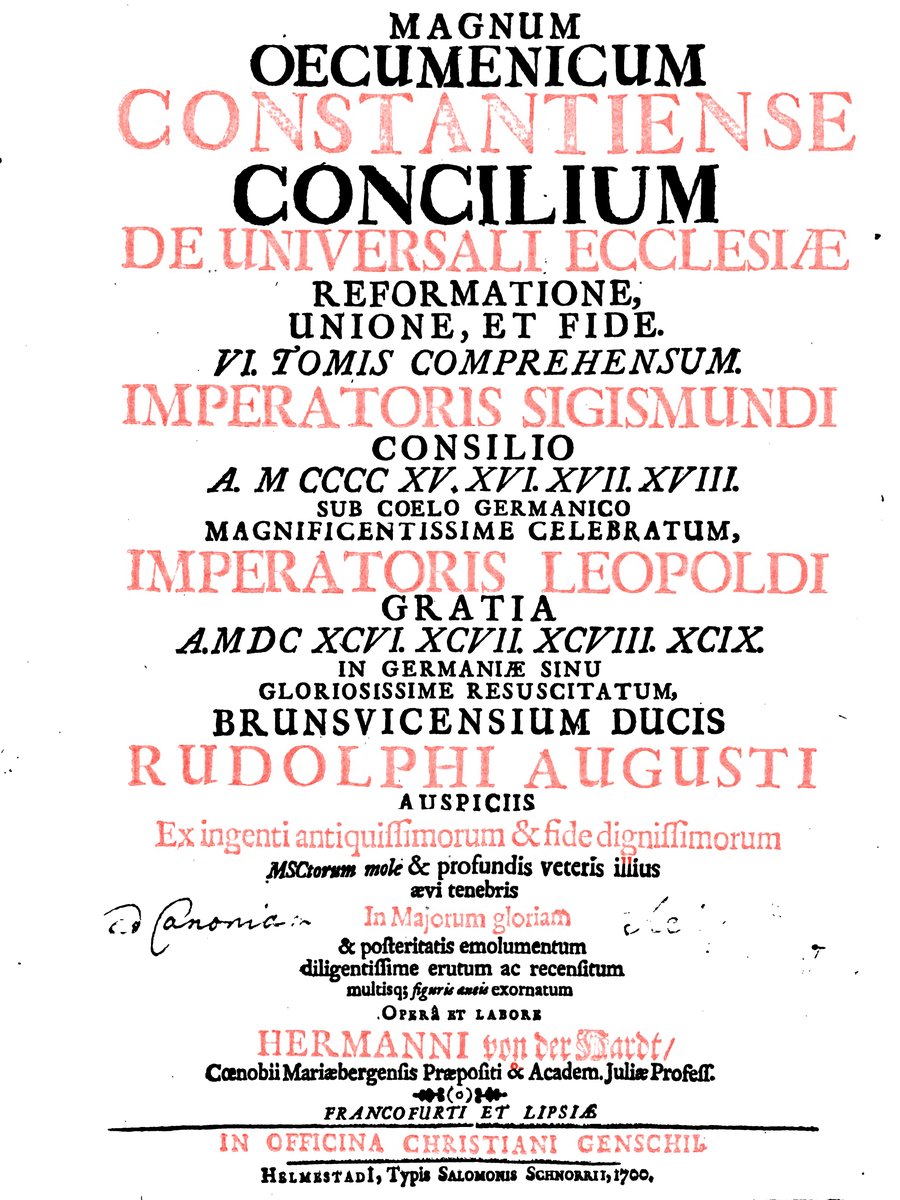
Counsel on the State of the Church to be Reformed in the Council of Constance
Consilium de Ecclesiastico Statu in Concilio Constantiensi Emendando
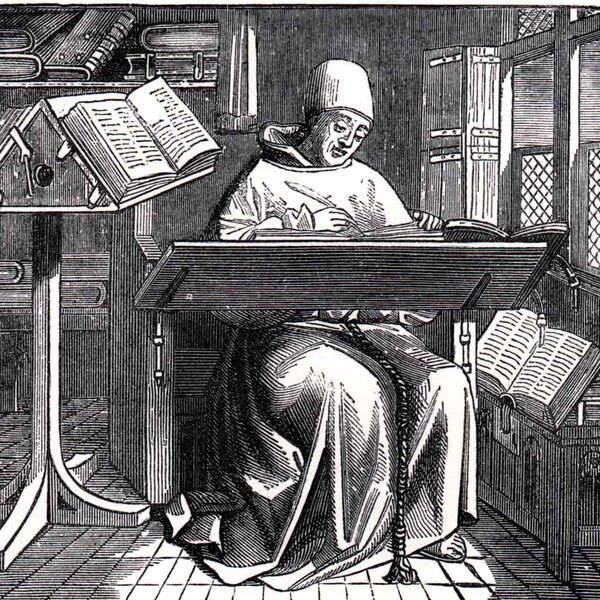 Maurice of Prague
Consilium de Ecclesiastico Statu in Concilio Constantiensi Emendando
Aperte vobis dicere, Joh. XVI. originative, & in officio Missae transumtive.
Reverendissimi Patres, Domini Magistri, ac bases & columnae atque paxilli tabernaculi testimonii, Exodi XXVII. figurati.
Locuturus vestrae beatitudini in quadam ancipiti versor sententia. Ut gravatis moestitudine mentibus quidam diffidentiae torpor obrepserit in dicendis. Tum, propter auditorum dignitatem. Terribilis beato Gregorio (prope finem Sexti Moralium) nuncupatur, dum ait: Cum talibus doctrina mens polleat, gravis est imperitia, velle docere meliores. In eo namque, verba vim suae rectitudinis amittunt, dum auditori non congruunt, nam & medicamina vires perdunt, cum sanis membris apponuntur.
Tum, propter morum pravitatem. Quia, ut idem ait in Pastorali, durum est, ut, qui nescit moderamina suae vitae, fiat judex alienae.
Tum, propter dicendorum tarditatem, Nam, ut scribit Petrus Damianus, dum Sermo Dei curiosorum auribus promitur, utrum artificiosi styli lepor adsit, attenditur, Rhetoricae venustatis color inquiritur, & captiosos Syllogismorum atque enthymematum circulos mens curiosa rimatur.
Super qua tarditate licet praeceptum habeamus, quo in templo Dei lucus infructuosae loquacitatis plantari prohibetur, Deut. XVI. Et cuncti procul dubio scimus, quod, quoties malae segetis culmi proficiunt, spicarum grana minori plenitudine turgescunt. Tamen salvator, in cujus manu sunt & sapientia, & operis & scientiae disciplina, Sap. VII. a quo est & nostra sufficientia, II. Cor. III. nostram solatur penuriam, inquiens, ubi thema, multa habeo vobis dicere, sed non potestis portare modo, cum autem venerit ille Spiritus veritatis, docebit vos omnem veritatem. Igitur pro impetranda ejusdem adventatione, matrem virginem eodem plenam spiritu salutemus, mente serena dicentes: Ave Maria gratia plena.
Quia secundum beatum Gregorium, sermone in Moralibus, in oratione, quando dicitur, necesse est, ut tempus, causa, & persona pensentur, si verba sententiae veritas roborat, si hanc tempus congruum expostulat, si veritatem sententiae & congruentiam temporis personae qualitas non impugnat, Ille enim laudabiliter spicula mittit, qui prius hostem conspicit, quam feriat. Haec Gregorius, Cumque gradus dicibilitatis consurgant ex gradibus entitatis, propter stylum veritatis: Hinc, quia primum propter reformandam corporis Ecclesiastici unitatem, secundo propter excludendam rectitudinis pravitatem, tertio propter erigendam sacerdotii dignitatem, vos congregatos video: Quamobrem super illis tribus vobis dicere habeo; Urgentibus, fructuosae fidelitatis necessitate, ut aliquem fructum in vobis habeam Rom. I. imperiosae noscibilitatis auctoritate, quam habeo a vobis, quibus datum est noscere mysterium regni Dei; animosae dicibilitatis utilitate, qua Salvator permotus ait: Simon habeo tibi aliquid dicere Luc. VII.
Cumque omne dicibile vel est honestatis, quale est reformatio Ecclesiastica unitatis, quoad primum: Vel utilitatis, quale
est exclusio recidiva pravitatis, quoad secundum: Vel delectabilitatis, quale est erectio sacerdotalis dignitatis, quoad tertium:
Liquet pro primo, quod perveniri ad reformandam corporis Ecclesiastici unitatem non potest nisi per hoc medium primitivæ Ecclesiæ, ad cujus formam seu sanctiones Ecclesiasticas disponitur Ecclesiæ præsentis reformatio, videlicet, ut sit vobis cor unum, & anima una in Domino Act. IV. Tum quia in ipso solo duntaxat nostra scismata uniuntur, dicente beato Augustino Confessione prima ad Dominum: Fecisti nos ad te: Inquietum est cor nostrum, nisi quiescat in te. Et infra lib. X. In omnibus his, quæ percurro, consulens te in creaturis, non invenio locum animæ meæ, in quo colligantur sparsa mea, nisi in te. Quod nisi in te, recedit a me. Cujus significat necessitatem Salvator dicens: Martha, Martha sollicita es & turbaris erga plurima: Porro unum est necessarium Luc. X. Super quo B. Augustinus in homiliis: Præponitur unum multis. Non enim a multis unum, sed multa ab uno sunt. Multa sunt unius, qui fecit. Hæc ille.
In quo facta prælatorum communio, est Ecclesiæ unio: A quo eorundem divisio, est Ecclesiæ scissio.
Quod sic suadetur. Vera Ecclesia universalis constat in particularibus, secundum Augustinum de civitate Dei, Lib. XVI. cap. IV. Particularis autem Ecclesia prælatorum particularis per Salvatorem dicitur Matth. XIIX. Si te non audierit, dic Ecclesiæ. Igitur si particularium prælatorum in Deo communio est Ecclesiæ universalis unio: Sic eorum a Domino per peccatum divisio, fuit Schismatis occasio.
Sed, inquis, durum est, de Prælatis talia sentire. Respondeo, utinam ipsi agnito crimine talia de se sentirent. Nam cum beato Augustino de Civit. Dei lib. 14. cap. 14. audeo dicere: Superbis est utile, cadere in aliquod apertum, manifestum peccatum, ut sibi displiceant, qui sibi placendo ceciderant. Salubrius enim sibi Petrus displicuit, quando flevit, quam quum sibi placuit, quando præsumsit. Hinc ait Propheta: Imple facies eorum ignominia & quærent nomen tuum Domine, qui sibi placuerunt quærendo suum. Sed pejor est superbia, qua in
manifestis peccatis quæritur suffragium excusationis, sicut ille, quorum unus dixit: Domine, mulier, quam dedisti mihi, & illa & serpens seduxit me. Nusquam sonat hic petitio veniæ, nusquam imploratio medicinæ. Nam licet non negent, sicut Cain, tamen in alium quærunt referre. Quod perperam fecerunt, quasi quidquam Deo, cui crederetur, proponendum foret. Unde non excusatio, sed potius vera accusatio est, ubi mandati divini est aperta transgressio, Hæc ille.
Nec allegatio metus subvenit, qui in schismate intervenerit. Beato Augustino Super Joh. XII. Qui amat animam suam perdit eam, dicente. Cum iste articulus venerit, ut aliquid faciendum sit contra Dei præceptum, aut ex hac vita migrandum, comminante mortem persecutore; Ibi eligat homo Deo dilecto mori, quam offenso vivere. Hæc Augustinus.
Et quia portatores rubei capelli sunt Papæ electores, ex signo rubedinis profecto sunt per Ecclesiam in statu martyrum. Est autem verendum, metum mortis martyribus adscribere. Qua in re non est fugiendum, Qvod seculares, qui assimulantur corpori, sicut Ecclesiæ prælati Spiritui, possint Ecclesiam scindere, Quod ex conditione status innocentiæ colligitur, in Adam, in quo tunc fuit universalis Ecclesia, dicente Apostolo Rom. VI. in quo omnes peccavimus, secundum B. Augustinum lib. XVI. de civit. Dei cap. 26. Legem datam omnibus, in Adam prævaricantibus, si spiritus Adæ, sicut in conditione acceperat, servasset unicus per obedientiam, nunquam etiam ab eo descendens scissuram sensisset, nec corpus ejus spiritui rebellare potuisset, ex sententia beati Augustini lib. de civit. Dei cap. 2. It. l. 60. cap. 1. Sed spiritu Adæ scindente se per peccatum a Deo, mox etiam universalis ab eo descendens pravitatem schismatis persensit, Propheta dicente: Omnes declinaverunt, simul inutiles facti sunt, corrupti, & abominatio facti sunt, Ps. 13.
Et a similibus prælatis, in Ecclesia peccantibus, schisma in Ecclesia est seminatum. Et sicut in Adam, spiritu peccante in Deum, mox sensualitas rebellavit spiritui: Sic prælatis Ecclesiæ, a Deo se separan-
parantibus, mox seculares protervire cœperunt, Domino per Prophetam dicente figurate cœtui prælatorum: Numquid servus est Israel, aut vernaculus? Quare ergo factus est in prædam. Super eum rugierunt leones, & dederunt vocem suam, posuerunt terram ejus in solitudinem, civitates ejus incensæ sunt, & non est qui habitet in eis, filii quoque Noph & Taphnes constupraverunt te usque ad verticem. Numquid non istud factum est tibi, quod dereliquisti Dominum Deum tuum eo tempore, quo ducebat per viam, Jer. II.
Quamobrem Reverendissimi Patres, postquam divites facti estis in omni verbo & omni scientia, sicut testimonium Christi confirmatum est in vobis: Ita, ut nihil vobis desit in ulla gratia: Obsecro vos per nomen Domini nostri Jesu Christi, ut non sint in vobis schismata, 1. Cor. II. Schismata, inquam, nec quoad Deum, nec quoad proximum. Quoad Deum, dico: Quia sunt contra naturam, secundum beatum Augustinum de civit. Dei lib. XI. cap. XVII. Vitium ita est contra naturam, ut non noceat nisi naturæ. Nec esset vitium recedere a Deo, nisi naturæ, cujus est vitium, cum peteret esse cum Deo.
Quamobrem pro exclusione schismatis quoad Deum, scrutetur unusquisque conscientiam suam, sicque ante se statuat proprii censuram judicii. Si in secreto cordis illam, quam Christus dat, invenit pacem, si desiderium spiritus nulla concupiscentia carnis impugnat, si humilia non spernit, similiter alta non appetit, si immoderate rerum suarum non gaudet augmento, si aliena felicitate non uritur, aut inimici miseria non lætatur; si ejus justitia nec adulantium potentia, nec propinquorum gratia, nec muneris vilescit pretio.
Et cum harum perturbationum nihil in se forte reperit, sincero disquirat examine, qualium frequentetur cogitationum species, & utrum nullis vanitatum acquiescat imaginibus. Nam nullis illecebris commoveri, nullis cupiditatibus titillari, non est istius vitæ, quæ tota est tentatio, & qua nimium vincitur, qui ab eadem vinci non veretur. Superbum est enim de non peccandi faci-
litate præsumere, cum hoc ipsum præsumsisse sit peccasse. Hinc beatus Augustinus de Civ. Dei lib. XIV. cap. X. ait: Nunc satis bene vivitur, si sine crimine. Sed qui sine peccato se vivere æstimat, non agit, ut peccatum non habeat, sed ut veniam non accipiat. Et infra lib. XXII. cap. 23. Sciamus, quantumlibet virtute pugnandi vitiis repugnemus, vel vitia superemus, quamdiu sumus in hoc corpore non deesse nobis posse. Unde dicamus Deo: Dimitte nobis debita nostra.
Dico secundo: Non sint schismata in vobis quoad proximum, ipsa etiam repugnante lege naturæ: De qua beatus Augustinus prope finem XII. libri de Civ. Dei: Nihil commodius contra vitium discordiæ, quam recordatio illius parentis, quem ideo Deus creavit unum, de quo multitudo propagaretur, ut hac communicatione unitas in multis servaretur.
Quæ unitas tunc cernitur, si ab hoc sacro concilio affectiones causarum particularium, lites generantium, & odia unitatem catholicam retardantia proscribantur. Qualiter in exordio conciliorum per Constantinum in primo lib. Historiæ Tripartitæ factum fuisse narratur. Secus, si invicem mordetis, & comeditis, videte, ne ambitione consumamini, Galat. V. novissima pejora prioribus relinquentes.
Ista non fonte labia prolui caballino, nec in bicipiti sum Parnasso perfusus mero. Quia, ut verbis utar Apostolorum Principis, non doctas fabulas secuti, notam fecimus vobis Domini nostri Jesu Christi virtutem & præsentiam, sed speculatores facti illius magnitudinis, 2. Petr. J. De qua habuimus vobis dicere quoad primum.
Dixi secundo, quod propter excludendam recidivi pravitatem congregatos vos video. Hinc secundam conclusionem vobis dicere habeo, videlicet, quod schismatis recidivi rationem non potestis providere, nisi per extirpationem Simoniæ. Quæ sic suadetur. Figuræ veteris legis & Ecclesiæ non verificantur, nisi ex figurato nostræ Ecclesiæ, dicente beato Augustino XII. de Civitate Dei
cap. VII. Nihil enim prodest Testamentum Vetus de monte Sina in servitutem, nisi quod Testamento Novo testimonium perhibet.
Sed status veteris legis & Ecclesiæ non est destructus nisi per Simoniam. Quod patet quadruplici testimonio.
Primo Prophetæ dicentis: Audite hæc Principes domus Jacob, & judices domus Israel, qui abominamini judicium, & omnia recta pervertitis, qui ædificatis Sion in sanguinibus, & Hierusalem in iniquitate. Principes ejus in muneribus judicabant, & sacerdotes ejus in mercede docebant, & Prophetæ ejus in pecunia divinabant, & super donum requiescebant, dicentes: Numquid non Dominus in medio nostrum? non venient super nos mala; Propter hanc causam Sion quasi ager arabitur, Hierusalem quasi acervus lapidum erit, & mons templi in excelsa sylvarum. Michæ III. Et rursum Hoseæ III. Sedebunt filii Israel sine rege & sine Principe, & sine sacrificio & sine altari, & sine Ephod, & sine Teraphim. Quæ heu citius etiam veniebant.
Secundo confirmatur testimonio Salvatoris, quo ait Simoniacis, quos de templo ejecerat: Auferetur a vobis regnum Dei, & dabitur genti fructus ejus. Matth. XXI.
Tertio per beatum Augustinum, Quod ignis sacrificii, qui LXX annis vixit sub aquis, vendente Antiocho sacerdotium Jasoni, est extinctus: Extinctionem sacerdotii ostendit.
Quarto ostenditur ex multitudine figurarum. Cum enim Simonia sit inordinata voluntas commutandi temporale pro spirituali, & e contra.
Et non dico, studiosa voluntas commutandi. Quia studiosa commutatio est laudabilis, Apostolo dicente: Si vobis seminamus spiritualia, non magnum est, si nos carnalia vestra metamus &c. Ita enim & Dominus ordinavit 1. Cor. IX. Qui etiam commutationem hujusmodi persuasit dicens: Facite vobis amicos de mammona iniquitatis, ut cum deficiatis, recipiant vos in æterna tabernacula. Luc. XVI.
Proinde dixi, inordinata voluntas. Quia procedit ex inordinato amore, odio
vel pretio forissandi spirituale pro temporali. Regnum vero Salomonis scissum est propter inordinatum amorem mulierum, commutantem cultum Dei in cultum Diaboli temporalem, idololatrando. III. Reg. XI. Regnum vero Roboam infra XII scissum est ab eo propter odium &c. quo detestatus est senum consilium, juvenum amplexans. Regnum vero Jeroboam ablatum est ab eo similiter propter inordinatum pretium, quod recipiebat vendendo sacerdotium. Dicitur enim ibidem cap. XIII. quod Jeroboam de novissimis, id est, de vilissimis populi, fecit sacerdotes excelsorum. Et propter hanc causam domus Jeroboam eversa & deleta est de superficiebus terræ.
Liquet ex relatione figurarum ad figurata, quod regnum Ecclesiæ primo scinditur propter regentium meretricia, quæ emuntur ex provisione Ecclesiastica, exemplo Salomonis. Quæ, inquam, provisiones sunt bona spiritualia, sicut infra probabitur, quæ commutantur pro temporalibus & momentaneis meretriciis.
Secundo propter contemtum sanctionum & decretorum Sanctorum Patrum contra pravitatem Simoniacam, & amplexionem novitatum, exemplo Roboam, asserentium, in Papam non posse cadere Simoniam. Vere mendacium operatus est stylus scribarum mendax. Nam si in nova lege in Judam, electum a Christo discipulum, æqualem tunc Petro, accidit simonia, qui etiam personam in divinis æstimavit xxx argenteis: Quomodo non in Papam, in Apostolatum ab hominibus electum?
Sed cur in Judam cecidit? Revera, quia de Christo malam fidem velut hæreticus habuit. Et tales sunt omnes simoniaci. Ait enim Remigius in præfatione tertii Psalmi: Quod Judas non credidit, Christum esse Dei filium, sed quendam magum & sacrilegum.
Simoniaci vero pejus de Spiritu sancto, quam hæretici sentiunt, teste beato Augustino contra Maximianum, qui Spiritum sanctum dixit esse servum Patris, & Filii, Simoniaci eum dicunt esse servum denarii.
Et
Et in adjutorium erroris assumitur, quod Papa non vendat spirituale, sed solum annexum temporale, cum quo transit spirituale, quemadmodum jus patronatus, cum emtæ villæ hæreditate.
Sed his respondetur, quod errant, nescientes divinas Scripturas, quibus docemur, quod temporale ipso facto annexionis dedicetur, ut consecretur & commutetur in spirituale.
Proinde, si venditur, profecto venditur ut spirituale. Quod patet ex ratione & autoritate.
Ratione, inquam. Quia corpus Christi non est de se spirituale, in eo, quod corpus: Secundum rationem annexionis divinitati, quæ est supremus spiritus, dicitur esse spirituale, quamvis in substantiam spiritus divini non transierit, sed corporale remanserit: Sic similiter de provisionibus temporalibus, quæ annectuntur spiritualibus, est censendum.
Autoritate, inquam, qua Ecclesiæ loquitur Dominus in lege veteri, Levitici ultimo; Quicquid semel consecratum fuerit Domino, sive homo fuerit, sive animal, sive ager, non vendetur, quia sanctum sanctorum erit, Domino loquente. Et in nova, Matth. XXIII. quod altare significat donum sibi impositum, & ita donum est spirituale. Quia sanctum Deo, non homini dedicatum. Unde sacerdos, dans denarium Deo dicatum pro meretricio, crimen simoniæ incurrit. Secundum quam sententiam oblata non dicuntur sacerdotum proprie, sed Dei. Quemadmodum Dominus Salvator, dicens: Reddite, quæ sunt Cæsaris, Cæsari, non subdit: Reddite sacerdotibus, quæ sunt sacerdotum, sed quæ sunt Dei, Deo.
Ut Papa intelligat, non se esse spiritualibus annexorum Dominum, sed dispensatorem & villicum. Et pro tali est reputandus, secundum Apostolum, dicentem: Sic nos existimet homo, ut ministros Christi, & dispensatores mysteriorum.
Sed quia hic jam quæritur in dispensatore, ut fidelis quis inveniatur, 1. Cor. 4. Quoniam nostri Jeroboam de vilissimis, qui manum eorum implebant, fecerunt sacerdotes: Sicut lamentabili-
ter colligitur ex Ecclesiæ scissura, cui occasionem præbuit ipsorum simonia: Qua de re autoritate hujus sacri concilii, reformantis Ecclesiæ scissuram, cicatrices simoniæ sunt medendæ.
Primo, quatenus hujusmodi simoniaci charitative commoneantur, ut digne pœniteant, aut saltem cum Juda proditore, primo novæ legis simoniaco, resignantes, beneficia percepta restituant, quemadmodum Judas projectis argenteis, nec tamen se suspendant, Matth. XXVII.
Nec sunt censendi extare alii modi pœnitendi. Nam sicut in omni genere primum est mensura omnium sequuturorum, ex X. Metaphys. sic Judæ primi novæ legis Simoniaci, pœnitentia, suscepto suspendio, est regula pœnitendi omnium Simoniacorum sequentium. Et, si pœnitere noluerint, ex tunc ejiciantur de beneficiis usque ad electionem summi Pontificis, exemplo concilii primi, Esdræ II. Ubi Veteris legis Ecclesia, dispersa per captivitatem Babylonicam, in reditu Hierosolymæ, redintegrata non legitur, nisi ejectis sacerdotibus, qui de justo beneficii titulo docere nequibant. Ait enim de filiis Abia &c. Hi quæsierunt scripturam genealogiæ suæ, & non invenerunt, & ejecti sunt a sacerdotio, ut non comederent de sancto sanctorum, id est, de cibo pertinente ad sacerdotes, donec surgeret sacerdos doctus atque perfectus. Tunc enim sacerdotium autentice transibat per successionem hæreditariam, qualis fuit Aaronitarum divinitus olim autentata Exod. XXVIII. Et hæc successio per lineam genealogiæ legitimam dabat tunc nisi beneficii titulum. Qui cessavit post partum virginis, quo sacerdotes, castitatis professores, promoventur pro spirituali sobole multiplicanda.
Quod si de beneficiis nolunt cedere, ex tunc illi expellantur cum furore, exemplo Salvatoris, qui mansuetissime super asinam veniens eosdem zelanter ejecit, atque fures & latrones appellavit, ac templum ratione simoniæ speluncam latronum, Matth. XXI.
Ad quod simoniacos intrare prohibens, se ostium Ecclesiæ vocavit Joh. X. In
In cujus mysterium Exod. XII. ostium in utroque poste agni sangvine tingitur: Ostendens introitum in Christi sangvine duntaxat. Atq; aliter intrantes, simoniace videlicet, Angelo exterminatori tanquam incorrigibiles relinquit.
Tandem facta expulsione sunt acerrime puniendi. Ut patet in Gehasi IV. Reg. V. Cui Elisæus legitur dixisse: Naamani lepra adhærebit tibi, & semini tuo in sempiternum.
Cum autem non legatur Gehasi semen naturale reliquisse, constat, de mutato cleri Simoniaci semine Elisæum prophetasse, quasi desperantem de Simoniacorum per Ecclesiam exterminatione.
Tum primo, quia in Romana curia non deficient servitores prælatorum pro promotionibus. Quam servitutem beatus Gregorius dicit Simoniacam. Quia munus ab obseqvio.
Nec secundo deficiunt promotores honorantiarum & præsentiarum, exemplo Gehasi, Qvi, sine pacto sanatione peracta, quamvis non consentiente Domino, tamen occulte, nomine sui Domini Elisæi, honorantias legitur recepisse tanquam munus a manu, secundum beatum Gregorium.
Nec tertio procuratores & advocati deficient, sicut nec lites. Qvas operas reputat beatus Gregorius Simoniacas, tanquam munus a lingua. Ait enim libro moralium, nono capitulo: Plerumque nonnulla terena præmia appetunt, & justitiam defendunt, seqve innocentes æstimant, & esse defensores rectitudinis exultant. Qvibus si spes nummi subtrahitur, a defensione justitiæ cessatur. Et tamen defensores se justitiæ cogitant, seqve rectos afferunt, qui nequaquam rectitudinem sed nummos quærunt. Contra quos bene per Mosen dicitur: Juste quod justum est exequitur, Injuste quippe, quod justum est exeqvitur, qui ad defensionem justitiæ non virtutis æmulatione, sed amore temporalium excitatur. Juste autem, quod justum exequitur, quando nec laudes nec præmia ab hominibus expectamus. Hæc Gregorius.
Sed quid contra stimulum calcitro,
ventum percutiens, postquam audio Prophetam dicentem: Frustra conflavit conflator, malitiæ ejus non sunt consumtæ.
Unum tamen infero, quod de partibus mecum attuli: Quod hoc sacrum concilium nullo modo ab infamia vulgari liberatur, nisi Simoniam exterminet. Tum, quia communis vulgi opinio, quanquam falsa & hæretica, clamat, Johannem Huß sententiatum per concilium, tanquam severe judicarit ut Salvator, Simoniacos, contra quos ille damnatus acerrime prædicavit.
Hoc in medium deducere volui, tanquam secundum quod vobis dicere habui.
Dixi tertio, quod propter erigendam sacerdotii dignitatem congregatos vos video. Hinc vobis hanc conclusionem tertiam dicere habeo, quod dignitatem sacerdotii non potestis erigere, nisi pro posse conemini promotiones puerorum, ignarorum & pravorum destruere.
Qvod svadetur: Qvia prædictorum prælatio, est ruinosa sacerdotii destructio. Igitur eorum destructio erit sacerdotii erectio. Talis consequentia capitur ab oppositis.
Et amplius patet inductive autoritate, ratione & exemplo, positio de prioribus.
Qvia autoritate prohibentur per Apostolum promoveri ad sacerdotium, 1. Tim. III. Non neophytum in fide, nec moribus novitium. Quales sunt pueri ætate vel probitate. Unde puer centum annorum maledicitur, Es. LXV.
Et ratio. Qvia propter pubescentem adolescentiam, qua sequuntur passiones vitiorum, & propter inexperientiam, a regimine arcentur Ecclesiastico. Eo quod ars artium est regimen animarum, secundum beatum Gregorium primo Past. c. II.
Porro si hujusmodi non sunt scientiæ morales, utiles auditoribus, ex I. Ethic. cap. II. quomodo erunt scientiæ moralis doctores? Quales esse oportet Prælatos. Qui non sunt in statu acquirendæ perfectionis, quemadmodum religiosi secundum beatum Benedictum cap. ult. suæ Re. Sed per amplius sunt in statu exercendæ virtutis & perfectionis, in alios prælatialiter diffundendæ. Qvemadmodum tradit
tradit beatus Gregorius, X. Moralium dicens: Summus locus tunc bene regitur, quando homo non hominibus, sed vitiis principatur. Qui ergo nescit propria vitia compellere, quomodo compescit aliena.
Ex quibus colligitur, quod inconsulte Balthasar de Cossa electus est in summum Pontificem, qui ab experimento non habuit statum exercendæ perfectionis, sed promittebat se assumere statum acquirendæ perfectionis. Quod prælatiæ repugnat.
Patet idem ab exemplo utriusque testamenti. Nam in veteri lege pastores pecorum propter experientiam vocantur ad regimen hominum. Et in nova assumuntur similiter piscatores.
Quod autem ignari arceantur a promotione Ecclesiastica, patet autoritate, ratione & exemplo.
Autoritate inquam. Quia Prælati animarum in veteri lege dicuntur speculatores, Ezech. III. In nova vero lege Episcopi, Act. XX. Attendite vobis & universo gregi, in quo Spiritus Sanctus vos posuit Episcopos, id est, Superintendentes, secundum beatum August. XIX. de civitate Dei c. XIX. Episcopatus nomen græcum est, & nomen est operis, non honoris. Hinc propter defectum scientiæ & Superintendentiæ ignari arcentur a sacerdotio, Domino dicente: Quia tu repulisti scientiam, repellam ego & te, ne sacerdotio fungaris, Hosea cap. IV. Et causam sive rationem assignat Propheta dicens: Labia sacerdotis custodiunt Scientiam, & legem requirunt ex ore ejus, quia Angelus Dei exercituum est. Malachia II. Angelus, inquam, divinæ voluntatis, legationem ad homines sufficienter proferens. Quia Dei perfecta sunt opera Deutr. XXXII. Unde & ait: Scientiam Dei volui plus, quam holocausta, Ezech. 17.
Hinc patet idem ab exemplo, quo Christus noluit Apostolos Ecclesiis præficere, volens ad cælum ascendere, nisi per missionem sancti Spiritus informatos sufficientissime, dicens: Sedete hic in civitate, donec induamini virtute ex alto, Luc. ult. Et ex tunc, Euntes in mundum prædicate, Marc. ult. Et rursum Act. I. Accipietis virtutem Spiritus supervenientis in vos, & eritis mihi testes &c. In cujus my-
sterium coronam impetrabitis in fide scientiam utriusque testamenti accipietis, quando signata signis concordant. Secus, secundum Gilbertum de abusion. nil stultius, propter signorum discrepantiam, quam asinus coronatus, & speculator cæcus.
Verum, quia prelati Ecclesiastici sunt laicorum libri & exemplaria, in quibus debent legere humanitatem, castitatem, & omnem virtutem, Salvatore ipsis dicente: Vos estis lux mundi, Matth. V. Lux, inquam, non solum ut videatis, sed ut videamini. Quemadmodum subdit: Sic luceat lux vestra coram hominibus, ut videant opera vestra bona: Hinc pueri & scandalosi arcentur a prælatiarum regimine, tanquam mala exemplaria, nomen Domini blasphemantia, in quibus legitur avaritia, luxuria, superbia & omnis malitia. Unde merito tales libri forent corrigendi vel certe comburendi. Tum quia secundum B. Gregorium, XVI. moralium, sicut lectio viva est vita justorum, sic scandalosa vita prælatorum est damnatio subditorum, Domino per Prophetam conquerente: Grex perditus factus est populus meus, pastores eorum seduxerunt eos.
Hæc vestræ sanctitati dicere habui, propter excludendum taciturnitatis dæmonium, cujus vitium Esaias Propheta sibimet imputans, VI. Cap. Væ, inquit, mihi, quod tacui, timens offensam regiam, in tantum aggravat, ut se propter hoc removendum ab officio prophetiæ censeat, nec posse purgari, nisi per ignitum calculum, quod beatus Hieronymus misericordiam interpretatur.
Vos autem, ut omnia præmissa verbis concludam Apostolorum Principis, II. Petr. I. omnem curam subinferentes, ut universa onera Ecclesiæ Catholicæ supportetis, ministrate in fide vestra virtutem, in virtute autem scientiam, in scientia autem abstinentiam, in abstinentia autem patientiam, in patientia autem pietatem, in pietate autem fraternitatis amorem, in amore autem fraternitatis charitatem. Hæc enim si vobiscum adsint & superent, non vacuos nec sine fructu vos constituent in Domini nostri Jesu Christi cognitione. Cui
Cui enim non præsto sunt hæc, cœcus est, & manu tentans, oblivionem accipiens purgationis veterum suorum delictorum. Quapropter satagite, ut per bona opera certam vestram vocationem & electionem faciatis. Sic enim
abundanter ministrabitur vobis introitus in æternum regnum. Hæc Petrus. Quem introitum ipse præstare dignetur, qui nos Deus benedicat in secula. Amen.
A Counsel for Reforming the Ecclesiastical Estate at the Council of Constance
“To tell you openly” [John 16], taken originally from John 16, and transumptively from the Office of the Mass.
Most reverend Fathers, Lord Masters, and bases and pillars and stakes of the tabernacle of testimony, figured in Exodus 27.
As I am about to address your beatitude, I find myself caught in a twofold judgment: namely, that upon minds burdened with sorrow a certain torpor of diffidence may creep in as I speak. This is so, first, because of the dignity of my hearers. Blessed Gregorius (near the end of Book VI of the Moralia) calls it a terrifying thing, when he says: “When the mind flourishes in teaching among such persons, ignorance is grave, wishing to teach those who are better. For in this case words lose the force of their rectitude when they do not suit the hearer, since medicines too lose their virtues when applied to sound limbs.”
Second, on account of the depravity of morals. For, as the same author says in the Pastoral Rule, “it is harsh that one who does not know how to govern his own life should be made judge of another’s.”
Third, on account of the slowness of what must be said. For, as Petrus Damianus writes, “when the Word of God is set forth to the ears of the curious, attention is paid to whether there is charm of artful style; the coloring of rhetorical elegance is sought out; and the curious mind pries into the captious circuits of syllogisms and enthymemes.”
Concerning which slowness we have a precept — that in the temple of God a grove of unfruitful loquacity is forbidden to be planted (Deuteronomy 16). And we all undoubtedly know that whenever the stalks of a bad crop thrive, the kernels of the ears swell with less fullness. Yet the Savior, in whose hand are both wisdom and the discipline of work and of knowledge (Wisdom 7), from whom also is our sufficiency (2 Corinthians 3), consoles our poverty, saying, where the theme is: “I have many things to say to you, but you cannot bear them now; but when that Spirit of truth shall come, he will teach you all truth.” Therefore, to obtain his arrival, let us greet the Virgin Mother, full of the same Spirit, saying with serene mind: Hail Mary, full of grace.
According to blessed Gregorius, in a sermon in the Moralia, “in speech, when something is said, it is necessary that time, cause, and person be weighed: whether the truth of the judgment strengthens the words, whether the fitting time demands it, whether the quality of the person does not conflict with the truth of the judgment and the fittingness of the time. For he praiseworthily shoots his darts who first spies out the enemy before he strikes.” Thus Gregorius. And since the degrees of what may be said arise from the degrees of being, on account of the style of truth: hence, because I see you gathered, first for the reforming of the unity of the Ecclesiastical body, second for the excluding of the depravity of right conduct, and third for the raising up of the dignity of the priesthood, therefore I have to speak to you on these three matters. Urged on by the necessity of fruitful fidelity, “that I may have some fruit among you” (Romans 1); by the authority of commanding knowability, which I have from you, “to whom it is given to know the mystery of the kingdom of God”; by the usefulness of courageous utterance, by which the Savior, moved, said: “Simon, I have something to say to you” (Luke 7).
And since everything speakable is either of honorableness — such as the reformation of Ecclesiastical unity, as regards the first; or of usefulness — such as
the exclusion of relapsing depravity, as regards the second; or of delightfulness — such as the raising up of sacerdotal dignity, as regards the third:
It is clear as to the first that one cannot come to the reforming of the unity of the Ecclesiastical body except through the medium of the primitive Church, to whose form or Ecclesiastical sanctions the reformation of the present Church is ordered — namely, that “you may have one heart, and one soul in the Lord” (Acts 4). For it is in him alone that our schisms are united, as blessed Augustinus says in the first book of the Confessions, addressing the Lord: “You have made us for yourself; our heart is restless, unless it rest in you.” And further, in Book X: “In all these things which I run through, consulting you concerning creatures, I find no place for my soul in which my scattered self may be gathered, save in you. Whatever is not in you withdraws from me.” Of which the Savior signifies the necessity, saying: “Martha, Martha, you are careful and troubled about many things: but one thing is necessary” (Luke 10). On which B. Augustinus in the Homilies says: “The one is set before the many. For the one is not from the many, but the many are from the one. The many things belong to the one, who made them.” Thus he.
In him, the communion of the prelates made is the Church’s union; from him, their division is the Church’s rupture.
This is urged thus. The true universal Church consists in particulars, according to Augustinus in On the City of God, Book XVI, chapter 4. Now the particular Church of particular prelates is spoken of by the Savior (Matthew 18): “If he will not hear you, tell the Church.” Therefore, if the communion of particular prelates in God is the union of the universal Church, so their division from the Lord through sin was the occasion of the Schism.
But, you say, it is harsh to hold such things about Prelates. I answer: would that they themselves, recognizing the crime, held such things about themselves. For with blessed Augustinus, On the City of God, Book 14, chapter 14, I dare to say: “It is useful to the proud to fall into some open, manifest sin, so that those who had fallen by pleasing themselves may become displeasing to themselves. For Peter more salubriously displeased himself when he wept than when he pleased himself when he presumed.” Hence the Prophet says: “Fill their faces with shame, and they shall seek thy name, O Lord” — those, that is, who pleased themselves by seeking their own. But worse is the pride by which, in
manifest sins one seeks the support of an excuse, like that man, one of whom said: “Lord, the woman whom you gave me, both she and the serpent deceived me.” Nowhere here is there a plea for pardon, nowhere an entreaty for a remedy. For although they do not deny it, as Cain did, still they seek to refer it onto another — something they did wrongly, as though anything could be set before God, who must be trusted, of such a kind [as an excuse]. Hence it is not an excusing but rather a true accusing, where there is an open transgression of the divine command. Thus Augustinus.
Nor does the plea of fear, which may have come in during the schism, offer any help. Augustinus, on John 12, commenting on “He who loves his soul loses it,” says: When this moment comes, that something must be done contrary to God’s precept, or else one must depart from this life because the persecutor threatens death, then let a man choose rather to die with God as his friend than to live with him offended. Thus Augustinus.
And because the bearers of the red hat are the electors of the Pope, by the sign of their redness they are indeed in the state of martyrs before the Church. Yet it is to be feared that fear of death should be ascribed to martyrs. In this matter there is no escaping the fact that seculars — who are likened to the body, as the prelates of the Church are to the spirit — are able to rend the Church. This is gathered from the condition of the state of innocence in Adam, in whom the universal Church then existed, the Apostle saying in Romans 6 [actually Rom. 5:12]: “in whom we all sinned.” According to Augustinus, in De civitate Dei book 16, chapter 26, if the spirit of Adam, as he had received it at his making, had by obedience preserved itself single, it would never have felt any rupture in what descends from it, nor could his body have rebelled against the spirit — from Augustinus’s sentence, De civitate Dei book [14], chapter 2, likewise book [13], chapter 1 [sic, reading uncertain]. But when the spirit of Adam split itself from God through sin, immediately also the whole that descends from him felt the perversity of the schism, as the Prophet says: “All have turned aside, they have together become useless, corrupt, and have become an abomination,” Psalm 13.
And from similar prelates, sinning in the Church, schism has been sown in the Church. And just as in Adam, once the spirit had sinned against God, at once sensuality rebelled against the spirit, so when the prelates of the Church sepa-
rated themselves from God, the seculars soon began to grow insolent — the Lord saying through the Prophet figuratively to the assembly of prelates: “Is Israel a servant, or a home-born slave? Why then has he become a prey? The lions have roared over him and given forth their voice; they have laid his land waste, his cities are burned and no one dwells in them; the sons also of Noph and Taphnes have defiled you even to the crown of the head. Has not this been done to you, because you forsook the Lord your God at the time when he led you on the way?” Jeremiah 2.
Wherefore, most reverend Fathers, since you have been made rich in all speech and in all knowledge — as the testimony of Christ has been confirmed in you, so that nothing is lacking to you in any grace — I beseech you by the name of our Lord Jesus Christ that there be no schisms among you, 1 Corinthians 2 [actually 1 Cor. 1:10]. Schisms, I say, neither with regard to God nor with regard to neighbor. With regard to God, I say, because they are against nature, according to Augustinus, De civitate Dei book 11, chapter 17: Vice is so contrary to nature that it harms nothing but nature. Nor would it be a vice to withdraw from God, except for a nature whose vice it is, since it was made to be with God.
Wherefore, for the exclusion of schism with regard to God, let each one examine his own conscience, and thus set before himself the judgment of his own censure: whether in the secret of his heart he finds that peace which Christ gives; whether no concupiscence of the flesh assails the desire of the spirit; whether he does not despise humble things nor, likewise, covet lofty ones; whether he does not immoderately rejoice in the increase of his own goods; whether he is not inflamed with envy at another’s happiness nor gladdened at an enemy’s misery; whether his justice is not cheapened by the power of flatterers, nor by the favor of kinsmen, nor by the price of a gift.
And when he finds, perhaps, that none of these disturbances is in him, let him with sincere scrutiny inquire what kinds of thoughts frequent him, and whether he acquiesces in no images of vanities. For to be moved by no enticements and tickled by no desires does not belong to this life, which is wholly temptation, and by which he is too thoroughly conquered who does not fear to be conquered by it. For it is proud to presume on the ease of not sin-
to presume upon an easy capacity for not sinning, since this very presumption is itself a sin. Hence Augustinus, in De Civitate Dei XIV.10, says: “At present one lives well enough if one lives without grave crime. But whoever judges himself to live without sin is acting not so as to have no sin, but so as not to receive pardon.” And further, in Book XXII, chapter 23: “Let us know that, however vigorously we fight against our vices or overcome them, so long as we are in this body they cannot be entirely absent from us. Therefore let us say to God: Forgive us our debts.”
I say, second: let there be no schisms among you with respect to your neighbor, since the very law of nature resists such schisms. Of this Augustinus, near the end of Book XII of De Civitate Dei, writes: “Nothing is more effective against the vice of discord than the remembrance of that one parent whom God created as one, and from whom a multitude might be propagated, so that through this shared origin unity might be preserved among the many.”
This unity will be seen if, from this sacred council, there are banished the affections of particular causes which generate quarrels, and the hatreds which hinder catholic unity — just as is related to have been done at the opening of the councils under Constantinus, in the first book of the Historia Tripartita. Otherwise, if you bite and devour one another, take heed that you be not consumed through ambition, Galatians 5, leaving the last things worse than the first.
I have not moistened my lips at the horse’s fountain, nor have I been steeped in wine on twin-peaked Parnassus. For, to use the words of the Prince of the Apostles, we have not followed learned fables, but have made known to you the power and coming of our Lord Jesus Christ, having been made beholders of his greatness, 2 Peter 1. Concerning which I had things to say to you with respect to the first point.
I said, second, that I see you gathered for the purpose of preventing a relapse into wickedness. Hence I have a second conclusion to present to you, namely, that you cannot provide against the prospect of a recurring schism except through the extirpation of simony. This is urged as follows. The figures of the Old Law and of the [Old] Church are not verified except from what is figured in our Church, as Augustinus says in De Civitate Dei XII,
chapter 7: “The Old Testament, given from Mount Sinai into bondage, profits nothing except in so far as it bears witness to the New Testament.”
But the condition of the Old Law and Church was not destroyed except through simony. This is clear from a fourfold testimony.
First, from the Prophet who says: Hear this, you princes of the house of Jacob, and you judges of the house of Israel, who abhor judgment and pervert all that is right, who build up Sion with blood, and Jerusalem with iniquity. Her princes have judged for bribes, and her priests have taught for hire, and her prophets divined for money; and they leaned upon the Lord, saying: Is not the Lord in the midst of us? No evil shall come upon us. Therefore, because of this, Sion shall be plowed as a field, Jerusalem shall be as a heap of stones, and the mountain of the temple as the high places of the forests, Micah 3. And again, Hosea 3: The children of Israel shall sit without king, and without prince, and without sacrifice, and without altar, and without ephod, and without teraphim. Which things, alas, came all too swiftly.
Second, it is confirmed by the testimony of the Savior, when he said to the simoniacs whom he had cast out of the temple: The kingdom of God shall be taken from you, and shall be given to a nation yielding the fruits thereof, Matthew 21.
Third, through Augustinus, who shows that the fact that the sacrificial fire, which had lived seventy years under the waters, was extinguished when Antiochus sold the priesthood to Jason, displays the extinction of the priesthood.
Fourth, it is shown from a multitude of figures. For since simony is the disordered will to exchange the temporal for the spiritual, and conversely.
And I do not say: the zealous will to exchange. For a zealous exchange is praiseworthy, since the Apostle says: If we have sown unto you spiritual things, is it a great matter if we reap your carnal things, etc. For thus has the Lord also ordained, 1 Corinthians 9. He likewise urged an exchange of this kind when he said: Make unto yourselves friends of the mammon of iniquity, that when you fail, they may receive you into everlasting dwellings, Luke 16.
I said accordingly: disordered will. For it proceeds from disordered love, hatred
or of a price for exchanging the spiritual for the temporal. Indeed, the kingdom of Solomon was torn asunder on account of his disordered love of women, which exchanged the worship of God for the temporal worship of the Devil through idolatry. 1 Kings 11. The kingdom of Rehoboam, moreover, was torn from him in [chapter] 12 on account of his hatred, etc., by which he despised the counsel of the elders and embraced that of the young men. And the kingdom of Jeroboam was likewise taken from him on account of the disordered price which he received for selling the priesthood. For it is said in the same book, chapter 13, that Jeroboam made priests of the high places from the meanest, that is, from the most worthless of the people. And for this cause the house of Jeroboam was overturned and blotted out from the face of the earth.
It is evident, from the correspondence of the figures to the things figured, that the kingdom of the Church is first torn asunder on account of the whoredoms of its rulers, which are purchased from ecclesiastical provisions, after the example of Solomon. These provisions, I say, are spiritual goods, as will be proved below, which are exchanged for temporal and momentary whoredoms.
Secondly, [it is torn] on account of contempt for the sanctions and decrees of the Holy Fathers against simoniacal depravity, and on account of the embrace of novelties, after the example of Rehoboam — by those who assert that simony cannot fall upon the Pope. Truly the lying pen of the scribes has wrought a lie. For if in the new law simony befell Judas, a disciple chosen by Christ, then equal to Peter, who also valued a person in divine things at thirty pieces of silver — how should it not befall the Pope, chosen to the apostolate by men?
But why did it fall upon Judas? Truly, because he held bad faith concerning Christ, as a heretic does. And such are all simoniacs. For Remigius says in the preface to the third Psalm: that Judas did not believe Christ to be the Son of God, but rather some sort of magician and sacrilegious man.
Simoniacs, however, think worse of the Holy Spirit than heretics do, as Augustinus testifies against Maximianus, who said that the Holy Spirit is the servant of the Father and of the Son: the simoniacs call Him the servant of the coin.
And
And in support of the error it is alleged that the Pope does not sell the spiritual thing, but only the annexed temporal thing, together with which the spiritual passes — just as the right of patronage [passes] with the hereditary purchase of an estate.
But to these it is replied that they err, not knowing the divine Scriptures, by which we are taught that the temporal is, by the very fact of annexation, dedicated, so that it may be consecrated and converted into a spiritual thing.
Accordingly, if it is sold, it is assuredly sold as something spiritual. Which is plain both by reason and by authority.
By reason, I say. For the body of Christ is not of itself spiritual, insofar as it is a body: but by reason of its annexation to the divinity, which is the supreme spirit, it is said to be spiritual, although it has not passed over into the substance of the divine spirit, but has remained corporeal. The same judgment must be passed, similarly, concerning temporal provisions which are annexed to spiritual things.
By authority, I say, by which the Lord speaks to the Church in the old law, in the last [chapter] of Leviticus: Whatever has once been consecrated to the Lord, whether it be man, or animal, or field, shall not be sold, because it shall be the holy of holies — the Lord Himself speaking. And in the new, Matthew 23, [it is said] that the altar sanctifies the gift placed upon it, and thus the gift is spiritual. For it is sanctified to God, not dedicated to man. Whence a priest who gives a coin dedicated to God for whoredom incurs the crime of simony. According to which judgment, offerings are not properly said to be the priests’, but God’s. Just as the Lord Savior, saying: Render unto Caesar the things that are Caesar’s, does not add: Render unto the priests the things that are the priests’, but: The things that are God’s, unto God.
So that the Pope may understand that he is not the lord of the things annexed to the spiritual, but their dispenser and steward. And he is to be reputed as such, according to the Apostle, who says: Let a man so account of us, as ministers of Christ, and dispensers of the mysteries [of God].
But since here now it is required in a steward that a man be found faithful, 1 Corinthians 4, — inasmuch as our Jeroboams have made priests of the most worthless, namely of those who filled their hand — as is lamenta-
as is lamentably inferred from the schism of the Church, to which their simony gave occasion. Concerning this matter, by the authority of this sacred council, which is reforming the schism of the Church, the wounds of simony must be healed.
First, in so far as simoniacs of this sort are to be charitably admonished, that they may worthily do penance, or at least that, like Judas the betrayer, the first simoniac of the new law, they may resign and restore the benefices they have received, just as Judas threw down the pieces of silver — though without hanging themselves, Matthew 27.
Nor are other modes of penance to be considered to exist. For just as in every genus the first is the measure of all that follow, according to Metaphysics X, so the penance of Judas, the first simoniac of the new law, having undergone hanging, is the rule of penance for all subsequent simoniacs. And if they refuse to repent, from that point they are to be ejected from their benefices until the election of the Supreme Pontiff, after the example of the first council in Ezra 2, where the Church of the Old Law, dispersed by the Babylonian captivity, is not read to have been restored on the return to Jerusalem except by the ejection of priests who could not show a just title to their benefice. For it says concerning the sons of Abia, etc.: “These sought the writing of their genealogy and found it not, and they were cast out from the priesthood, that they should not eat of the holy of holies” — that is, of the food pertaining to priests — “until there should arise a priest learned and perfect.” For at that time the priesthood passed authentically by hereditary succession, such as the Aaronic priesthood divinely established of old in Exodus 28. And this succession through a legitimate genealogical line then gave only the title to the benefice. This ceased after the virgin birth, by which priests, as professors of chastity, are promoted for the multiplication of spiritual offspring.
But if they refuse to yield their benefices, then let them be expelled with fury, after the example of the Savior, who, coming most meekly upon an ass, zealously ejected these same men, called them thieves and robbers, and called the temple, on account of simony, a den of thieves, Matthew 21.
Forbidding simoniacs to enter it, he called himself the door of the Church, John 10. In
In the mystery of which, Exodus 12, the door is stained on both posts with the blood of the lamb, showing that entry is only through the blood of Christ. And those who enter otherwise — namely, simoniacally — he abandons as incorrigible to the destroying Angel.
At last, once expulsion has been carried out, they are to be most severely punished. As is evident in Gehazi, 2 Kings 5, to whom Elisha is read to have said: “The leprosy of Naaman shall cleave to thee, and to thy seed for ever.”
Now since Gehazi is not read to have left any natural offspring, it is clear that Elisha prophesied concerning the changed seed of the simoniac clergy, as though despairing of the extermination of simoniacs by the Church.
For, first, in the Roman curia there will be no lack of servitors of prelates seeking promotions. Such servitude blessed Gregorius calls simoniacal, because it is a gift from obeisance [munus ab obsequio].
Nor, secondly, is there a lack of promoters of honoraria and gratuities, after the example of Gehazi, who, once the healing had been accomplished without any pact, although his master did not consent, nevertheless secretly, in the name of his master Elisha, is read to have received honoraria as a gift from the hand [munus a manu], according to blessed Gregorius.
Nor, thirdly, are there lacking proctors and advocates, any more than there are lawsuits. Such labors blessed Gregorius reckons as simoniacal, as a gift from the tongue [munus a lingua]. For he says in the book of the Moralia, chapter nine: “Very often some men seek certain earthly rewards and defend justice, and they reckon themselves innocent and exult in being defenders of rectitude. If from these the hope of money is withdrawn, they cease from the defense of justice. And yet those think themselves defenders of justice, and proclaim themselves upright, who seek not rectitude but money. Against such it is well said through Moses: ‘Justly shall he pursue what is just.’ For unjustly does he pursue what is just who is moved to the defense of justice not by zeal for virtue but by love of temporal things. But justly does he pursue what is just when we expect neither praise nor rewards from men.” Thus Gregorius.
But why do I kick against the goad,
beating the wind, since I hear the Prophet saying: In vain has the smelter smelted, for their wickedness has not been consumed.
One thing, however, I set forth, which I have brought with me from my own region: that this sacred council is in no way freed from common infamy unless it exterminates Simony. For the common opinion of the people, although false and heretical, cries out that Iohannes Hus was sentenced by the council as though it had judged him as severely as the Savior judged the simoniacs, against whom he, though condemned, had preached most vehemently.
I wished to bring this into the midst as the second point I had to say to you.
I said thirdly that I see you gathered for the purpose of raising up the dignity of the priesthood. Hence I have this third conclusion to state to you: that you cannot raise up the dignity of the priesthood unless you strive so far as you can to destroy the promotion of boys, the ignorant, and the wicked.
This is urged thus: because the prelacy of such men is the ruinous destruction of the priesthood. Therefore their destruction will be the raising up of the priesthood. Such an inference is drawn from opposites.
And further, the position concerning the foregoing is made clear inductively by authority, reason, and example.
By authority, because they are forbidden by the Apostle to be promoted to the priesthood, 1 Timothy 3: Not a neophyte in faith, nor a novice in morals. Such are boys, whether in age or in uprightness. Whence the boy of a hundred years is cursed, Isaiah 65.
And reason: because on account of burgeoning adolescence, in which they follow the passions of the vices, and because of inexperience, they are barred from ecclesiastical rule. For the art of arts is the governance of souls, according to blessed Gregorius, Pastoral Rule book 1, chapter 2.
Moreover, if such men do not possess the moral sciences useful to their hearers, from Ethics 1, chapter 2, how shall they be teachers of moral science? — which prelates must be. They are not in the state of acquiring perfection, as religious are, according to blessed Benedictus in the last chapter of his Rule. But rather they are in the state of exercising virtue and perfection, to be spread abroad to others in a prelatical manner. As blessed
Gregorius hands down, Moralia book 10, saying: The highest place is then well governed, when a man rules not over men, but over vices. He therefore who does not know how to curb his own vices, how shall he restrain those of others?
From which it is gathered that Balthasar de Cossa was rashly elected to the supreme Pontificate, since by experience he was not in the state of exercising perfection, but promised that he would take up the state of acquiring perfection — which is repugnant to prelacy.
The same is clear from the example of both testaments. For in the old law, shepherds of flocks are called to the rule of men because of their experience. And in the new, fishermen are likewise taken up.
That the ignorant, moreover, are barred from ecclesiastical promotion, is clear by authority, reason, and example.
By authority, I say. Because prelates of souls in the old law are called watchmen, Ezekiel 3. But in the new law, bishops, Acts 20: Take heed to yourselves and to the whole flock, in which the Holy Spirit has placed you as bishops — that is, overseers, according to blessed Augustinus, City of God book 19, chapter 19: The name “episcopate” is Greek, and is a name of work, not of honor. Hence on account of the defect of knowledge and oversight, the ignorant are barred from the priesthood, the Lord saying: Because you have rejected knowledge, I also will reject you, that you may not exercise the priesthood, Hosea 4. And the Prophet assigns the cause or reason, saying: The lips of the priest guard knowledge, and they seek the law from his mouth, because he is the angel of the Lord of hosts, Malachi 2. An angel, I say, of the divine will, sufficiently conveying the embassy to men. Because the works of God are perfect, Deuteronomy 32. Whence He also says: I willed knowledge of God more than burnt offerings, Ezekiel 17 [Hosea 6].
Hence the same is clear from the example by which Christ refused to set the Apostles over the churches, when He was about to ascend to heaven, except as most sufficiently instructed by the mission of the Holy Spirit, saying: Sit here in the city, until you are clothed with power from on high, Luke, last chapter. And from then, Going into the world, preach, Mark, last chapter. And again, Acts 1: You shall receive the power of the Spirit coming upon you, and you shall be witnesses for me, etc. In whose mys-
tery you shall obtain a crown in faith, you shall receive the knowledge of both testaments, when the things signified agree with the signs. Otherwise, according to Gilbertus, De abusionibus, nothing is more foolish, on account of the discrepancy of the signs, than a crowned ass and a blind watchman.
Truly, since ecclesiastical prelates are the books and exemplars of the laity, in which they ought to read humanity, chastity, and every virtue, the Savior himself saying to them: You are the light of the world, Matthew 5 — light, I say, not only that you may see, but that you may be seen. As he adds: So let your light shine before men, that they may see your good works. Hence children and scandalous persons are barred from the governance of prelacies, as bad exemplars, blaspheming the name of the Lord, in which is read avarice, luxury, pride, and every wickedness. Whence such books would deserve to be corrected, or certainly burned. For according to blessed Gregorius, Moralia 16, just as the life of the just is living reading, so the scandalous life of prelates is the damnation of their subjects, the Lord complaining through the Prophet: My people have become a lost flock; their shepherds have led them astray.
These things I had to say to Your Holiness, in order to expel the demon of silence, whose vice the Prophet Isaiah, imputing to himself in chapter 6, says, Woe is me, because I have kept silent, fearing royal offense, so gravely that on account of this he judged himself to be removed from the office of prophecy, and unable to be purged except by a fiery coal, which blessed Hieronymus interprets as mercy.
As for you, however, to conclude all the foregoing in the words of the Prince of the Apostles, 2 Peter 1: applying all care, so that you may bear all the burdens of the Catholic Church, minister in your faith virtue, and in virtue knowledge, and in knowledge abstinence, and in abstinence patience, and in patience piety, and in piety love of the brotherhood, and in love of the brotherhood charity. For if these things be with you and abound, they will make you neither empty nor without fruit in the knowledge of our Lord Jesus Christ. To whom
For he to whom these things are not at hand is blind, and groping with his hand, receiving forgetfulness of the purgation of his former sins. Wherefore be diligent, that through good works you may make your calling and election sure. For so
an entrance into the eternal kingdom shall be abundantly ministered unto you. Thus Petrus. May He Himself deign to grant that entrance, who as God may bless us unto the ages. Amen.