On Masters, and that they should not exact anything for a license to teach
De Magistris, & ne aliquid exigant pro licentia docendi
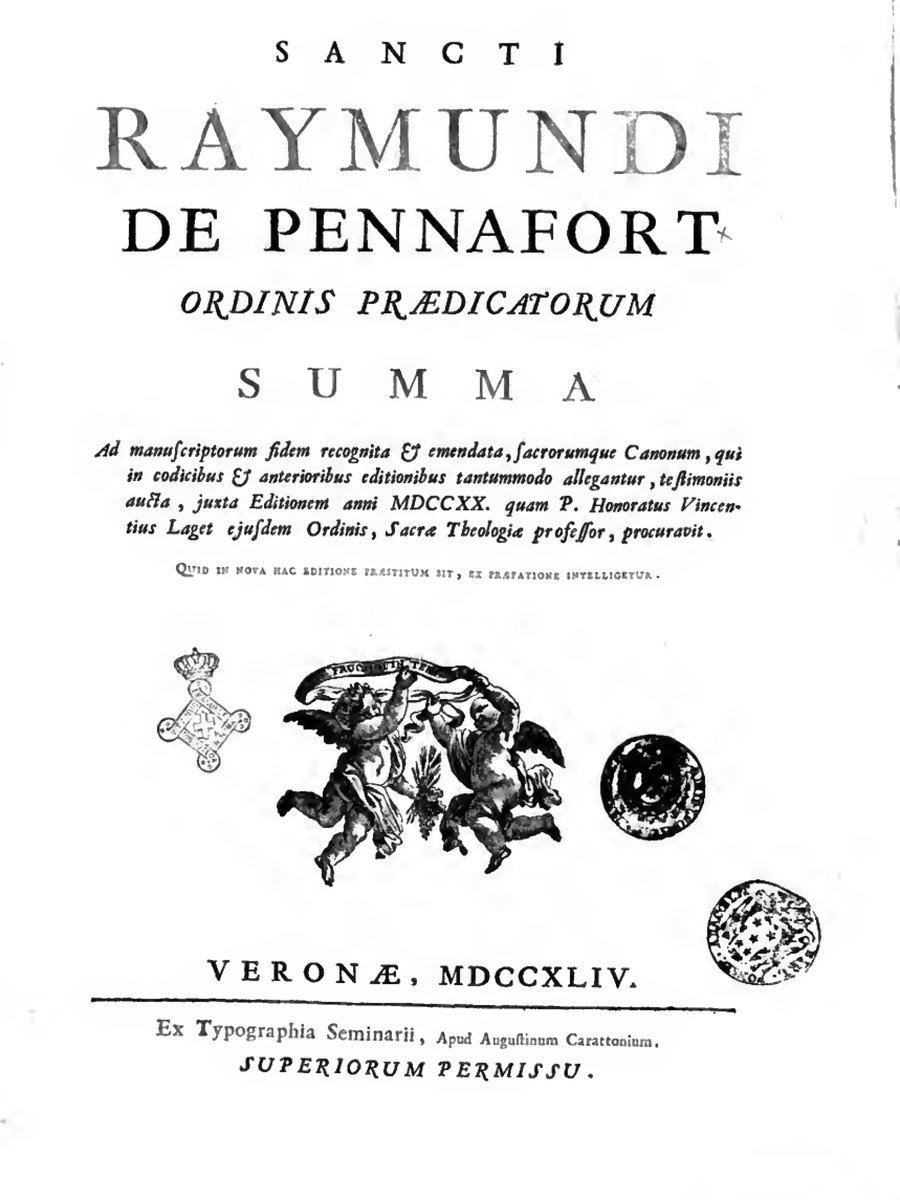
 Raymond of Penyafort
De Magistris, & ne aliquid exigant pro licentia docendi.
Diximus qualiter spiritualia prohibeantur acquiri; nunc videamus de iis, quæ spiritualium instar habent, scilicet de magistris, & licentia docendi.
Nota ergo, quod statutum fuit quondam ab Eugenio Papa, postea ab Alexandro in Concilio Late-
ranense, deinde ab Innocentio in Concilio generali, quod singulæ Ecclesiæ Cathedrales tenerent singulos magistros liberalium artium, ad minus grammaticæ, quæ earumdem Ecclesiarum Clericos, & alios scholares pauperes, gratis instituerent; propter quod aliquod competens beneficium magistro cuilibet præberetur in Ecclesia. Adjecit etiam in sua constitutione Dominus Innocentius, quod non solum fieret hoc in Ecclesiis Cathedralibus, sed etiam in aliis, quarum possent sufficere facultates. Item quod Metropolitana Ecclesia Theologum nihilominus habeat, qui sacerdotes, & alios in sacra pagina doceat, & in his præsertim informet, quæ ad curam animarum spectare noscuntur.
Probantur hæc dift. 37. c. De quibusdam. Extra, de magistris, c. Quoniam, & Quia nonnullis.
De quibusdam locis ad nos refertur, neque magistros, neque curam inveniri pro studio litterarum. Idcirco ab universis Episcopis subjectisque plebibus & aliis locis, in quibus necessitas occurrerit, omnino cura, & diligentia adhibeatur, ut magistri & doctores constituantur, qui studia litterarum, liberaliumque artium dogmata assidue doceant; quia in his maxime divina manifestantur, atque declarantur mandata.
QUoniam Ecclesia Dei, sicut pia mater providere tenetur, ne pauperibus, qui parentum opibus juvari non possunt, legendi & proficiendi opportunitas subtrahatur, unamquamque Cathedralem Ecclesiam magistro, qui Clericos ejusdem, & scholares pauperes gratis doceat, competens aliquod beneficium præbeatur (& infra) Pro licentia vero docendi nullus pretium exigat, vel sub obtentu alicujus consuetudinis ab eis, qui docent, quid quærat, nec docere quemquam (qui sit idoneus) petita licentia illis interdicat; qui autem contra hoc venire præsumpserit, Ecclesiastico fiat beneficio alienus: dignum quippe videtur, ut in Ecclesia fructus sui laboris non habeat, qui cupiditate animi, dum vendit docendi licentiam, Ecclesiasticum profectum nititur impedire.
QUia nonnullis propter inopiam, & legendi studium, & opportunitas proficiendi subtrahitur, in Laterauensi Concilio pia fuit constitutione provisum, ut per unamquamque Cathedralem Ecclesiam, magistro, qui ejusdem Ecclesiæ clericos, aliofque scholares pauperes gratis institueret, aliquod competens beneficium præberetur, quo & docentia relevaretur necessitas, & via pateret discentibus ad doctrinam. Verum quoniam in multis Ecclesiis id minime observatur, Nos præditum roborantes statutum, adjicimus, ut non solum in qualibet Cathedrali Ecclesia, sed etiam in aliis, quæ sufficere poterant facultates, constituatur magister idoneus a Prælato eum Capitulo, seu majori, & saniori parte capituli eligendus, qui clericos Ecclesiarum ipsarum gratis in grammatica facultate, ac alios instruat juxta posse. Sane Metropolis Ecclesia Theologum nihilominus habeat, qui sacerdotes, & alios in sacra pagina doceat, & in his præsertim informet, quæ ad curam animarum spectare noscuntur. Assignetur autem cuilibet magistrorum a Capitulo unius præben-
de proventus, & pro Theologo Metropolitano tantundem, non quod propter hoc efficiatur canonicus, sed tamdiu reditus ipsos percipiat, quamdin perstiterit in docendo: quod si forte de duobus magistris Ecclesia Metropolis gravetur, Theologo juxta modum præditum ipsa provideat; grammatico vero in alia Ecclesia suæ civitatis, sive diœcefis, quæ sufficere valeat, faciat provideri.
Utrum committat simoniam Magister, si exigit aliquid a pauperibus, vel a Clericis Ecclesiæ, a qua recipit beneficium.
REspondeo sic: quum enim hoc sit spirituale, & ex officio suo teneatur facere; certum est, exigere aliquid propter hoc, simoniam esse. Extra, de simonia, c. Nemo. In Templo vendentes sunt, qui hoc, quod quibusdam jure competit, ad præmium largiuntur. Caussa 1. q. 3. c. Vendentes. Cum eo concordat etiam Beda, eadem q. c. Non solum.
Non solum venditores sunt columbarum, & domum Dei faciunt domum negotiationis, qui sacros ordines, largiendo pretium pecuniæ, vel landis, vel etiam honoris, inquirunt. Verum hi quoque, qui gradum, vel gratiam in Ecclesia spiritualem, quam Domino largiente, perceperunt, non simplici intentione, sed cujuslibet humanæ caussa retributionis exercent, contra illud Petri Apostoli: Qui loquitur, quasi sermones Dei: qui ministrat, tamquam ex virtute, quam administrat Deus, ut in omnibus honorificetur Deus per Jesum Christum. Quicumque ergo tales sunt, si nolunt, veniente Domino, de Ecclesia auferri, auferant ista de actibus suis, ne faciant domum Dei domum negotiationis.
Per eadem jura dico, simoniam committere magistrum, qui festum de jure, vel consuetudine colendum, non vult concedere scholaribus colendum, nisi pecunia sibi data; vel e converso, diem non colendum concedit colendum pro pecunia.
Sed numquid ab aliis scholaribus, qui nec sunt pauperes, nec de eadem Ecclesia, potest exigere salarium? vel numquid Magister in scholis Parisiis, vel Bononiæ potest facere licite collectam?
Videtur quod non; quia scientia donum Dei est, unde vendi non potest. Caussa 1. q. 3. c. Non solum, ut supra; immo potius debet projicere pecuniam exemplo Socratis, qui magnum pondus auri abjecit, videns, se non posse simul virtutes, & divitias possidere. Item professores juris, etsi honeste sponte oblata recipiant, tamen inhonesie petunt, ff. de var. & extraord. cog. l. 1. §. Est enim quidem.
Sed contra; qui pro tempore præstat obsequium, debet consequi beneficium, 12. q. 2. Charitatem. Item potest Magister vendere doctrinam, sicut & jurisperitus consilium, 14. q. 5. c. Non sane.
Non sane, quidquid ab invito sumitur, injuriose aufertur; nam plerique nec Medi-
-ca volunt reddere honorem suum, nec operario mercedem; nec tamen hæc, qui ab invita accipiunt, per injuriam accipiunt, quæ potius per injuriam non darentur; sed non ideo debet index vendere justum judicium, aut testimonium verum, quia vendit advocatus justum patrocinium, jurisperitus verum consilium: illi enim inter utramque partem ad examen adhibentur; isti ex una parte consistunt. Cum autem &c.
Item gratis potest docere, nihilominus pro expensis suis collectam facere, sicut testis gratis testatur, & tamen recipit procurationem, 4. q. 3. c. Si testes, §. Venturis.
Si testes... Venturis autem ad judicium per accusatorem, aut ab iis, per quos fuerant postulati, sumtus competentes ministrentur, etiamsi in pecuniaria caussa ab alterutra parte testes sint producendi.
Et Episcopus gratis consecrat Ecclesiam, & recipit similiter procurationem. Extra, de simonia, c. Cum sit.
Solutio. Dico cum Laurent. & Joan. quod si sua non sufficiunt ei competenter, & honeste, potest licite exigere, & moderate: alias nihil debet exigere; sed sponte ablata poterit recipere, 1. q. 2. c. Placuit, 33. q. a. c. Quæsta est. Dist. 18. c. De Eulogiis.
Placuit, ut quoties ab aliqua fidelium ad consecrandas Ecclesias Episcopi invitantur, non quasi ex debito munus aliquod a fundatore requirant; sed si ipse quidem aliquid ex suo voto obtulerit, non respuatur: si vera aut paupertas illum, aut necessitas retinet, nihil exigatur ab illa; hoc tamen unusquisque Episcoporum meminerit, ut non prius dedicet Ecclesiam, nisi antea dotem Basilicæ, & obsequium ipsius per donationem chartulæ confirmatum, accipiat. Nam non levis culpa est illa temeritas, si sine luminariis, vel sine substantiali sustentatione eorum, qui ibidem servituri sunt, tamquam domus privata, consecretur Ecclesia.
De Eulogiis ad sacra Concilia deferendis nihil invenimus a Majoribus terminatum; sed sicut unicuique presbytero placuerit. Nam si constitutum fuerit illo in tempore benedictiones afferri, forsitan minus libenter ad Synodum occurrent, & magis venire obtractabunt, quæ non sunt, ut arbitrantur, rationabiliter requirendæ, nec ultro delatæ, respuendæ.
Quid de Cancellaric Parisiensi, vel Bonniensi, vel de Magistris scholarum, seu de præceptoribus aliarum Ecclesiarum, qui a cupiditate, vel consuetudine longa, nolunt forte aliquando dare licentiam docendi, nisi aliquo sibi dato?
Ad hoc dico, quod nec qui petit licentiam, nec quid dare, vel promittere, nec aliquid supra dictorum aliquid exigere: si contra hoc factum fuerit, debent exactores dignitatibus ac beneficiis Ecclesiasticis spoliari. Extra, de magistris, cap. 4. & 3. seu c. Prohibeas.
Prohibeas, ne in parochia tua prædicantia docendi exigatur aliquid, aut etiam præmittatur. Si quid vero postea solutum fuerit, vel promissum, remitti promissum facias, & restitui, appellatione cessante, solutum, sciens quod scriptum est: Gratis accepistis, gratis date. Sane si quis distulerit Magistros in locis congruis instituere, tibi liceat, appellatione postposita, ibi aliorum instruendis præficere viros pravidos, honestos, & discretos.
Quanta Gallicana Ecclesia Majorum per bonarum scientia & honestate præfulget, continentius nititur cavere, quæ confundere Ecclesiasticam videantur honestatem, tanto vehementiori dignos esse animadversione censemus, qui nomen Magistri scholarum, & dignitatem assumunt, & sine certo pretio Ecclesiasticis viris docendi alios licentiam non dant. Cum autem hæc prava consuetudo a cupiditatis radice processerit, & de admodum Ecclesiasticæ honestatis confundat; mandamus quatenus (consuetudine ipsa de vestris Ecclesiis exstirpata) sub anathematis interminatione hoc inhibere curetis, districte præcipientes, ut quicumque viri idonei, & litterati voluerint regere studia litterarum, sine malestia, & exactione qualibet, scholas regere permittantur: si qui vero hujusmodi prohibitionis, vel præcepti exstiterint transgressores, eas officiis, & dignitatibus spolietis.
Et licet ex utraque parte turpitudo vetetur, & ideo videatur potior conditio possidentis, ff. de cond. ob turp. Caus. l. 3. tamen subvenitur hic magistro promittenti, & solventi, ut promissum remittatur, & quod solverit, sibi, appellatione cessante, & non obstante aliqua consuetudine, restituatur, non in favorem sui, sed in odium alterius. Extra, de Magistris, c. Prohibeas, & c. Quanta.
Quid de Episcopo, qui clerico suo noluerit dare licentiam eundi ad scholas, nisi data sibi primo pecunia.
Re-
Respondeo eum Laur. stricte non est simonia, sed turpe lucrum. Arg. Caussa 1. quaest. 3. cap. Vendentes.
In summa nota, quod in omnibus supradictis nomine pecuniae totum, quod habent homines in terra, seu mobile, seu immobile, intelligitur, ut Caussa 1. quaest. 3. e. Totum.
TOtum, quidquid homines possident in terra, omnia, quorum domini sunt, pecunia vocatur: servus, vas, ager, arbor, pecus, quidquid horum est, pecunia dicitur. Ideo autem pecunia vocata est, quia antiqui totum, quod habebant, in pecoribus habebant.
Item in talibus simoniis credo, cum contritis, & vere poenitentibus posse per Episcopum dispensari, quia non sibi est prohibitum; quod sufficit.
On Masters, and That They Should Exact Nothing for a License to Teach
We have discussed how spiritual things are forbidden to be acquired; now let us consider those things that are treated like spiritual things — namely, masters and the license to teach.
Note, therefore, that a statute was once issued by Pope Eugenius, and afterwards by Alexander at the Council of Late-
-ran [i.e., the Third Lateran Council], and thereafter by Innocentius at the general Council [the Fourth Lateran Council], that each cathedral church should maintain at least one master of the liberal arts — at minimum of grammar — who would instruct the clerics of those churches and other poor scholars without charge; and that on this account some suitable benefice should be provided to each such master in the church. Lord Innocentius also added in his constitution that this should take place not only in cathedral churches, but also in others whose resources could suffice. Moreover, the metropolitan church should nonetheless have a theologian who might teach priests and others in sacred scripture, and instruct them especially in those things known to pertain to the care of souls.
These matters are proved at dist. 37, c. De quibusdam; Extra, de magistris, c. Quoniam, and c. Quia nonnullis.
De quibusdam locis — It is reported to us from certain places that neither masters nor provision for literary studies are to be found. Therefore let every care and diligence be applied by all bishops, subject parishes, and other places where need arises, so that masters and teachers may be appointed who shall continually teach literary studies and the doctrines of the liberal arts; for in these things the divine commandments are chiefly made manifest and declared.
Quoniam — Because the Church of God, as a pious mother, is bound to provide that the opportunity of reading and advancing not be taken from the poor who cannot be aided by their parents’ means, some suitable benefice shall be assigned to a master at each cathedral church who may freely teach its clerics and poor scholars — and further: for the license to teach, no one shall exact a price, nor under pretext of any custom demand anything from those who teach, nor shall any one forbid teaching to anyone who is suitable, once license has been sought from them; whoever shall presume to act against this shall be deprived of his ecclesiastical benefice; for it seems fitting that one who, out of greed, seeks to impede the advancement of the Church by selling the license to teach, should not enjoy the fruits of his labor in the Church.
Quia nonnullis — Because the opportunity for study and the chance of advancement is denied to some on account of poverty, the Lateran Council provided by a pious constitution that in each cathedral church a suitable benefice should be assigned to a master who would freely instruct the clerics of that church and other poor scholars — so that the need of teachers might be relieved and the way to learning opened to students. But since this is little observed in many churches, we, confirming the said statute, add that not only in each cathedral church, but also in others where resources may suffice, there shall be appointed a suitable master, to be chosen by the prelate together with the chapter or the greater and sounder part of the chapter, who shall freely instruct the clerics of those churches in the faculty of grammar and others in accordance with his ability. Indeed the metropolitan church shall also have a theologian who may teach priests and others in sacred scripture, and instruct them especially in those things known to pertain to the care of souls. Moreover, the chapter shall assign to each of the masters the revenues of one prebend —
— and the same to the metropolitan theologian — not so that he thereby becomes a canon, but that he may receive those revenues for as long as he continues in teaching; but if by chance the metropolitan church should be burdened by two masters, it shall provide for the theologian in the manner described above, and shall arrange for the grammarian to be provided for in another church of its city or diocese that is able to suffice.
Whether a master commits simony if he exacts something from the poor, or from the clerics of the church from which he receives his benefice.
I respond: yes — for since this is a spiritual matter and he is bound to perform it by virtue of his office, it is certain that to exact anything on this account is simony. Extra, de simonia, c. Nemo [X. 5.3.1]. Those who sell in the Temple are those who bestow for a reward what by right belongs to certain persons. Causa 1, q. 3, c. Vendentes [C. 1 q. 3 c. 2]. Beda agrees with this, at the same question, c. Non solum [C. 1 q. 3 c. 4].
Non solum — They are not only sellers of doves and makers of the house of God into a house of trade who seek sacred orders by paying a price in money, praise, or honor. But also those who exercise the spiritual grade or grace in the Church which they received by the Lord’s gift, not with a simple intention but for the sake of some human recompense — acting against the word of the Apostle Peter: “Whoever speaks, let him speak as the oracles of God; whoever ministers, let him do it as with the strength that God supplies, so that in all things God may be glorified through Jesus Christ.” Therefore all such persons, if they do not wish to be removed from the Church when the Lord comes, let them remove these things from their conduct, lest they make the house of God a house of trade.
By these same authorities I say that a master commits simony who, when a feast is to be observed by right or custom, refuses to grant scholars leave to observe it unless money is given to him; or, conversely, grants leave to observe a non-feast day in exchange for money.
But can he exact a salary from other scholars who are neither poor nor of that same church? Or, can a master at Paris or Bologna lawfully make a collection?
It seems that he cannot, because knowledge is the gift of God and therefore cannot be sold. Causa 1, q. 3, c. Non solum, as above [C. 1 q. 3 c. 4]; indeed he should rather cast money away, after the example of Socrates, who threw away a great weight of gold, seeing that he could not possess both virtues and riches at once. Likewise, professors of law, even if they may honorably accept what is freely offered, nevertheless dishonorably demand it: ff. de var. & extraord. cog., l. 1, §. Est enim quidem [Dig. 50.13.1 pr.].
But on the other hand: one who renders service over time ought to receive a benefit in return, 12, q. 2, Charitatem [C. 12 q. 2 c. 32]. Likewise a master may sell his teaching just as a jurist may sell his counsel, 14, q. 5, c. Non sane [C. 14 q. 5 c. 12].
Non sane — Whatever is taken from an unwilling person is taken wrongfully; for many people are unwilling to render a physician —
-cians are willing to render their proper fee, nor employers the laborer’s wage; and yet those who accept payment from an unwilling party do not receive it unjustly, since it would rather be unjust not to give it. But for this reason a judge ought not to sell a just verdict, nor a witness true testimony, merely because an advocate sells just advocacy and a jurist true counsel: for the latter stand on one side only, while the former are brought in between both parties for examination. But and so on.
Item: one may teach freely and yet make a collection for one’s expenses, just as a witness testifies freely and yet receives a procuration. Decretum IV, q. 3, c. Si testes, §. Venturis.
Si testes... Venturis autem ad judicium per accusatorem, aut ab iis, per quos fuerant postulati, sumtus competentes ministrentur, etiamsi in pecuniaria caussa ab alterutra parte testes sint producendi. [To witnesses coming to judgment at the summons of the accuser, or of those by whom they were called, competent expenses shall be supplied, even if in a monetary cause the witnesses are to be produced by either party.]
And a bishop consecrates a church freely and likewise receives a procuration [hospitality allowance]. Extra, de simonia, c. Cum sit.
Solution. I say, with Laurent. and Joan., that if his own means do not suffice him competently and honorably, he may lawfully demand payment in moderation; otherwise he ought to demand nothing, but may accept what is voluntarily offered. Decretum I, q. 2, c. Placuit; Decretum XXXIII, q. 2, c. Quaesta est; Decretum Dist. 18, c. De Eulogiis.
Placuit, ut quoties ab aliqua fidelium ad consecrandas Ecclesias Episcopi invitantur, non quasi ex debito munus aliquod a fundatore requirant; sed si ipse quidem aliquid ex suo voto obtulerit, non respuatur: si vero aut paupertas illum, aut necessitas retinet, nihil exigatur ab illa; hoc tamen unusquisque Episcoporum meminerit, ut non prius dedicet Ecclesiam, nisi antea dotem Basilicæ, & obsequium ipsius per donationem chartulæ confirmatum, accipiat. Nam non levis culpa est illa temeritas, si sine luminariis, vel sine substantiali sustentatione eorum, qui ibidem servituri sunt, tamquam domus privata, consecretur Ecclesia. [It was decreed that whenever bishops are invited by any of the faithful to consecrate churches, they should not demand any gift from the founder as though it were owed; but if the founder freely offers something from his own vow, it should not be refused. If, however, poverty or necessity restrains him, nothing is to be exacted from him. Nevertheless, let each bishop remember not to dedicate the church until he has first received a written donation confirming the church’s endowment and the arrangement for its service. For it is no light offense rashly to consecrate a church as though it were a private house, without lights or without adequate support for those who will serve there.]
De Eulogiis ad sacra Concilia deferendis nihil invenimus a Majoribus terminatum; sed sicut unicuique presbytero placuerit. Nam si constitutum fuerit illo in tempore benedictiones afferri, forsitan minus libenter ad Synodum occurrent, & magis venire obtractabunt, quæ non sunt, ut arbitrantur, rationabiliter requirendæ, nec ultro delatæ, respuendæ. [Concerning eulogies [gifts of bread] to be brought to sacred councils, we find nothing settled by our predecessors; it is left to each presbyter’s pleasure. For if it were made obligatory to bring such offerings at that time, they might come less willingly to the Synod and be more reluctant to attend, since [such offerings] are not, in their view, to be reasonably required, nor, when brought voluntarily, to be refused.]
What of the Chancellor of Paris or Bologna, or the masters of schools, or the teachers of other churches, who out of greed or long-standing custom are sometimes unwilling to grant a license to teach unless something is given to them?
To this I say that neither he who seeks a license ought to give or promise anything, nor should any of the aforesaid exact anything. If this is violated, the exactors ought to be stripped of their ecclesiastical dignities and benefices. Extra, de magistris, cap. 4 and 3, or c. Prohibeas.
Prohibeas, ne in parochia tua prædicantia docendi exigatur aliquid, aut etiam præmittatur. Si quid vero postea solutum fuerit, vel promissum, remitti promissum facias, & restitui, appellatione cessante, solutum, sciens quod scriptum est: Gratis accepistis, gratis date. Sane si quis distulerit Magistros in locis congruis instituere, tibi liceat, appellatione postposita, ibi aliorum instruendis præficere viros pravidos, honestos, & discretos. [Prohibit anything from being exacted or even promised in your parish for the practice of teaching. If anything has been paid or promised thereafter, have the promise remitted and, with appeal suspended, the payment restored, knowing what is written: “Freely you have received, freely give” [Matthew 10:8]. Indeed, if anyone has delayed in appointing masters in suitable places, you are permitted, setting aside appeal, to appoint there prudent, honorable, and discreet men for the instruction of others.]
Quanta Gallicana Ecclesia Majorum per bonarum scientia & honestate præfulget, continentius nititur cavere, quæ confundere Ecclesiasticam videantur honestatem, tanto vehementiori dignos esse animadversione censemus, qui nomen Magistri scholarum, & dignitatem assumunt, & sine certo pretio Ecclesiasticis viris docendi alios licentiam non dant. Cum autem hæc prava consuetudo a cupiditatis radice processerit, & de admodum Ecclesiasticæ honestatis confundat; mandamus quatenus (consuetudine ipsa de vestris Ecclesiis exstirpata) sub anathematis interminatione hoc inhibere curetis, districte præcipientes, ut quicumque viri idonei, & litterati voluerint regere studia litterarum, sine molestia, & exactione qualibet, scholas regere permittantur: si qui vero hujusmodi prohibitionis, vel præcepti exstiterint transgressores, eas officiis, & dignitatibus spolietis. [Inasmuch as the Gallican Church shines so brilliantly through the learning and integrity of its great men, and strives more earnestly to guard against what may seem to dishonor ecclesiastical propriety, we judge the more worthy of severe censure those who take on the title and dignity of master of schools and yet do not grant ecclesiastical men a license to teach others without a fixed payment. Since this corrupt custom has arisen from the root of greed and greatly dishonors ecclesiastical propriety, we command that, once this custom has been rooted out from your churches, you take care to prohibit it under threat of anathema, strictly ordering that whatever qualified and learned men wish to govern schools of learning shall be permitted to do so without any harassment or exaction. If any transgress this prohibition or command, strip them of their offices and dignities.]
And although the disgrace applies to both parties, and therefore the possessor’s condition might seem the stronger — Digest de cond. ob turp. Caus. l. 3 — nevertheless relief is here given to the master who promised and paid, so that the promise is remitted and what he paid is restored to him, with appeal suspended and notwithstanding any custom, not for his own benefit but out of odium for the other party. Extra, de Magistris, c. Prohibeas and c. Quanta.
What of a bishop who is unwilling to give his cleric leave to go to school unless money is first given to him?
Re-
I respond with Laur.: strictly speaking it is not simony, but shameful gain. Arg. Decretum Causa 1, quaest. 3, cap. Vendentes.
In sum, note that in all of the above cases the word “money” [pecunia] is understood to encompass everything that men possess on earth, whether movable or immovable, as in Decretum Causa 1, quaest. 3, c. Totum.
TOtum, quidquid homines possident in terra, omnia, quorum domini sunt, pecunia vocatur: servus, vas, ager, arbor, pecus, quidquid horum est, pecunia dicitur. Ideo autem pecunia vocata est, quia antiqui totum, quod habebant, in pecoribus habebant. [Everything whatsoever that men possess on earth — all of which they are masters — is called money: a slave, a vessel, a field, a tree, livestock; whatever falls under these categories is called money. It is called “pecunia” because the ancients had everything they owned in the form of cattle [pecora].]
Item, in such simonies I believe that the bishop can grant a dispensation to the truly contrite and penitent, since it is not forbidden to him; which suffices.