Raymond of Penyafort (c. 1175–1275) was a Catalan Dominican friar, canon lawyer, and papal penitentiary who compiled the Decretales Gregorii IX (Liber Extra) at the commission of Pope Gregory IX, completing it in 1234. The compilation systematized five books of papal decretals into the authoritative canon law collection that governed the medieval Western church alongside Gratian's Decretum. Raymond also served as Master General of the Dominican Order (1238–1240) and is credited with encouraging Thomas Aquinas to write the Summa contra Gentiles. He was canonized in 1601 and is the patron saint of canon lawyers.
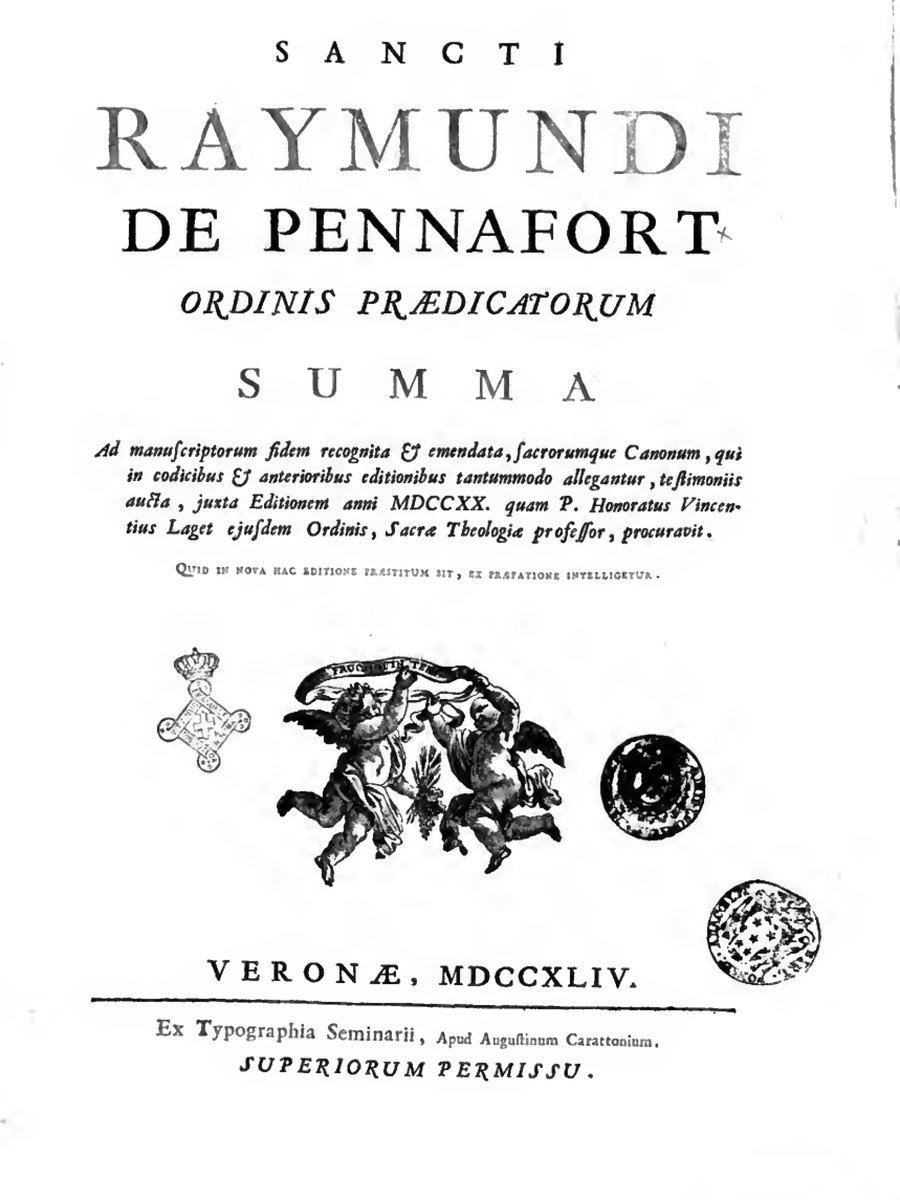
Summa of Saint Raymond of Penyafort of the Order of Preachers
Sancti Raymundi de Pennafort, Ordinis Prædicatorum, Summa
On Masters, and that they should not exact anything for a license to teach
De Magistris, & ne aliquid exigant pro licentia docendi
Raymond's treatment of teaching licenses in Book 1, Title 3 of the Summa. Drawing on papal decretals of Alexander III (Prohibeas, Quanta), it prohibits masters and chancellors from demanding any payment for the licentia docendi, treating such licenses as annexed to spiritual goods and therefore subject to the law against simony. Discusses what compensation teachers may lawfully receive (voluntary offerings, expense recovery), addresses the chanceries of Paris and Bologna, and considers the bishop who withholds a cleric's license to study unless paid.
On Simony
De Simonia
Raymond's treatment of simony in Book 1, Title 1 of the Summa. Defines simony as the deliberate will to buy or sell a spiritual thing (§. I), covers the various modes of committing it — by gift, service, or flattery — and distinguishes licit from illicit transactions involving ecclesiastical offices, ordinations, benefices, and patronage rights. Addresses penalties for simoniacs and conditions for dispensation, with extensive citation of the Decretum and Decretals.