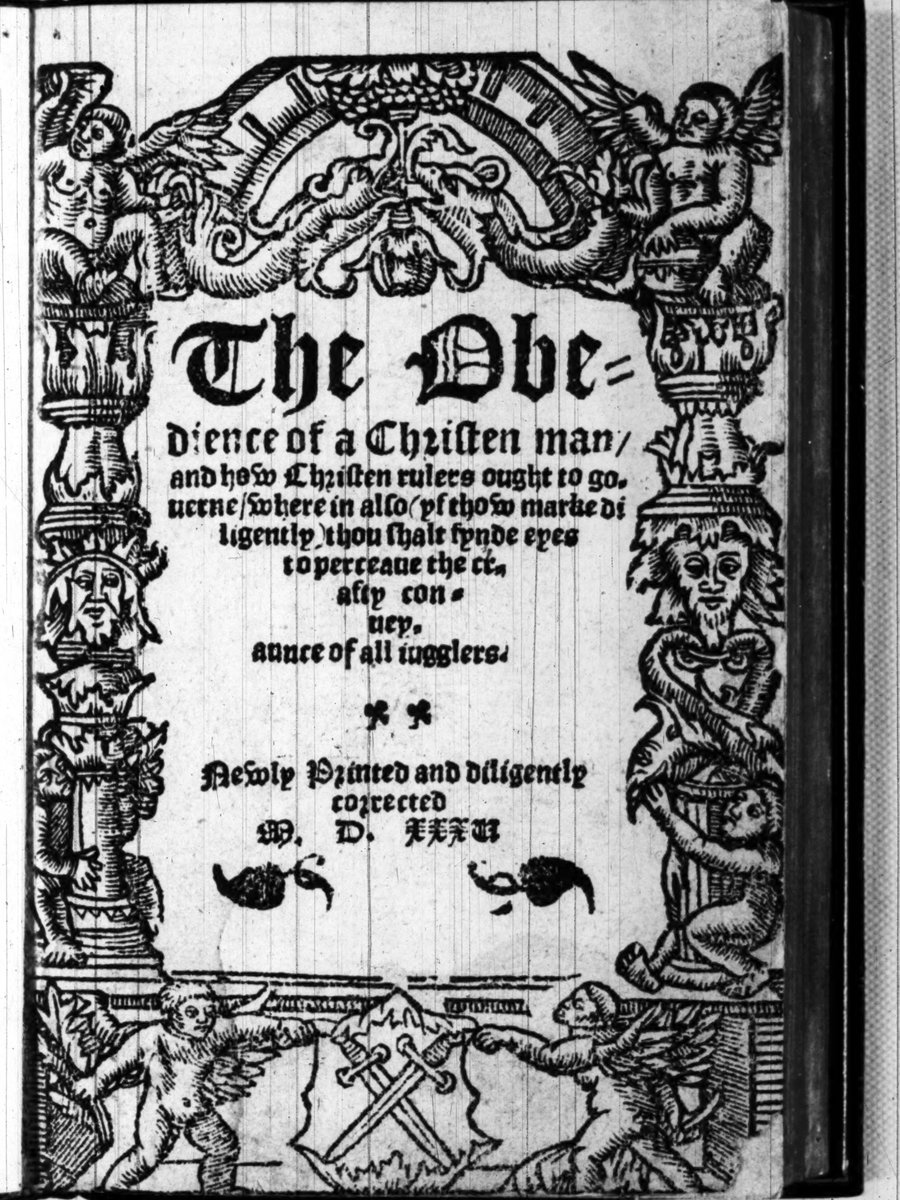
Of the Covetousness of the Spiritualty
 William Tyndale
Of the Covetousness of the Spiritualty
Neither as vnsaciable wretches not vnmyndfull whi they were shaue and shore/because they will stande at no mans grace or be in any mans daunger/haue gotten in to their awne handes / fyrst the tythe or tenth of all the realme. Then I suppose
suppose we in a litle or all to gether the third fote of all the temporall londes. Marke well how many personages or vicariages ar ther in the realme that at the lest haue a plowe londe a pece. Then note the londes of Bisshopes/Abbotes/Pryors/Nunnes/knyghtes of saynt Johns/Cathedrall chyrches/Coleges/Chauntries/Frechapels. For though the house fall in decaye and the ordinaunce of the founder be lost/yet will not they loose the londes. What cometh ones in/maye neuer more out. They make a frechapell of it/so that he weneth it shall to nought therfore. Besides all this/how many chaplaines doo gentlemen fynde at their awne cost in their houses. How mani singe for soules by testamentes. Then the prouinge of testamentes and presinge of goodes the Bisshope of Caunterburyes prerogatyue. Ys that not moch thorow the Realme in a yere? Foure offeringe dayes and preuey tythes. There is no seruante/but that he shall paye some what of his wages. None shall receaue the bodi of Christ at Ester/be he neuer so pore a begger or neuer so yonge a lad or mayd: but they must paie some what for it. Then mortuaries for forgote tythes (as they saye) And yet what parsone or vicare is there that wil forgete to haue a pygyn howse to pecke vp some what both at sowinge tyme and at heruest
when corne is ripe. They will forgette nothinge. No man shall dye in their dett/or if any man doo/he shall paye it when he is deed. They will loose nothinge. Why? It is Gods/it is not thers. It is sent Luders rentes/sent Albans londes/sent Edmonds ryght/sent Peters patrimonye saye they/and none of oures. Item if a man dye in a nother mans paresh/bysides that he must paye at home a mortuary for forgoten tythes he must there paye also the best that he there hath. Wether it be an horse of twenty pound or how good so euer he be/ether a cheyne of golde of an hundret marke or fiue hundret punde/if it so chaunce. It is moch veryly for so litle payne takynge in confession and in ministringe the sacramentes. The beedrolles. Item chrisome/chyrchinges/banes/weddinges/offeringe at weddinges/offeringe at buryenges/offeringe to images/offeringe of ware and lyghtes do come to their vautage/besides the supersticious wast of ware/in torches and tapers thorow out the londe. Then brotherhedes and perdoners. What gete they also by confession? Yee and many enioyne penaunce to geue a certayne for to haue so many masses laide/and desire to prouide a chappellayne them selues. Soul masses diriges/moneth myndes/yeres myndes/alsouldaye and trentals. The mother chyrch and the hie altare must haue some what in eueri testamente
Offeringes at prestes fyrst masses. Item man is professed/of what so euer religion it be/but he must bringe some what. The halowinge or rather coniuringe of churches chapels/altares/super altares/chalice vestimentes and belles. Then boke/bell/candelsticke/organes/chalice/vestimentes copes/altare clothes/syrpleses: towels basens/ewars/shippe/senser and all maner ornamentes must be founde them frely/they will not geue a myte there vnto. Last of all what swarmes of begginge freres are there. The person shereth the vicare shaueth/the parish prest polleth/the frere scrapeth and the pardoner pareth we lacke but a bocher to pole of the skynne.
What gete they in their spirituall law (as they call it) in a yere/at the arches and in euery dioses/what gete the Comissaries and officials with their somners and apparitars by bawdery in a yere? Shall ye not fynde curates ynowe which to flatter the comessaries and officials with all that they may/ye goo quite them selues shall ope vnto them the cofessios of the richest of their pareshes Whom they cite priuely and laye to their charges secretly. Yf they desyre to knowe their accusers/naye saye they/the mater is knowe well ynough and to moare then ye are ware of. Come laye youre hande on the boke/yf ye forswere youre selfe/we shall bringe proues/we will handle you/
we will make an ensample of you. Oh how terreble are they. Come and swere (saye they) that ye wilbe obediente vnto oure indictions. And bi that craft wringe thei their purses and make them droppe as longe as there is a peny in them. In thre or foure yeres shall they in those offices gete ynough to paye for a bisshopes bulles. What other thinge are these in a realme saue horslieches and euen very magottes cancres and caterpillers/which deuoure no moare but all that is greane and those wolues whom Paul prophesied shuld come and shuld not spare the flocke Actes.xx.chap. And which Christ said shuld come in lambes skynnes and bade vs beware of them and iudge them bi their workes.
Of the Covetousness of the Spiritualty
Furthermore, like insatiable wretches—unmindful of why they were shaved and shorn [tonsured for the clergy]—because they will stand at no man’s mercy or be in any man’s debt, they have gotten into their own hands, first, the tithe, or tenth, of the whole realm. Then I suppose,
we may reckon, a little under or altogether, a third part of all the temporal lands. Consider well how many parsonages or vicarages there are in the realm that have at least a plowland [as much land as one plow can till] apiece. Then take note of the lands of bishops, abbots, priors, nuns, knights of Saint John’s, cathedral churches, colleges, chantries, and free chapels. For though the house fall into decay and the founder’s endowment be lost, yet they will not let go of the lands. Whatever comes in once may never come out again. They turn it into a free chapel, so that whoever thinks it must come to nothing is mistaken. Besides all this, how many chaplains do gentlemen maintain at their own cost in their houses? How many sing for souls by bequest of testaments? Then there is the proving of testaments and the appraising of goods—the Archbishop of Canterbury’s prerogative. Is that not a great sum throughout the realm in a year? Four offering days, and private tithes. There is no servant but he must pay some part of his wages. None shall receive the body of Christ at Easter—be he ever so poor a beggar, or ever so young a lad or maid—but they must pay something for it. Then mortuaries [death dues to the parish], for forgotten tithes (as they say). And yet what parson or vicar is there that will forget to keep a pigeon house to peck up something both at sowing time and at harvest,
when the corn is ripe? They will forget nothing. No man shall die in their debt, or if any man does, he shall pay it when he is dead. They will lose nothing. Why? It is God’s; it is not theirs. It is Saint Luder’s rents, Saint Alban’s lands, Saint Edmund’s right, Saint Peter’s patrimony, say they, and none of ours. Likewise, if a man die in another man’s parish, besides that he must pay at home a mortuary for forgotten tithes, he must there pay also the best possession he has there—whether it be a horse worth twenty pounds, or however good he may be, or a chain of gold worth a hundred marks, or five hundred pounds, if it so happen. It is very much, truly, for so little labor taken in confession and in administering the sacraments. The beadrolls [lists of the dead to be prayed for]. Likewise the chrisom [fee for the cloth used at baptism], churchings [fees for the rite purifying women after childbirth], banns, weddings, offerings at weddings, offerings at burials, offerings to images, offerings of wax and lights—all come to their profit, besides the superstitious waste of wax in torches and tapers throughout the land. Then there are brotherhoods and pardoners. What do they also get by confession? Yes, and many enjoin penance: to give a certain sum to have so many masses said, and to desire to provide a chaplain for themselves. Soul masses, diriges [the Office for the Dead], month minds, year minds [commemorations a month and a year after death], All Souls’ Day, and trentals [sets of thirty masses for the dead]. The mother church and the high altar must have something in every testament.
Offerings at priests’ first masses. Likewise, when a man is professed into any religious order whatsoever, he must bring something. The hallowing—or rather conjuring—of churches, chapels, altars, super-altars, chalices, vestments, and bells. Then book, bell, candlestick, organs, chalice, vestments, copes, altar cloths, surplices, towels, basins, ewers, ship [the incense boat], censer, and every kind of ornament must be provided for them free of charge; they will not give a mite toward it. Last of all, what swarms of begging friars there are. The parson shears, the vicar shaves, the parish priest polls, the friar scrapes, and the pardoner pares; we lack only a butcher to flay off the skin.
What do they gain in their spiritual law (as they call it) in a year, at the Arches [the Court of Arches] and in every diocese? What do the commissaries and officials, with their summoners and apparitors, gain by their bawdry in a year? Will you not find plenty of curates who, to flatter the commissaries and officials with everything they can—so that they may get off scot-free themselves—will open up to them the confessions of the richest in their parishes? These men they cite privately and charge in secret. If the accused wish to know who their accusers are, “No,” they say, “the matter is well enough known—and to more people than you are aware of. Come, lay your hand on the book; if you perjure yourself, we shall bring proofs; we will handle you—
we will make an example of you.” Oh, how terrible they are! “Come and swear,” they say, “that you will be obedient to our injunctions.” And by that trick they wring people’s purses and make them drip as long as there is a penny in them. In three or four years they will get enough in those offices to pay for a bishop’s bulls. What else are these in a realm but horse-leeches, and indeed the very maggots, cankers, and caterpillars that devour everything green and nothing else—and those wolves whom Paul prophesied would come and would not spare the flock (Acts 20), and whom Christ said would come in lambs’ skins, bidding us beware of them and judge them by their works.