The Obedience of a Christian Man
The Obedience of a Christen Man
The Obedience of a Christian Man by William Tyndale, first published in 1528 and here in the corrected edition of 1535. The colophon bears the well-known false imprint — "At Marlborow in the lande of Hesse... by me Hans Luft," 29 October 1535 — under which Tyndale's books were actually printed in Antwerp. The work argues that secular rulers hold their authority directly from God and that subjects owe them obedience, while attacking the temporal power and "juggling" of the papacy and clergy. A foundational text of the English Reformation, it is reputed to have prompted Henry VIII to declare, "This book is for me, and all kings, to read."
Author

William Tyndale
William Tyndale
Readings
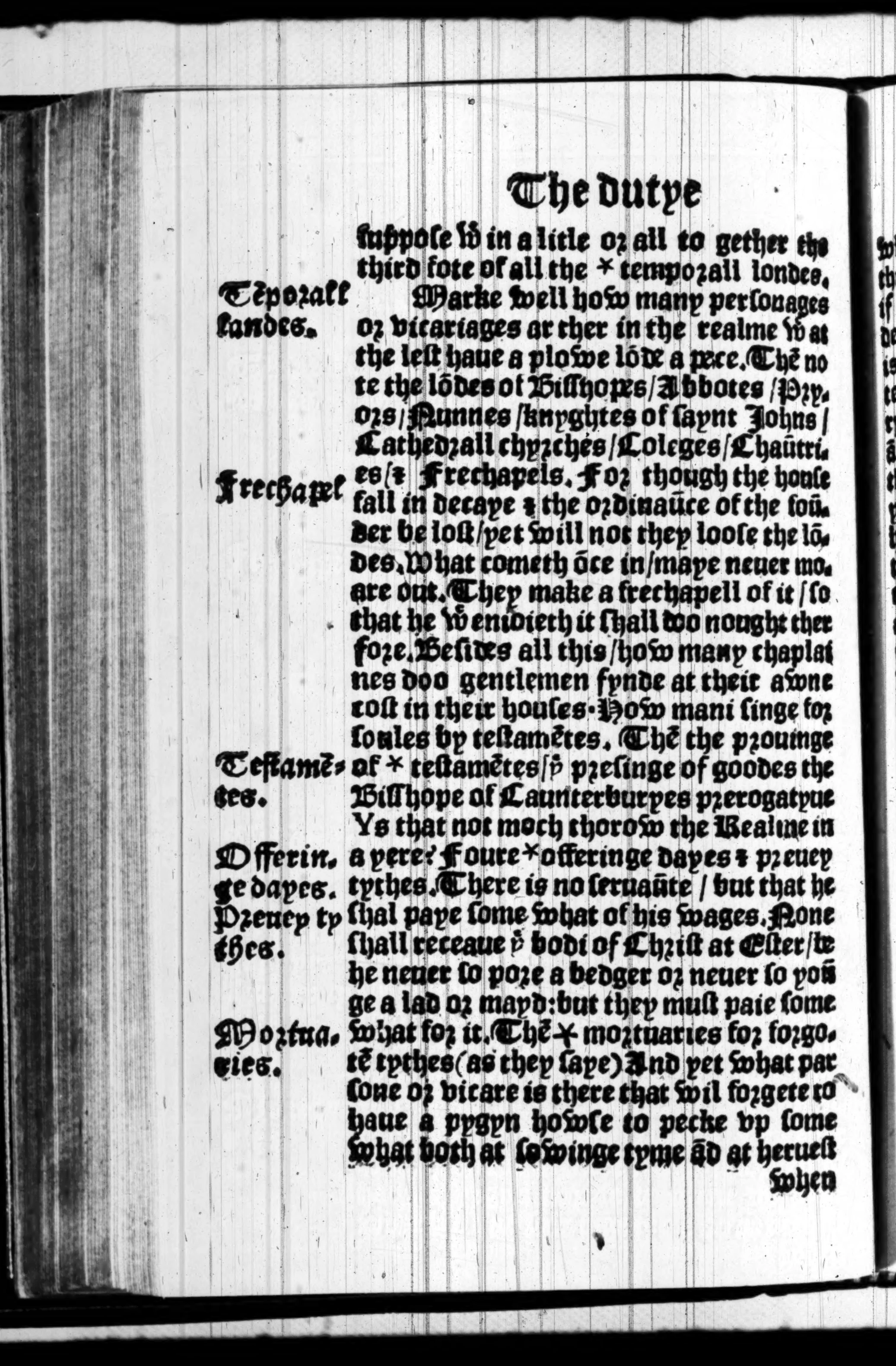
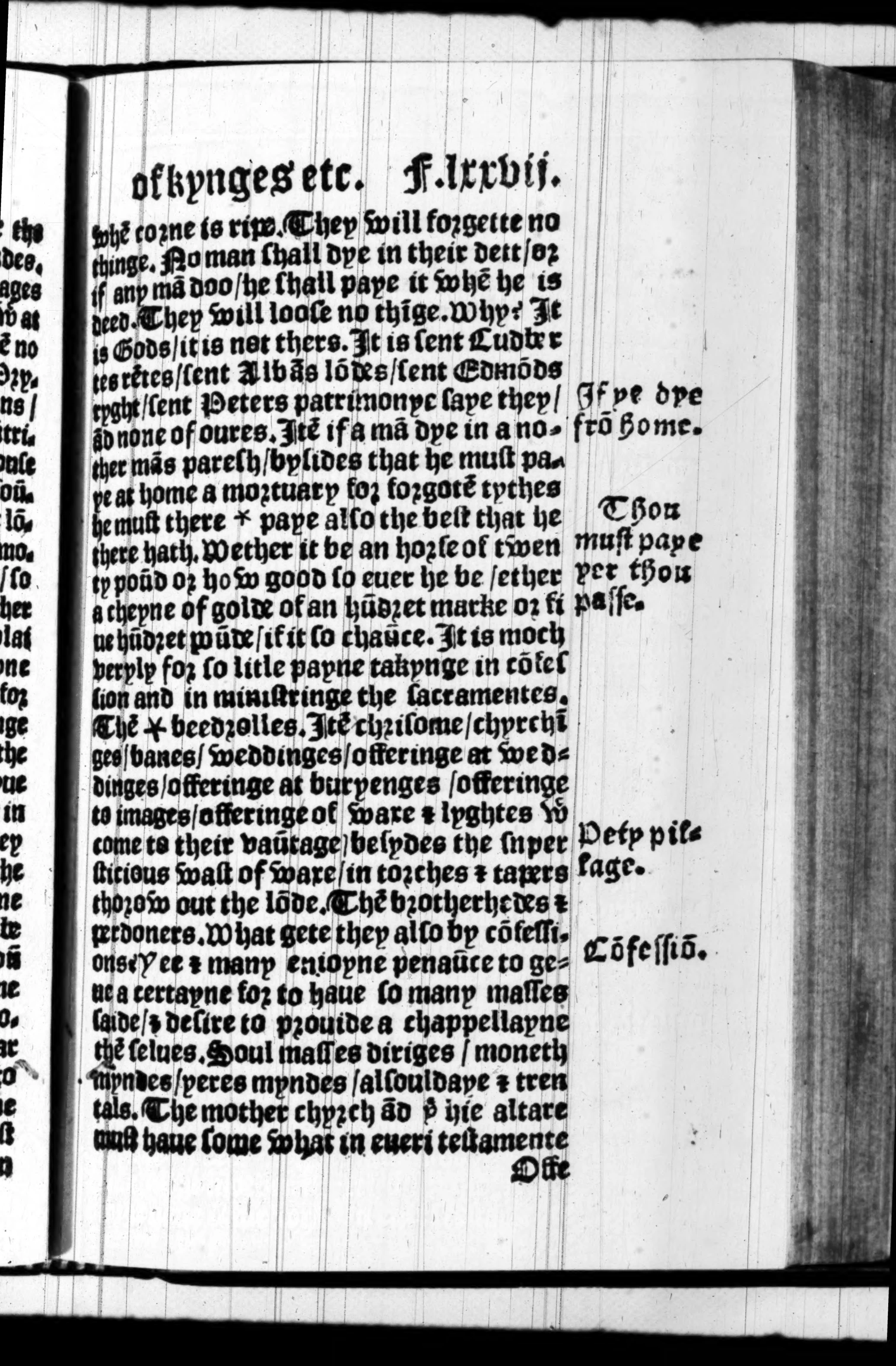
Of the Covetousness of the Spiritualty
Tyndale's catalogue of the exactions by which the clergy fleece the realm. Beginning with their seizure of the tithe — "the tenth of all the realm" — he enumerates their temporal lands, mortuaries, offering-days, and privy tithes, and the endless fees for churchings, weddings, burials, hallowings, and priests' first masses. The indictment climaxes in his image of the clergy flaying the laity: "the parson shears, the vicar shaves, the parish priest polls, the friar scrapes, and the pardoner pares; we lack but a butcher to pull off the skin." He likens the spiritualty to horseleeches, caterpillars, and wolves in lambs' skins, to be known and judged by their works.
William Tyndale·1528·Early Modern English·The Duty of the Higher Powers·fol. 76r–78rOf Matrimony, and the Pope's Dispensations
The close of Tyndale's section on the obedience of children, treating Christian matrimony. Tyndale argues that lawful marriage — made with the consent of parents and friends — may not be dissolved by the Church's vows and traditions, and he attacks the way the clergy separate those whom God has joined. Above all he assails the Pope's traffic in dispensations, releasing men from monastic profession and priestly vows for money, closing with the famous gibe that to sell a benefice outright is reckoned simony, but to resign it on a pension and redeem it again is held no simony at all: "O crafty jugglers and mockers with the word of God!"
William Tyndale·1528·Early Modern English·The Obedience of Children unto their Elders·fol. 26r–27r