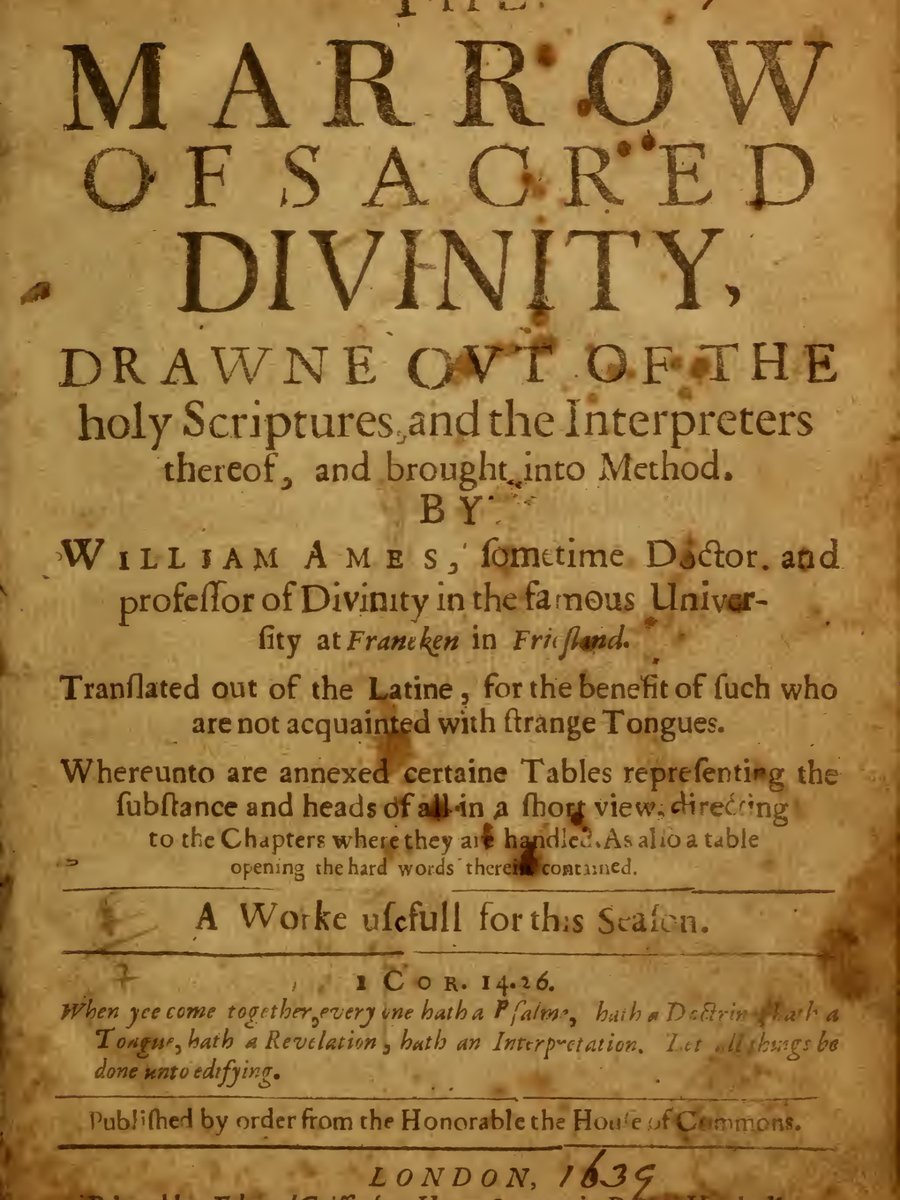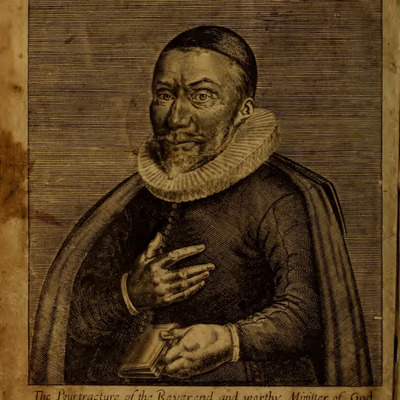
William Ames (1576–1633) was an English Puritan theologian and philosopher who became one of the most influential Reformed thinkers of the seventeenth century. Educated at Christ's College, Cambridge under William Perkins, he was driven from England for his nonconformity and eventually appointed professor of theology at the University of Franeker in Friesland (1622–1633). His two major works, the Medulla Theologica (1627) and De Conscientia (1630), provided compact systematic treatments of Reformed doctrine and casuistry that were widely used as textbooks in both European and New England universities. His emphasis on practical, experiential piety shaped the Puritan tradition on both sides of the Atlantic.
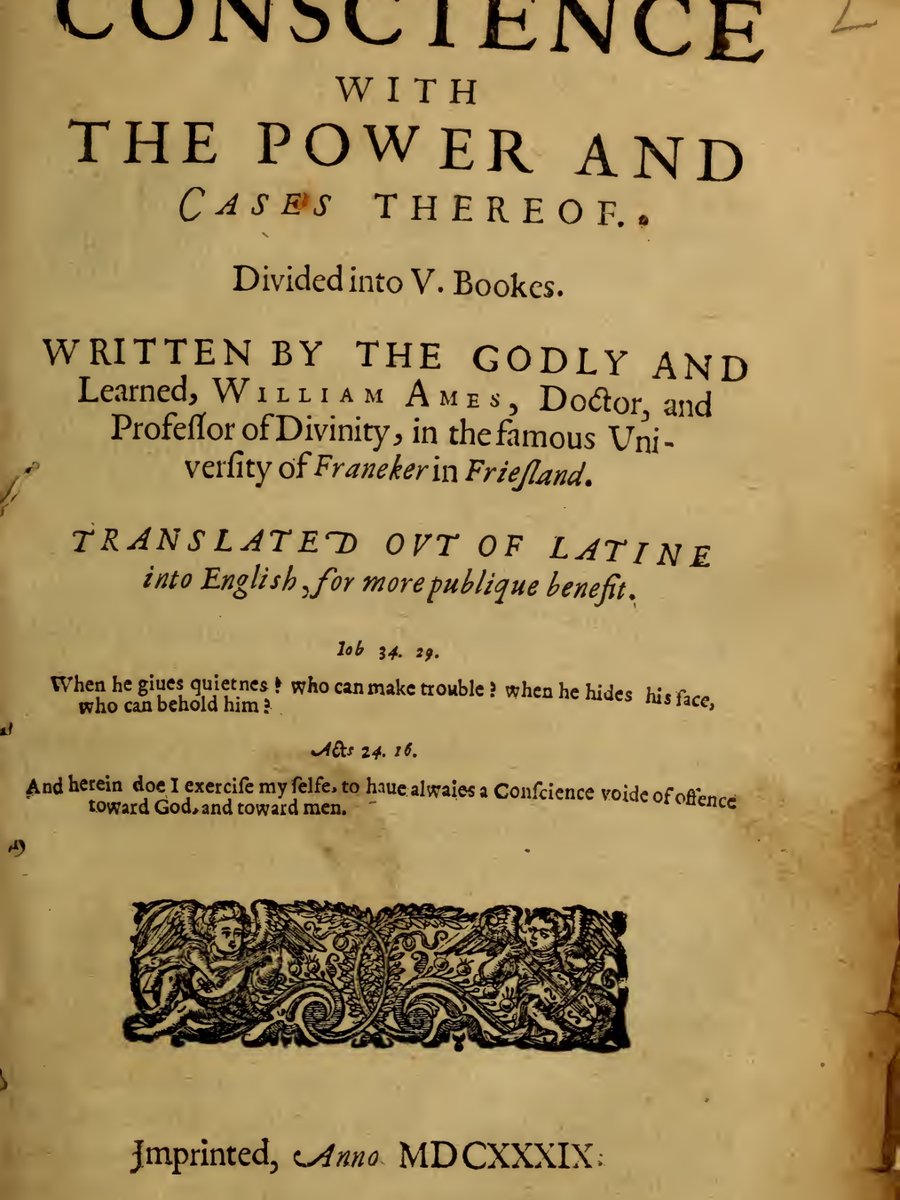
Conscience with the Power and Cases Thereof
Conscience with the Power and Cases Thereof, Divided into Five Books
Of calling to the Ministry
Of calling to the Ministry
Book IV, Chapter 25 of Ames's Conscience with the Power and Cases Thereof addresses the call to the ministry. Ames argues that a singular calling is required for the ministerial office, distinguishing it from the general duty of all Christians to teach. He examines what integrity of life, knowledge, and divine assurance are required of candidates, how a vocation is confirmed by the judgment of the Church, and on what grounds a minister may lawfully leave one congregation for another.
Of Contracts
Of Contracts
Book V, Chapter 42 of Ames's Conscience with the Power and Cases Thereof treats the law of contracts. Ames defines the conditions required for a lawful contract — fit persons, free and promissive consent, and outward expression — and examines the matter, form, and end of contracts. The chapter addresses simony as the paradigmatic case of an unlawful contract, covering its extension to sacraments and ecclesiastical benefices, the three modes of simoniacal gift (hand, tongue, and observance), and the analogous corruption involved in the sale of public offices of jurisdiction.