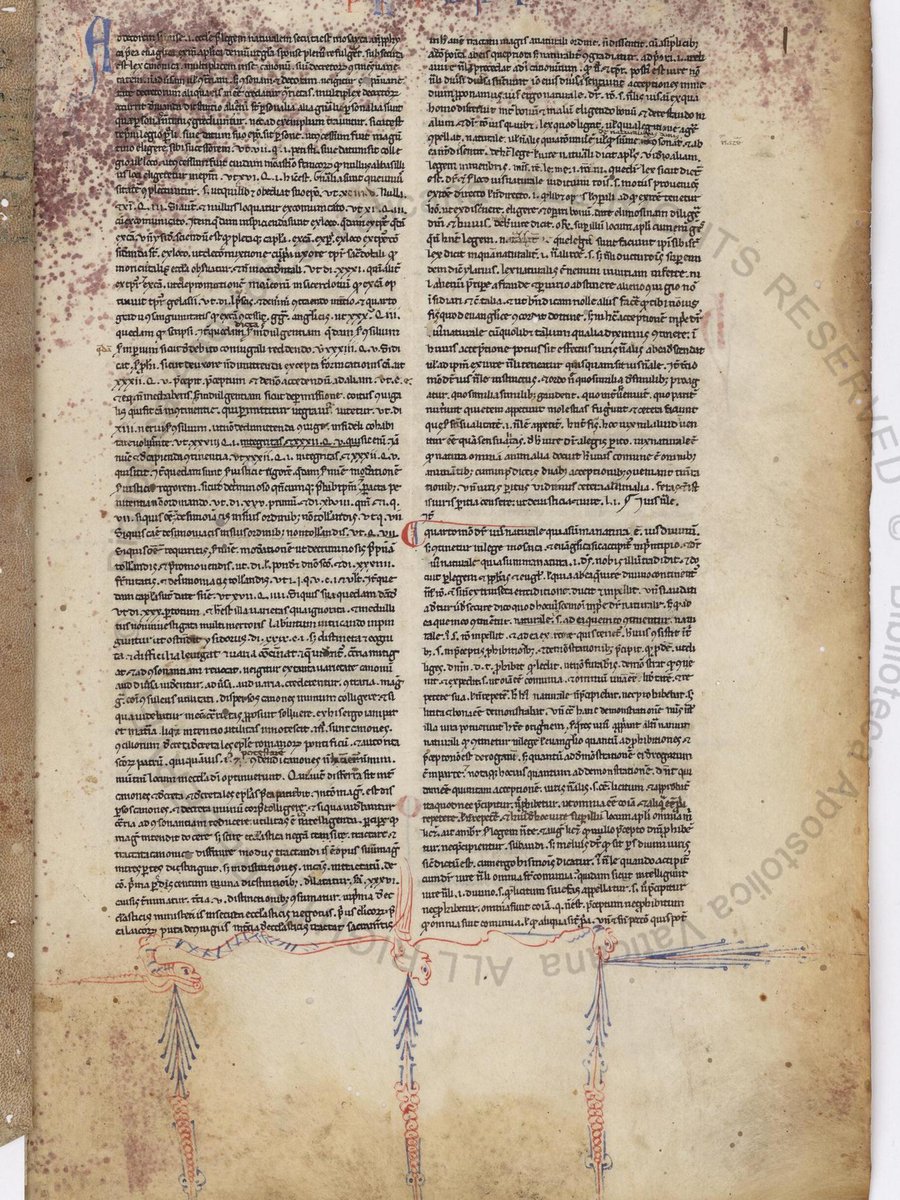
Summa, on D. 37, c. 12 (De quibusdam locis): On the license to teach
Summa, ad D. 37, c. 12 (De quibusdam locis): de licentia docendi
 Huguccio of Pisa
Ad D. xxxvii, c. xii. De quibusdam locis
Ecce esto non vult dare licentiam clerico eundi ad scolas nisi data pecia. Dat ei pecia. Est ne symonia? Respondeo: est, tamen turpe lucrum et mortale peccatum esse, cum precio dat quod gratis dare debuit. Argumentum xc. di., i. q. iii. Videtur, et ix. q. ii. Quia si rectores. Et similiter turpe lucrum est et peccatum mortale, si quis accipit pecuniam ut det alicui licentiam docendi, quod Parisius olim fiebat. Non enim cancellarius permittebat ibi aliquem regere scolas nisi dato precio, quod vitium alius eius reprehendit, et sub pena anathematis prohibuit ne deinceps fieret, ut in extra. Quanto Gallicana, et in proximo Quoniam ecclesia Dei. Forte in tali casu symonia committebatur, si magister deberet docere theologiam.
Ecce esto magister dat clerico licentiam eundi ad scolas, sed non dat ei licentiam in benedictione sua nisi dato precio. Est ne symonia? Distinguo: si de iure dicas debebat eum habere in scolis, ex parte episcopi committitur symonia, et non ex parte clerici. Argumentum i. q. iii. Si quis, et i. q. ii. Quod pro. Si autem de iure non debet eum habere in scolis, symonia committitur ex utraque parte.
On D. 37, c. 12. De quibusdam locis
Behold, suppose [a master] is unwilling to give a cleric permission to attend the schools unless a fee is paid. The cleric gives him the fee. Is this simony? I answer: it is — yet at least it is shameful gain and a mortal sin, since he is taking a price for what he was bound to give freely. Argument from D. xc, C. i q. iii Videtur, and C. ix q. ii Quia si rectores. And likewise it is shameful gain and a mortal sin if anyone accepts money in order to grant someone the license to teach, as used to be done at Paris. For the chancellor would not permit anyone to direct schools there unless a price had been paid — a corruption which another of [the popes] rebuked, and under pain of anathema forbade ever to be done again, as in Extra [X 5.5.3] Quanto Gallicana and the immediately preceding [X 5.5.1] Quoniam ecclesia Dei. Perhaps in such a case simony was indeed being committed, where the master was supposed to be teaching theology.
Behold, suppose a master gives a cleric leave to attend the schools, but will not give him leave under his own blessing unless a price is paid. Is this simony? I draw a distinction: if you grant that by law he was bound to keep him in his schools, then simony is committed on the bishop’s side, and not on the cleric’s. Argument from C. i q. iii Si quis, and C. i q. ii Quod pro. But if by law he was not bound to keep him in the schools, then simony is committed on both sides.