Summa Decretorum
Summa Decretorum
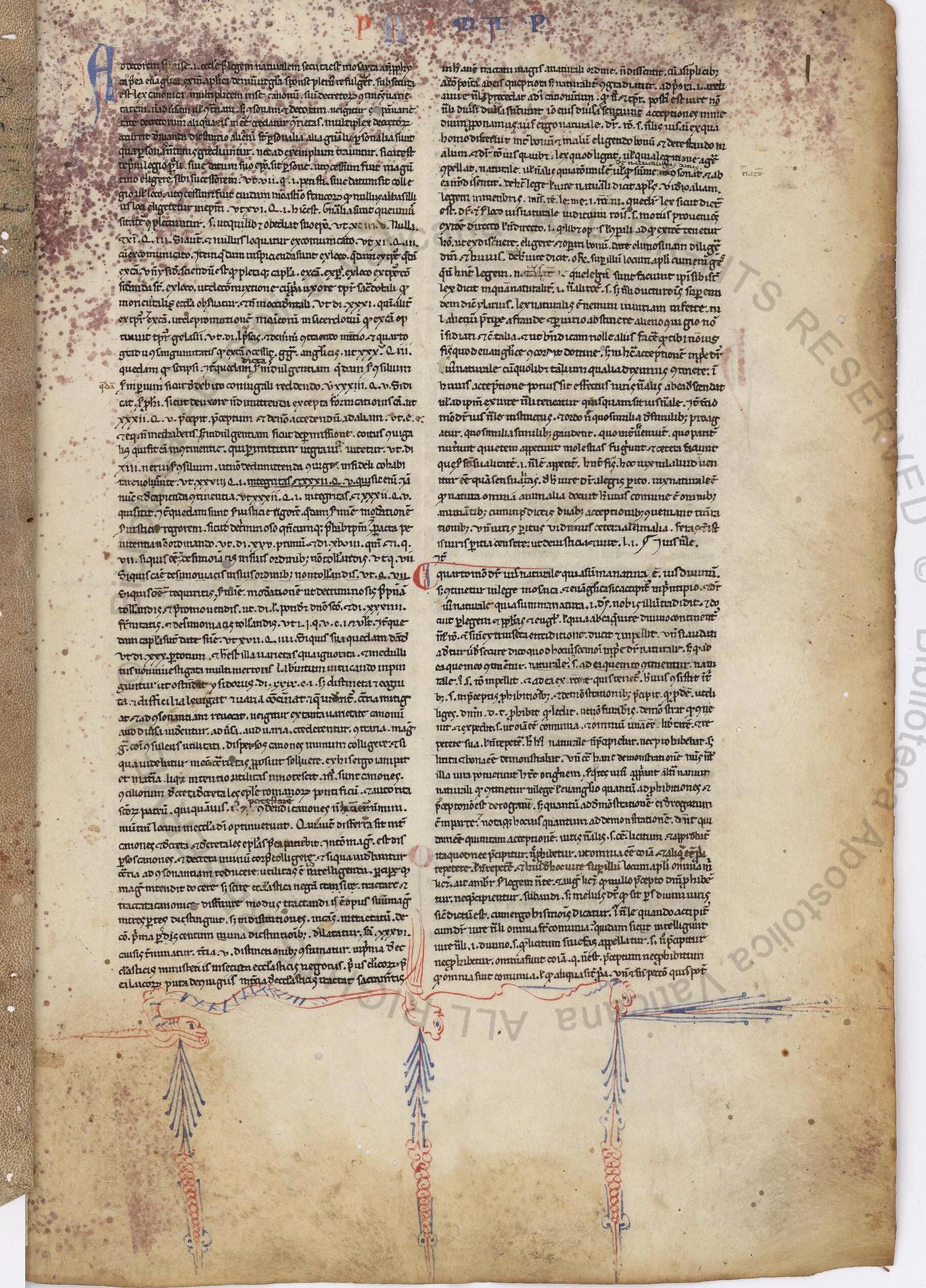
The most extensive and influential of the twelfth-century commentaries on Gratian's Decretum, composed by Huguccio of Pisa ca. 1188–1190 while he taught canon law at Bologna. The Summa works through the Decretum in order — Distinctions I–XCVI in the first part and Causae I–XXXV in the second — drawing together and surpassing the earlier decretist tradition (Rufinus, Stephen of Tournai, Johannes Faventinus, Simon of Bisignano). It became the standard reference for later canonists and shaped the Glossa ordinaria. Vatican, Arch. Cap. S. Pietro C.114 is a 14th-century manuscript copy in two-column gothic textualis, 340 folios.
Author
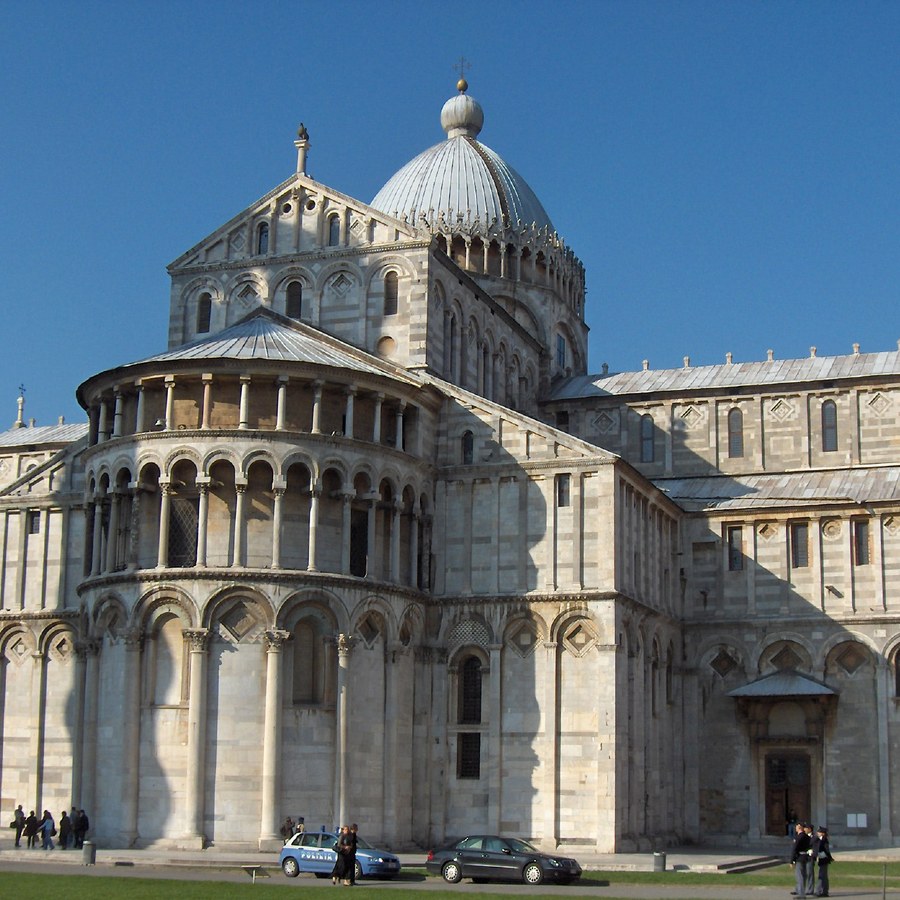
Huguccio of Pisa
Hugutio Pisanus
Readings
Summa, on Causa 1: On simony
Summa, ad C. 1: de symonia
Huguccio of Pisa's commentary on Causa I of Gratian's Decretum — the great twelfth-century quaestio de symonia. Causa I treats a man who buys a church for his son and the chain of consequences for the simoniacal ordainer, the paying purchaser, the ordained son, and the parishioners who receive the sacraments from him. Across seven quaestiones Gratian asks whether such a transaction is simony at all, what counts as the munus a manu, lingua, obsequio, whether bishops who confer free orders may afterwards charge fees for chrism or consecration, whether ordinations conferred by simoniacs are valid, whether the simoniacally ordained should be deposed even if ignorant, and how parishioners should regard sacraments from a simoniacal priest. Huguccio works through each quaestio with characteristic rigor, drawing on the prior decretist tradition (Rufinus, Stephen of Tournai, Johannes Faventinus, Simon of Bisignano) and shaping the doctrine that the Glossa ordinaria would later inherit.
Huguccio of Pisa·1190·Latin·ad Decretum, Causa I (de symonia)·fol. 117ra–119rbSumma, on D. 37, c. 12 (De quibusdam locis): On the license to teach
Summa, ad D. 37, c. 12 (De quibusdam locis): de licentia docendi
A short gloss-cluster from Huguccio's Summa on D. 37, c. 12 (De quibusdam locis), turning a casus about teachers and students into one of the earliest decretist treatments of selling the licentia docendi as simony. Huguccio asks first whether a master who refuses a cleric leave to attend school unless paid commits simony, then — similiter — whether the chancellor who sells the license to teach commits simony, recalling the practice "quod parisius olim fiebat" and the reforming decretals Quanto Gallicana (X 5.5.3) and Quoniam ecclesia Dei (X 5.5.1). He concludes that the act is at the very least turpe lucrum and peccatum mortale, and forte outright simony where the license concerns sacred learning such as theologia.
Huguccio of Pisa·1190·Latin·ad Decretum, D. 37, c. 12 (De quibusdam locis)·fol. 48rb–48rb