Complete Works of William of Saint-Amour
Magistri Guillielmi de Sancto Amore Opera Omnia quae Reperiri Potuerunt
This volume collects the known works of William of Saint-Amour (c. 1200–1272), doctor of the Faculty of Theology of Paris and member of the Sorbonne. Published pseudonymously in Constance in 1632 under the imprint "Ad Insigne Bonae Fidei Apud Alithophilos," the edition was assembled by Joannes Alithophilus to defend the hierarchical structure of the Church against the mendicant orders. It opens with an extensive prefatory history of William's controversies and relevant papal documents, followed by William's preface to the Psalms, his major treatise De Periculis Novissimorum Temporum (On the Dangers of the Last Times), his Collectiones Catholicae et Canonicae Scripturae ad instructionem et praeparationem Simplicium Christi Fidelium contra pericula imminentia Ecclesiae Generali per Hypocritas et Pseudo-Praedicatores, a table of signs for detecting false preachers, and a sermon for the feast of Saints James and Philip.
Author

William of Saint-Amour
Guillelmus de Sancto Amore
Readings
Collectiones, Distinction I: On Helpers
Collectiones, Distinctio I: De Opitulationibus
A passage from the first distinction of William of Saint-Amour's Collectiones treating the Opitulationes — the auxiliary or "helper" offices in the Church. William argues that those who exercise such helping roles outside the ordinary hierarchy of bishops and parish priests lack proper jurisdiction over their hearers, and that the sustenance they receive from preaching is therefore not owed potestative (by right) but only mendicative (by begging for God's sake).
William of Saint-Amour·1266·Collectiones, Distinctio I (on Opitulatores)·p. 145–157Collectiones, Distinction IV: Signs 40–48
Collectiones, Distinctio IV: Signa XL–XLVIII
Signs forty through forty-eight from the fourth distinction of William of Saint-Amour's Collectiones, part of the catalogue of scriptural marks by which pseudo-preachers may be distinguished from true apostles. These signs concern motives of gain, manner of receiving offerings, and related abuses.
William of Saint-Amour·1266·Collectiones, Distinctio IV, §§ 40–48·p. 456–476On the Dangers of the Last Times, Chapter 12
De Periculis Novissimorum Temporum, Caput XII
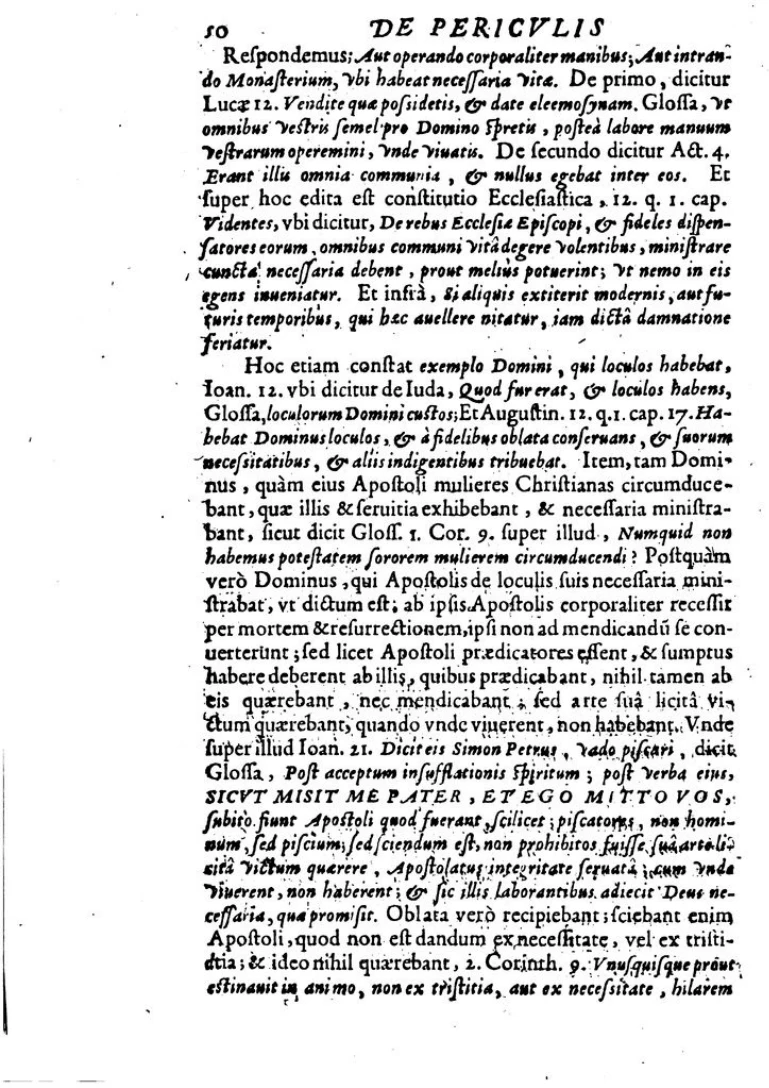
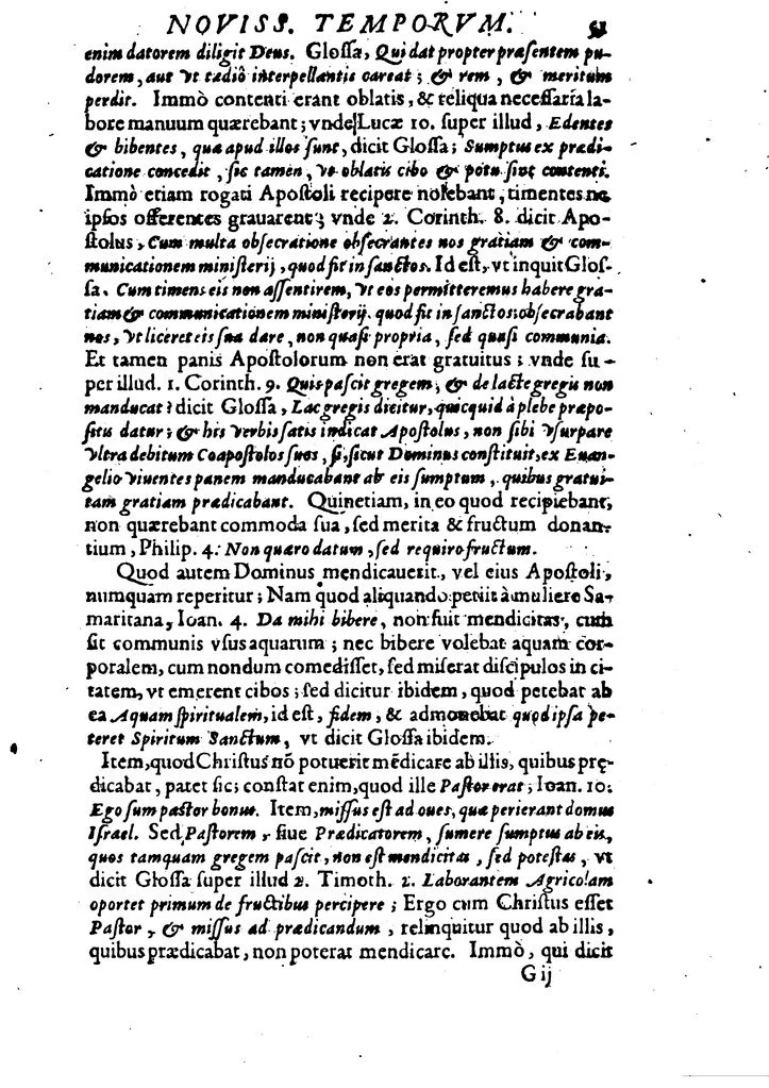
Chapter 12 of William of Saint-Amour's De Periculis Novissimorum Temporum (1256), addressing how the foregoing dangers of the last times are to be repelled. William enumerates six things necessary for repelling them, then mounts an extended argument against perpetual mendicancy by preachers — refuting the claim that Christ and the apostles begged, and concluding that withdrawing the means of mendicancy from pseudo-preachers also withdraws their usurped office of preaching.
William of Saint-Amour·1256·De Periculis Novissimorum Temporum, Caput XII·p. 46–53On the Dangers of the Last Times, Chapter 14
De Periculis Novissimorum Temporum, Caput XIV
Chapter 14 of William of Saint-Amour's De Periculis Novissimorum Temporum (1256), enumerating the many signs—some infallible, others probable—by which pseudo-apostles may be distinguished from true apostles of Christ. Sign 20 holds that true apostles do not take the temporal goods of those to whom they preach, on pain of committing simony in the manner of Gehazi.
William of Saint-Amour·1256·De Periculis Novissimorum Temporum, Caput XIV·p. 57–72On the Dangers of the Last Times, Chapter 2
De Periculis Novissimorum Temporum, Caput II
Chapter 2 of William of Saint-Amour's De Periculis Novissimorum Temporum (1256), identifying the kind of men through whom the dangers of the last times will come. Drawing on 2 Timothy 3, William catalogues the self-loving, "house-penetrating" preachers — the penetrantes domos — who claim a right to preach without being canonically sent, and argues from Scripture and canon law that such men are to be reckoned as pseudo-apostles.
William of Saint-Amour·1256·De Periculis Novissimorum Temporum, Caput II·p. 21–28On the Able-Bodied Mendicant
De Valido Mendicante
A scholastic quæstio by William of Saint-Amour debating whether alms ought to be given to the able-bodied mendicant — that is, to one who is poor but capable of supporting himself by work. After arrays of scriptural and patristic arguments on both sides, William concludes that able-bodied beggars are not to be supported, since Scripture and the Fathers everywhere enjoin labor on those who can work; alms are owed only to the genuinely poor — the disabled, the aged, pilgrims, scholars, and others unable to earn their bread. The tract closes with a brief sub-question on whether preachers may beg, answered in the negative lest they fall into avarice, flattery, or simony.
William of Saint-Amour·1256·Quæstio: De Valido Mendicante·p. 80–87